How to Remove Gel Ink Stains From Clothes
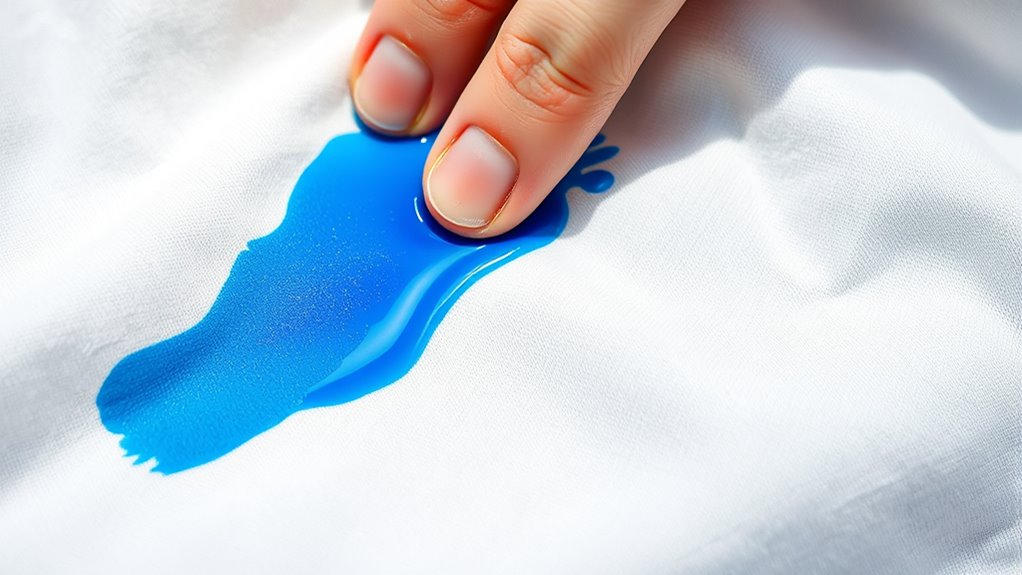
Dealing with gel ink stains on clothes is a common frustration many people face. Whether it’s from a pen mishap or a creative project, these stains can be tricky to remove. You’re not alone in struggling with how to get ink out without damaging your favorite shirt.
To remove gel ink stains from clothes, act quickly by placing a paper towel underneath the stain and rinsing with cold water, focusing on the fabric’s backside. Dab gently with rubbing alcohol or sanitizer, letting it sit for a few minutes. Keep rinsing until the stain fades, then wash with cold water and detergent.
For tougher stains or delicate fabrics, you’ll find more detailed steps that can help you get the stain out effectively.
Key Takeaways
- Rinse the stain immediately with cold water, focusing on the fabric’s backside to dislodge ink particles.
- Dab the stain with a cotton ball soaked in rubbing alcohol or sanitizer, then rinse thoroughly.
- Test stain removal products on hidden fabric areas first to prevent damage or discoloration.
- Use cold water and appropriate stain removers, avoiding hot water and heat until the stain is fully gone.
- For stubborn stains, repeat the treatment. You might also want to consider professional cleaning or specialized stain removers.
How to Quickly Remove Gel Ink Stains From Clothes
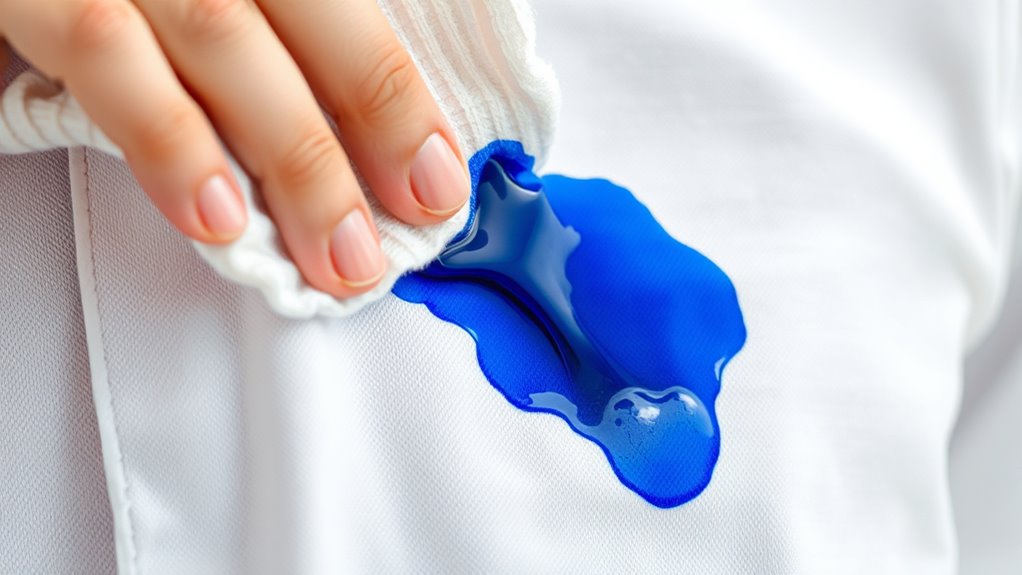
Wondering how to get gel ink out of your clothes quickly? Start by placing a paper towel under the stained area to prevent spreading.
Use a cotton ball soaked in rubbing alcohol or hand sanitizer, and gently dab the gel ink stain. This helps loosen the ink fast.
Gently dab the stain with a cotton ball soaked in rubbing alcohol or hand sanitizer to loosen the gel ink quickly.
Let the alcohol sit on the stain for a few minutes to break down the gel ink. Then, rinse the area with cold water to flush out the ink.
If the stain persists, repeat the dabbing and rinsing steps until the ink lifts. Once the stain is gone, wash your garment in cold water with regular detergent.
Avoid heat because it can set any remaining ink, making stain removal more difficult.
Preparing Your Clothes for Ink Stain Treatment
Before you start treating the ink stain, it’s important to prepare your garment properly. First, avoid washing or drying the clothing, as this can set the ink stain permanently.
Next, place a white paper towel or cloth underneath the stained area to prevent ink from transferring to other parts of the fabric. It’s also helpful to test any stain removal product, like rubbing alcohol or hairspray, on a hidden fabric spot to check for colorfastness.
Gently blot excess ink with a clean cloth or paper towel to remove as much ink as possible. Just be careful not to rub or scrub, as this can spread the stain or damage fibers.
Proper preparation guarantees your ink stain treatment is more effective and helps prevent further damage to your clothes.
Immediate Steps to Treat Gel Ink on Clothing
When you notice gel ink on your clothing, place a paper towel underneath to absorb excess ink and stop it from spreading.
Gently dab the stain with a cotton ball soaked in rubbing alcohol, hand sanitizer, or stain remover, then let it sit for a few minutes.
Rinse with cold water to wash away the loosened ink and any residue before you move on to a deeper clean.
Blot Excess Ink
As soon as you notice the gel ink stain, you should act quickly to prevent it from setting deeper into the fabric. The key is to blot the ink carefully, not rub, to lift it from the surface.
Place a paper towel or clean cloth under the stained area to catch any excess ink and prevent spreading. Gently blot the gel ink stain with a cotton ball or cloth soaked in rubbing alcohol or hand sanitizer, using light, dabbing motions.
Keep blotting with fresh sections of the towel or cotton ball, monitoring the ink transfer. This process helps lift the ink without pushing it further into the fibers.
Apply Immediate Treatment
Once you’ve blotted away as much ink as possible, the next step is to apply an immediate treatment to loosen the gel ink stain. Place a paper towel underneath the stained area to prevent the ink from spreading further.
Use a cotton ball soaked in rubbing alcohol, hand sanitizer, or a stain remover to gently dab the gel stain. Allow the treatment to sit for a few minutes to loosen the gel ink.
To improve the process, refer to the table below:
| Step | Action | Tip |
|---|---|---|
| Prepare | Soak a cotton ball in chosen solution | Use alcohol or sanitizer |
| Dab | Gently press onto the gel stain | Avoid rubbing to prevent spreading |
| Rinse | Wash with cold water | Dilutes ink and removes residue |
Repeat as needed before washing.
Test Your Stain Removal Method Safely on Different Fabrics
Always test your stain remover on a hidden part of the fabric first to avoid damage or discoloration. Apply it lightly and wait at least five minutes to see how the material reacts.
Inconspicuous Area Testing
Before applying any stain removal method to a visible gel ink stain, it’s important to test it in an inconspicuous area first. This helps you avoid causing permanent damage or discoloration.
Use a small amount of the stain removal product on a hidden spot, like inside a seam or hem. Wait 5-10 minutes to see if there’s any color change or fabric weakening.
Try the test on different fabric types, such as the inside of a cuff or a side seam, to make sure it’s safe. Remember, delicate fabrics like silk or velvet might need gentler testing or professional help.
Keep a record of your results so you can decide if the stain removal method is safe for the main stain. This can save you from costly mistakes and fabric damage.
Fabric Compatibility Checks
Testing your stain removal method on different fabrics is key to avoiding damage or discoloration. Always do a patch test on hidden areas before treating visible stains.
Use a small amount of solvent, like rubbing alcohol or hand sanitizer, on an inconspicuous spot. Wait a few minutes to see if there’s any color change or fabric damage.
Delicate fabrics like silk or suede need gentler testing methods or professional cleaning. Synthetic fabrics such as polyester and nylon usually handle alcohol-based solutions better.
Conducting this patch test helps ensure your stain removal process won’t weaken fibers or cause unwanted staining.
| Fabric Type | Testing Method | Notes |
|---|---|---|
| Delicate fabrics | Use a small amount of solvent, wait | Avoid home remedies, seek professional help |
| Synthetic fabrics | Test with alcohol-based solutions | Usually tolerate better, but still test |
Using Rubbing Alcohol and Household Items to Remove Gel Ink
If you want to remove gel ink stains from your clothing effectively, rubbing alcohol combined with household items can be a powerful solution. Use a cotton ball or Q-tip dipped in rubbing alcohol to gently dab the stain.
Place a paper towel underneath to absorb the ink transfer and prevent spreading. Let the alcohol sit for a few minutes to loosen the ink particles.
Then, rinse the area with cold water. If the stain persists, repeat the dabbing process until it fades.
Finish by washing the garment in cold water with regular detergent to remove any remaining ink residue. This method works as an effective ink remover when combined with household items.
- Dampen cotton or Q-tip with rubbing alcohol
- Use a paper towel to catch ink transfer
- Rinse and wash with cold water
Applying Stain Removers Without Spreading the Ink
To prevent spreading the gel ink stain, it’s important to apply stain removers carefully and strategically. Start by placing a white paper towel or cloth underneath the stained area to catch any ink transfer.
Use a cotton swab soaked in rubbing alcohol or a specialized stain remover to target the ink directly. This helps minimize the risk of spreading the stain. Gently blot the stain, working from the outside toward the center, to keep the ink contained.
Reapply the stain remover with fresh cotton swabs as needed. Avoid vigorous rubbing, which could spread the ink or damage the fabric.
Keep an eye on the towel underneath to see if ink is transferring. This helps you gauge how well your blotting technique is working and keeps the stain focused in a small area.
Rinsing and Washing Clothes After Gel Ink Treatment
After treating the stain, rinse the area with cold water to dilute any remaining ink.
Next, wash the garment in cold water using a good stain remover to make sure all the ink is lifted.
Before drying, check the stain. If it’s still there, repeat the process. Only dry the item once you’re certain the stain is gone.
Effective Rinsing Techniques
Once you’ve applied an ink remover, it’s crucial to rinse the stained area with cold water thoroughly to prevent the gel ink from setting further. Use running cold water from the fabric’s backside to help push out the ink particles without spreading the stain.
After the initial rinse, make sure to rinse with cold water immediately. Focus on the back side of the fabric to dislodge as much ink as possible. Keep rinsing until you see the stain start to fade.
This process helps dilute any leftover ink and prevents it from sinking deeper into the fibers. If the stain is still there, repeat the rinsing and reapply the treatment before washing. Avoid hot water, as heat can cause the ink to set permanently.
Proper Washing Procedures
Proper washing procedures are essential to make sure the gel ink stain is fully removed and doesn’t set permanently. After applying a stain remover, rinse the garment thoroughly with cold water to dilute and wash away any remaining ink and chemicals.
When washing, use the right cycle and stick to cold water to prevent the stain from setting. Always check the stain before drying because heat can make the ink permanent. If any residue remains, repeat the washing process—sometimes multiple cycles are needed to get it completely out.
Avoid hot water or high-heat drying until you’re sure the stain is gone. This way, the ink from gel pens won’t become a permanent mark, keeping your clothes looking clean and fresh.
Ensuring Complete Stain Removal
Rinsing thoroughly with cold water immediately after applying stain remover is a crucial step in ensuring complete removal of gel ink from your clothes. This helps dilute any remaining ink and prevents it from setting deeper into the fabric.
After rinsing, wash the garment in the appropriate water temperature for the fabric to fully remove residual ink and avoid re-staining.
Always check the stain before drying; heat from a dryer can set any leftover ink, making it almost impossible to remove later.
If traces of ink remain, repeat the rinsing and washing process. Air drying is recommended to monitor the stain’s progress without risking permanent setting.
- Use cold water to prevent ink from setting deeper
- Confirm stain removal before drying
- Repeat washing if needed for complete ink removal
How to Remove Stubborn or Persistent Gel Ink Stains
Dealing with stubborn gel ink stains can be tricky, especially if initial treatments didn’t fully do the job.
To tackle persistent stains, you might need to apply an alcohol-based remover, like rubbing alcohol or hand sanitizer, multiple times. This helps break down the gel pen ink effectively.
You can also combine chemical treatments with gentle physical methods. For example, hold the fabric taut over a jar while applying the remover—this can improve the stain’s removal.
Dried gel ink stains are tougher and often need patience and longer treatment times.
Always test any solvent on a hidden part of the fabric first to avoid damage.
If these steps don’t work, consider professional cleaning or using specialized stain removers made for stubborn ink.
Tips for Removing Gel Ink From Delicate Fabrics Like Silk and Wool
Removing gel ink from delicate fabrics like silk and wool needs extra care so you don’t damage the material. Always test stain removers on a hidden spot first.
For silk, gently blot the stain with a cold, damp cloth using a white towel. Think about taking it to a professional cleaner to avoid harming the fibers.
Wool can be treated by spraying hairspray onto the stain, then softly blotting with a vinegar solution. Be careful not to scrub too hard, as this can distort the fibers or cause colors to fade.
Use only small amounts of solvent like rubbing alcohol or special stain removers. After treatment, let the fabric air dry. Always check the stain before applying heat, because heat can set the gel ink permanently.
Remember to test any products first and work gently to protect your delicate fabrics.
Preventing Gel Ink Stains From Setting or Reappearing
To prevent gel ink stains from setting or reappearing, act quickly once you notice the spill. Immediately applying a solvent like rubbing alcohol or hand sanitizer can stop the ink from soaking deeper into the fabric fibers, making it easier to remove.
Avoid heat sources such as hot water, dryers, or irons until the stain is fully gone. Heat can set gel ink stains permanently, making them much harder to remove.
Before applying any cleaning solution, do a patch test on a hidden area. This helps ensure it won’t cause discoloration or damage to your fabric.
When treating the stain, gently blot instead of rubbing. This helps lift the ink without spreading it or embedding it further into the fabric.
Addressing fresh stains quickly is key to preventing them from setting or reappearing after washing.
When to Seek Help From a Professional Cleaner
If the gel ink stain is large or deeply embedded, it’s best to get professional cleaning right away. They have the right expertise, solvents, and equipment for stubborn stains, especially on delicate fabrics like silk or suede.
Reach out to a professional if your home treatments haven’t worked after multiple tries or if the fabric is expensive or has sentimental value. Rushing DIY methods on fragile textiles can cause more damage.
Consider contacting a professional cleaner if the stain is stubborn or on delicate fabrics, or if home remedies haven’t worked after several attempts. Also, seek help if the item is valuable or sentimental.
Always check the care label and choose expert help to keep your clothes safe.
Frequently Asked Questions
Does Gel Ink Come Out of Clothes?
Gel ink can come out of clothes, but it’s tricky once it dries. You need to act quickly and avoid rubbing it, which can spread the stain.
Use a specialized stain remover or a solvent like acetone, but test it on a hidden area first. Gently blot the stain to lift it out.
Then wash the fabric as usual. Persistence and proper treatment give you the best chance to fully remove the gel ink.
How to Wash Out Gel Ink Stains?
Think of removing gel ink stains like peeling off a stubborn sticker—you need patience and the right approach.
Start by rinsing the stain with cold water to dilute it. Then, blot with rubbing alcohol or hand sanitizer, letting it sit a few minutes.
Rinse thoroughly and wash in cold water with a good stain remover. Be sure to check the stain before drying.
Repeat the process if necessary to fully remove the stain.
Does Dawn Soap Remove Ink Stains?
Dawn soap isn’t specifically designed to remove ink stains, including gel ink. However, its degreasing properties can help loosen ink particles when combined with other methods like alcohol or stain removers.
You might want to test Dawn on a hidden fabric spot first to avoid damage. Usually, it works better as a supplementary step rather than a standalone solution for ink stains.
Can You Remove Gel Stains From Clothes?
Think of removing gel ink stains like fighting a stubborn flame. You can definitely tame it with the right tools.
Start by applying rubbing alcohol or hand sanitizer directly to the stain, then gently blot—don’t rub—until the ink lifts.
Repeat as needed, testing first on a hidden fabric area. Remember, patience and gentle touches help you win the battle without damaging your clothes.
Conclusion
Removing gel ink stains from your clothes can be like untangling a tricky knot. You just need the right approach and patience. Acting quickly and following the steps carefully will help you get your favorite garments looking fresh again.
Remember to test your method first. Treat stubborn stains with household items, and handle delicate fabrics gently. With a little effort, you’ll be back to wearing your clothes without worry.
When it comes to gel ink stains, being proactive is key. Using the right techniques can make all the difference. Soon, your clothes will look as good as new—like a master painter restoring a masterpiece.