DIY Guide to Make Invisible Ink at Home
Ever wondered how to send secret messages or add a fun twist to your notes? You’re not alone—many people struggle with finding simple ways to create invisible ink at home. The good news is, you don’t need fancy equipment; just a few household items can do the trick.
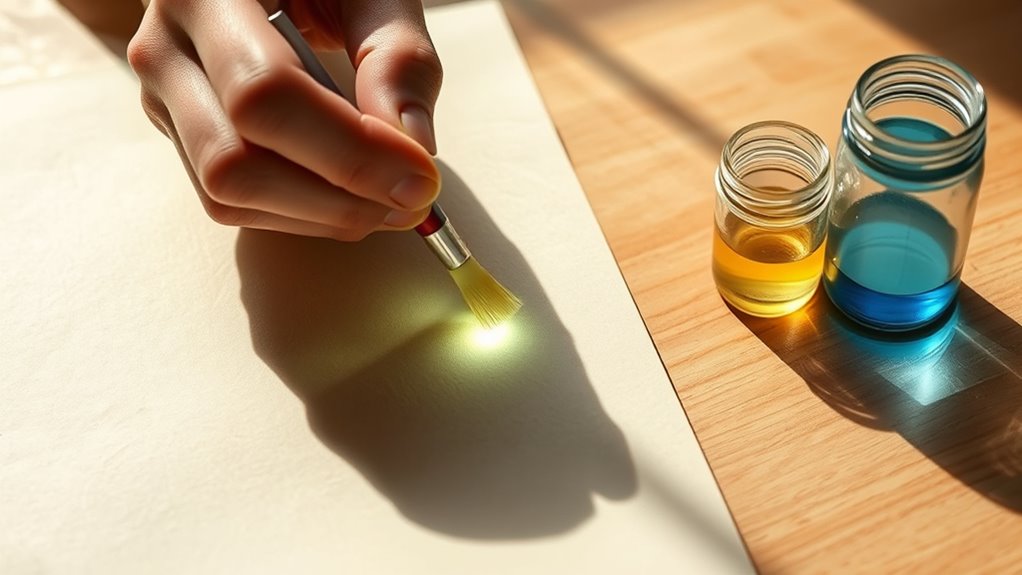
To make invisible ink at home, gather simple supplies like lemon juice, baking soda, or grape juice. Use a cotton swab or fine brush to write your secret message on paper, then let it dry completely.
To reveal the message, carefully heat the paper with a light bulb, candle, or iron—just watch the temperature. If you’re curious about more tips and tricks for creating hidden messages, there’s plenty more to investigate below.
Key Takeaways
- Collect household supplies like lemon juice, milk, or grape juice to create different invisible inks.
- Use cotton swabs or fine brushes to write messages on paper. Make sure they dry completely before moving on.
- Reveal your messages by carefully heating the paper with a light bulb, candle, or iron. Just be cautious to avoid burns or damaging the paper.
- For a fun glow-in-the-dark effect, apply household reagents like laundry detergent. Then, view your message under a UV or blacklight to see it shine.
- Always follow safety precautions when heating or handling chemicals. Supervise the process, and be careful not to cause any burns or damage.
What Is Invisible Ink and How Does It Work?
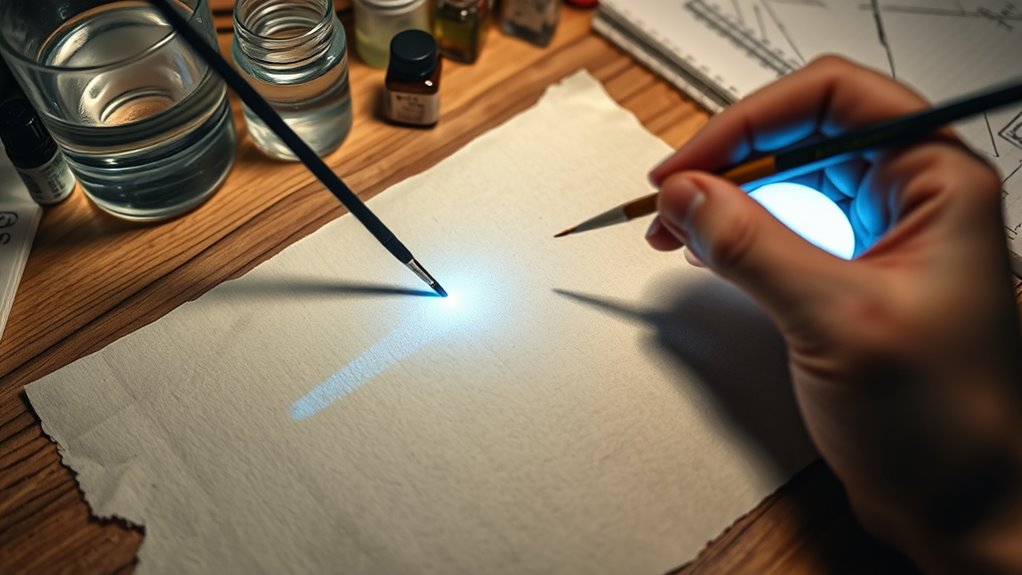
Invisible ink is a special substance that lets you write messages that are hidden under normal conditions but can be revealed later. It’s made from substances like lemon juice, milk, or baking soda, which are organic compounds.
When you write with invisible ink, the message stays invisible because the chemicals don’t react to visible light. To reveal the message, you trigger a chemical reaction—like heating or applying a reagent—that changes the ink’s appearance.
These reactions involve processes such as oxidation, reduction, or acid-base interactions, which change the ink’s color or make it fluorescent. This clever chemistry makes invisible ink great for secret messages or fun spy games.
Knowing how these chemical reactions work is key to understanding how invisible ink stays hidden until you decide to reveal it.
Essential Supplies for Making Invisible Ink at Home
To make invisible ink at home, you’ll need some basic household items like lemon juice, baking soda, and water. You’ll also require tools such as cotton swabs, small brushes, or toothpicks to apply your ink.
You’ll want to have paper and a surface cover to keep things neat. For revealing your secret message, have a heat source or revealing reagents ready to see your writing come to light.
Basic Household Materials
Creating your secret messages at home only needs a few simple household items. You’ll need basic supplies like lemon juice, baking soda, water, and paper. Lemon juice works as a natural invisible ink when applied to paper, while baking soda can be mixed with water to create revealing solutions.
These ingredients are super easy to find and safe to handle. Using small brushes, cotton swabs, or toothpicks helps you write or apply the invisible ink precisely. A heat source, like a light bulb or candle, is needed to reveal some messages.
To prevent stains or damage, it’s a good idea to use protective materials like towels. With these simple household materials, you can create and reveal secret messages right at home easily and safely.
Writing and Revealing Tools
Using the right tools guarantees your secret messages come out neat and easy to reveal. A small paintbrush, cotton swabs, or a fine-tipped calligraphy pen helps you apply invisible ink smoothly and precisely.
For detailed writing, a calligraphy pen works well with homemade solutions like lemon juice or baking soda. To reveal the message, dip a paintbrush or cotton swab into reagents such as turmeric or grape juice, then gently paint over the dried ink.
Heat sources like a hairdryer, light bulb, or iron are essential to reveal heat-sensitive ink. Always use protective coverings like plastic sheets or newspapers to prevent stains on surfaces.
Having these tools on hand makes your invisible ink project simple, clean, and effective.
How to Make Invisible Ink Using Lemon Juice or Other Citrus
To make invisible ink with citrus, squeeze fresh lemon juice into a bowl. Use a cotton swab or a fine brush to write your message on paper.
Once it’s dry, you can reveal it by gently heating the paper over a light bulb, candle, or iron. The heat darkens the organic compounds, making the message visible.
You can also substitute lemon juice with other citrus juices like lime or orange for similar results.
Extracting Citrus Juice
Have you ever wondered how to extract citrus juice effectively for your invisible ink projects? To get the best citrus juice, squeeze fresh lemons or other citrus fruits like oranges, making sure to remove all seeds.
Use a small bowl or cup to hold the freshly squeezed juice. This makes it easier to dip your writing tool or apply with a brush. If needed, strain the juice to remove pulp or residues that could clog your pen.
The acidity of citrus juice is what makes it invisible on paper until heat reveals the message. Remember, you can store your citrus juice in a sealed container for later use.
Proper extraction guarantees your invisible ink stays clear and effective when you’re ready to write and reveal your secret message.
Use a citrus reamer or hand-held squeezer for maximum juice extraction. Collect the juice in a fine-mesh strainer to remove pulp.
Avoid squeezing too aggressively to prevent pulp from mixing in. Keep the extracted citrus juice refrigerated if you’re not using it immediately.
Writing and Revealing Message
Wondering how to make your secret message disappear and reappear? To write with invisible ink using lemon juice, dip a cotton swab or fine brush into fresh lemon juice and carefully write your message on paper.
Let it dry completely, which takes about 15-20 minutes, making it invisible. To reveal the hidden message, gently heat the paper over a light bulb, candle, or an iron set on high (with adult supervision).
The heat causes the organic compounds in the lemon juice to oxidize and darken, revealing your secret message as a brown stain. Remember to cool the paper afterward for a clearer view.
Here’s a quick look at the process:
| Step | Action | Result |
|---|---|---|
| 1 | Write with lemon juice | Invisible message |
| 2 | Dry completely | Message remains hidden |
| 3 | Heat the paper | Reveal the hidden message |
| 4 | Cool and view | Clear, darkened message |
How to Write Secret Messages With Baking Soda and Water
Writing secret messages with baking soda and water is simple and fun. To create your invisible ink, mix equal parts baking soda and water. Dip a cotton swab, paintbrush, or sponge into the solution, then carefully write your message on paper. Allow the ink to dry completely so it stays invisible until revealed.
To make your message more detailed and precise, consider these tips:
- Use a fine-tipped brush for neat writing
- Write slowly to avoid smudging
- Experiment with different paper types for varied effects
- Keep the dried message hidden in a secure spot
How to Reveal Invisible Ink Using Household Reagents
To reveal your invisible ink, carefully apply a household reagent like grape juice or turmeric solution onto the dried message.
As the chemical reaction occurs, you’ll notice the message start to appear clearly. Keep a watchful eye as the ink transforms, revealing your hidden message without the need for special equipment.
Applying the Reagent
Once the invisible ink has dried completely, you can reveal the hidden message by carefully applying a household reagent. Use a small brush, cotton swab, or sponge to gently apply the reagent over the dried ink.
Be sure to cover the entire area evenly without disturbing the underlying message. The reagent reacts chemically with the ink, often producing a vivid color change, such as red or yellow, revealing the hidden text.
Protect surrounding surfaces, as some reagents like turmeric can stain. Apply the reagent gradually, avoiding excess to prevent smudging.
Allow the reagent to sit for a few seconds to minutes for the best reveal. Use light, even strokes to ensure consistent application and clear visibility of the message.
Observing the Reveal
After applying the reagent and waiting a few moments, the hidden message starts to reveal itself through a visible chemical reaction. Depending on the reagent, the ink will change color or darken, making the message clear.
For example, turmeric mixed with rubbing alcohol causes a bright red or yellow reveal. Grape juice, being acidic, reacts with alkaline components in the ink, producing stained or darkened areas.
To improve contrast and clarity, gently paint or rub the reagent over the dried ink. Watch how the chemical reaction brings the message into view. Patience is key, as the reveal can take from a few seconds to several minutes.
Proper application helps ensure the message is revealed sharply and accurately.
Tips and Precautions for Safely Heating and Revealing Messages
Heating your invisible ink carefully is essential to avoid accidents or damage. Always supervise the heat to prevent fire hazards or burns, and never leave hot objects unattended.
Use moderate heat settings, keeping a safe distance from heat sources like light bulbs or irons to avoid damaging the paper or causing injury. Allow the paper to cool completely after heating to prevent burns and to see the message clearly.
Test a small, inconspicuous area first to ensure the paper and ink can withstand the heat without damage. Follow safety guidelines for electrical devices by using heat protectors or heat-resistant gloves when handling hot tools.
Prioritize safety and patience to reveal your message effectively without risking harm or ruining your materials.
Other Household Inks: Milk, Laundry Detergent, and More
Beyond using traditional methods, you can explore common household inks like milk and laundry detergent to make invisible messages at home. Milk acts as an invisible ink because it looks clear until you heat or iron it, revealing a dark message.
Just write with milk on paper, let it dry, then carefully apply heat to see the message appear. Laundry detergent is another fun option—it stays invisible under normal light but glows under UV or blacklight, making it great for secret messages.
Both milk and detergent are safe and easy to find, so they’re perfect for experimenting with invisible messaging. Using household items like these makes it simple and safe to explore hidden messages and turn everyday items into fun tools for secret communication.
Creative Ways to Hide and Read Invisible Messages (Indentations, UV Light)
Invisible messages can be hidden in creative ways that only need simple tools to reveal. One method involves creating indentations in paper by pressing with a pen or stylus, then shading over the bottom sheet with a soft pencil. The graphite highlights the indentations, making the message visible.
Another technique uses UV light to make invisible ink—like fluorescent markers or highlighters—glow under blacklight. Applying heat can also bring out hidden messages, as some chemical inks darken or burn when warmed.
Combining indentation with UV light or heat adds extra layers of security. These methods let you hide messages subtly and then reveal them easily with everyday tools like pencils, UV light, or heat sources.
Troubleshooting Common Issues With Homemade Invisible Ink
If your homemade invisible ink isn’t revealing when heated, the problem might be that you’re not applying enough heat or not giving it enough time to dry. Make sure you spread the ink evenly and let it dry completely before trying to reveal it.
If the message still doesn’t show, try increasing the heat slightly. Just be careful not to burn the paper. Also, check that your mixture, like baking soda and turmeric, is prepared well for a consistent color change.
When using grape juice, make sure it’s fresh and acidic enough to react properly. If you’re relying on UV light, double-check that your ink has fluorescent agents and that your light source is working correctly.
Troubleshooting these steps should help you get the most reliable reveal from your invisible ink.
A Brief History of Invisible Ink in Espionage and Secret Communication
Throughout history, people have relied on invisible ink to communicate secretly, especially during times of conflict or political unrest. This method allowed spies and insurgents to send secret messages without detection.
During the American Revolution, lemon juice and milk served as early invisible inks for covert communication. In the 16th and 17th centuries, orange juice was used as an invisible ink during the Gunpowder Plot.
Major John André and George Washington experimented with heat-sensitive inks to hide military secrets. During World War II, advanced chemical inks were developed to improve security and prevent interception of messages.
These historical uses highlight how invisible ink played an essential role in espionage: from ancient civilizations’ use of natural substances to the evolution of heat-sensitive and chemical inks, especially during wartime. They also showcase the techniques used to reveal hidden messages.
Fun DIY Invisible Ink Experiments for Kids and Beginners
Kids and beginners can easily create their own secret messages using simple household items like lemon juice, milk, or baking soda. Making invisible ink with lemon juice is a fun, straightforward activity.
You just write your message with lemon juice using a cotton swab or brush and let it dry completely. Once dry, you can reveal the message by gently heating the paper with a light bulb or hairdryer.
The heat causes the lemon juice to oxidize and turn brown, making your secret message visible. Other experiments include mixing baking soda with grape juice for colorful, chemical-based invisible ink.
These activities teach basic science principles like chemical reactions and heat effects, making learning engaging for kids and beginners. Plus, they provide a creative way to send secret messages.
How to Disguise and Protect Your Secret Messages
Ever wonder how to keep your secret messages truly hidden? Disguising an invisible message makes it harder for others to detect or understand without the right tools.
Disguise your secret messages to make them harder to detect without the right tools.
You can crumple or dim the paper to obscure the ink, making it less obvious. Using multiple layers of paper or writing over existing text adds extra protection and confusion.
A light coating of regular ink or graphite can camouflage the invisible message, blending it into the background. Incorporating a code or cipher transforms your message into an unintelligible puzzle, ensuring only you can decode it.
To further protect your secret, store messages in inconspicuous locations or mix them with unrelated documents. These methods help you disguise and secure your secret messages effectively.
Frequently Asked Questions
How to Make Homemade Invisible Ink?
To make homemade invisible ink, mix equal parts of baking soda and water. Use a cotton swab, paintbrush, or toothpick to write your secret message.
Let the ink dry completely before revealing it. To see the message, you can apply heat or use a chemical reagent like lemon juice.
This simple method keeps your messages hidden until you’re ready to reveal them.
What Can Be Used as Invisible Ink?
You can use household items like lemon juice, milk, or baking soda solutions as invisible ink. Grape juice and black light-reactive detergents can also reveal hidden messages.
Turmeric mixed with rubbing alcohol creates bright red ink. Highlighters, especially fluorescent yellow ones, can be used to write and then reveal messages under UV light.
Pencil indentations are also a good option. They serve as invisible messages and become visible when shaded with a soft pencil.
Is Invisible Ink Just Lemon Juice?
No, invisible ink isn’t just lemon juice. While lemon juice is popular because it’s easy and effective, you can also use other substances like milk, vinegar, or baking soda mixed with water.
Each of these reacts differently when heated or exposed to certain conditions. So, if lemon juice doesn’t work, try experimenting with these other options to find what works best for your secret messages.
What Can I Use Instead of Invisible Ink?
You can use alternative substances like grape juice or black light-reactive laundry detergent as invisible ink. Household liquids such as lemon juice, milk, or vinegar also work, especially when heated to reveal the message.
Fluorescent highlighters are another option, revealing their ink under UV or black light. Baking soda mixed with water can be revealed with acidic stains like grape juice.
Using a white crayon on white paper then heating it also creates invisible ink. These options are fun and easy to try with common household items.
Conclusion
Now that you’ve learned the secrets of invisible ink, you’re practically a modern-day spy with a pen.
With just a few household ingredients, you can hide messages as elusive as a shadow in the night.
So, grab your supplies, set your inner agent free, and turn everyday items into tools of secret communication.
Remember, the magic of invisible ink is in your hands—ready to make your words vanish and reappear whenever you wish.