Understanding the Effects of Eating Pen Ink
Many people worry about the potential dangers of accidentally ingesting pen ink, especially when kids are around or during creative moments. You’re not alone—this is a common concern, and understanding the risks can help ease your worries.
Eating pen ink usually causes only minor issues since most inks contain minimal toxins and are safe for brief skin contact. Small accidental ingestion might stain your mouth temporarily and cause mild stomach upset, but serious health problems are rare.
The risks increase if you swallow larger amounts or experience persistent pain or difficulty breathing. To stay safe, learn proper first aid and when to seek medical help—continuing will give you essential tips to protect yourself.
Key Takeaways
- Pen ink is minimally toxic, so accidental ingestion usually only causes mild symptoms or skin staining.
- If someone swallows a small amount, less than 1.2 mL, it’s rarely a cause for concern.
- You might notice some staining in the mouth, or maybe feel a bit nauseous or have mild stomach discomfort. Usually, these symptoms go away on their own without needing treatment.
- But if larger amounts are ingested, or if the ink is of a hazardous type, it’s important to get immediate medical help and contact poison control.
- Properly disposing of and handling ink can help prevent accidental ingestion and reduce health risks.
What Is Pen Ink Made Of, and Is It Safe to Swallow?
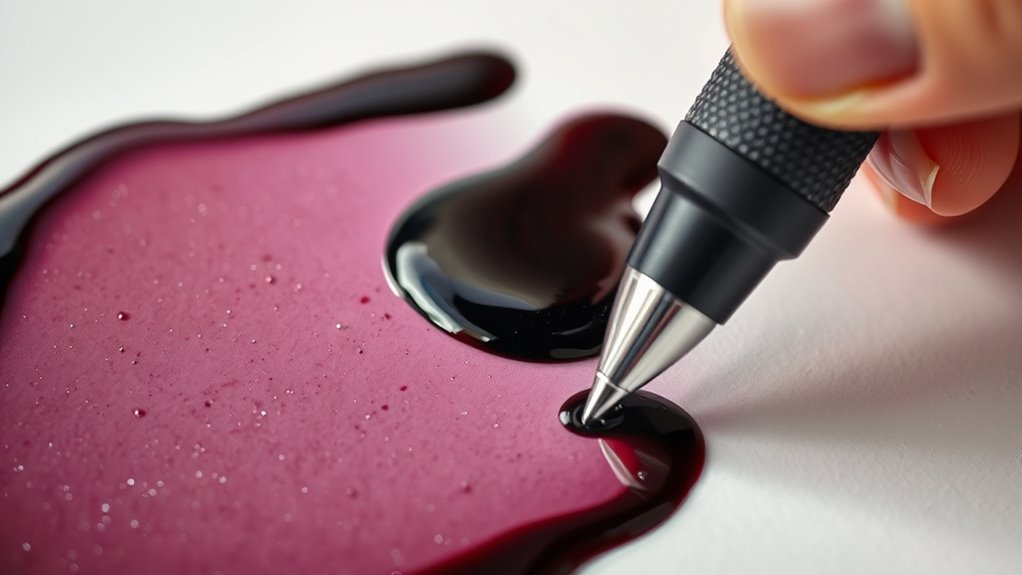
Pen ink is mainly made of solvents, resins, and dyes or pigments, which give it color and flow. When you think about ink, it’s important to know that these ingredients are designed for appearance and consistency, not toxicity.
Ingesting small amounts of ink probably won’t cause serious health problems since most pen inks are considered minimally toxic and safe for skin contact. But swallowing larger quantities, like from calligraphy bottles, could pose a higher, though still low, health risk.
The toxicity of ink really depends on its ingredients, but most typical pen inks are made to be safe enough for accidental contact. Still, it’s best not to deliberately swallow ink to avoid any potential health issues.
How Much Pen Ink Is Usually Swallowed During Ingestion?
Most people swallow only small amounts of pen ink—about 0.7 to 1.2 milliliters—during accidental ingestion.
Larger quantities, like from calligraphy bottles, can be more dangerous. If that happens, it’s best to call poison control.
Usually, the amount swallowed is minimal and unlikely to cause serious health issues, but it’s good to estimate how much was ingested.
Typical Ingested Amounts
When accidental ingestion occurs, the amount of ink typically swallowed is quite small—usually less than 1 milliliter. Most people only swallow small amounts of pen ink during such incidents.
In fact, accidental swallowing usually involves far less than the 2.5 milliliters found in a typical ink cartridge. Ingesting more than 1.2 milliliters is uncommon and may slightly increase the risk of mild symptoms.
However, serious health effects are rare with these small quantities. If you suspect a larger amount has been swallowed, it’s best to call poison control.
Small vs. Large Quantities
Have you ever wondered how much ink is usually swallowed if you accidentally ingest it? Usually, only small amounts are involved, and they often cause little to no harm. Here’s what you should know:
- Swallowing less than 1 mL of ink generally isn’t toxic and might just stain your mouth or stomach.
- A typical pen cartridge holds about 2.5 mL of ink, which is still considered a small amount if accidentally swallowed.
- Larger quantities, like 30 mL from a calligraphy bottle, can cause discomfort but rarely lead to serious poisoning.
- Swallowing bigger amounts of printer or stamp pad ink might upset your stomach a bit but usually isn’t harmful.
Estimating Swallowed Ink
While small amounts of ink are common in accidental ingestions, estimating exactly how much ink is swallowed can help clarify the potential risks. Swallowed ink from typical ink ingestion usually involves tiny amounts, often less than a teaspoon, such as 0.7 to 1.2 mL.
Most accidental ink ingestion occurs with small amounts, which generally pose no toxicity risk. A standard pen cartridge contains about 2.5 mL, but the amount swallowed during accidental ingestion is usually much less.
Larger quantities, like those from calligraphy bottles with around 30 mL, are unlikely to be ingested accidentally by small children. Overall, the amount of ink swallowed during typical accidents is usually insufficient to cause serious health effects or toxicity.
What Are the Symptoms of Pen Ink Ingestion or Poisoning?
If you swallow pen ink, you might notice staining around your mouth or tongue. You could also experience mild stomach upset, nausea, or vomiting, especially with larger amounts.
While serious poisoning is rare, watch for persistent pain or difficulty breathing. Seek medical help if these symptoms occur.
Visible Staining Signs
When someone ingests pen ink, one of the most noticeable signs is visible staining around the mouth, tongue, or teeth. You might see bright or dark discoloration on your skin or mucous membranes, indicating ink contact. Here are the key signs to watch for:
- Staining of the mouth, tongue, or teeth that appears as bright or dark spots.
- Discoloration of the skin around the mouth or on the lips.
- Widespread or persistent staining, which suggests a larger ink intake.
- Temporary discoloration that usually fades within a few days as the ink wears off naturally.
These visible staining signs are generally harmless and tend to resolve on their own, but they are important indicators that ink ingestion has happened.
Mild Gastrointestinal Symptoms
Ingesting even small amounts of pen ink can cause mild gastrointestinal symptoms that usually go away on their own. You might feel a little stomach upset, like nausea or some minor abdominal discomfort, shortly after swallowing ink.
These symptoms typically appear within a few hours and tend to resolve without medical help. If you swallow larger amounts of ink, you might notice more noticeable signs like vomiting or diarrhea, which suggest your stomach lining is more irritated.
The dyes and solvents in ink can irritate your stomach and cause discomfort. Luckily, ink poisoning rarely leads to serious or long-term health problems.
Most cases of swallowing ink only cause mild stomach symptoms that improve quickly with minimal treatment.
Is Pen Ink Toxic if It Gets on Your Skin? Can It Cause Skin Cancer?
Pen ink that comes into contact with your skin is generally harmless and doesn’t pose a toxic threat. Most pen inks are designed to be non-toxic and safe for brief skin exposure.
Pen ink on skin is usually harmless and non-toxic.
There’s no scientific evidence linking pen ink on your skin to skin cancer. Skin cancer risk is mainly caused by UV radiation, not ink contact.
If ink gets on your skin, just wash it off with soap and water. It won’t cause any harm.
To clarify:
- Pen ink usually causes temporary staining but isn’t toxic.
- Most inks are made to be non-toxic and safe for skin contact.
- Skin exposure to ink doesn’t increase your risk of skin cancer.
- Protect your skin from UV rays to lower your chances of developing skin cancer.
In short, ink on your skin isn’t a carcinogenic threat.
What Should You Do if Pen Ink Gets in Your Mouth, Eyes, or Wound?
If ink accidentally contacts your mouth, eyes, or wounds, acting quickly can prevent bigger problems.
If ink gets in your mouth, rinse thoroughly with water and wipe with a damp cloth. Seek medical help if you feel nauseous or have stomach upset.
For ink in your eyes, immediately flush with cool, clean water for at least 15 minutes. See an eye care professional if irritation continues.
If ink enters a wound, wash the area well with soap and water to prevent infection. Avoid harsh chemicals or alcohol, as they can cause irritation.
Contact poison control or a healthcare professional if you experience ongoing symptoms or if large amounts of ink contact your eyes, mouth, or wound.
Quick action reduces risks and helps ensure proper care.
Are Inhaling Pen Ink Fumes Dangerous?
While inhaling fumes from typical pen inks is generally low risk, it can still cause temporary discomfort, especially in poorly ventilated spaces. Inhaling ink fumes from regular pens and markers usually isn’t dangerous in small amounts. However, industrial or specialty inks with solvents can be more toxic and may cause health issues if inhaled in large quantities.
Inhalation of pen ink fumes is generally low risk but can cause temporary discomfort, especially in poorly ventilated areas.
Consider these points:
- Normal use of pens produces minimal ink fumes, posing little health risk.
- Inhaling large amounts of industrial or chemical inks can irritate your respiratory system.
- Short-term symptoms include throat irritation, coughing, or headaches.
- Prolonged exposure to toxic ink fumes may lead to respiratory problems.
In general, brief inhalation isn’t hazardous, but repeated exposure should be avoided to protect your health.
Are Stick-and-Poke Tattoos Using Pen Ink Safe?
Because pen ink isn’t designed for body art, using it in stick-and-poke tattoos poses serious health risks. Pen ink often contains chemicals and pigments that can cause allergic reactions, skin infections, or other issues when injected into the skin.
Unlike professional tattoo inks, which are sterilized and made to be non-toxic, pen ink isn’t safe for tattooing. DIY stick-and-poke tattoos with pen ink increase the chances of pain, improper healing, and infection.
The FDA and health experts recommend only using sterilized, tattoo-specific inks approved for skin to reduce health risks. Using pen ink for tattoos can lead to long-term skin problems and other health issues.
It’s best to avoid this practice and talk to professional tattoo artists about safer, skin-safe ink options.
How Can You Prevent Accidental Ink Ingestion and Exposure at Home and Work?
To prevent accidental ink ingestion and exposure at home and work, handle pens and ink bottles carefully and responsibly. Keep pens with caps securely on when not in use to avoid spills and accidental contact with skin or mouth.
Handle pens and ink bottles carefully, keep caps on, and store out of children’s reach to prevent accidental ink ingestion.
Store pens and ink bottles out of children’s reach and sight so they can’t access or ingest ink. Use pens only for writing and avoid touching your face, mouth, or eyes with them.
Proper disposal of ink containers, especially large bottles or cartridges, is key to minimizing accidental access. Make sure to throw them away safely and out of reach of children.
Educate everyone about the risks of ink exposure and the importance of child safety. By following these simple steps, you can reduce the chances of accidental ingestion and protect yourself and others from unnecessary ink exposure.
When Should You See a Doctor or Call Poison Control About Ink Incidents?
If you or someone else ingests a significant amount of ink, knowing when to seek medical help can prevent serious health complications. For ink ingestion from printer cartridges or stamp pads, call poison control at 1-800-222-1222 immediately.
If industrial or specialty inks containing hazardous chemicals are swallowed, seek medical attention right away. Watch for symptoms like persistent stomach pain, vomiting, or difficulty breathing—these require prompt medical care.
If the person shows signs of an allergic reaction, such as swelling or trouble breathing, call emergency services. Always consult a medical professional if you’re unsure about the severity of the ink ingestion or if symptoms worsen over time.
Prompt action can help avoid serious poisoning and guarantee proper treatment.
Frequently Asked Questions
What Would Happen if You Ingested Pen Ink?
If you ingest pen ink, you probably won’t experience serious health issues, especially if it’s a small amount like 0.7 to 1.2 mL. You might notice your mouth or tongue stained temporarily.
However, swallowing larger amounts could cause mild stomach upset or nausea. The risk of poisoning is low because ink is designed to be minimally toxic.
If you swallow a significant amount or develop symptoms, contact a poison control center promptly.
What to Do After Swallowing Ink?
You should rinse your mouth thoroughly with water and spit out any remaining ink immediately. Then, take small sips of water to help dilute the ink in your stomach.
Keep an eye out for stomach upset, nausea, or vomiting. If you notice any symptoms or ingested a large amount, contact poison control or a healthcare professional for guidance.
Do not induce vomiting unless instructed by a medical expert.
How Is Ink Poisoning Diagnosed?
You can diagnose ink poisoning by your doctor based on your history of exposure or ingestion. They’ll perform a physical exam to check for staining or signs of irritation.
Sometimes, they may order blood tests or stool analysis to identify ink components if they suspect poisoning. In severe cases, imaging like X-rays can reveal ink in your gastrointestinal tract.
Ultimately, diagnosis relies on your symptoms and exposure details.
What to Do if Pen Ink Goes in Your Mouth?
If pen ink gets in your mouth, rinse thoroughly with water to remove any ink and wipe away the excess.
Don’t try to induce vomiting unless a healthcare professional advises you to do so, as it could cause more irritation.
Swallowing small amounts usually isn’t serious, but keep an eye out for symptoms like nausea or stomach pain.
Contact poison control or a healthcare provider if you swallow a lot or experience any symptoms.
Conclusion
If you or someone you know accidentally ingests or contacts pen ink, act quickly. Stay informed and seek help when needed. Knowing the ingredients and recognizing symptoms can make a big difference.
Take precautions to prevent exposure. Protect your skin, avoid inhaling fumes, and be cautious with DIY tattoos. These steps help keep everyone safer.
By staying vigilant and practicing safety, you can reduce risks. Knowing when to seek medical attention is essential. This way, you’ll keep yourself and others safer, healthier, and more aware in any situation involving pen ink.