
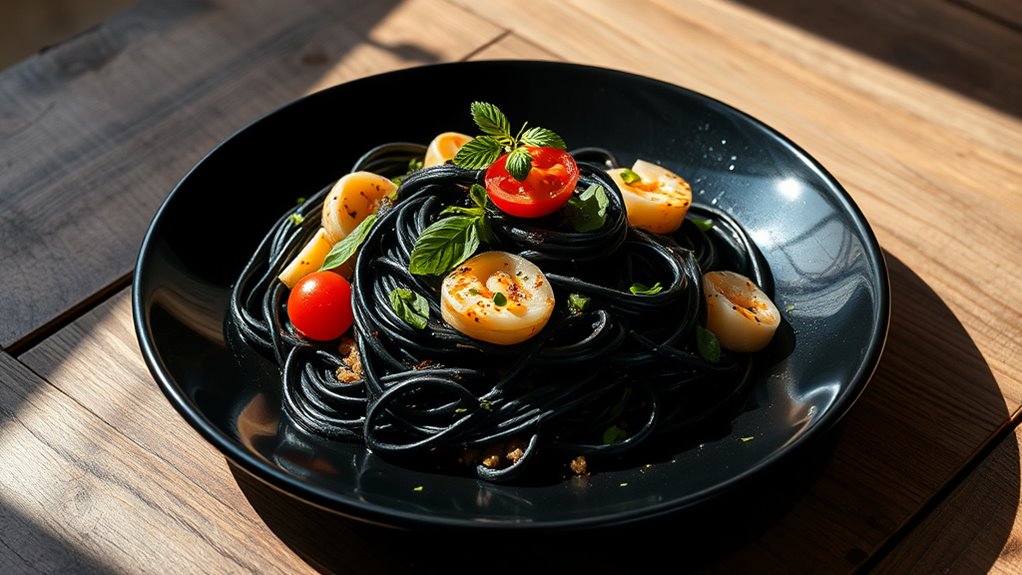
How Does Squid Ink Pasta Taste?
Are you curious about trying squid ink pasta but worried it might taste too bold or unfamiliar? You’re not alone—many people struggle with predicting how this striking dish will turn out. Luckily, once you understand its flavor profile, you can enjoy it with confidence.
Squid ink pasta has a subtle, savory flavor with gentle briny, oceanic notes that aren’t fishy or overpowering. You’ll notice hints of saltiness and umami that deepen with seafood sauces, but it remains delicate and balanced when prepared properly.
The taste varies depending on freshness and amount of ink used.
If you want to learn how to perfect its flavor and avoid common pitfalls, keep exploring how to make the most of this unique dish.
Key Takeaways
- Squid ink pasta has a mild, briny flavor with subtle seafood and earthy umami notes, enhancing its savory profile.
- It usually doesn’t taste strongly fishy if you use fresh, high-quality ink and prepare it properly.
- The flavor gets richer and more complex when paired with seafood, garlic, lemon, or herbs.
- Proper cooking keeps the pasta tender and prevents it from becoming gritty or slimy, helping to preserve its delicate flavor.
- The ink adds depth and a unique visual appeal without compromising safety or nutritional value.
What Does Squid Ink Pasta Taste Like?
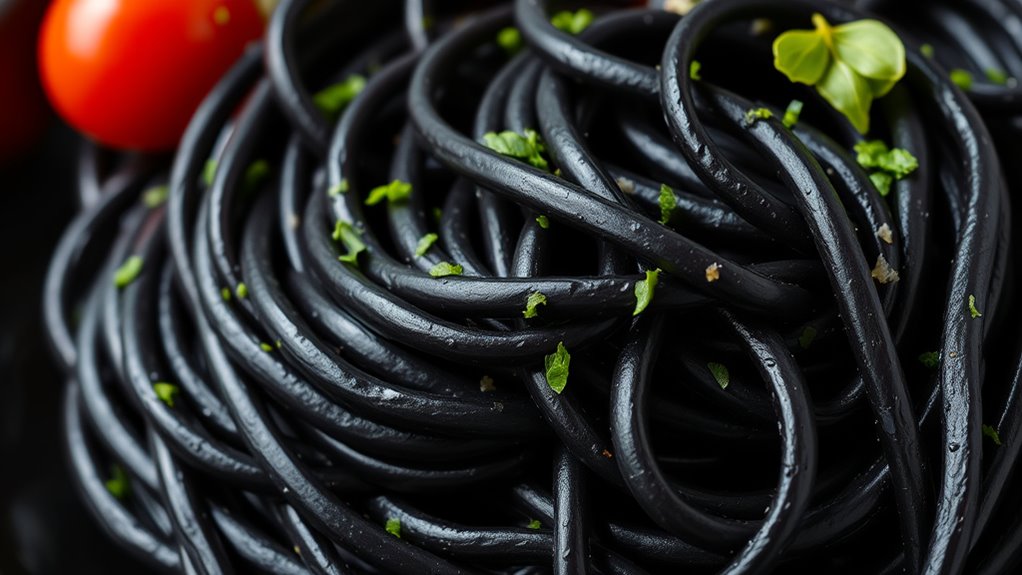
Squid ink pasta offers a flavor that’s both subtle and intriguing. The squid ink provides a mild, briny taste that’s reminiscent of the sea, with a hint of saltiness that enhances the dish.
Its flavor is delicate, with the ink adding a faint umami richness that pairs well with the pasta without overpowering it. Many people say it tastes similar to regular pasta but with a deeper seafood note.
The flavor profile is nuanced and complex, often described as earthy and savory because of the high glutamate content in the ink. When cooked right, it doesn’t taste fishy or off-putting, making it approachable even for first-timers.
Is the Flavor of Squid Ink Pasta Fishy or Off-Putting?
You might wonder if squid ink pasta has a fishy taste, but when made properly, it usually doesn’t.
The flavor is subtle, with a gentle briny and umami note, not overpowering or foul-smelling.
However, poor quality ink or overuse can bring out a stronger fishy or off-putting flavor.
Fishy Flavor Potential
When prepared correctly, squid ink pasta usually offers a subtle, oceanic flavor rather than a strong fishy or off-putting taste. The fishy flavor potential depends a lot on the quality of the squid ink used.
High-quality, fresh squid ink has a clean, briny taste that *amplifies* the dish without overwhelming it with fishiness. But if the ink is old or poor quality, it can give off a more pronounced, unpleasant fishy smell and flavor.
Overusing squid ink or cooking it too long can also boost its fishy notes, making the pasta taste more off-putting. Many chefs recommend moderation and proper handling to avoid these undesirable flavors.
When treated well, squid ink *amplifies* dishes without imparting a strong fishy taste.
Freshness and Preparation
The freshness of squid ink is key to whether your pasta tastes fishy or off-putting. When the ink is fresh, it has a clean, briny flavor that enhances the pasta without overpowering it.
Fresh ink gives a subtle, balanced seafood taste, making the dish enjoyable rather than off-putting. On the other hand, old or low-quality ink can bring out a stronger, more pungent seafood flavor that some people find unappealing.
Commercially packaged squid ink usually has a milder taste, but high-quality, artisanal versions tend to be fresher and more flavorful. Proper preparation, including correct cooking techniques and balanced seasoning, helps keep the flavor delicate and pleasant.
This way, you avoid any fishy or off-putting notes, ensuring your dish tastes just right.
Taste Perception Variability
While many find the flavor of squid ink pasta to be mild and savory, individual perceptions can vary widely. Your taste perception influences whether you experience a subtle seafood and umami flavor or detect a slight fishiness.
Factors like the amount of ink used, freshness, and preparation methods play significant roles in shaping your experience. If the ink isn’t fresh or is overused, you might perceive a stronger oceanic or fishy taste, which can be off-putting.
Conversely, high-quality, fresh squid ink tends to produce a delicate, balanced flavor that’s more appealing. Personal taste sensitivities also matter, as some people are more attuned to seafood flavors than others.
Ultimately, your taste perception determines whether you find squid ink pasta enjoyable or overpowering.
How Does the Ocean and Umami Flavor Show Up in Squid Ink Pasta?
The ocean and umami flavors burst through the richness of squid ink pasta in subtle yet memorable ways. When you taste squid ink, you’ll notice a gentle brininess that hints at the sea without overwhelming your palate.
This oceanic flavor is complemented by the high glutamate content in the ink, which brings out savory umami notes that deepen each bite.
The ink also imparts a mineral-like richness that amplifies the seafood essence, especially when paired with shellfish or seafood-based sauces.
These flavors tend to become more pronounced as the pasta interacts with seafood broths or sauces, highlighting the dish’s complexity.
What Ingredients Pair Best With Squid Ink Pasta?
To amplify the bold, oceanic flavor of squid ink pasta, pairing it with ingredients that complement its savory depth is key. Seafood like shrimp, calamari, and mussels really bring out its marine essence, creating a delicious seafood medley.
Garlic, olive oil, and cherry tomatoes boost the savory and slightly sweet profile. They add richness and brightness that make the dish even more appealing. A splash of lemon juice or zest helps balance the saltiness and deep flavor of the ink with a refreshing acidity.
Fresh herbs such as parsley, basil, or thyme add aromatic contrast. They brighten the dish both visually and in flavor. For a creamier, more indulgent sauce, butter or cream can be stirred in to deepen the umami taste and give a velvety texture that pairs beautifully with squid ink pasta.
What Texture Does Squid Ink Impart to Pasta?
When you taste squid ink pasta, you’ll notice its slightly slimy or chewy feel, thanks to the ink’s natural consistency.
The ink creates a silky coating that elevates the mouthfeel, offering a unique contrast to the tender pasta.
This texture varies with freshness and amount used, making each experience subtly different.
Mouthfeel and Sliminess
Squid ink gives pasta a distinctive mouthfeel with a slight sliminess and chewiness that makes it stand out from regular pasta. When you add squid ink, the pasta gets a silky coating that enhances the tactile experience.
You’ll notice that the ink adds a subtle glossiness, making each bite feel smooth and luscious. When cooked properly, the texture stays tender, balancing chewiness with softness.
However, overdoing it or poor preparation can make the pasta feel too slimy or rubbery, which can take away from the enjoyment. The black color from squid ink adds visual appeal that complements its unique taste and mouthfeel.
Eating squid ink pasta offers more than just flavor—it can also provide health benefits. Just be mindful of the Terms of Use so you can fully enjoy this delicacy.
Visual and Textural Contrast
The dark, glossy coating of squid ink creates a striking visual contrast against the pale pasta, immediately catching your eye. This ink gives the surface a subtle, velvety texture, making each bite feel silkier and more delicate than regular pasta.
As you handle it, you’ll notice the ink adds a slightly slimy and chewy quality, creating a unique mouthfeel. When cooked right, the pasta stays tender, but the ink influences the overall texture, giving it a slightly elastic bite.
The amount of ink used and the cooking time can change this experience, making each serving unique. The ink’s presence elevates not just the visual appeal but also the tactile contrast, enriching your pasta into a more refined and intriguing culinary experience.
Can You Overdo It? Common Tips for Cooking Squid Ink Pasta
It’s easy to overdo it with squid ink pasta, but doing so can easily throw off the dish’s balance. Squid ink adds a rich, briny flavor, but too much can overpower the delicate taste.
To avoid this, keep these tips in mind:
- Use a small amount of ink—less is more to prevent an overly dark appearance.
- Avoid overcooking the pasta, as it can become mushy and lose its texture.
- Be cautious with salt; excessive salt amplifies the ink’s saltiness and masks its subtle flavors.
- Aim for moderation to preserve the dish’s visual appeal and nuanced flavor profile.
Moderation is key. Carefully balancing these elements ensures your squid ink pasta remains delicious and visually appealing.
Are There Myths or Misconceptions About Squid Ink Pasta?
Many people assume that the dark color of squid ink pasta signals spoilage or poor quality, but in reality, it’s a natural pigment used intentionally in cooking. The black hue comes from the squid ink itself, which adds depth rather than indicating anything negative.
A common myth is that squid ink pasta tastes strongly fishy or offensive, but it actually has a mild, briny flavor with rich umami notes. Some believe the appearance makes it unappetizing, yet it remains popular in gourmet and traditional cuisines worldwide.
Others think the ink gives the pasta a gritty or slimy texture, but when prepared properly, it stays tender with a unique mouthfeel. Ultimately, concerns about health risks are unfounded. Squid ink is safe and contains beneficial nutrients like antioxidants and minerals.
How Do Different Dishes Highlight the Flavor of Squid Ink?
Different dishes highlight the unique flavors of squid ink in various ways, letting its subtle briny notes and umami richness shine through. You can do this by using risotto or pasta sauces that showcase the ink’s flavor without overpowering other ingredients.
Combining squid ink with seafood like shrimp or calamari adds oceanic depth and creates a more complex taste. Infusing rice or risotto with ink gives it a deep black color and a mild, mineral-like flavor that emphasizes seafood freshness.
Serving squid ink pasta with garlic, olive oil, or light seafood broths allows its delicate, salty taste to stand out subtly. These methods balance the ink’s flavor, highlighting its savory qualities in each dish.
Frequently Asked Questions
Does Squid Ink Pasta Stain Your Mouth?
Yes, squid ink pasta can stain your mouth temporarily. The dark pigment in the ink, melanin, might leave a black or grayish tint on your teeth and lips right after eating.
The stain is usually mild and washes away with brushing or rinsing. To keep your mouth looking clean, just brush your teeth or rinse your mouth afterward.
Is Squid Ink Pasta Unhealthy?
Squid ink pasta can be healthy if you eat it in moderation. It’s rich in antioxidants, iron, and zinc, which support your immune system.
Plus, its high glutamate content boosts flavor without adding much salt, making it a lower-sodium choice. However, overdoing it might cause too much iodine intake.
If you’re allergic to shellfish, steer clear, but for most, enjoying squid ink pasta occasionally is a nutritious treat.
Does Squid Ink Pasta Actually Use Squid Ink?
Yes, squid ink pasta actually uses squid ink. The ink is extracted from the ink sacs of squid or cuttlefish, then processed and added into the dough or sauce during making.
When you cook it, the ink gives the pasta its deep black color and a subtle, briny seafood flavor. This authentic ingredient really boosts the oceanic taste.
It makes the dish a unique and flavorful culinary experience that seafood lovers tend to enjoy.
Do Italians Eat Squid Ink Pasta?
Yes, Italians eat squid ink pasta regularly, like a treasured gem in their culinary crown. You’ll find it served in seaside trattorias and fine dining spots, especially in Venice and Sicily.
It’s a dish that reflects regional pride and tradition, often paired with fresh seafood. When you taste it, you’re experiencing a piece of Italy’s rich maritime heritage, crafted with love and centuries of culinary artistry.
Conclusion
Savor the bold, oceanic allure of squid ink pasta, knowing that its unique flavor can elevate any dish. Its rich, savory taste brings a touch of the sea to your plate, making each bite a delightful experience.
Like the tide that shapes the shore, its umami depth can turn simple ingredients into a culinary masterpiece. Don’t be afraid to experiment—each bite uncovers a story of the sea’s mysterious beauty.
Remember, the true magic lies in your willingness to explore. In the depths of flavor, you’ll discover the true essence of adventure, especially with squid ink pasta’s distinctive taste.