Can You Refill Ink Cartridges?
Many people struggle with the high cost of replacing ink cartridges and the environmental impact of throwing them away. If you’re looking for a way to save money and reduce waste, you’re not alone. Refillable ink cartridges can be a great solution, and many users find success with the right techniques.
Yes, you can refill ink cartridges to save money and reduce waste, as long as you follow proper techniques and use compatible ink. Refill kits and tools like syringes make the process straightforward, but it’s important to handle everything carefully to avoid leaks or clogs.
You can reuse cartridges multiple times, usually 3-4, but internal components may wear out over time. Want to uncover the best methods and tips for successful refilling? Keep exploring to learn more.
Key Takeaways
- Yes, ink cartridges can be refilled using specialized kits to extend their usability.
- Refill cartridges usually can be reused 3 to 4 times before their internal parts start to wear out.
- It’s important to use the right technique and good quality inks to avoid leaks, clogs, or damage to your printer.
- Refillable cartridges are a great way to save money and help reduce environmental waste.
- If you’re not comfortable doing it yourself, professional refill services and compatible cartridges are also available for reliable refilling options.
What Is Cartridge Refill and How Does It Work?
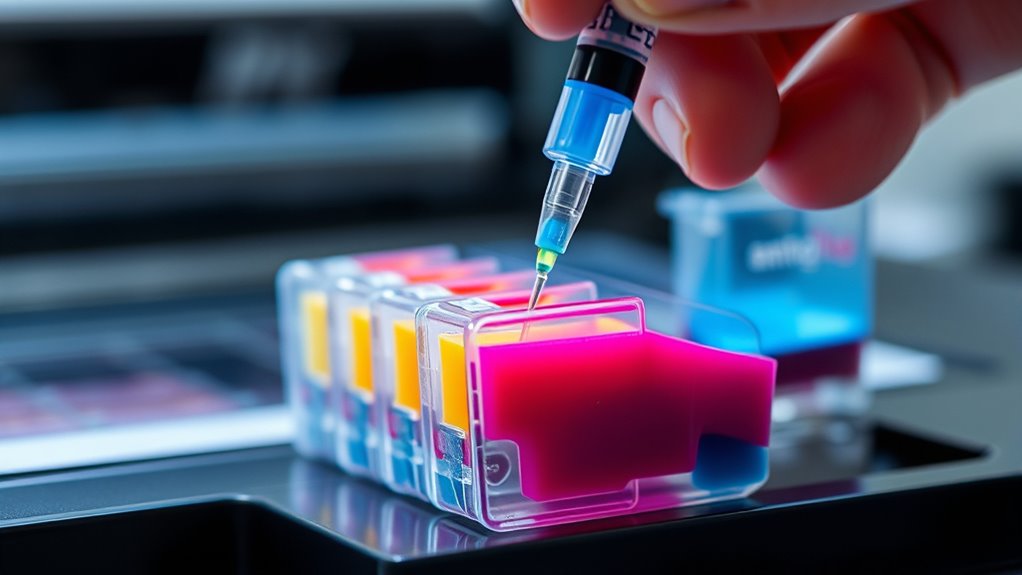
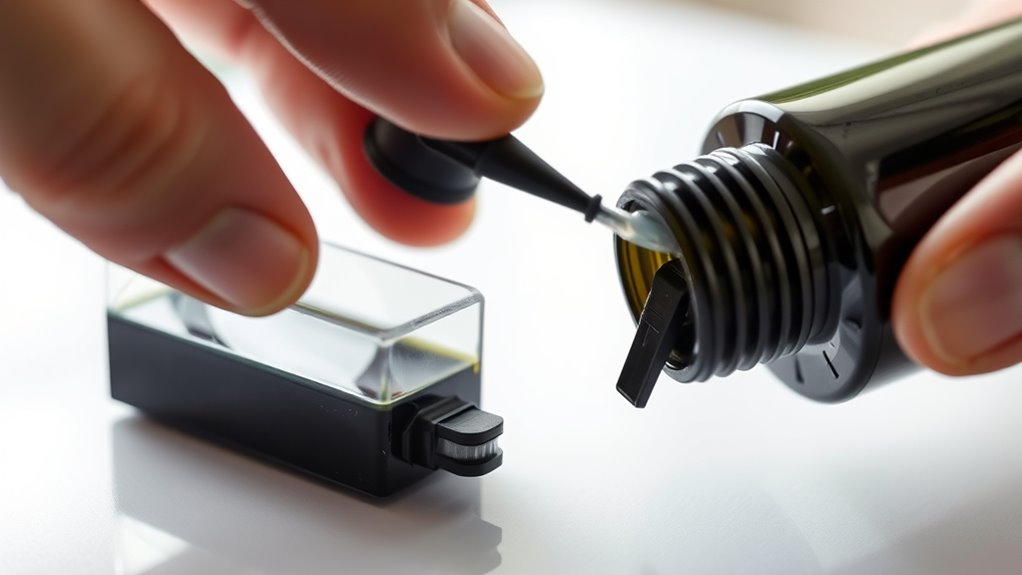
Cartridge refill involves adding ink to an empty or low ink cartridge to extend its use. You usually use a refill kit, which includes tools like syringes and compatible ink bottles, to carefully inject ink into the cartridge.
Refilling cartridges extends their life, saving money with tools like syringes and compatible ink bottles.
This process depends on whether you’re refilling an inkjet printer cartridge or a fountain pen, as each needs specific techniques. Proper cleaning and preparation of used cartridges are essential to prevent contamination and ensure smooth ink flow.
When you refill a cartridge, it can often be used multiple times, but the print quality might decline after several refills. Keep in mind that as the cartridge ages, leaks or clogs can develop, which affects performance.
Refill kits make it easier to restore your ink cartridges and save money.
Is Refill Ink Safe and Worth It?
Refilling ink can be safe and cost-effective if you follow proper procedures and use quality ink. When done correctly, refill ink is generally safe and a more environmentally friendly way to reduce waste.
Using compatible or remanufactured cartridges with refilled ink minimizes the risk of leaks or damage, making the process safer. Proper handling is key—wear gloves and work in a well-ventilated area to reduce health hazards.
Refill ink is worth it financially, often saving you up to 50% compared to buying new cartridges. While it’s a greener choice, consistent quality depends on careful maintenance and proper techniques.
When you follow these guidelines, refilling ink becomes a safe, economical, and environmentally responsible option for your printing needs.
Which Types of Ink Are Best for Refill Cartridges?
Choosing the right ink for your refill cartridge depends on compatibility and quality. You’ll want to consider whether dye, pigment, or specialty inks best suit your printing needs.
Making an informed choice ensures your prints stay vibrant, water-resistant, and long-lasting. Picking the right ink helps your printer perform at its best and keeps your prints looking sharp.
Ink Compatibility and Quality
Ever wondered which type of ink will give you the best results when refilling your cartridges? It all comes down to ink compatibility and quality.
You need to select inks specifically formulated for your printer model to avoid damage and guarantee smooth performance. Dye-based inks are popular for refill ink cartridges because they produce vibrant colors and are easy to work with.
However, if you want archival-quality prints with superior water and fade resistance, pigment inks are a better choice. Be cautious with other types like iron gall or shimmering inks, as they require careful handling and may clog print heads.
Always prioritize ink formulation and quality to get the best results, prevent damage, and maintain your printer’s longevity.
Types of Refillable Ink
Have you thought about which type of ink will give you the best results for your refill cartridges? They work well with different ink types, but picking the right one is key.
Dye-based inks are popular because they’re affordable and produce vibrant colors, making them great for everyday printing. Pigment inks provide better water and fade resistance, perfect for archival-quality prints.
Iron gall ink is a traditional, acid-based option known for permanence, but it can corrode printer parts over time. Shimmering inks with metallic or glitter effects are mainly for specialty printing and might clog cartridges more often.
Always make sure to use proper ink formulated specifically for refill cartridges. This helps prevent clogging, leaks, and damage, and keeps your ink compatible with your printer.
How to Refill Ink Cartridges at Home Step-by-Step
Refilling ink cartridges at home can be pretty simple if you follow the steps carefully. First, take out the ink cartridge from your printer, following the manufacturer’s instructions, so you can access the refill holes.
Use a clean syringe to draw 3-5 ml of ink from your bottle. Be careful not to overfill. Then, gently inject the ink into the refill port through the refill holes, making sure not to leak any ink.
After refilling, wipe away any excess ink with a paper towel. Seal the refill hole with clear tape to prevent leaks later on. Put the cartridge back into your printer, ensuring it fits securely without wetting the contacts.
Finally, let the ink settle for at least 15 minutes before printing. This helps guarantee proper flow and good print quality.
Advantages and Disadvantages of Refilled Cartridges
Refilled cartridges offer notable benefits, especially for those looking to save money and reduce environmental impact. They cut costs considerably, often up to 50% cheaper than buying new, brand-name cartridges.
Moreover, refilled cartridges help protect the environment by reducing plastic waste and landfill contribution. However, the print quality can vary and might not match that of original cartridges, which could affect your documents.
They may also require more maintenance. Improper refilling or infrequent cleaning can lead to clogs or printer damage. Besides, refilled cartridges tend to have a shorter lifespan than new ones, so you’ll need to replace or refill them more often.
How Many Times Can You Reuse a Refilled Cartridge?
You can usually reuse a refilled cartridge about 3 to 4 times before its performance starts to drop.
Reusing it more than 5 times increases the risk of leaks, clogs, or even damaging your printer.
The number of times you can refill depends on the cartridge type, the quality of the refill, and how carefully you handle each refill.
Cartridge Wear and Tear
Most ink cartridges can be reused about three to four times before they start showing signs of wear or develop leaks. Cartridge wear happens as internal parts like the sponge break down, which reduces ink absorption and can mess with your print quality.
Repeated refilling can also cause internal damage, such as clogged nozzles or damaged seals, leading to leaks. Over time, seals and connections weaken, increasing the chance of ink spills and malfunctions.
Pushing a cartridge too far can cause internal damage that’s hard to fix, making it unusable and needing a replacement. To get the most out of your cartridge, keep an eye out for signs of wear, leaks, or poor print quality.
Handling your cartridge properly and limiting refills can help prevent internal damage and keep your printer working smoothly.
Ink Compatibility Limits
How many times can a cartridge be successfully reused before it starts to lose quality? Typically, most cartridges can be refilled about 3 to 4 times before print quality drops or leaks happen.
Ink compatibility is really important here—using inks that aren’t compatible can damage your cartridges or shorten their lifespan. Different ink types like dye-based or pigment-based also impact how many times you can refill without problems.
Reusing cartridges repeatedly wears out internal parts like the sponge and seals, which makes it harder to hold ink effectively. Excessive refilling may cause clogging or even damage the printhead, making further reuse impossible.
With proper maintenance and careful handling, you can extend your cartridge’s lifespan. Just remember, knowing the limits of your specific cartridges and inks is key to keeping your prints looking great.
Refill Frequency and Quality
Refill frequency directly impacts the quality and longevity of a cartridge, with most able to be refilled about 3 to 4 times before issues arise. As you continue refilling, print quality can decline, and the risk of clogs or leaks increases, especially after multiple reuse cycles.
The cartridge lifespan depends on the type, ink quality, and your refilling technique. Generally, reusing a cartridge more than five times isn’t recommended because internal components may degrade. Monitoring the ink level helps maintain consistent print quality, but over-reuse can cause internal damage, reducing overall lifespan.
Proper cleaning and careful handling can extend usability, but eventually, replacement becomes necessary. Knowing when to stop refilling ensures you get the best results without compromising print quality.
Where to Find Refill Services and Compatible Cartridges
Finding refill services and compatible cartridges is easier than you might think. You can visit local office supply stores, print shops, or specialized ink refill stations for professional refill options.
Many online retailers offer compatible cartridges that meet or even surpass OEM quality standards, often at lower prices. Certified refill service providers may also provide professional refilling, testing, and recycling services for various printer models.
Major brands like HP, Canon, and Epson list authorized refill dealers on their official websites, making it simple to find trustworthy sources. Furthermore, refillable cartridges and compatible alternatives are readily available through e-commerce platforms like Amazon and eBay.
Whether shopping locally or online, you have plenty of options to keep your printer running smoothly and affordably.
Tips for Refill Success and Maintaining Your Cartridge
To guarantee successful refilling and keep your ink cartridges in good condition, it’s important to follow some simple but effective tips. When refilling, do so slowly and steadily to prevent clogs and spills, which helps maintain consistent ink flow.
Refill slowly and steadily to prevent clogs, spills, and ensure smooth ink flow.
After refilling, let the ink settle for at least 15 minutes to stabilize internal pressure and avoid print flaws. Seal the fill holes with clear tape to prevent leaks during storage and use.
Always clean syringes thoroughly with rubbing alcohol beforehand to prevent contamination and ensure quality. When storing refilled cartridges, keep them in a cool, dark place, ideally inside a sealed container with desiccant.
Proper sealing and storage preserve ink quality and prevent drying out, extending the life of your ink cartridges.
Frequently Asked Questions
Is It Possible to Refill an Ink Cartridge?
Yes, you can refill an ink cartridge. Most cartridges can be refilled 3-4 times if you handle them carefully.
You’ll need to inject new ink through refill holes, making sure not to leak or damage the cartridge. Using compatible ink and following proper procedures helps guarantee success.
Keep in mind, refilling might void your printer’s warranty, but it saves money and is better for the environment.
How to Revive a Dried Out Ink Cartridge?
To revive a dried-out ink cartridge, first remove it from your printer. Soak the print head in warm water or isopropyl alcohol to help dissolve the dried ink.
Use a syringe to flush the ink channels with distilled water or a cleaning solution. Make sure you rinse out all the dried ink completely.
Let the cartridge air dry fully or gently dry it with a lint-free cloth. Once dry, reinstall it and test your printer for better ink flow and print quality.
How Many Times Can I Refill an Ink Cartridge?
You can typically refill an ink cartridge about 3 to 4 times before it starts leaking or printing quality drops. Some high-quality cartridges might last up to 6 or more refills if you take good care of them.
Just keep in mind, reusing a cartridge beyond the recommended limit increases the risks of clogs, leaks, or even damage to your printer. It’s a good idea to keep an eye on each refill and replace the cartridge when its performance declines.
How Much Does It Cost to Refill Printer Cartridges?
Refilling your printer cartridges usually costs between $10 and $30 for a refill kit, or $20 to $50 if you go for professional services that include labor and materials.
Refill bottles are typically $5 to $15 per 100 ml and can refill multiple cartridges, making it a cost-effective option.
Reusing cartridges can save you up to 50% compared to buying new OEM cartridges, which makes refilling a smarter choice, especially if you print often.
Conclusion
Refilling your ink cartridges is like tending a garden. You need the right tools, a bit of patience, and care to keep everything thriving.
When done properly, it’s a cost-effective way to extend your cartridge’s life and save money. Just remember, like any garden, occasional weeds or issues can pop up, so stay vigilant about maintenance.
With the right approach, your printing journey can stay vibrant and flourishing. Yes, you can refill ink cartridges, and it can be a smart, budget-friendly choice.