How to Choose the Right Archival Ink for Meaningful Results
Many artists and writers know the frustration of investing time and effort into their work only to see it fade or deteriorate over time. You’re not alone—choosing the right archival ink can feel overwhelming with so many options out there. But don’t worry, finding a reliable, long-lasting ink is easier than you think.
To choose the right archival ink, look for pigment-based, acid-free, pH-neutral options with certified standards like ISO 11798 or ASTM D-4236. Check labels for long-lasting qualities such as lightfastness, water resistance, and environmental stability.
Select inks compatible with your paper type and storage conditions, and handle them carefully to prevent deterioration. If you want to guarantee your work stays vibrant and durable over time, there’s more to uncover below.
Key Takeaways
- Prioritize pigment-based inks with certification standards like ISO 11798 and ASTM D-4236. These ensure proven archival quality and long-lasting results.
- Choose pH-neutral, acid-free inks to help prevent paper deterioration over time. This is key for preserving your documents or artwork.
- Check the ink’s lightfastness, water resistance, and chemical stability through detailed technical data sheets. It’s worth taking the time to verify these details.
- Match the ink type, whether water-based or solvent-based, to your specific art or document needs. This will help ensure the best durability for your project.
- Store your ink properly in cool, dry, sealed containers. Always verify label claims for longevity and permanence to keep your ink in top condition.
What Makes Ink Truly Archival and Long-Lasting?
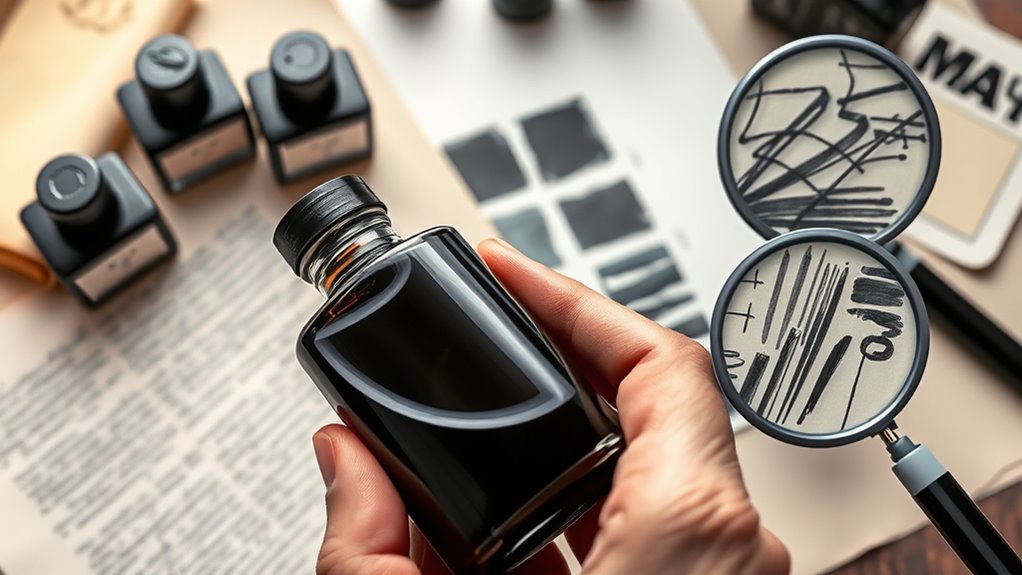
To keep your ink bright and intact over time, it’s important to know what makes an ink truly archival and long-lasting. The best archival inks use high-quality pigment inks instead of dyes, which offer better lightfastness and resistance to fading.
These inks are designed to be acid-free and pH-neutral, helping prevent paper yellowing and deterioration. Certification standards like ISO 11798 and ASTM D-4236 confirm their durability and safety for long-term preservation.
A proper chemical makeup, with stable pigments and neutral binders, keeps the ink’s color and structure intact for decades. Rigorous aging tests show they can withstand UV light, moisture, and environmental pollutants.
Pigment vs. Dyes: Which Is Better for Archival Preservation?
When choosing inks for archival preservation, pigment inks usually outperform dye inks in durability and longevity. Pigment inks contain tiny solid particles that sit on the paper surface, giving them better fade resistance, water resistance, and UV stability.
Dye inks, on the other hand, dissolve into paper fibers, making them more vulnerable to fading and chemical changes over time. Because of this, they are less suitable for long-term preservation.
Pigment-based inks often meet or exceed standards like ISO 11798 and ASTM D-4236, which ensure their longevity. While dye inks are cheaper and come in vibrant colors, their reduced fade resistance makes them less ideal for archival purposes.
Here’s a quick comparison of their key features:
| Feature | Pigment Inks | Dye Inks |
|---|---|---|
| Composition | Solid particles | Dissolved dyes |
| Fade Resistance | High | Low |
| Water Resistance | Excellent | Poor |
| Longevity | Long-term | Short-term |
| Standards Compliance | Meets archival standards | Often does not |
What Are the Key Standards and Certifications for Archival Ink?
Understanding the key standards and certifications for archival ink is essential to guarantee your prints will stand the test of time. These standards, like ISO 11798 for permanence, ASTM D-4236 for safety, and TAPPI T 516 for fade resistance, help ensure inks meet strict benchmarks.
Key standards like ISO 11798, ASTM D-4236, and TAPPI T 516 ensure archival inks are safe, durable, and fade-resistant over time.
Certifications often involve accelerated aging tests that expose inks to UV, heat, and moisture. These tests evaluate their color retention, pH stability, and resistance to bleeding or smudging.
Reputable brands provide detailed documentation of their ingredients and testing results, confirming compliance with these standards. Inks that meet or surpass these certifications are designed to resist fading, water damage, and chemical degradation over decades.
Independent labs verify these claims. This gives you confidence that your archival ink will deliver lasting, meaningful results.
Which Ink Types Are Best for Art, Documents, and Crafts?
Choosing the right ink depends on your project’s needs. Pigment-based inks are great for artwork and long-lasting documents because they’re durable.
For crafts on porous surfaces, water-based inks are quick-drying and acid-free, but they’re not waterproof.
If you need durability on non-porous materials or vibrant labels, solvent, oil, gel, or marker inks are the best options.
Best Inks for Artwork
For creating artwork, choosing the right ink is key to making sure your pieces last and stay vibrant over time. Archival-quality inks, especially pigment-based ones, are great because they are more lightfast and water-resistant. This means your art stays vivid and intact longer.
Water-based pigment inks are ideal for fine art because they keep their color and resist fading. For detailed illustrations or calligraphy, inks rated AA or A for permanence, like pigmented or Indian Black, give you professional, long-lasting results.
If you’re working on non-porous surfaces, consider solvent-based inks. They’re durable and weather-resistant, perfect for outdoor or mixed-media art. Ultimately, selecting archival inks with vibrant colors and water resistance helps preserve your artwork’s beauty for years to come.
Suitable Inks for Documents
Wondering which inks are best suited for documents, crafts, and artwork? For longevity and archival quality, choose pigment-based, acid-free inks. These inks offer superior lightfastness, water resistance, and long-term stability, making them ideal for important documents and art projects.
Dyes tend to fade faster and are less suitable for durability. Certified archival inks meet standards like ISO 11798 and ASTM D-4236, ensuring safety and permanence.
For detailed crafts, gel and marker inks with high pigment content provide vibrant, opaque colors that resist fading. Use this guide to select the right ink type:
| Ink Type | Best For |
|---|---|
| Pigment-based | Documents, crafts, art projects |
| Dye-based | Less durable, short-term use |
| Acid-free | Prevents paper yellowing |
| Gel/Marker | Vibrant, detailed work |
How to Read Labels and Specs to Ensure Ink Quality
When examining ink labels, look for certification marks like ISO 11798, ASTM D-4236, or TAPPI T 516. These indicate the ink meets standards for permanence and safety.
Check the datasheets for pH neutrality and acid-free claims to confirm the ink won’t damage your paper over time. It’s also good to verify if the ink is pigment-based for better lightfastness.
Finally, review durability ratings for water resistance and chemical stability. These details help ensure you’re choosing high-quality ink that lasts.
Certification Labels Significance
Reading certification labels on archival inks is essential to guarantee you’re choosing a product that meets long-term preservation standards.
Certification labels like ASTM D-4236, ISO 11798, and TAPPI T 516 show the ink has passed standardized testing for safety, permanence, and fade resistance.
Carefully examining these labels confirms whether the ink aligns with archival standards for durability and chemical stability.
Look for lightfastness ratings, with higher designations like AA or A indicating superior fade resistance.
The presence of third-party certification marks offers independent verification of compliance with industry standards.
Understanding the detailed specifications on labels helps ensure the ink is acid-free and pH-neutral, making it suitable for archival-quality preservation.
This knowledge empowers you to select inks with proven longevity and reliability.
Key Specification Indicators
Understanding how to interpret the specifications on ink labels helps you verify their quality and suitability for archival purposes. Look for indicators of compliance with standards like ISO 11798, ASTM D-4236, or TAPPI T 516, which confirm durability, safety, and fade resistance.
Check for clear certification or testing documentation showing accelerated aging, lightfastness, and water resistance tests. Reading the product specifications ensures the ink is pH-neutral, acid-free, and pigment-based, supporting long-term stability and paper preservation.
Focus on labels that list high-quality pigments rather than dyes, as pigments offer better archival permanence. Also, pay attention to safety symbols and warnings indicating non-toxicity and adherence to safety standards, guaranteeing your ink meets both preservation and safety needs.
Understanding Durability Ratings
Durability ratings on archival ink labels give you important info about how well the ink will hold up over time. These ratings often use standard codes like ASTM D-4236, which show safety and permanence.
Look for certifications like ISO 11798 or TAPPI T 516. They indicate fade resistance and long-term stability. Inks rated AA or A tend to have better lightfastness and resist environmental factors more effectively.
Always check the technical data sheet for details on pH neutrality, water resistance, and chemical stability. This helps you accurately assess how durable the ink really is.
Be cautious of marketing claims and verify certifications and test results. This ensures the ink’s fade resistance and permanence meet your expectations.
Understanding these ratings helps you pick truly archival-quality ink that will last.
Which Brands Are Trusted for Reliable Archival Ink?
When choosing reliable archival ink, it’s best to go with trusted brands known for their quality and certifications. Reputable names like Sakura Pigma Micron, Winsor & Newton, Platinum, Pilot, Noodler’s, and De Atramentis produce inks that are certified for long-term preservation.
Many of these brands publish third-party testing results such as ISO 11798 and ASTM D-4236. This confirms their inks are fade-resistant, waterproof, and safe for archival use.
Sakura Pigma Micron is popular for its pigment-based ink that resists fading, making it a favorite among artists and archivists. Winsor & Newton’s inks are formulated with lightfast pigments, ideal for professional work.
Here’s a quick overview:
| Brand | Certification | Special Features |
|---|---|---|
| Sakura Pigma Micron | ISO 11798, ASTM D-4236 | Fade-resistant, pigment-based |
| Winsor & Newton | ISO 11798 | Lightfast pigments |
| Noodler’s & De Atramentis | ASTM D-4236 | Acid-free, long-lasting inks |
How to Choose the Right Ink for Your Paper and Storage Conditions
Choosing the right ink really depends on your paper and storage conditions because these factors affect how well your materials will last over time. To make sure your work stays vibrant and intact, keep these points in mind:
Selecting the right ink depends on paper and storage to ensure lasting vibrancy and preservation.
First, go for acid-free, pH-neutral inks and papers. This helps prevent yellowing and deterioration as time goes on.
Next, pick ink types carefully—pigment-based inks are usually better if your environment has moisture or lots of light exposure.
Also, choose paper that’s certified as archival quality. That way, you know it’s compatible with your ink’s chemical makeup.
Finally, store your materials in ideal conditions. Keep humidity low, around 30-50%, and limit exposure to UV light to help preserve both ink and paper.
Using inks that meet standards like ISO 11798 and ASTM D-4236 can give you extra confidence in their durability and safety. This makes your efforts truly archival and long-lasting.
How to Handle and Store Your Ink to Maximize Longevity
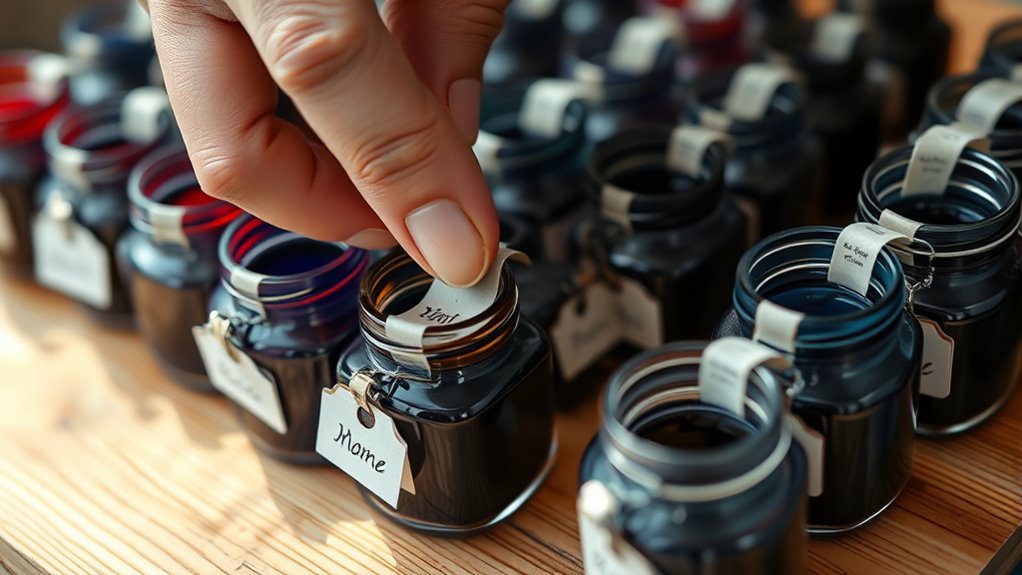
Proper handling and storage are essential to keep your archival ink in top condition over time. Store ink bottles in a cool, dry place away from direct sunlight to prevent pigment degradation and preserve quality.
Always keep lids tightly sealed after each use to avoid evaporation, contamination, and oxidation, which can change the ink’s consistency. Use acid-free, archival-quality storage containers or clearly labeled bottles to prevent exposure to acids and pollutants.
Maintain stable storage conditions by avoiding temperature fluctuations. The ideal temperatures are between 60-70°F with 30-50% humidity. Regularly check your stored inks for clumping, discoloration, or changes in consistency.
Discard any compromised ink promptly to ensure your archival-quality supplies remain effective and long-lasting.
Common Myths About Archival Ink: What Really Matters
Many people assume that just choosing a black ink labeled “archival” guarantees it will last a long time, but that’s not always the case.
There’s a common myth that all inks with this label are equally durable, but formulation and lightfastness testing are what really matter.
Here are some myths to watch out for:
- Thinking all pigment inks are inherently archival—actually, formulation and certification influence how durable they are.
- Believing pH-neutral ink automatically means it’s archival—pigment stability is what really counts.
- Assuming waterproof inks are automatically archival—long-term preservation needs more than just water resistance.
- Relying solely on marketing claims—standards like ISO 11798 and ASTM D-4236 give real confirmation of archival properties.
Knowing these facts helps you pick inks that truly stand the test of time.
Frequently Asked Questions
What Is the Best Pen With Archival Ink?
The best pen with archival ink for you is a fine-point, waterproof, acid-free pen like the Sakura Pigma Micron or Staedtler Pigment Liners. These pens have pigment-based ink that resists fading, water, and chemicals, so your work stays vibrant over time.
Look for labels that say “archival-quality” or “permanent.” Consider refillable options too, for long-term durability. These choices give you reliable, lasting results for important documents and artwork.
What Is the Difference Between Distress Ink and Archival Ink?
Did you know that archival ink is designed to last over 100 years without fading? It’s different from distress ink, which creates aged, vintage effects but isn’t meant for long-term preservation.
Archival ink uses pigment-based formulas that resist water, light, and chemicals. Distress ink, on the other hand, contains water-soluble dyes that can fade or smudge over time.
What Is the Difference Between Archival Ink and Regular Ink?
Archival ink differs from regular ink mainly in durability and chemical makeup. It contains pigment-based, pH-neutral compounds, which help it resist fading, moisture, and chemical breakdown over time.
Regular ink, on the other hand, is usually dye-based. It tends to fade, discolor, and deteriorate faster than archival ink.
What Is Ranger Archival Ink Used For?
Imagine your art as a timeless treasure chest. Ranger Archival Ink acts as the sturdy lock securing it.
You use it for stamping, scrapbooking, and mixed media projects because it offers vibrant, fade-resistant images that stand the test of time.
Once dried, it’s waterproof, allowing you to watercolor or emboss without worry.
Its acid-free, pH-neutral nature guarantees your masterpiece remains pristine, preserving your creative legacy for generations.
Conclusion
Choosing the right archival ink guarantees your artwork and documents stand the test of time. Did you know that high-quality pigment inks can last over 200 years without fading?
By understanding standards, reading labels carefully, and selecting trusted brands, you can preserve your creations for generations. Proper handling and storage further extend their life.
Make informed choices today, and your meaningful work will remain vibrant and intact for decades to come. Choosing the right archival ink is key to lasting results.