

What Happens if You Write a Check in Red Ink?
Many people struggle with the little things that can cause big headaches, like writing checks in the wrong ink color. If you’ve ever wondered what happens if you write a check in red ink, you’re not alone. It’s a common question, and it can lead to unexpected issues.
Writing a check in red ink isn’t illegal, but it can cause problems during processing. Many banks prefer standard black or blue ink because red ink may trigger automatic flags for imaging issues or suspicion of fraud.
This can lead to delays, rejection, or account restrictions if red ink checks are repeatedly flagged.
To avoid trouble, stick to regular ink colors and check with your bank if you experience issues—there’s more to what you should know.
Key Takeaways
– Writing checks in red ink isn’t illegal under the UCC or federal laws.
Many banks might flag, reject, or delay processing checks written in red ink because of imaging issues.
Red ink can also trigger automated fraud alerts, which can lead to manual reviews or even account restrictions.
Poor image quality from red ink increases the chances of rejection and might even cause your account to be closed.
To avoid these problems, it’s best to use black or blue ink. This helps ensure your check clears smoothly and without delays.
Are Red Ink Checks Allowed by Banks?
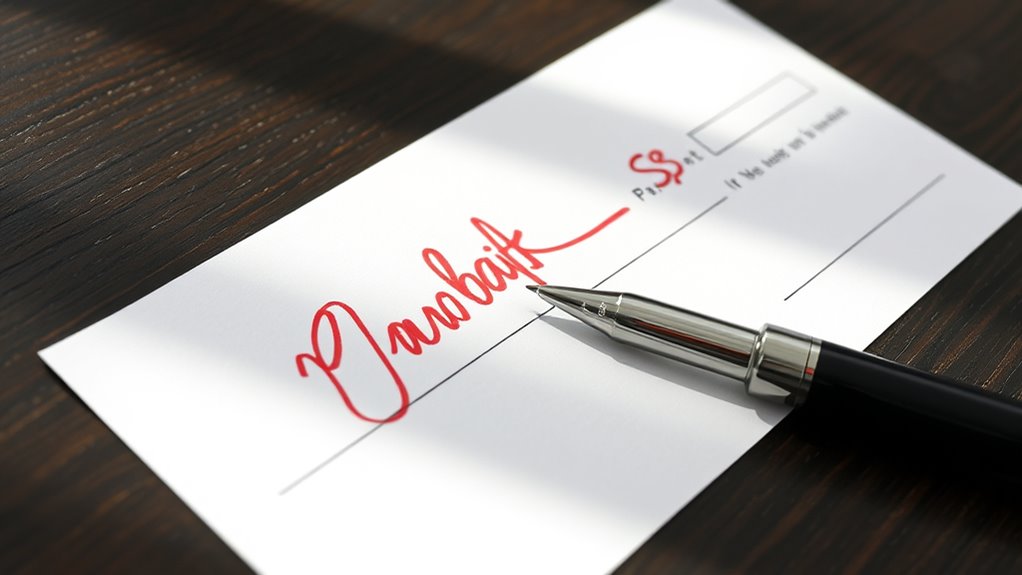
Are red ink checks allowed by banks? In most cases, yes. Banks generally don’t have specific rules banning checks written in red ink, and legally, the Uniform Commercial Code (UCC) doesn’t restrict ink color for signatures or checks.
However, check processing might be affected. Some banks may flag or reject red ink checks because of imaging or processing issues rather than legal restrictions.
Red ink can sometimes cause delays or complications during check clearing. That’s why most banks recommend using standard black or blue ink.
While writing checks in red ink isn’t explicitly illegal, it’s best to stick with traditional ink colors to avoid potential processing problems. This helps guarantee your check clears smoothly without unnecessary delays.
How Does Using Red Ink on Checks Affect Processing?
When you write a check in red ink, banks often have trouble scanning and imaging it properly. This can cause delays or errors in processing.
Automated systems are also more likely to flag red ink checks as suspicious or blank. That can lead to extra scrutiny and hold-ups.
Because of this, using red ink can slow down the process and increase the chance of rejection or needing manual review.
Check Imaging Challenges
Using red ink on checks can cause serious imaging issues during processing. Automated check imaging systems rely on high-contrast black or blue ink, but red ink often results in poor-quality images or scans that look blank.
This makes check processing more difficult and increases the chances of errors or rejection. Fluorescent or gel red ink can make scanning even more complicated, causing delays or requiring manual review.
Banks’ imaging equipment has traditionally struggled with red ink, making it hard to capture accurate check details.
| Issue | Effect |
|---|---|
| Poor check imaging | Check details may be unreadable or missing |
| Rejection or flag | Checks might be rejected during electronic processing |
| Scanning problems | Delays or need for manual processing |
Automatic Flagging Risks
Red ink on checks can trigger automatic flags in bank processing systems because of how poorly it scans compared to standard black or blue ink. When you write a check in red ink, the bank’s check processing systems may struggle to accurately capture the image, often resulting in poor contrast or illegible scans.
This can lead to check images appearing blank or unclear during automated processing. As a result, automated flagging algorithms might misinterpret the red ink as suspicious or as a potential fraud risk.
This increases the likelihood of your check being delayed, held for review, or requiring manual intervention. Using red ink risks triggering automatic flagging, which complicates check processing and can cause unnecessary delays in clearing your funds.
What Common Problems Do Banks Face With Red Ink Checks?
Banks often struggle with red ink checks because they can cause scanning issues, making the check appear blank or unclear. Automated systems might mistake the red ink for fraud or an incomplete check, which can lead to problems.
This can trigger alerts or cause the check to be rejected. As a result, red ink checks can cause delays, account restrictions, or even wrongful closures without proper verification.
Imaging and Scanning Challenges
Have you ever wondered why red ink on checks can cause processing issues? Red ink creates imaging challenges for bank scanners because it often doesn’t produce clear, high-contrast images. Automated check processing systems struggle to capture the details accurately, which can result in blank or incomplete images.
Red or fluorescent inks, especially gel pens, can produce blurry, unreadable scans that delay check processing. These poor-quality images make verification harder and can slow down the availability of funds. Checks written in red ink might even trigger fraud alerts, leading to manual reviews or rejection due to suspicious imaging results.
Fraud Detection Triggers
Ever wonder why checks written in red ink often get flagged during processing? It’s because red ink can trigger fraud detection systems, raising suspicions of tampering or forgery.
Banks’ automated check processing relies on clear contrast, and red ink often complicates this. This makes it harder for scanners to capture details accurately.
As a result, these checks may be flagged for suspicious activity or even rejected, which can delay your transaction. The fraud detection algorithms are designed to spot irregularities, and red ink stands out as a potential red flag.
Using red ink makes your check more likely to be flagged or restricted. This can complicate the check processing and lead to unnecessary concerns about fraud.
Why Do Banks Flag Red Ink Checks as Potential Fraud?
Why do checks written in red ink often get flagged as potential fraud? During check processing, automated systems scan images to detect tampering, and red ink can cause issues.
The bright color often results in poor image quality or even blank spots, making it difficult for scanners to read the check accurately. Since imaging equipment was originally optimized for black or blue ink, red ink checks are more prone to being flagged as suspicious.
Fraud detection algorithms may interpret the inconsistent or unclear images as signs of forgery or tampering. As a result, banks’ systems tend to flag red ink checks more frequently, increasing the chances of rejection or alerts for potential fraudulent activity.
This is why red ink can complicate check processing and raise suspicion.
What Can Happen If You Write Checks in Red Ink?
Writing checks in red ink can cause some major processing problems because banks’ automated systems often see these checks as suspicious.
When banks process checks, red ink might cause scanning errors or make the image quality poor, which can lead to rejection or delays.
Some banks might refuse to accept checks written in red ink altogether, thinking it’s a sign of potential fraud.
If the system spots red ink, it could trigger fraud alerts, which might result in account restrictions or even closure without a thorough review.
Manual processing could be needed if the check images don’t scan properly, adding more delays to getting your funds.
Can Red Ink Checks Cause Deposit Delays or Rejections?
Have you ever wondered if writing a check in red ink could cause problems when you try to deposit it? It’s possible that red ink may trigger deposit delays or check rejection. Automated bank systems are designed to scan checks in standard ink colors, and red ink can interfere with this process.
As a result, your check might be flagged for manual verification, causing deposit delays. It could also appear illegible or blank in digital images. Sometimes, it might be rejected during deposit due to poor image quality or require extra steps before funds become available.
These issues happen because high-contrast, standard ink colors help ensure smooth processing. Using red ink can disrupt this, leading to inconvenience and delays in accessing your money.
Could Using Red Ink Lead to Account Restrictions?
Using red ink on checks can trigger automated fraud detection systems. This might flag your account for suspicious activity.
This can lead to account restrictions or even closures if multiple red ink checks are processed. Even if your checks are legitimate, repeated red ink markings increase the risk of your bank taking protective actions.
Automated Fraud Detection Flags
Automated fraud detection systems are becoming more sensitive to checks written in red ink. They often flag these checks as suspicious or potentially fraudulent.
When your check is scanned, red ink can cause the system to misread it or mark it as blank or unreadable. This can trigger fraud alerts and lead to immediate restrictions on your account.
You might find your bank restricts or freezes your account without warning. The system’s focus on red ink as a suspicious indicator can cause your check to be flagged unexpectedly.
Common issues include red ink causing misreads during scanning, checks being automatically flagged as suspicious, and account restrictions triggered by flagged checks. This can also lead to delays in resolving these issues with bank management.
Account Closures Risks
Could writing a check in red ink unexpectedly cause your account to be restricted or closed? Banks often see red ink checks as suspicious, which can set off automatic restrictions or even lead to closures.
If their system spots red ink, it might interpret it as fraud, triggering security measures right away. Some banks close accounts without doing a full investigation, citing security protocols.
Processing delays or refusals can happen when red ink checks are flagged, causing deposit setbacks.
Repeated issues may lead banks to permanently close your account to prevent further processing problems.
| Red Ink Check | Bank Response | Outcome |
|---|---|---|
| Flagged | Account restrictions | Possible closure |
| Delayed | Processing delays | Frustration and refusal |
| Repeated | Account closure risks | Permanent bank closure |
How to Fix Issues When Your Red Ink Check Is Rejected
Have you ever had a check rejected because it was written in red ink? If so, don’t panic. To fix a rejected check, start by contacting your bank’s customer service or action line to report the issue and get guidance.
Then, provide the original check and any related documents to verify the payment and clarify the situation. Request that the bank reprocess the check, making sure it’s legible and written in standard black or blue ink if needed.
If your efforts don’t resolve the rejection, escalate the matter to higher management or the dispute resolution department. Keep thorough records of all communications and documents related to the rejected check to support any further investigations or claims.
Best Practices to Avoid Problems With Red Ink Checks
To prevent issues with red ink checks, always use standard black or blue ink when writing your checks. This helps ensure clear imaging and smooth processing by banks.
If you prefer to use red ink, find a red pen that is safe to use and designed for check writing. Remember, using non-standard ink colors can cause scanning delays or rejections.
Verify check images after deposit to confirm there are no issues. Avoid gel, fluorescent, or colored inks, as these can interfere with check microfilming and automation systems.
Follow your bank’s recommendations to prevent problems. Here’s a quick guide:
| Tip | Why | Example |
|---|---|---|
| Use black or blue ink | Clear imaging | Standard check writing |
| Find a red pen | Safe to use | Check if you prefer red ink |
| Verify images | Prevent delays | Confirm deposit accuracy |
Do Banking Rules Prohibit Writing Checks in Red Ink?
Banking rules generally don’t prohibit writing checks in red ink, as long as the check is valid and can be processed properly. Most U.S. regulations, including the UCC, don’t specifically ban red ink.
Bank account agreements usually don’t restrict ink color, focusing instead on signatures and authenticity. Banks have processed checks in various ink colors, including red, without legal issues.
However, some banks might refuse or reject red ink checks because of processing or imaging problems, not because of legal restrictions. Here’s what you should know:
- No federal law makes red ink checks illegal.
- Regulations don’t specify restrictions on ink color.
- Banks may reject checks due to processing issues.
- Red ink doesn’t affect check validity if it can be processed properly.
What Should You Do If Your Bank Closes Your Account Over Red Ink Checks?
If your bank closes your account over checks written in red ink, it’s important to act quickly and proactively. Contact the bank’s customer service or high-level management immediately to request clarification and appeal the closure.
Gather all relevant documentation, including copies of the red ink checks and any communication with the bank. Ask for a formal written explanation to understand the reasons behind the closure and examine options for reinstatement.
Follow the bank’s dispute resolution process carefully. If you believe the account was closed unjustly or without proper investigation, consider filing a complaint with a financial regulatory authority.
Furthermore, consult a legal professional to understand your rights and explore any possible remedies to resolve the situation.
Frequently Asked Questions
Can You Write on a Check With Red Ink?
You can write on a check with red ink, but it’s not a good idea. Banks might reject or delay processing your check because red ink can cause issues with automated scanning systems.
Using red ink could lead to errors or extra delays, even though there’s no law against it. To avoid problems, stick with black or blue ink when filling out checks.
This helps ensure your payment clears smoothly and quickly.
Can a Check Be Deposited With Red Ink?
Yes, you can deposit a check written in red ink, but it might face some hurdles. Imagine a river flowing smoothly—red ink can cause the bank’s automated systems to stumble, leading to delays or extra reviews.
Many banks prefer black or blue ink because it’s clearer and easier for machines to process. To avoid hassle, it’s best to stick with traditional ink colors when writing checks.
Can You Fill a Check Out With Red Ink?
You can technically fill out a check with red ink, but it’s not recommended. Banks prefer black or blue ink because these colors scan and process more reliably.
Using red ink might cause the check to look unclear or blank to automated systems, which can lead to delays or rejection. To make sure your check clears smoothly and quickly, stick with black or blue ink when filling out checks.
Is It Okay to Write in Red Ink?
It’s okay to write in red ink, but it’s not recommended for checks. While there’s no law against it, banks prefer black or blue ink because their systems process those colors more reliably.
Writing in red may cause delays, rejection, or flag your check for fraud detection. To avoid any issues, stick with standard black or blue ink when filling out checks.
This ensures smooth processing and clear legibility, making everything run more smoothly.
Conclusion
While writing checks in red ink isn’t explicitly prohibited, it can cause processing delays or raise suspicion of fraud. Banks might flag your check if they see the red ink, which could lead to unnecessary hassle.
If your bank does flag your check, don’t panic. Just clarify your intent and follow their guidelines to resolve any issues quickly. Most problems can be avoided with clear, legible writing in standard ink.
To keep your banking smooth and hassle-free, stick to black or blue ink when writing checks. Doing so helps prevent unnecessary complications or even account closures.