What Is Pigment Ink?
Are you tired of prints that fade, smudge, or don’t stand up to the elements? You’re not alone—many people struggle with finding the right ink that lasts and looks great over time. If durability and vibrant color are top priorities, then pigment ink might just be what you need.
Pigment ink is made of tiny solid color particles suspended in a liquid carrier, sitting on the surface of media instead of soaking in. This makes it highly durable, water-resistant, and fade-proof, perfect for outdoor signs or archival prints.
It provides vibrant, crisp results, but works best on porous surfaces and may need surface prep for best adhesion. Want to uncover more about how to use it effectively? Keep exploring these key details next.
Key Takeaways
- Pigment ink is made up of tiny solid pigment particles that are suspended in a liquid carrier.
- These pigment particles sit on the surface of the media rather than soaking in. This helps create durable and vibrant prints.
- Because of this, pigment ink offers excellent water, UV, and environmental resistance. It’s perfect for outdoor displays and archival projects that need to last.
- Compared to dye ink, pigment ink produces more subdued hues but with better longevity and fade resistance.
- You’ll often find it used in fine art printing, signage, crafting, and other applications where long-lasting color is important.
What Is Pigment Ink and How It Differs From Dye Ink
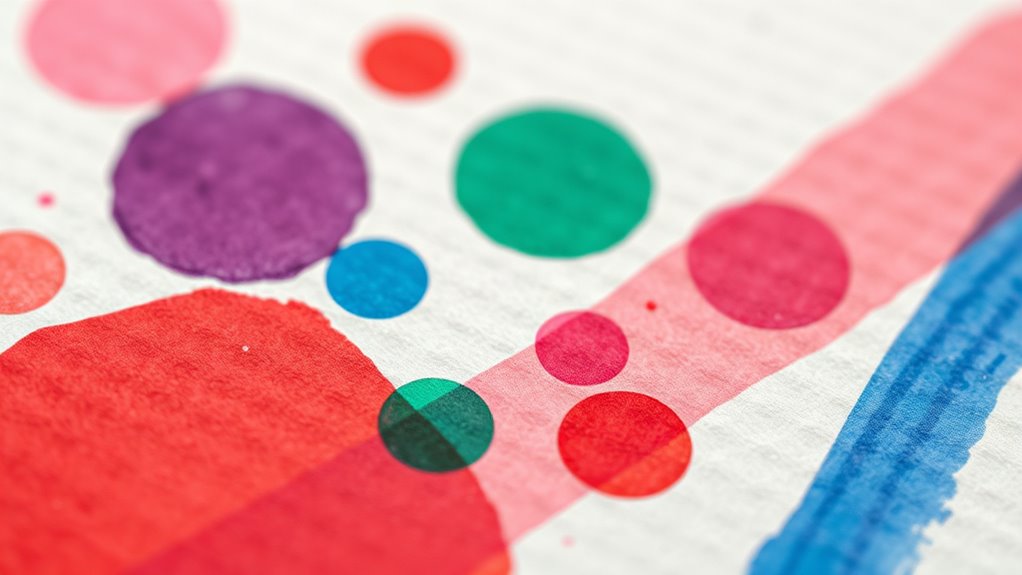
Pigment ink is made up of tiny solid particles suspended in a liquid carrier. These particles sit on the surface of the media instead of soaking in like dye ink.
This difference affects color durability and fade resistance. Pigment ink offers better longevity because of this surface sitting behavior.
Pigment ink’s surface sitting behavior ensures superior durability and fade resistance over time.
While dye ink dissolves completely into the media, creating vibrant, sharp colors, pigment ink’s opaque particles produce more subdued hues. But it guarantees long-lasting results.
The composition of pigment ink makes it more water- and UV-resistant, which is great for applications needing durability. It works well on a wider range of surfaces, including non-porous materials, compared to dye ink.
How Is Pigment Ink Made? An Inside Look at Its Composition
Ever wondered how pigment ink achieves its durability and vividness? It all starts with tiny pigment particles, which are dispersed into a liquid carrier, usually water or a water-based solution.
During manufacturing, pigments are mixed with resins, additives, and stabilizers to help them spread evenly and stay stable. Coatings or treatments are applied to the pigment particles to improve adhesion and prevent settling or clumping.
Heating or cooling techniques are used to control the ink’s viscosity and particle size, making sure everything disperses smoothly. This careful balancing creates a formulation that offers consistent color, durability, and resistance to environmental factors.
The whole process is designed to produce pigment ink that performs reliably, giving you long-lasting, vibrant prints.
The Key Properties of Pigment Ink: Durability, Water Resistance, and Colorfastness
Many factors contribute to the exceptional durability, water resistance, and colorfastness of pigment ink, making it a preferred choice for long-lasting prints. Its solid, opaque pigment particles sit on the media surface, offering superior resilience against environmental damage.
The high UV resistance and chemical stability prevent deterioration, ensuring long-lasting, archival quality prints. These properties let pigment ink withstand handling, moisture, and light without fading.
To visualize, consider this comparison:
| Property | Effect |
|---|---|
| Durability | Resists fading and damage over time |
| Water Resistance | Repels moisture, preventing smudges and runoff |
| Colorfastness | Maintains vibrant colors even after years of display |
| UV Resistance | Protects against sunlight, preserving print quality |
This combination makes pigment ink ideal for outdoor signage and archival projects.
Common Uses of Pigment Ink in Printing and Crafting
You’ll find pigment ink is perfect for creating archival-quality art prints that resist fading over time.
It’s also great for crafting projects like scrapbooks and fabric printing, thanks to its vibrant colors and durability.
Plus, businesses often use pigment ink for signage and labels that need to stand up to weather and handling.
Archival-Quality Art Prints
Have you ever wondered why artists and galleries choose pigment ink for their most treasured prints? It’s because pigment ink creates archival-quality art prints that stand the test of time.
Its fade resistance and longevity ensure your images stay vibrant for over 50 years, making them perfect for fine art. The solid pigment particles sit on the paper’s surface, delivering sharp details and rich, vibrant colors that truly pop.
This opacity allows for deep color depth and accurate reproductions, which are essential for high-quality art and craft projects. Plus, the water resistance and lightfast properties mean your prints won’t easily deteriorate or fade when displayed in galleries or framed.
Pigment ink’s durability guarantees your artwork remains stunning and true to its original for decades.
Durable Craft Projects
Pigment ink is a popular choice for crafting projects because of its water and fade resistance, ensuring your creations stay vibrant and intact over time. Its durable nature makes it great for card making, scrapbooking, and fabric printing.
The solid particles sit on porous materials’ surface, creating vibrant designs that withstand handling and exposure. Artists often prefer pigment ink for embossing and watercolor effects because it produces crisp lines and rich colors.
When used on high-quality, acid-free papers or textiles, it guarantees long-lasting results suitable for archival displays. Sealing or heat-setting your projects further boosts their durability, making them resistant to moisture, light, and frequent use.
With pigment ink, your craft items stay vibrant and preserved for years to come.
Professional Signage Uses
Why is pigment ink the preferred choice for professional signage? Because it offers exceptional durability and fade resistance, ensuring your signs stay vibrant over time.
Signage applications often use pigment ink on materials like vinyl, canvas, and rigid substrates. This allows outdoor signs to withstand harsh weather conditions.
Its water-resistant properties make it ideal for outdoor signs exposed to rain, humidity, or sunlight. Many large-format printers designed for signage use pigment inks to produce sharp, vivid, and weatherproof graphics.
Whether you’re creating banners, posters, or point-of-sale displays, pigment ink provides the longevity and color vibrancy needed for impactful, professional signage. Its weatherproof qualities make it a reliable choice for any outdoor advertising or signage project.
Pros and Cons of Using Pigment Ink for Printing
Using pigment ink for printing offers notable advantages, especially regarding durability and longevity. Its fade resistance and waterproof qualities make it great for archival printing and long-lasting displays.
However, there are some drawbacks to consider.
First, pigment inks tend to be more expensive because of their complex manufacturing process and durable particles.
Color accuracy can also be an issue, with bronzing or metamerism sometimes affecting how colors look under different lighting conditions.
In terms of media versatility, while pigment inks work well on textured and non-porous surfaces, they may need higher-quality paper to prevent bleeding or feathering.
Finally, they often require more maintenance to keep the printing quality high and avoid problems caused by paper quality.
Should You Use Pigment Ink? Factors to Consider
Deciding whether to use pigment ink depends on your specific printing needs and circumstances. If you need long-lasting, fade-resistant prints that can handle light and moisture, pigment ink is a great choice.
It offers superior durability and archival quality, making it perfect for professional art prints, signage, or archival documents. But you should check if your printing media works well with pigment ink.
Pigment ink performs best on porous, high-quality papers like watercolor or fine art paper. Keep in mind that pigment ink is usually more expensive than dye ink, so consider your budget.
Also, make sure your printer supports pigment ink, as not all inkjet printers are compatible with it. Your decision should be based on whether durability and archival quality outweigh the higher cost and media requirements.
Top Tips for Using Pigment Ink Effectively
To get the best results with pigment ink, start by selecting high-quality, porous paper designed specifically for it. This helps prevent bleeding and ensures your colors stay vibrant.
Allow enough drying time, and consider heat setting or sealing your work to lock in the pigments and avoid smudging.
Experiment with layering and embossing to add depth and texture to your designs.
Avoid using pigment ink on glossy or non-porous surfaces unless you apply a primer or sealant first.
Remember to regularly clean your stamping tools and ink pads to keep the ink consistent and prevent clogging.
Following these tips will help you get the most out of pigment ink, giving you crisp, vivid results with less frustration.
Frequently Asked Questions
What Is the Difference Between Pigment Ink and Regular Ink?
You’ll notice that pigment ink uses tiny solid particles that sit on the surface of your media, making it more durable and fade-resistant. Regular ink, like dye ink, dissolves fully into the material, producing vibrant colors but fading faster over time.
Pigment inks are better for archival quality prints because they resist environmental factors. On the other hand, dye inks offer brighter colors but don’t last as long.
Can Any Printer Use Pigment Ink?
No, not all printers can use pigment ink. Most consumer inkjet printers are made for dye-based inks, so they might not support pigment ink without some modifications.
Professional or large-format printers usually handle pigment ink better because they’re built for durability. Before trying to use pigment ink, check your printer’s specs and manufacturer guidelines.
Using incompatible ink can damage your printer or void your warranty, so it’s really important to be cautious.
What Are the Disadvantages of Pigment Ink?
You might think pigment ink is perfect because of its durability, but it has some drawbacks. It’s often more expensive, which can increase your printing costs.
Early formulations can cause issues like bronzing or color shifts under different lighting. And the narrower color range limits vibrant prints.
The pigment particles can clog printheads, which means more maintenance. Plus, it may produce less smooth color gradations, affecting overall print quality.
Does Pigment Ink Wash Out?
No, pigment ink doesn’t wash out easily once it’s dry and properly sealed.
Its water-resistant properties make it durable against washing and exposure to water, so your prints stay vibrant and intact over time.
However, if you don’t set it correctly or use harsh detergents, it can fade or wash out.
To ensure it lasts, follow the manufacturer’s instructions for sealing or coating your prints.
Conclusion
Thinking about trying pigment ink? With its durability, water resistance, and vibrant colors, it’s perfect for many projects.
But are you ready to handle its slower drying time and potential cost? Understanding its properties and uses can help you decide if it’s the right fit.
Imagine your artwork or prints lasting beautifully over time. Doesn’t that make pigment ink a compelling choice?
Immerse yourself in its qualities and see how it can elevate your creative work!