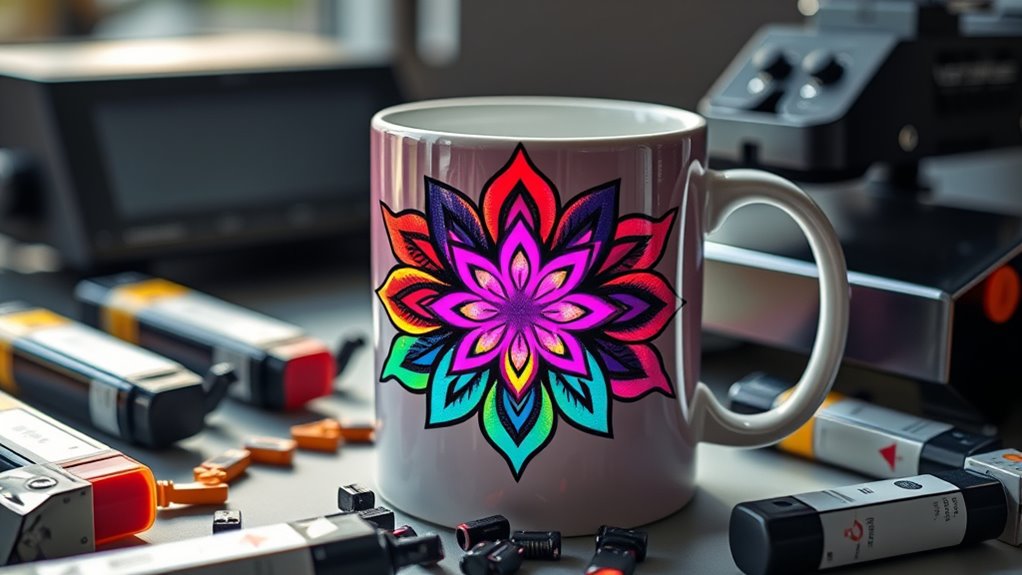
What Is Sublimation Ink and Its Uses?
Are you tired of printing images that fade or peel over time? Many people struggle with finding the right method to create vibrant, long-lasting designs on their products. If you’re looking for a solution that delivers durable, professional-looking results, sublimation ink might just be what you need.
Sublimation ink is a dye-based ink that turns into gas when heated, bonding permanently with polyester fabrics and coated surfaces. It’s used to create vibrant, long-lasting images on items like mugs, apparel, and home décor.
Because it works best on smooth, non-porous materials, it’s popular in personalized products and promotional merchandise. If you want to uncover more about how sublimation ink can transform your projects, keep exploring this fascinating printing method.
Key Takeaways
- Sublimation ink is a dye-based ink that turns into gas when heated. It bonds permanently with polyester or coated surfaces.
- It produces vibrant, durable prints that resist cracking, peeling, and fading.
- People often use it for customizing mugs, apparel, promotional items, and home decor.
- It works best with polyester fabrics, coated ceramics, metals, and plastics.
- However, it’s not suitable for natural fibers like cotton.
- To get the best results, you need specialized sublimation printers and heat transfer processes.
What Is Sublimation Ink, and How Is It Different From Regular Printer Ink?
Sublimation ink is a special dye-based ink that turns into gas when heated, allowing it to bond permanently with polyester fabrics and coated surfaces.
Unlike regular ink, sublimation ink changes from solid to gas during the process. This chemical phase change helps the ink become part of the material.
Sublimation ink transforms from solid to gas, embedding deeply for durable, long-lasting prints.
This deep infusion creates durable prints that resist cracking, peeling, and fading over time.
Regular ink stays on the surface, making it more likely to wear off or fade.
To use sublimation ink properly, you need specialized inkjet printers and sublimation paper, which are designed for this chemical change.
This process results in vibrant, long-lasting images that are embedded into the substrate, making it different from standard printing methods.
How Does Sublimation Ink Work to Produce Vibrant, Long-Lasting Prints?
When heated to around 350°F to 400°F, sublimation ink changes directly from a solid into a gas, skipping the liquid stage entirely. This vaporization helps the ink seep into the surface pores of the substrate, creating a seamless infusion.
During heat transfer, the gas from the sublimation ink bonds with the polymer coating or polyester surface. This results in vibrant prints that are both durable and long-lasting.
As the gas cools, it solidifies inside the material, embedding the image permanently. This process ensures the ink resists fading, cracking, and peeling over time.
| Step | Description |
|---|---|
| Vaporize | Ink turns into gas at high heat |
| Infusion | Gas bonds with the substrate’s polymer layer |
| Solidify | Gas cools and solidifies, embedding the image |
Which Materials Are Best Suited for Sublimation Printing, and Which Should Be Avoided?
If you want vibrant, durable sublimation prints, focus on polyester surfaces or coated materials like ceramics and metals. These materials are ideal because they absorb the ink well and produce bright, long-lasting colors.
Avoid natural fibers like cotton since they lack the necessary coating for ink infusion. Also, steer clear of dark or uncoated surfaces that won’t hold the ink properly.
Make sure the material is smooth, non-porous, and specifically designed for sublimation. This will help you get the best results and avoid disappointing outcomes.
Ideal Substrates for Sublimation
Are you wondering which materials work best for sublimation printing? The ideal sublimation substrates include polyester fabric or items with a high polyester content, as they allow for good ink infusion.
Coated ceramics, aluminum, and plastics with polymer layers are perfect for vibrant, durable images. These materials have open pores or coatings that help the sublimation ink stick properly.
Avoid natural fibers like cotton or uncoated surfaces since the ink won’t bond correctly, leading to poor image quality. When choosing substrates, focus on those with a high polyester content, ideally above 65%, for the best results.
Surfaces to Avoid
Certain materials simply don’t work well with sublimation printing because they prevent the ink from bonding properly. Natural fibers like cotton are ineffective since they lack pores for ink infusion, resulting in dull, faded images.
Uncoated surfaces, such as raw wood or natural stone, also don’t hold sublimation ink well because the ink needs a polymer coating or polyester layer to adhere properly. Porous materials absorb the ink unevenly, leading to poor results.
Dark fabrics and surfaces without a light or white base can hinder color vibrancy, making them unsuitable for sublimation. Ceramics, aluminum, and glass with polyester or polymer coatings are ideal, but uncoated ceramics or metals won’t produce vibrant, durable prints.
Stick to coated surfaces for the best results.
What Are the Main Products and Industries Using Sublimation Ink?
Sublimation ink is used across a variety of industries that need vibrant, durable, and personalized products. It’s popular for creating sublimation items like mugs, keychains, and photo panels with high-quality, long-lasting prints.
Sublimation ink enables vibrant, durable printing on personalized products across multiple industries.
In the promotional goods world, businesses use it to produce custom merchandise that really stands out. The apparel industry relies on sublimation ink for printing on polyester fabrics like sportswear and jerseys, using a heat press and transfer paper.
Home decor companies also use sublimation for decorative pieces such as ceramic tiles and wall art. The sports and outdoor sectors benefit from its wash-resistant, durable images on technical fabrics and gear.
Industries focused on branding and gifts love sublimation’s ability to deliver vivid, lasting designs.
How Do You Choose the Best Sublimation Ink for Your Projects?
Choosing the right sublimation ink depends on matching its qualities to your specific project needs and equipment.
Look for high-quality sublimation ink that offers vibrant dyes and fade-resistant properties to guarantee long-lasting, vivid results. Compatibility is key—make sure the ink is designed for your specific sublimation printer model to prevent clogs and maintain excellent performance.
Check the color accuracy and color gamut to achieve detailed, sharp images suitable for your project. Also, verify that the ink works effectively within your transfer process, considering temperature and pressure settings.
The best sublimation ink bonds deeply with polyester or coated surfaces, providing durability and vibrant color retention. Selecting the right ink will improve your printing quality, making your projects stand out with professional, lasting results.
What Common Problems Occur With Sublimation Ink, and How Can You Troubleshoot Them?
While selecting high-quality sublimation ink is essential for vibrant and durable prints, several common issues can still happen during printing and transfer. Ghosting occurs when the transfer shifts during pressing, leading to blurry or doubled images. This is often caused by improper alignment or insecure material.
Clogged printheads happen when ink dries or builds up, which can be prevented through regular printer maintenance and cleaning cycles. Using regular paper instead of sublimation or coated transfer paper results in poor image quality and ineffective ink transfer.
The ink can also become inconsistent if the paper surface isn’t ideal or if the ink shifts during pressing. To troubleshoot, check for clogged printheads, make sure your heat press settings are correct, and maintain your printer regularly to avoid issues like ghosting and improper transfer.
Frequently Asked Questions
What Are the Downsides of Sublimation?
The downsides of sublimation include its limitation to polyester and coated surfaces, so you can’t use it on natural fibers like cotton.
The initial cost for equipment can be high, making it less ideal for small-scale or hobby projects.
Plus, the process requires high heat and pressure, which can damage some materials.
The prints are embedded but fragile against scratches, and maintaining color accuracy demands proper calibration and quality supplies.
What Can Sublimation Ink Be Used For?
You can use sublimation ink to create vibrant, long-lasting prints on a variety of surfaces. It’s perfect for customizing polyester clothing, mugs, phone cases, and keychains.
You can also print on coated ceramics, aluminum, and promotional items like plaques and home decor. Whether for personal gifts, promotional products, or industrial signage, sublimation ink provides detailed, fade-resistant images that stand the test of time.
Which Lasts Longer, DTF or Sublimation?
Sublimation outlasts DTF like a marathon runner outpaces a sprinter, especially on polyester. You’ll find sublimation’s chemical bonding creates images embedded into the material, making them resistant to fading, cracking, or peeling after many washes.
DTF, sitting on the surface with an adhesive layer, tends to degrade over time, especially with heavy washing or stretching. If durability is your goal, sublimation’s infusion process keeps your designs vibrant for the long haul.
Will Sublimation Ink Work in a Regular Printer?
No, sublimation ink won’t work in a regular printer. Regular printers aren’t built to handle the specific chemical and thermal properties of sublimation ink, which can cause clogging, damage, or poor print quality.
To use sublimation ink effectively, you need a dedicated sublimation printer or one that’s been modified for sublimation. Using the right equipment guarantees you get vibrant, durable transfers without risking your printer’s internal components.
Conclusion
Now that you know what sublimation ink is, how it works, and the best ways to use it, you’re ready to create vibrant, lasting prints.
Welcome the possibilities, venture into new materials, and troubleshoot with confidence. Whether you’re designing for personal projects or professional products, let your creativity flow freely.
With the right ink and techniques, you’ll turn ordinary surfaces into extraordinary works of art. Bring your visions to life with color, clarity, and endurance.