What Are Ink Poisoning Symptoms?
Many people worry about accidental ink exposure, especially when handling pens, markers, or art supplies. If you’re not careful, ink poisoning symptoms can sneak up on you, and it’s easy to feel unsure about what to do next. You’re not alone—understanding the signs can help you stay safe.
If you get ink on your skin or in your eyes, you might notice stains, irritation, or temporary whitening of the eye, but these usually fade over time.
Ingesting ink can cause nausea, vomiting, or throat staining, and larger amounts may lead to stomach upset.
Severe symptoms like swelling, trouble breathing, or persistent pain require immediate medical attention.
Staying alert to these signs ensures you’ll recognize when quick action is necessary. Knowing the symptoms of ink poisoning can make a big difference in getting timely treatment.
Key Takeaways
- Skin or tongue may become stained or show temporary reactions after contact with ink.
- You might notice eye irritation or whitening from eye contact, which can sometimes cause discomfort or changes in your vision.
Ingesting ink could lead to nausea, vomiting, or upset stomach.
You might also see staining of the mouth and throat.
Serious symptoms include difficulty breathing, ongoing pain, swelling, or signs like confusion.
If you experience any of these, especially ongoing pain or trouble breathing, seek medical help immediately.
Persistent vomiting is also a sign that you need to get medical attention right away.
What Are the Common Signs of Ink Poisoning?
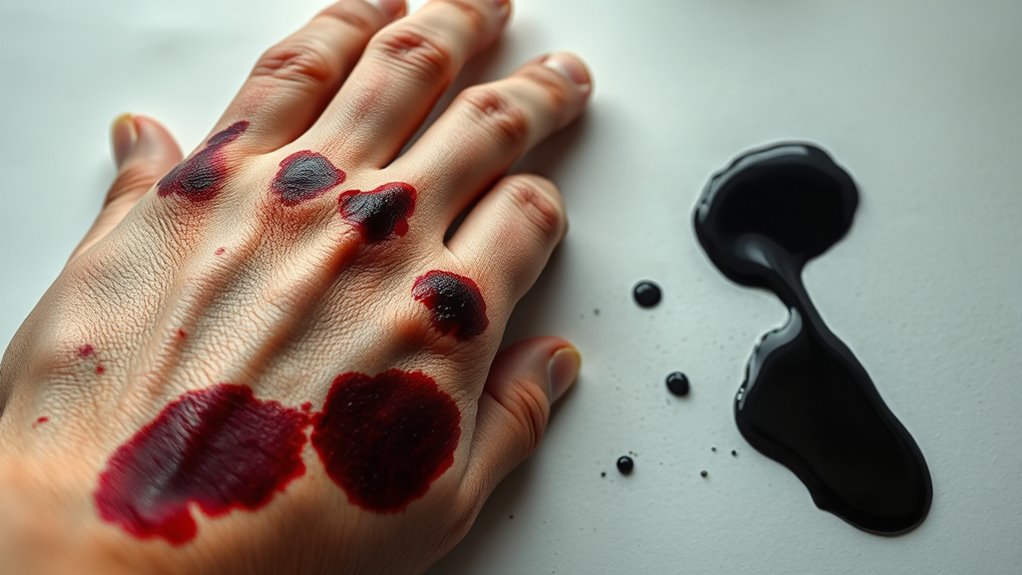
When ink poisoning occurs, you might notice stained skin or a tongue from contact with ink. These are common signs of ink poisoning and show skin reactions to the ink’s chemicals. You could see dark or colorful stains on your skin or tongue that won’t wash away easily.
While ink poisoning is generally minimally toxic, these skin reactions are a clear warning. Other signs might include mild gastrointestinal symptoms like nausea, vomiting, or stomach upset if you accidentally swallow ink.
Keep in mind, severe health issues are rare, but noticing stained skin or a stained tongue is important. These skin reactions are usually temporary and fade with time, but it’s wise to monitor your symptoms and seek advice if needed.
How Does Ink Contact or Ingestion Affect Your Eyes, Skin, and Mouth?
Ink contact with your eyes, skin, and mouth can cause temporary discomfort and cosmetic changes, but serious damage is rare if you act quickly. When ink touches your eyes, it might cause irritation and temporary staining of the white part, but rinsing with cool water usually stops any long-term harm.
Skin contact results in staining, which is just cosmetic and not toxic or poisonous. It’s easy to clean off, and usually doesn’t cause any serious problems. If ink is ingested, small amounts rarely lead to serious health issues, though larger amounts might cause mild stomach upset, nausea, vomiting, or diarrhea.
The main concern with ink poisoning is irritation in the area rather than systemic toxicity. Rinsing the affected area right away helps reduce irritation and prevents staining or further issues.
What Are the Symptoms of Ink Ingestion and When Should You Seek Help?
Ingesting ink can cause symptoms like nausea, vomiting, diarrhea, and visible staining of the mouth and throat tissues. These signs show ink ingestion and can differ depending on how much was swallowed.
Swallowing more than an ounce (30 mL) might lead to mild stomach irritation, causing discomfort and upset. While ink poisoning from swallowing is rare and usually not serious, it’s important to get help right away if you notice vomiting, stomach pain, or trouble breathing.
Quick medical attention is crucial, especially if a lot of ink has been ingested. Contact poison control or go to the emergency room if symptoms get worse or if a large amount was swallowed. Acting fast can help avoid complications and ensure proper treatment.
How Can You Tell the Difference Between Minor Reactions and Serious Ink Poisoning?
You can usually tell the difference by looking at how severe and widespread the symptoms are.
Minor reactions often show up quickly as staining or irritation. Serious poisoning might cause symptoms like nausea or dizziness that develop over time.
Also, think about how much ink was ingested or exposed to. Large ingestions or systemic symptoms suggest a more serious issue that needs medical attention.
Symptom Severity Indicators
How can you tell if a reaction is minor or serious? Symptom severity is key. Minor ink reactions usually involve localized staining or skin irritation with no systemic signs.
In contrast, serious ink poisoning shows signs affecting multiple body systems, like nausea, vomiting, or gastrointestinal discomfort. Watch for quick-onset symptoms like swelling, rash, or severe discomfort, which suggest a more serious reaction.
Persistent vomiting, abdominal pain, difficulty breathing, chest pain, or altered mental status are clear signs of serious poisoning. If you notice these severe signs and symptoms, seek emergency care immediately.
Minor reactions tend to be temporary and localized, while serious ink poisoning involves widespread symptoms indicating significant toxicity. Recognizing these indicators helps you respond quickly and appropriately.
Timing of Reactions
Timelines are key to telling apart minor ink reactions from serious poisoning. If symptoms show up right away or within a few hours, like mild irritation or staining, it’s probably a minor reaction.
But if they develop after several hours or days—like stomach problems or systemic signs—that could mean serious poisoning. Quick symptoms like nausea, vomiting, or swelling need urgent medical attention.
Delayed symptoms, such as persistent pain or signs of infection, suggest more serious issues. Recognizing these timing patterns helps you figure out how serious the situation is.
Exposure Context Differences
Understanding the context of exposure is key to telling apart minor ink reactions from serious poisoning. If your skin gets stained or your tongue turns a little discolored but it clears up quickly, it’s probably a minor reaction that doesn’t need a doctor.
Similarly, if you experience mild eye irritation or a little stomach upset, it usually means only minimal ink contact. But if you start vomiting, having diarrhea, or find it hard to breathe, that could mean a more serious case of ink poisoning.
Swallowing more than an ounce of ink can cause serious symptoms that need urgent medical attention. The main difference is how severe and widespread the symptoms are.
Minor reactions tend to stay in one spot and go away on their own. Serious poisoning causes persistent, widespread symptoms like confusion or trouble breathing that require immediate medical care.
What Happens During Medical Evaluation and Treatment for Ink Poisoning?
When you seek medical help for ink poisoning, healthcare providers start by evaluating the situation to figure out how severe the exposure is and what type of ink was involved. They look at how much ink was ingested or came into contact with you, which helps determine potential toxicity.
During the physical exam, doctors check your vital signs and look for any staining or irritation on your skin, eyes, or mouth. They might rinse your eyes or skin to wash away ink residues or give activated charcoal to absorb toxins if needed.
Supportive care is often provided to help manage symptoms. If you’ve ingested a lot of ink, lab tests or imaging might be done to detect ink in tissues or check for complications. Healthcare professionals also watch for gastrointestinal issues, allergic reactions, or other side effects to decide on the next steps.
What Immediate First Aid Steps Should You Take After Ink Exposure or Ingestion?
If ink gets into your eyes, rinse them immediately with cool water for at least 15 minutes to help reduce irritation and prevent damage.
For skin contact, wash the area thoroughly with soap and water to remove the ink and minimize irritation.
If ink is swallowed, do not try to make yourself vomit. Instead, seek medical advice and give details about the substance and how much was ingested.
Call poison control or emergency services right away if a large amount has been swallowed or if your symptoms get worse after exposure.
Keep the product container or label nearby so medical professionals can identify the specific ink involved.
Quickly following these first aid steps can help reduce health risks until you get professional medical care.
What Are the Long-Term Risks of Ink Poisoning and When Is Emergency Care Needed?
Long-term health issues from ink poisoning are rare, especially with small exposures. However, serious reactions can happen if large amounts are ingested or if ink touches sensitive areas.
You should seek emergency care immediately if you experience ongoing symptoms like stomach pain, trouble breathing, or allergic reactions.
Monitoring your condition and following up with a healthcare professional can help prevent potential complications.
Potential Long-Term Effects
Although ink poisoning usually doesn’t cause long-term health problems, certain situations can lead to ongoing issues. Large ingestions might cause persistent stomach irritation or tissue staining, but these cases are rare.
Chronic exposure, especially with tattoo inks, can raise the chances of allergic reactions or skin sensitivities over time. It’s important to keep an eye out for delayed allergic responses or infections at tattoo sites.
Seek emergency care if you notice symptoms like severe swelling or if pain persists.
Symptoms Requiring Urgent Help
When it comes to ink poisoning, recognizing symptoms that require urgent help can be life-saving. If you suspect ink ingestion and have trouble breathing, persistent vomiting, or signs of systemic toxicity, seek urgent medical help immediately.
These severe symptoms suggest the ink may be affecting your vital functions or causing widespread health issues. If ink gets into your eye and causes ongoing irritation or vision changes that don’t get better with rinsing, you need emergency care right away.
Prompt treatment can prevent serious complications like tissue damage or infection. Even if initial symptoms seem mild, worsening or persistent issues after first aid call for urgent medical help.
Don’t delay—early intervention is key to avoiding long-term health effects from ink poisoning.
Monitoring and Follow-Up
While ink poisoning usually isn’t a big long-term health risk because it’s not highly toxic, swallowing a lot can cause ongoing stomach discomfort and irritation. Keep a close eye on your symptoms to catch any problems early, like stomach upset, skin reactions, or eye irritation.
It’s important to follow up with a healthcare professional if these symptoms stick around or get worse after the initial treatment. Watch for any new or worsening signs, as they might mean you need more care.
Be careful with repeated contact or long-term exposure, especially with contaminated tattoo ink. This can raise the chances of infections or allergic reactions over time.
How Can You Prevent Ink Poisoning at Home and in Daily Life?
To prevent ink poisoning at home and in daily life, keep ink and ink-containing products out of children’s reach. Store all ink supplies securely to avoid accidental ingestion and poisoning.
Always read and follow the safety instructions on ink products, making sure to handle and store them properly.
Clean ink stains from skin and surfaces quickly to reduce the risk of contact or ingestion.
Avoid eating or drinking near ink supplies to prevent cross-contamination and accidental swallowing.
Use protective gloves and eye protection when handling ink to prevent irritation or exposure.
Practicing these simple tips can help protect you and others, especially children, from potential health hazards related to ink.
Prevention is your best defense against ink poisoning incidents.
Frequently Asked Questions
How Do I Know if I Got Ink Poisoning?
If you suspect ink poisoning, look for signs like stained skin, tongue, or mouth, along with nausea or vomiting. You might also feel irritation in your mouth or throat.
Usually, symptoms are mild and go away quickly. But if you experience persistent discomfort, difficulty swallowing, or other unusual symptoms, it’s important to see a doctor right away.
Avoid swallowing ink, and if you do, make sure to get medical attention. Keep any ingested ink monitored by a healthcare professional to ensure proper care.
What Happens if Ink Goes Into Your Bloodstream?
If ink enters your bloodstream, you might face serious health problems like inflammation, blood clots, or blockages that can interfere with blood flow to vital organs.
You could also develop symptoms like fever, chills, or signs of infection, especially if the ink has contaminants.
It’s crucial to see a doctor right away because quick treatment can help prevent complications like embolisms or systemic toxicity, which can be life-threatening.
What Are the 5 Signs and Symptoms of Poisoning?
Think of your body as a fortress under attack. The five signs of ink poisoning include skin or tongue staining, nausea, vomiting, eye irritation, and gastrointestinal discomfort.
You might notice your skin temporarily colored or your eyes slightly red. If you experience these symptoms after ink exposure or ingestion, it’s like an alarm bell ringing.
Prompt medical attention is essential to keep your fortress safe and healthy.
What Happens if a Kid Eats a Sharpie?
If a kid eats a Sharpie, they might get some minor mouth or throat irritation from the chemicals in the ink.
Swallowing a lot could upset their stomach, causing nausea or vomiting.
While Sharpie ink is usually only minimally toxic, swallowing big amounts might be risky.
If your child keeps showing symptoms or you’re worried about how much they swallowed, it’s best to see a doctor.
Keep Sharpies out of reach to avoid any accidental ingestion.
Conclusion
If you find yourself tangled in the ink’s dark grip, don’t wait for the storm to pass—act swiftly. Recognize the signs of ink poisoning, seek help, and follow safety steps to clear the ink’s shadow from your life.
Remember, ink poisoning can be a sneaky villain lurking in everyday pages or art supplies. But with quick action, you can turn the tide.
Stay alert to symptoms like nausea, vomiting, diarrhea, or skin irritation. These clues can help you catch ink poisoning early.
If you notice any of these signs, don’t hesitate—seek medical help immediately. Early treatment is key to preventing serious health issues.
By understanding ink poisoning symptoms and acting fast, you can keep your health shining bright. Stay safe, stay informed, and don’t let ink poisoning darken your day.