How to Remove Printer Ink From Skin With This Step-By-Step Guide
Getting printer ink on your skin can be frustrating, and you’re not alone in this struggle. Many people find it tricky to remove those stubborn stains quickly and safely. Whether it’s from a home printer or a busy office, dealing with ink on your hands is a common mishap.
Luckily, there are simple ways to tackle it without causing irritation or damage to your skin.
If printer ink gets on your skin, act quickly to prevent stains from setting deeper. Start with gentle soap and warm water, rubbing in circles to lift the ink.
For tougher stains, apply isopropyl alcohol or natural remedies like lemon and salt or coconut oil. Be careful not to scrub too harshly to avoid irritation.
To learn more about safe removal techniques and preventing future spills, keep exploring these step-by-step methods.
Key Takeaways
- Act quickly using gentle soap and warm water to prevent ink from setting deeper into the skin.
- Gently rub the area with your fingers or a soft cloth.
- Rinse thoroughly with water and repeat if needed.
- For faster ink removal, apply isopropyl alcohol with a cotton ball.
- Let it sit for a moment, then wash the area with soap and water.
- Be careful not to scrub too hard to avoid skin irritation.
- You can also try natural remedies like a lemon-salt scrub or coconut oil.
- Test a small patch of skin first to check for sensitivity.
- Apply and gently massage in circular motions.
- After cleaning, rinse well and pat dry.
- Moisturize your skin to prevent dryness and irritation.
- If irritation persists or worsens, seek medical advice.
What Causes Printer Ink Stains on Your Skin?
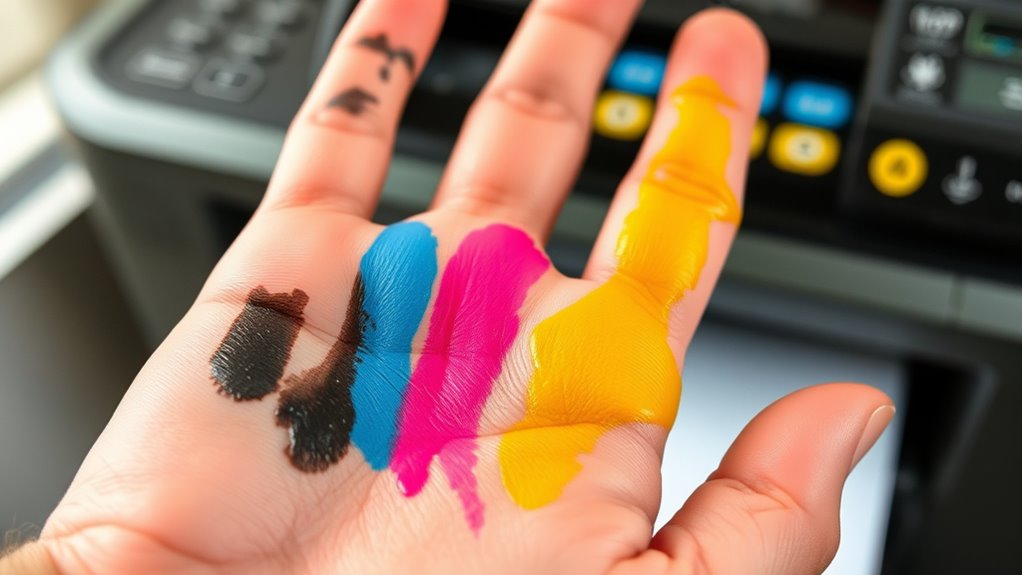
Have you ever wondered why printer ink easily stains your skin? When you handle printer ink, contact with your skin often results in ink stains because the pigments or dyes transfer quickly.
The ink contains chemical compounds like water, glycol, and oils, which can cause stubborn stains upon contact. These ingredients can penetrate the skin’s surface, making removal more challenging.
Furthermore, chemical compounds such as fast-drying agents and stabilizers in the ink tend to make stains set in faster and harder to remove. When you get printer ink on your skin, it’s not just a superficial stain—these chemicals can embed themselves, leading to persistent marks if not cleaned promptly.
Understanding these causes helps you act quickly to prevent lasting stains.
How Quickly Should You Act to Remove Ink?
The moment you notice printer ink on your skin, acting quickly is key to preventing the stain from setting deeper. Doing something within minutes makes it much easier to get rid of the ink and reduces skin irritation.
The longer you wait, the more the ink sets, making it harder to remove completely. Prompt cleaning with gentle methods right away can save you effort and help avoid skin damage.
Quick action means less ink penetrates your skin and lowers the chance of irritation caused by prolonged contact. The table below shows why acting fast really matters:
| Time After Ink Contact | Effect on Ink Removal |
|---|---|
| Within a few minutes | Easier to remove ink, less irritation |
| After 10 minutes | Ink starts to set, removal gets harder |
| 30 minutes or more | Removal is tougher, stain may stay |
| Immediate action | Best chance for complete removal |
| Delayed cleaning | More effort needed, higher risk of skin damage |
Common Mistakes That Worsen Ink Stains
Waiting too long to clean ink can let it sink deeper into your skin, making it harder to remove.
Scrubbing vigorously or with harsh tools can irritate your skin and spread the stain.
Using unknown or abrasive products without knowing their effects might make things worse or damage your skin further.
Delaying Action Risks Stains
Delaying action allows ink to sink deeper into your skin, making it much harder to remove later on. If you wait too long, ink stains can cause skin discoloration or set, which makes removal more difficult. Ignoring prompt removal increases the risk of permanent staining and skin irritation. The longer ink penetrates, the more it bonds with oils and sweat, complicating cleanup.
| Action | Effect of Delay | Result |
|---|---|---|
| Prompt removal | Prevents ink penetration | Easier stain removal |
| Immediate cleaning | Stops stain setting | Less skin discoloration |
| Delayed action | Allows ink to set | More aggressive methods needed |
Harsh Scrubbing Causes Irritation
Harsh scrubbing might seem like a quick fix, but it often makes things worse. Vigorous scrubbing can damage your skin’s outer layer, leading to irritation and a higher chance of infection.
Using abrasive tools or harsh chemicals strips away natural oils, causing dryness and redness. Instead of helping, aggressive scrubbing can push the ink deeper into your skin, making it harder to remove.
Applying too much force may cause micro-tears, which increase discomfort and irritation. To avoid this, use gentle, circular motions when trying to get printer ink off your skin.
Being gentle prevents damage and irritation, making the process safer and more effective. Remember, patience and a soft touch are key to avoiding unnecessary pain and skin damage.
Unknown Products Worsen Stains
Using the wrong products to remove printer ink can make the stain worse instead of better. Unknown products or untested cleaners can cause harmful chemical reactions that push the ink deeper into your skin.
Avoid harsh scrubbing with abrasive materials like rough cloths or erasers. These can irritate your skin and embed the ink even further.
Strong solvents such as acetone or bleach, if used without proper dilution, can damage your skin and make the stain worse. Waiting too long to clean the ink allows it to penetrate deeper, making it harder to remove.
Relying on aggressive or inappropriate methods increases the risk of skin damage and irritation. This can potentially worsen the stain instead of removing it effectively.
Always choose gentle, proven solutions to prevent making your skin’s condition worse.
Simple Soap Solutions to Remove Printer Ink From Skin
Using gentle soaps like baby shampoo or mild dish soap can effectively lift printer ink from your skin.
Apply the solution with a damp cloth or sponge, rubbing gently in circular motions.
Afterward, rinse thoroughly with cool or warm water and moisturize to prevent dryness.
Gentle Soap Choices
Gentle soap solutions are a great way to remove printer ink from your skin without causing irritation. You can use a gentle soap like mild dish soap or baby shampoo mixed with water to make safe, effective soap solutions.
For example, mixing half a teaspoon of baby shampoo in a quarter cup of water creates a mild solution that lifts ink stains without irritating sensitive skin. Alternatively, a teaspoon of mild dish soap in two-thirds cup of warm water can gently loosen ink while keeping your skin safe.
Dampening a soft cloth or sponge with these solutions allows you to gently rub in circles to break down the ink. Afterward, rinse thoroughly with warm or cool water to wash away any residual ink and soap, helping to minimize skin irritation.
Application Techniques
To effectively remove printer ink from your skin, apply a small amount of your chosen soap solution—either a mixture of baby shampoo and water or mild dish soap and warm water—directly onto the stained area.
Use a damp cloth soaked in the solution or apply soap with your fingers or a soft sponge. Gently rub the affected area with circular motions to help break down the ink pigments or dyes.
After working on the stain, rinse thoroughly with cool or warm water to wash away the soap and residual ink. Be sure to pat your skin dry with a clean towel and avoid rubbing too hard.
This simple application technique guarantees effective cleaning while protecting your skin from irritation.
Rinsing and Moisturizing
After applying soap and gently scrubbing the stained skin, rinse thoroughly with cool or warm water. This step helps loosen ink particles and removes soap residue.
To keep your skin clean and free from ink, follow these tips:
- Rinse your skin with water to wash away loosened ink and soap.
- Use a soft cloth or fingertips to gently scrub, lifting ink without irritation.
- Continue rinsing until the water runs clear, removing all soap and ink residue.
- Pat your skin dry with a clean towel, then apply a moisturizer to keep your skin hydrated and soothe any irritation.
This process helps effectively remove printer ink while keeping your skin moisturized and protected from dryness.
How Alcohol Can Help Dissolve Printer Ink
Because of its solvent properties, isopropyl alcohol can effectively dissolve printer ink stains on your skin. When you apply it with a cotton ball or soft cloth, it helps break down the dye and pigment molecules in the ink.
Isopropyl alcohol works quickly to loosen ink particles, making stain removal easier and more efficient. It’s especially helpful for stubborn or dried ink that soap alone can’t get rid of.
To use, gently dab the alcohol onto the stained area, letting it dissolve the ink before washing with soap and water. Just be careful not to overuse it, as too much can dry out or irritate your skin.
This method offers a targeted and effective way to remove printer ink from your skin.
Natural Remedies to Remove Printer Ink From Skin
You can try natural remedies like a lemon and salt scrub to lift ink stains or use a vinegar and baking soda paste to break down the ink naturally.
Applying coconut or olive oil helps dissolve ink residues while keeping your skin moisturized.
Remember to test these remedies on a small skin area first to avoid any allergic reactions.
Lemon and Salt Scrub
Wondering how to effectively remove printer ink from your skin using natural remedies? A lemon and salt scrub is a simple and effective way to do it.
Here’s how to make it:
Mix fresh lemon juice with about a teaspoon of salt to create an abrasive scrub. Apply the paste directly onto the ink-stained skin.
Gently massage in circular motions to help break down and lift the printer ink. Let the scrub sit for 5 to 10 minutes.
Then, rinse with warm water and pat dry. This natural remedy is gentle on sensitive skin and works well to remove ink stains.
The acidity of lemon juice combined with salt acts as a natural scrub, making it easier to clean ink without harsh chemicals.
Vinegar and Baking Soda Paste
If printer ink has stained your skin, a simple natural remedy is a vinegar and baking soda paste. Mix equal parts vinegar and baking soda to make a thick paste that helps lift ink stains from your skin.
Apply the paste gently with your fingertips or a cotton swab, making sure to cover the stained area evenly. Let it sit for about 5 to 10 minutes so the acids and abrasives can loosen the ink.
Then, scrub the area in circular motions to remove the stain without irritating your skin. Rinse thoroughly with warm water, dry, and moisturize to prevent dryness.
| Ingredient | Purpose | Effect |
|---|---|---|
| Vinegar | Breaks down ink stains | Natural stain remover |
| Baking soda | Acts as gentle abrasive | Lifts ink from skin |
| Paste | Combines acids and abrasives | Improves ink removal process |
Natural Oil Remedies
Natural oils like coconut and olive oil are effective, gentle remedies for removing printer ink from skin. These oils help break down the pigments and dyes, making ink removal easier.
To use, follow these steps:
- Generously apply coconut or olive oil to the inked skin.
- Massage the oil into the stain to loosen the ink particles.
- Let it sit for a few minutes to allow gentle cleansing.
- Wipe away the oil and ink residue with a clean cloth or tissue.
This oil-based method is gentle on your skin and reduces irritation risks compared to harsh chemicals. Repeating the process may be needed for stubborn stains, ensuring your skin is thoroughly cleaned without damage.
How to Use Baking Soda or Cornstarch Paste on Ink Stains
To effectively lift printer ink from your skin, start by mixing equal parts baking soda or cornstarch with water until you get a thick, paste-like consistency.
This homemade paste is great for skin stain removal because it gently penetrates the ink stain and helps break down the ink particles.
Using your fingertips, a cotton swab, or a soft cloth, apply the paste directly onto the affected area.
Let it sit for 5-10 minutes to loosen the ink. Then, gently scrub the area in circular motions to help remove the ink without irritating your skin.
Afterward, rinse thoroughly with warm water and mild soap, pat dry, and apply moisturizer to prevent dryness or irritation.
This method provides a natural, effective way to handle printer ink stains on your skin.
Gentle Ways to Scrub and Rinse Ink Off Your Skin
Gently scrubbing and rinsing ink off your skin requires a careful approach to avoid irritation. Start by using a damp, soft cloth or sponge soaked in a gentle soap solution.
Carefully scrub the ink in circular motions, focusing on removing ink stains without applying too much pressure. Rinse your skin thoroughly with cool or warm water to lift and remove the ink residue.
Pat your skin dry gently and avoid harsh rubbing. Apply a mild, fragrance-free moisturizer to soothe your skin and prevent dryness.
Always test any cleaning solution on a small patch first. Remember, gentle washing and rinsing are key to removing ink without irritating your skin.
Preventing Ink Spills During Printer Maintenance
Preventing ink spills during printer maintenance starts with taking simple precautions before you begin. Always wear protective gloves and old clothing to avoid ink contact and stains. Handle ink bottles and cartridges over a paper towel or disposable surface to catch any ink spills immediately.
Keep your workspace well-lit and organized to reduce the risk of knocking over ink containers or causing cartridge leaks. Use caution when opening ink cartridges, avoiding force that can cause leaks or splashes.
Regularly check for damaged cartridges or leaks and replace them promptly to minimize accidental spills. Following these safe handling tips not only prevents ink spills but also makes cleaning easier if spills do occur, ensuring a cleaner and safer printer maintenance experience.
When Should You See a Doctor About Ink Stains?
If ink stains on your skin cause persistent irritation, swelling, or pain, it’s important to see a doctor instead of ignoring the symptoms.
Seek medical attention immediately if:
- You notice chemical burns or blistering on your skin.
- An allergic reaction happens, like hives, rash, or difficulty breathing.
- Signs of infection develop, such as redness, warmth, or pus.
- You’re unsure about the ink’s chemical makeup and experience bad skin reactions.
Persistent stains that won’t wash away or cause ongoing discomfort should also be checked by a professional. Ignoring these signs could lead to bigger problems.
Don’t hesitate to see a healthcare provider when in doubt. Acting quickly helps prevent serious issues and gets you proper treatment.
Practical Tips to Protect Your Skin From Ink Spills
To minimize the risk of ink spills and skin contact, it’s important to take proactive steps in your workspace. Always wear protective gloves or clothing during ink refills or when changing cartridges to prevent skin stains. Handle printing tasks carefully and avoid rushing to reduce the chance of accidental ink contact.
Keeping your workspace well-lit and organized helps you stay in control and prevents spills. Use spill-proof containers and make sure to tighten ink bottle caps securely to avoid leaks. If a spill does happen, clean the area right away with soap and water or rubbing alcohol to prevent staining and irritation.
FAQS: Removing Printer Ink From Skin Effectively
Wondering how to effectively remove printer ink from your skin? Here’s what you need to know.
First, gentle soap and warm water are your best friends for skin removal, especially for light ink stains. Second, rubbing alcohol or hand sanitizer can dissolve stubborn printer ink but must be followed by thorough washing to prevent irritation.
Use gentle soap and warm water for light ink stains, and always follow rubbing alcohol with thorough washing.
Third, natural remedies like baking soda and lemon juice create abrasive scrubs that help lift ink stains without harsh chemicals. Finally, avoid harsh scrubbing or abrasive tools, as they can irritate your skin.
Always test any method on a small skin patch first to prevent reactions. For best stain removal, combine these techniques carefully and gently to keep your skin healthy while removing ink stains effectively.
Frequently Asked Questions
How to Get Printer Ink off Skin Fast?
To get printer ink off your skin fast, start by rinsing the area with cool water to stop it from setting. Then, gently wash with mild soap or baby shampoo in circles.
Dab rubbing alcohol or hand sanitizer onto a cotton ball and apply it to the stain to dissolve the ink. Finish by wiping with oil like coconut or olive oil, then dry and moisturize your skin.
What Draws Ink Out of Skin?
To draw ink out of your skin, you can try natural abrasives like baking soda or salt. These gently exfoliate and help absorb the ink particles.
Applying a mild solvent such as isopropyl alcohol or oil-based remedies like coconut oil can soften the ink, making it easier to lift.
Then, use absorbent materials like cotton or paper towels to help lift and remove the ink as it breaks down.
How to Remove Ink From Skin Without Scrubbing?
Think of your skin as a delicate canvas, and ink as stubborn paint. To remove it without scrubbing, gently blot the stain with a cotton ball soaked in isopropyl alcohol, like soft rain washing away dirt.
Follow up with a damp cloth and mild soap, as if watering a plant to nourish it. Rinse thoroughly to complete the cleansing process, leaving your skin refreshed and free of ink’s mark.
What Dissolves Printer Ink?
You can dissolve printer ink using isopropyl alcohol, which breaks down the pigment and dye molecules effectively.
Acetone, found in nail polish remover, works even faster because of its strong solvent properties.
Oils like coconut or olive oil loosen the ink’s bond to your skin, making it easier to wash away.
Vinegar mixed with baking soda creates a natural paste that helps break down stubborn ink stains.
Conclusion
Now that you know how to tackle printer ink stains, imagine your skin as a canvas, ready to be cleaned and refreshed. With quick action and gentle solutions, you can wipe away the stubborn ink and restore your natural glow.
Think of each successful removal as a fresh start—a chance to keep your skin clear and vibrant. Keep these tips in mind, and you’ll handle ink spills with confidence.
By following these steps, you turn a messy mishap into a moment of mastery. Removing printer ink from skin is easier than you think when you act promptly and use the right methods.