
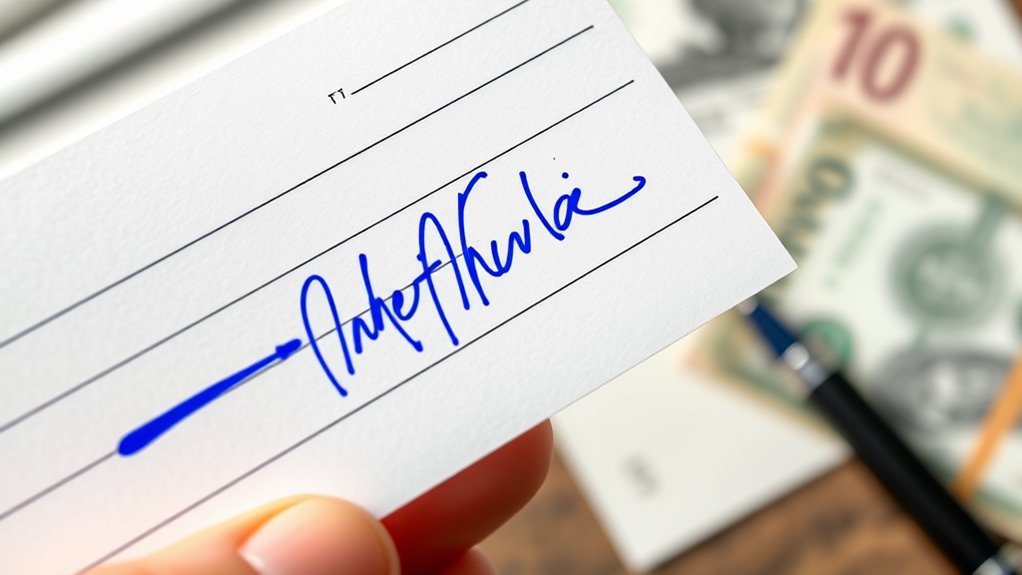
Is Blue Ink Acceptable When You Sign a Check?
Many people find themselves wondering about the best way to sign a check. It can be confusing, especially with so many ink colors and bank policies out there. You’re not alone—most folks want to ensure their checks are valid and secure.
Yes, blue ink is generally acceptable for signing checks, and many banks prefer it because it offers good contrast, helps verify signatures, and reduces the risk of fraud. While black ink is often favored by banks for consistency, blue ink is widely accepted and can make your signature stand out clearly.
Following bank policies and using a quality pen guarantee your check won’t face delays.
Keep going to learn more tips for proper check signing practices.
Key Takeaways
- Blue ink is widely accepted and helps distinguish original signatures from photocopies.
- Many banks prefer or accept blue ink for signatures, which can make verification easier.
- Using blue ink can also make it harder for someone to copy or fake your signature.
- Still, having a proper and consistent signature is more important than the ink color for check validity.
- Keep in mind that some banks might have specific policies favoring black ink, so it’s a good idea to check with your bank first.
Is Using Blue Ink for Checks Widely Accepted?

Is using blue ink for checks widely accepted? In most cases, yes. Blue ink is generally acceptable for signing checks because it offers good contrast and visibility, making signatures clear.
However, many banks and financial institutions prefer black ink for consistency and easier processing. Some banks might have specific policies that require black ink to avoid potential issues with check verification or processing.
While blue ink is popular among many check writers, black ink remains the standard recommended by banking guidelines. Using black ink helps ensure your check meets most banking standards and reduces the risk of rejection or delays.
What Do Banks and Financial Institutions Prefer?
Banks generally prefer blue or black ink for signatures to guarantee clarity and authenticity. Blue ink is often favored because it provides a strong contrast, making signatures easier to verify and helping prevent fraud.
While some institutions accept black ink, sticking to blue aligns with industry standards and simplifies processing.
Bank Preferences for Ink Color
Most banks and financial institutions prefer check signatures to be in blue or black ink because these colors guarantee clarity and authenticity. Blue ink is often recommended since it helps distinguish original signatures from photocopies, making verification easier. Although some banks might accept other dark ink colors, blue ink remains the standard for many procedures.
Using the right ink color guarantees smooth processing and reduces issues during manual handling. To meet bank requirements, consider these points:
- Follow specific ink color policies outlined by your bank
- Use blue ink to ensure clarity and authenticity
- Avoid lighter or unconventional ink colors
- Opt for dark, permanent ink to prevent smudging or fading
Sticking with blue ink can streamline your check transactions and record-keeping.
Signatures and Fraud Prevention
To improve security and prevent fraud, financial institutions prefer signatures on checks to be in blue or black ink. Using blue ink for signatures helps distinguish original signatures from photocopies or scanned images, reducing the risk of forgery.
Banks find blue ink especially useful because it makes signatures more authentic and easier to verify during processing. Many institutions see blue ink signatures as a standard security measure since they help prevent alterations and fraud.
Red or unusual ink colors are discouraged because they can raise suspicion or be hard to authenticate. By signing with blue ink, you strengthen the check’s security and make it easier for banks to confirm your signature’s validity.
Are There Exceptions When Using Blue Ink on Checks?
While blue ink is often acceptable, some banks have specific policies that require black ink for signatures. You should check with your bank or the transaction’s requirements to avoid issues. This is especially important for international or formal deals.
Keep in mind that digital transactions may have different standards. Always verify beforehand to make sure you’re following the right procedures.
Bank Preferences Vary
Are there exceptions to the general preference for black or blue ink when signing checks? Yes, because bank preferences vary. Some banks may accept blue ink depending on their policies, while others insist on black ink for consistency.
You should keep in mind that many banks prefer black or blue ink for clear, lasting signatures. Certain institutions require black ink to streamline processing. Some banks may reject checks signed in blue ink if their policies specify black ink for security.
It’s best to verify with your bank before signing to prevent delays. Understanding that bank preferences differ helps you avoid issues. While blue ink might be acceptable at some banks, others may reject it, so knowing your bank’s specific requirements is important.
Digital Transactions Considerations
In digital transactions, physical ink color usually doesn’t matter because most payments are processed electronically without needing a handwritten signature.
When you print physical checks from digital platforms, ink color becomes more relevant. Generally, blue ink is acceptable for signatures on checks, but some banks prefer black ink to ensure clear scanning and processing.
Certain financial institutions or automated check systems might specify black ink to improve image quality and reduce errors. If a physical signature is needed on a digitally issued or printed check, blue ink could be allowed if explicitly permitted by the bank or issuer.
Ultimately, whether blue ink is acceptable in digital transactions depends on your bank’s policies and the check processing method used.
How Does Blue Ink Help Prevent Fraud and Confirm Authenticity?
Have you ever wondered how blue ink can help prevent check fraud and verify authenticity? When you sign with blue ink, it makes a clear difference between the original signature and a photocopy. This visual cue helps banks and auditors spot tampering or forgery more easily.
The unique shade of blue ink does a few important things. It helps distinguish original signatures from copies, acting as a visual marker that the document is genuine. It’s also harder for counterfeiters to replicate convincingly.
Using blue ink on checks adds an extra layer of security. It makes counterfeiting less convincing and makes the verification process quicker for financial institutions.
Can Using Blue Ink Affect the Legality of a Check?
Many wonder if the color of ink used to sign a check can influence its legal standing. The truth is, using blue ink does not affect the check’s legal validity.
The key factors are the signer’s intent and the authenticity of the signature. Most banks accept blue ink for signatures, as long as the signature is clear and matches official records.
While blue ink helps distinguish original signatures from photocopies, it doesn’t make the check more or less legally valid. Some banks or payees might prefer black ink, but legally, a check signed with blue ink remains valid.
Ultimately, the legality of a check depends on proper signing and authorization, not the ink color.
Should You Use Blue Ink or Black Ink for Checks?
Choosing the right ink color for your checks can help ensure they’re accepted without any issues. While blue ink might look appealing, black ink is generally the better choice for signing checks. Many banks and financial institutions recommend or even require black ink because it provides high contrast and clarity.
Using black ink makes your check easier to read and process. It also helps prevent delays that can happen with scanning or photocopying blue ink. Some banks explicitly specify using black ink, so following their guidelines can reduce the risk of your check being rejected.
- Black ink offers better readability
- It’s widely accepted by banks
- Reduces problems with scanning and photocopying
- Helps avoid check disputes or delays
What Are the Benefits of Choosing Blue Ink for Checks?
Blue ink offers several advantages when signing checks because it creates a clear contrast against black or colored printing on the document. This makes your signature more visible and easier to verify.
Using blue ink also helps distinguish original signatures from photocopies, which can reduce the risk of fraud. Many banks accept blue ink signatures as standard, so your signed checks are recognized without any issues.
Blue ink signatures stand out well when scanned or photographed, making record-keeping simpler. Plus, choosing blue ink can give your checks a professional look, showing attention to detail.
How Can You Make Sure Your Check Signatures Meet Bank Requirements?
To make sure your check signatures meet bank requirements, start by checking your bank’s policies on acceptable signature styles and ink colors. Most banks accept blue ink for signatures on checks, but it’s good to double-check.
Use a consistent, high-quality pen with smooth ink flow for clarity. Sign your check exactly as your bank has your name recorded. Avoid using red, green, or metallic inks, as they may cause processing issues.
Sign within the designated signature line to keep it authentic. Following these tips helps prevent your checks from being rejected or delayed.
Being precise and consistent is key to smooth check processing and avoiding unnecessary problems.
Frequently Asked Questions
Can You Sign a Paycheck With Blue Ink?
Yes, you can sign a paycheck with blue ink. Most banks and employers accept blue ink because it clearly shows the original signature from copies, making it easier to verify.
While some might prefer black ink, blue is widely accepted and usually won’t cause any issues when processing. Just check if your employer or bank has specific requirements for ink color.
But generally, blue ink is a safe and acceptable choice for signing checks.
Is It Okay to Fill Out a Check-In With Blue Ink?
Yes, it’s okay to fill out a check with blue ink. Most banks accept blue ink because it’s clear, legible, and makes it harder to alter the check.
While black ink is often recommended for standardization, using blue ink is generally acceptable. Just check your bank’s specific guidelines, but in most cases, blue ink works just fine.
Is It Better to Sign in Black or Blue Ink?
Choosing between black or blue ink is like picking the right brush for a masterpiece. Black ink often paints the clearest, most professional picture.
You should sign checks in black ink because it offers higher contrast, better clarity, and is widely accepted by banks. While blue ink can look appealing, it might cause issues with readability or processing.
For a seamless, worry-free signature, black ink is your best bet.
What Kind of Ink Cannot Be Washed off a Check?
You should know that waterproof or archival inks, like pigment-based inks, can’t be washed off a check easily. These inks are designed to resist moisture and tampering, making them perfect for official documents.
On the other hand, water-soluble inks, such as standard fountain pen ink, can be washed off with water. So, if you want your signature to stay, choose a waterproof ink that’s resistant to washing or smudging.
Conclusion
So, next time you sign a check, think about the ink you choose. Will your signature blend into the background or stand out clearly, ready to be scrutinized?
Will it pass unnoticed by those who hold the purse strings? The choice of ink might seem small, but it could make all the difference when your financial story is written.
Are you prepared to make the right impression before it’s too late? Is blue ink acceptable when you sign a check?