How to Get Ink Out of Paper With a Step-By-Step Guide
Getting ink out of paper is a common frustration many people face. Whether it’s a mistake on a printed document or a pen leak on your favorite note, you’re not alone in struggling with this problem. Luckily, there are straightforward ways to tackle ink stains and save your paper.
To remove ink from paper, first identify the ink type—water-based, oil-based, or toner—as each needs a different approach. Prepare a clean workspace and test any method on a hidden area.
For water-based inks, use gentle solvents like rubbing alcohol or natural remedies like lemon juice. You can also carefully scrape or lightly sand the ink, or apply heat or cold to loosen it.
If stubborn stains remain, exploring detailed techniques can provide more effective solutions.
Key Takeaways
- First, figure out what kind of ink you’re dealing with—whether it’s water-based, oil-based, or toner. This will help you pick the right method to remove it.
- Before applying any solvent fully, test it on a small, hidden part of the paper. Use a cotton swab or soft cloth for this.
- Gently dab the solvent onto the ink stain. Remember, blot instead of rubbing to avoid spreading or damaging the paper.
- If you’re trying to loosen the ink, you can carefully apply heat with a hairdryer or cold by freezing the paper. Be cautious with both methods to prevent damage.
- For stubborn stains or valuable documents, it’s best to ask a professional for help. They can handle delicate situations without causing further harm.
Identify Your Ink Type and Its Removal Challenges

How can you determine the type of ink on your paper? First, look at whether the ink is water-based, oil-based, or toner ink. Water-based inks are usually easier to remove with gentle solvents like alcohol or vinegar, but if the ink is dried, it might take more effort.
Oil-based inks are tougher to remove and can sometimes damage the paper if you’re not careful. Toner ink from laser printers often needs chemical solvents like acetone or even physical scraping to get rid of.
Knowing if the ink is fresh or dried helps you pick the right method. Dried ink is more difficult to remove, so it requires different techniques. Also, think about where the ink is, the type of paper, and what kind of ink it is, as these factors affect how hard it is to remove and what solvents are safe to use.
Prepare Your Workspace and Choose the Right Method
Are you ready to start removing ink from your paper? First, set up a clean, well-lit workspace with all your tools and cleaning agents within reach. Gather supplies like cloths, brushes, or applicators, and any cleaning agents you’ll need.
Before applying any solvent, test it on a small, hidden area of the paper to prevent damage. Decide on the best method based on the ink type—water-based, oil-based, or toner—and the paper surface, such as glossy or coated.
If you’re using chemical solvents like acetone, make sure to wear protective gear like gloves and masks. Carefully read and follow each product’s instructions to ensure safe and effective ink removal.
Proper preparation helps you avoid accidental damage and makes the process smoother.
How to Remove Ink With Chemical Solvents
Start by choosing a suitable chemical solvent, like acetone or rubbing alcohol. Before applying it to the main area, test it on a small, hidden part of the paper first.
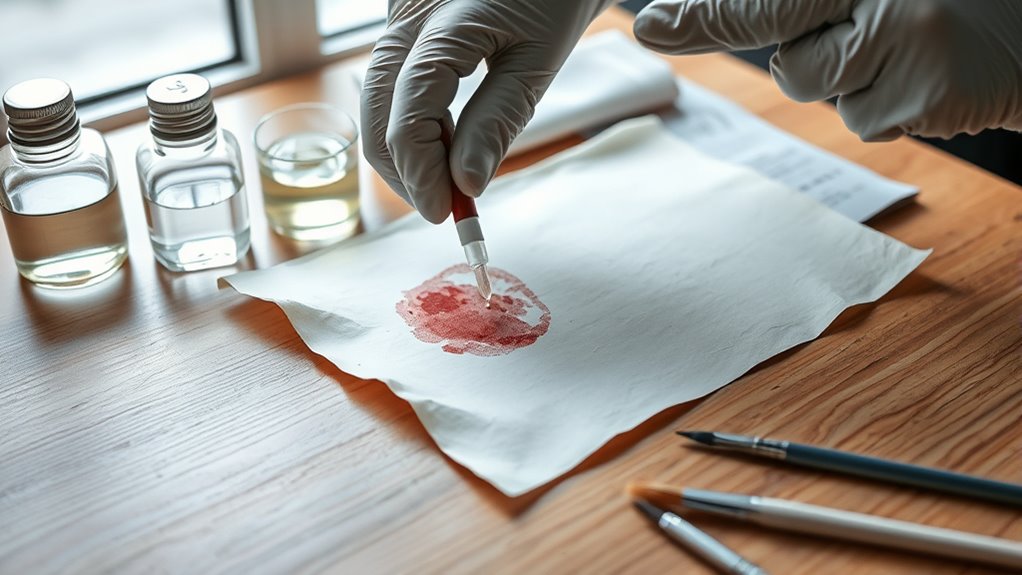
Use a cotton swab to carefully dab the solvent onto the ink. Be gentle to lift the ink without causing any damage to the paper.
Apply the solvent in small amounts and blot immediately. Let the paper dry completely before handling it further.
Selecting Suitable Solvents
Selecting the right chemical solvent is key when trying to remove ink from paper because using the wrong one can cause permanent damage. Your choice of solvents—like white vinegar, acetone, or rubbing alcohol—depends on the ink type and how sensitive the paper is.
White vinegar, being a mild acid, can gently break down ink bonds when dabbed with a cotton swab. But you need to be careful to avoid discoloration. Acetone and rubbing alcohol are stronger and better for stubborn ink. Apply them with a cotton swab and blot immediately to prevent spreading or damage.
Always test any chemical solution on a small, hidden area first. This helps you check for discoloration or surface damage. Use these solvents carefully to avoid weakening or warping delicate paper surfaces.
Testing on Small Areas
Before applying any chemical solvent to remove ink, it’s important to test a small area of the paper first. Use a cotton swab or fine-tipped brush to carefully apply the chemical on a hidden spot, avoiding spreading it to surrounding areas.
Wait a few seconds to see if the ink starts to lift or dissolve. Then, gently blot with a clean tissue to remove the dissolved ink during the blotting process. Check for any discoloration, warping, or damage to prevent possible harm.
If you notice any adverse reactions, stop immediately. Rinse or blot the tested area with water or a neutralizer if needed to remove residual chemicals, helping to prevent long-term damage.
This careful testing helps ensure safe, effective ink removal without risking unnecessary damage.
Applying With Care
How can you effectively apply chemical solvents to remove ink without causing damage? Start by testing first on a small, inconspicuous area of the paper to avoid any damage.
When you’re ready, gently dab a soft cloth or cotton swab with small amounts of solvent like rubbing alcohol or acetone onto the inked area. Be careful to apply it gently, avoiding excessive rubbing that could tear or warp the paper.
Let the solvent sit for a few minutes to loosen the ink bonds. Then, blot the ink with a clean cloth or tissue to lift it.
Repeat this process as needed, adding small amounts of solvent gradually. After removing the ink, blot the area with a damp cloth to clean any residual solvent.
Finally, let the paper dry flat to prevent warping.
Natural Household Methods for Ink Removal
Natural household methods offer a gentle yet effective way to remove ink stains from paper. You can use simple items like lemon juice or a baking soda paste for natural ink removal. Dab a cotton swab dipped in lemon juice onto the ink stain and gently blot to lift the ink without damaging delicate paper.
Alternatively, prepare a paste by mixing equal parts baking soda and water, then apply it with a soft cloth or your finger. Let it sit briefly before wiping away. Always test these natural cleaning methods on a hidden corner first to avoid discoloration.
Using controlled amounts of lemon juice or baking soda paste minimizes risk and ensures gentle blotting for the best results. Stick to light, controlled use to protect your paper and achieve effective ink removal.
Mechanical Techniques: Sandpaper, Razor, and Erasers
Mechanical techniques can help remove ink from paper, but you need to be careful to avoid damaging the surface. Using fine-grit sandpaper, a sharp razor, or rubber erasers can be effective if applied gently and with caution.
Always test on an inconspicuous area first to prevent unintended tears or thinning. This way, you can see how the paper reacts before working on a visible spot.
Gentle Surface Scraping
Ever wondered how to gently remove ink from paper without causing damage? Surface scraping with fine-grit sandpaper can help. Use light circular pressure to lift surface ink, making sure not to use too much force that might harm the paper.
When scraping, go for gentle motions to avoid scratches or weakening the paper’s structure. If you prefer, a razor blade can carefully lift surface ink by applying light, controlled pressure, but only after testing on an inconspicuous area.
Rubber ink erasers work well for ballpoint ink. Rub with short, smooth strokes, being cautious not to press too hard. Always test your technique first to avoid unintended damage.
The goal is to remove surface ink efficiently while preserving the paper’s integrity.
Using Fine Grit Sandpaper
Using fine-grit sandpaper is an effective way to gently remove surface ink from paper without causing significant damage. Choose sandpaper in the 400-600 grit range to avoid tearing the paper surface.
With light pressure, carefully rub the sandpaper over the ink stain in small, circular motions. This helps delicately lift the ink without disturbing the paper fibers.
Be patient and avoid pressing too hard, as excessive force can weaken the paper or create holes. Focus on the inked area and gradually lift the ink while keeping the paper intact.
After sanding, you can use a soft eraser or cloth to smooth the surface and remove any leftover particles. This method ensures effective ink removal while minimizing damage to the paper.
Precautions for Paper Damage
While mechanical techniques like sandpaper, razors, and erasers can effectively remove ink, they also risk damaging delicate paper surfaces if you’re not careful. Always test your method on an inconspicuous area first to see how the paper reacts.
Use gentle removal techniques and apply light pressure to avoid tearing or weakening the paper’s structure. Coarse grit sandpaper or aggressive blades can cause scratches or irreparable damage.
It’s best to opt for fine-grit options and work slowly. Remember, mechanical methods should be a last resort after trying safer chemical or natural ink removal options.
Using Heat or Cold to Help Remove Ink Safely
Applying gentle heat or cold can help loosen or reduce ink stains on paper, but it’s important to do so carefully to avoid damage. Using a hairdryer set at 100-120°F about 6 inches from the paper can help dissolve certain inks, making ink removal easier.
Keep the heat source moving back and forth to warm the area evenly without overheating, which can cause damage. For more concentrated heat, a heat gun works, but it needs careful control to prevent scorching or warping.
Alternatively, freezing the paper can sometimes reverse heat-sensitive ink effects, causing the ink to contract or become less adherent. Always test on a small, hidden spot first to protect the paper’s integrity and avoid unintentional damage.
Troubleshooting: What to Do When Ink Won’t Come Out
If gentle heat or cold doesn’t loosen stubborn ink stains, you might find that the ink simply refuses to budge despite multiple attempts. Removing ink can be tricky, especially with deeply absorbed stains.
You can try applying alcohol or acetone carefully, blotting the ink stain without rubbing to avoid damaging the paper. Repeat the process, letting each layer work before reapplying.
For tougher stains, white vinegar may help lighten the ink, but use it cautiously. Mechanical removal like scraping or sanding risks tearing or thinning the paper and should be a last resort.
If these ink removal techniques fail, consider commercial ink removers or professional restoration. Always test on an inconspicuous area first to prevent further damage.
Keep in mind that some stains may only lighten rather than fully disappear.
When to Seek Professional Ink Removal Help
Sometimes, trying to remove ink stains yourself can cause more harm than good, especially if the stain is stubborn or deeply embedded. If the ink has soaked through multiple layers or is on fragile paper, it’s best to get professional help.
When DIY methods don’t work after several tries, consulting a document conservator can prevent further damage. For valuable or antique documents, experts use specialized tools and techniques to minimize risks.
If you’re unsure about the ink type or the paper’s fragility, professionals can assess the situation and recommend the best approach. When chemical removal or mechanical methods might weaken or tear the paper, it’s safer to rely on trained specialists to preserve your documents safely.
Frequently Asked Questions
How to Remove Ink From Paper Easily?
To remove ink easily, act quickly and gently blot the stain with a damp cotton swab or cloth.
Test any solvent first on a hidden corner to avoid damage.
Use mild solutions like white vinegar or rubbing alcohol sparingly to dissolve water-based ink.
For stubborn stains, carefully scrape or sand the surface with fine tools.
Let the area dry completely before handling or writing over it.
Patience and gentle techniques work best for the best results.
Can Lemon Juice Remove Ink From Paper?
Think of lemon juice as a gentle eraser for ink stains. It can lighten or remove fresh, water-based ink if you’re careful.
You just need to apply a small amount with a cotton swab. But be careful—using too much or rubbing too hard can damage your paper.
Always test on a hidden spot first to avoid discoloration. Lemon juice works best on light, recent stains, not dried or oil-based inks.
Does Water Remove Ink From Paper?
Water can sometimes help remove water-based inks like ballpoint or gel ink if you act quickly and gently. You should dab or blot the stain with a damp cloth, but be careful not to overdo it. Too much water can cause the paper to warp or tear.
Keep in mind, water isn’t very effective on dried or permanent inks, and it might make the stain worse. So, it’s not always the best solution, especially if the ink has dried completely.
What Is the Best Ink Remover for Paper?
Imagine your paper as a canvas waiting to be freed from ink’s grip. The best remover depends on your ink type: use chemical solvents like acetone for stubborn toner or ballpoint ink.
Natural options like lemon juice work well for water-based inks. For delicate papers, gentle erasers or sandpaper act like whispering brushes.
Always test first to avoid damage. Choose the method that best suits your paper’s delicate surface.
Conclusion
Now that you’re familiar with different ways to remove ink from paper, you’re ready to take on those stubborn stains. Patience and the right approach really do make a difference.
Are you prepared to experiment carefully and avoid damaging your paper? With a bit of effort and the proper techniques, you can improve your paper’s appearance.
So, why not give it a try and see how effective these tips can be? Your paper will thank you!