Does White Ink Tattoo Hurt More?
Thinking about a white ink tattoo? You’re not alone—many people worry about the pain involved with this unique style. It’s a common concern, especially for those new to tattooing or with sensitive skin.
White ink tattoos tend to hurt more than traditional black ink designs because they require deeper needle penetration, more passes, and thicker application. This increases skin irritation and hits nerve endings more sharply, especially on sensitive areas.
The thicker ink creates more resistance, making the process more uncomfortable. If you want to understand ways to minimize this discomfort, keep exploring – there’s helpful advice that can make your experience better.
Key Takeaways
- White ink often requires more passes and deeper skin penetration, which can make the tattooing process more uncomfortable compared to traditional black ink.
- Thicker white ink creates more resistance against the needle, meaning more pressure is needed. This extra pressure can increase the sensation of pain during the procedure.
- Because of the multiple passes and deeper needle insertions, nerve endings are hit more sharply, raising the overall pain levels.
- Sensitive areas with lots of nerve endings tend to be more painful, especially when white ink is applied on inflamed or irritated skin.
- Choosing an experienced artist and talking about pain management options can really help make the process more comfortable.
Does White Ink Hurt More Than Traditional Tattoos?
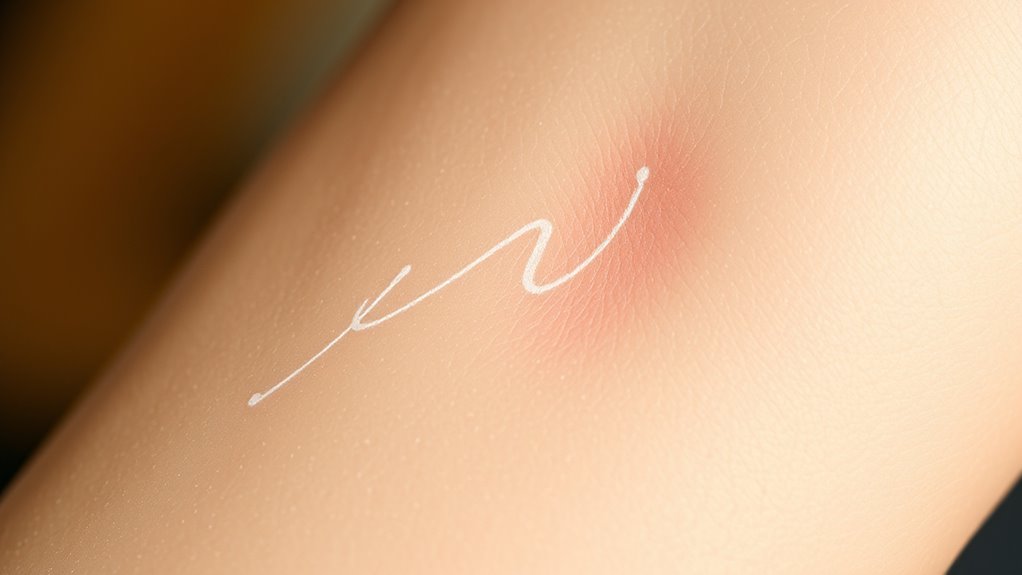
While white ink tattoos don’t necessarily cause more pain because of the pigment color itself, the tattooing process often makes them more uncomfortable than traditional black ink tattoos.
White ink requires more passes and deeper penetration into your skin, which can increase discomfort. Its thicker consistency means more pressure is needed during application, amplifying the pain you feel.
Furthermore, white ink is usually applied last on raw, sensitive skin, heightening irritation and sensation. The use of lining needles, which tend to cause more pain than shading needles, also adds to the discomfort.
Why Does White Ink Feel More Painful During Tattooing?
The main reason white ink feels more painful during tattooing is due to the techniques and conditions needed for its application. White ink often requires more passes and deeper needle penetration into your skin, which increases discomfort.
Its thicker consistency also demands extra pressure from the needle, making the process feel more painful. Plus, white ink is usually applied after the initial tattoo when your skin is already irritated, which makes it more sensitive to pain.
Using lining needles for white ink can cause more discomfort than shading needles because of their sharper, more precise tips. All these factors—more passes, deeper penetration, increased pressure, and sensitive skin—mean that tattooing with white ink naturally feels more painful compared to other colors.
Do Multiple Passes and Deep Needle Penetration Increase Discomfort?
Multiple passes with the needle and deeper needle penetration can significantly increase discomfort during a tattoo session. When working with white ink, artists often need several passes to get the opacity right, which can cause more skin irritation and inflammation.
Deeper needle penetration hits nerve endings more strongly, leading to sharper and more noticeable pain. Repeating the same area also causes additional skin trauma, making it feel more uncomfortable.
Since white ink usually needs extra passes for proper coverage, the process takes longer, and that means more pain. The longer the procedure, especially with multiple passes and deep needle use, the more you’ll feel each movement.
All these factors combined tend to raise the level of discomfort during a white ink tattoo session.
Does the Thickness of White Ink Make It More Painful?
Thicker white ink requires more pressure during application, which can make the process more uncomfortable. Its increased resistance may lead to longer sessions and deeper needle penetration, both of which can heighten pain.
As a result, the overall experience might be more painful compared to thinner inks.
Increased Needle Resistance
Since white ink has a thicker consistency, it creates more resistance as the needle injects it into your skin. This increased needle resistance means the tattoo needle needs to apply extra force to push the viscous white ink beneath the surface.
As a result, you might experience more pain and discomfort during the process. The added pressure can cause more trauma to nerve endings, which can intensify sensations of pain.
Artists often need to exert more control and make multiple passes to deposit enough white ink. This can further increase discomfort. Overall, the greater resistance from thicker white ink makes the tattooing experience more painful, as your skin endures extra force and trauma during application.
Greater Application Pressure
Because white ink tends to be more viscous, it often requires you to apply more pressure during tattooing. The artist has to push harder to get the dense white ink into your skin, which can make the process more uncomfortable.
Thicker white ink resists passing through the skin more than thinner inks, so the artist may need to make multiple passes. Each pass adds to the overall pressure and pain you feel.
This increased force can irritate nerve endings more than standard inks, amplifying discomfort. Variations in ink thickness across brands also influence how much pressure is needed.
Generally, the thicker the formulation, the more force the artist must exert. So, this extra application pressure can make the tattooing experience more painful for you.
Longer Session Duration
The increased viscosity of white ink means your tattoo session will likely take longer than with standard inks. White ink tattoos often need more time because the artist has to do multiple layered passes to get the right opacity.
This thicker ink requires more effort and pressure, which can stretch out the tattooing process and cause extra skin irritation. Needle adjustments are needed more often, as the artist tweaks the needle depth and movement to handle the dense pigment.
As a result, the process slows down, leading to more skin fatigue and nerve irritation. Longer sessions can also increase discomfort and pain, making white ink tattoos more challenging than black ink designs.
The longer the session lasts, the more pain and sensitivity you might experience.
Are Sensitive Areas More Painful When Getting White Ink Tattoos?
Getting a white ink tattoo on sensitive areas like the ribs, inner arms, or spine can be more painful than in less delicate regions. These areas have more nerve endings, which makes you more likely to feel discomfort during the tattoo process.
White ink applications often happen after the initial tattoo, when your skin is already irritated, which can make the pain worse. The thicker consistency of white ink and the need for extra passes can also increase discomfort, especially on delicate skin.
Repeated needle passes over sensitive areas cause more nerve irritation and can prolong the pain. Plus, the skin from previous tattooing is inflamed, making these spots even more prone to pain during white ink application.
How Can You Minimize Pain When Getting White Ink Tattoos?
To minimize pain when getting white ink tattoos, choosing an experienced artist is essential. Skilled artists know how to use the right technique, which can help reduce discomfort from multiple passes or deep needle penetration.
Since white ink often needs more pressure and careful application, an experienced artist can work efficiently with lighter, slower needle movements. This helps lessen the pain you feel during the process.
White ink’s thicker consistency might increase pressure during tattooing, but a seasoned artist knows how to manage this without causing extra discomfort. They can adjust their technique to make the experience smoother.
Because white ink is usually applied over sensitive skin, an experienced tattoo artist can adapt their approach to minimize trauma to the area. Picking a professional ensures your tattooing experience is as comfortable as possible despite the challenges of white ink.
What Are Tips for a Less Painful White Ink Tattoo Experience?
Choosing the right strategies can make your white ink tattoo experience much less painful. To keep things comfortable, focus on preparation and technique.
Pick an experienced artist who is skilled in white ink. A smoother application means less discomfort for you. Keep your designs small and simple to cut down on session time and reduce pain.
Avoid sensitive areas like ribs or inner arms, which tend to be more painful. Applying numbing agents or topical anesthetics beforehand can help dull nerve endings and make the process more comfortable.
Staying well-hydrated and avoiding alcohol or caffeine before your appointment can also help lower skin sensitivity and overall discomfort.
Frequently Asked Questions
Why Do Tattoo Artists Not Like White Ink?
Tattoo artists dislike white ink because it’s harder to work with, needing multiple passes and deeper needle penetration. This increases your discomfort during the process.
It’s thicker too, which means more pressure and a precise technique are required, making the application more challenging.
White ink also tends to fade quickly and can cause skin irritation or healing issues, leading to dissatisfaction.
Plus, the longer sessions and potential complications make it less appealing for artists to specialize in, affecting their workflow and client outcomes.
How Much Tip on $500 Tattoo?
For a $500 tattoo, you should tip your artist around 15-20%. That’s $75-$100, a nice way to say thanks for your ink adventure.
If the work’s complex or the session’s long, lean toward 20%.
How Painful Is a White Ink Tattoo?
A white ink tattoo can be more painful than others because it’s often applied when your skin’s already irritated, and the thicker ink needs more pressure.
You might feel extra discomfort due to additional passes over the skin and the application on sensitive areas.
While the ink itself isn’t inherently more painful, the process’s intensity, longer duration, and timing can make it feel more uncomfortable.
Is White Tattoo Ink Worse?
White tattoo ink isn’t inherently worse, but the application process can make it seem more uncomfortable. You’ll probably feel more pain because it needs more passes and deeper penetration, which puts more pressure on your skin.
Since white ink is often applied last, your skin might already be irritated, making the pain feel worse. The thicker consistency and the layered passes also extend the session, which can make the experience seem more intense than with other colors.
Conclusion
So, there you have it—white ink tattoos might just be the masochist’s choice of body art. If you enjoy the thrill of extra needles and the excitement of deeper pain, go ahead and pick white ink.
Just remember, pain is temporary, but regretting that Instagram-worthy white ghost tattoo? Now that’s forever. So, brace yourself, stay relaxed, and maybe keep a promise to yourself: next time, stick to the fun, pain-free stuff!