
How Does Disappearing Ink Work?
Are you curious about how disappearing ink works? Many people love the magic behind it but often wonder about the science that makes it fade away so effortlessly. If you’re into clever tricks or want to understand the chemistry, you’re not alone.
Disappearing ink works through a chemical reaction involving a pH indicator, typically thymolphthalein. When you write with the ink, it appears blue because of the basic environment created by substances like sodium hydroxed.
Exposure to air introduces carbon dioxide, which forms carbonic acid and lowers the pH, turning the ink colorless and making it fade.
If you want to understand the chemistry behind this fascinating process, there’s more to investigate.
Key Takeaways
- Disappearing ink contains a pH indicator like thymolphthalein. This indicator changes color depending on the solution’s pH level.
- When the environment is basic, the ink looks blue. But if the pH drops below 10.5, it turns colorless.
- Exposure to air introduces carbon dioxide, which forms carbonic acid. This acid lowers the pH and causes the ink to fade away.
- The fading process isn’t permanent. Neutralization reactions can bring the pH back down, making the message disappear temporarily.
- Factors like humidity and how thick the layer of ink is can affect how fast it fades over time.
What Is Disappearing Ink and How Does It Work?
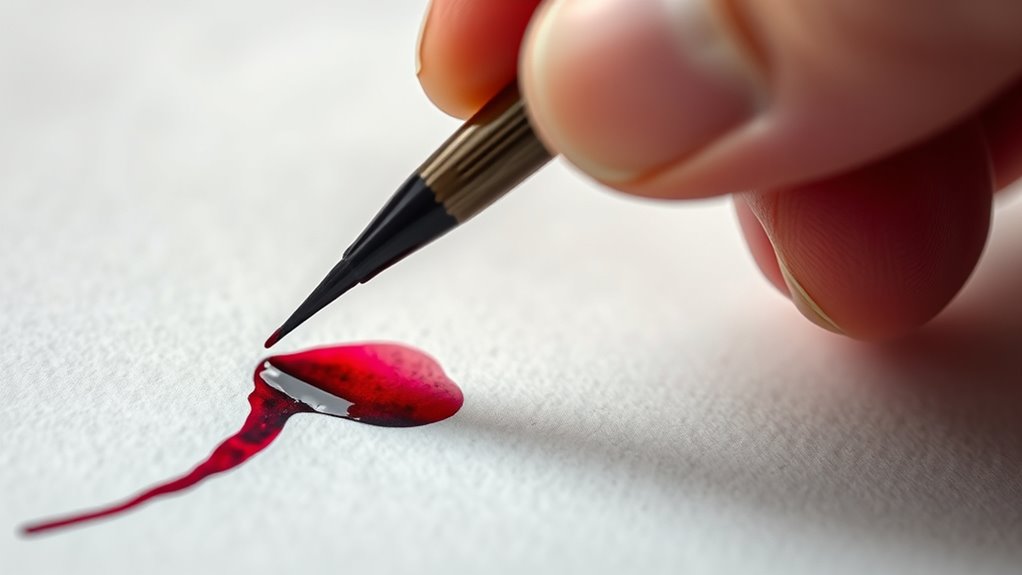
Disappearing ink is a special type of secret ink that temporarily shows a message and then vanishes without leaving a permanent mark. It works through a chemical reaction involving a pH indicator, like thymolphthalein.
Disappearing ink reveals messages temporarily through a pH indicator and chemical reactions.
When you write with disappearing ink, it contains substances like sodium hydroxide, which creates a basic environment, making the message visible. Over time, exposure to air introduces carbon dioxide.
This carbon dioxide reacts with the alkaline solution to form carbonic acid. This neutralizes the pH, causing the ink’s color to fade and the message to disappear.
The process relies on the pH indicator’s ability to change color depending on acidity or alkalinity. This natural fading makes disappearing ink perfect for short-term secret messages, security, or just fun activities.
The Chemistry That Makes Disappearing Ink Fade
The fading process depends on a chemical reaction that happens when the ink is exposed to air, especially when it absorbs carbon dioxide. When the alkaline ink reacts with carbon dioxide, it forms carbonic acid, which lowers the pH.
Since disappearing ink contains pH-sensitive indicators like thymolphthalein, this change from alkaline (above pH 10.5) to less alkaline makes the ink lose its color. As the pH drops, the basic parts are neutralized, turning the ink transparent or colorless.
Increasing air exposure or adding mild acids like vinegar speeds up this process by making the pH decrease faster. In the end, the chemistry—absorbing carbon dioxide and lowering pH—makes the ink fade smoothly.
What Ingredients Are Used in DIY Disappearing Ink?
To make DIY disappearing ink, you’ll mainly need thymolphthalein, sodium hydroxide, ethyl alcohol, and water. These ingredients work together to create a solution that changes color in response to pH shifts.
Be sure to follow safety precautions when handling these chemicals to avoid any accidents.
Key Chemical Components
- Thymolphthalein’s color change depends on pH shifts.
- Sodium hydroxide raises the solution’s alkalinity.
- The pH indicator’s color responds to CO₂ exposure.
Preparation Process
Wondering how to make your own disappearing ink? To start, dissolve thymolphthalein in a mixture of alcohol, like ethanol, and water. Thymolphthalein is a pH indicator that reacts to the solution’s alkalinity, changing color in basic conditions.
To create the right environment, add sodium hydroxide (NaOH), which raises the pH and keeps the ink vibrant. You can also include small amounts of vinegar or water to fine-tune the pH and control how quickly the ink disappears.
The alcohol helps dissolve thymolphthalein more effectively and improves the ink’s storage stability. By carefully combining these ingredients, you’ll produce a DIY disappearing ink that reacts predictably to pH changes and vanishes when the pH drops.
Safety Precautions
Have you thought about the potential hazards when handling ingredients for DIY disappearing ink? Sodium hydroxide (NaOH) is a caustic chemical that requires careful handling because it’s corrosive. Always wear gloves and eye protection when working with it to stay safe.
Ethyl alcohol, which dissolves thymolphthalein, is flammable. Keep it away from open flames or heat sources to prevent accidents. It’s also important to work in a well-ventilated area and store chemicals out of children’s reach.
Remember, safety precautions are key to avoiding skin burns or eye injuries. Always dilute chemicals properly before disposal and never pour concentrated solutions down the drain.
Prioritizing safety makes your DIY project both fun and risk-free.
How Thymolphthalein Causes Temporary Color Changes
Thymolphthalein changes color based on pH levels, shifting from clear in acidic conditions to blue in basic solutions.
When used in disappearing ink, it reacts to the slight decrease in pH caused by carbon dioxide exposure, which forms carbonic acid.
This acid-base reaction lowers the pH below 10.5, causing the dye to revert to its colorless form and temporarily erase the ink.
pH-Dependent Color Shift
The color-changing ability of thymolphthalein as a disappearing ink depends on how it responds to pH levels. As a pH indicator, thymolphthalein turns blue in basic solutions with a pH above around 10.5, but stays colorless in neutral or acidic environments.
When exposed to air, carbon dioxide reacts with water to produce carbonic acid. This lowers the pH level, causing thymolphthalein to change back from blue to its colorless form, making the ink disappear.
To understand this process better:
- The color of the pH indicator depends on the pH level.
- Carbon dioxide from the air affects the pH by forming carbonic acid.
- The temporary color shift happens because of this pH change caused by the acid.
Acid-Base Reaction Mechanism
When thymolphthalein reacts to changes in pH, it does so through a reversible acid-base equilibrium. As a pH indicator, thymolphthalein shifts between two forms depending on the environment.
In basic solutions above pH 10.5, it’s deprotonated and appears blue. When the pH drops below this point, it gains a proton and returns to a colorless form.
This reaction is driven by the balance between protonated and deprotonated states, making it reversible. The process can be summarized as:
| pH Range | Indicator Form | Color |
|---|---|---|
| >10.5 | Deprotonated | Blue |
| <10.5 | Protonated | Colorless |
| Neutral | Equilibrium state | Shift |
| Air exposure | CO₂ reacts with water | pH drops |
This acid-base mechanism explains how thymolphthalein causes the temporary color change in disappearing ink.
Disappearance Process Explained
As the ink reacts with the air around it, its color starts to fade because of a chemical change caused by pH shifts. Thymolphthalein, a pH indicator, initially turns blue in the high pH environment of the ink.
When exposed to air, carbon dioxide reacts with water to form carbonic acid, which lowers the pH. Once the pH drops below about 10.5, thymolphthalein shifts from blue to colorless, making the ink disappear.
This process is reversible because it’s based on neutralization, not destruction. Factors that influence this include air exposure, which introduces carbon dioxide, and the resulting decrease in pH levels that causes the color change.
How Carbon Dioxide Causes Disappearing Ink to Fade
Carbon dioxide causes disappearing ink to fade by reacting with the water in the solution to form carbonic acid. This chemical reaction lowers the pH of the ink, making it more acidic.
As the pH drops below the indicator’s threshold, the disappearing ink changes from its colored form back to colorless. When you leave the ink exposed to air, carbon dioxide naturally diffuses into the solution, speeding up this process.
The formation of carbonic acid neutralizes the alkaline parts of the ink, causing the color to fade gradually. This explains why disappearing ink becomes invisible over time when left in open air.
Basically, carbon dioxide’s effect on pH triggers the fading, so the ink disappears without any external removal needed.
How to Apply and Remove Disappearing Ink Step-by-Step
To apply disappearing ink effectively, start by choosing a clean surface and pick your preferred tool—like a brush, pen, or cotton swab.
Make sure to apply the ink evenly across the surface. Allow it to dry completely, which usually takes a few minutes.
Ensure even application and full drying for effective disappearing ink removal.
Once dry, expose the area to air so the natural reaction can fade the message. You can speed up removal by gently blowing on it or dabbing with a damp cloth or vinegar.
After the ink disappears, check under natural or UV light to make sure it’s fully gone. Proper application and removal will ensure the disappearing ink works as intended.
What Factors Influence How Quickly Disappearing Ink Vanishes?
The speed at which disappearing ink fades depends on several key factors that influence its chemical reactions. One major factor is the concentration of sodium hydroxide in the solution, which affects how quickly the ink’s pH shifts and neutralizes.
Environmental humidity and temperature also play roles. Higher humidity and warmth tend to accelerate the fading process. Exposure to carbon dioxide from the air lowers the pH by neutralizing the sodium hydroxide, speeding up disappearance.
Furthermore, the amount of ink applied influences how fast it vanishes—thinner layers disappear faster. The surrounding environment’s pH balance, affected by other acids or bases, can either hasten or slow down the process. All these factors work together to determine how quickly your disappearing ink vanishes.
Practical Uses of Disappearing Ink in Security and Art
Disappearing ink plays a crucial role in security by creating temporary markings that prevent tampering and counterfeiting.
Artists use it to craft ephemeral works or hidden designs that surprise viewers as they fade over time.
These practical applications show how disappearing ink improves both safety measures and creative expression.
Security Marking Techniques
Security marking techniques use disappearing ink to discreetly authenticate valuable items. This method involves applying invisible ink that can be checked later through specific cues.
When used for security marking, the ink is often hidden from plain sight, making it hard for counterfeiters to detect or copy. You can verify markings under UV light, which reveals hidden codes or symbols that fade over time or when exposed to air.
These techniques are especially useful for marking jewelry, electronics, or packaging. They add a covert layer of protection that’s hard to detect.
Key aspects include using invisible ink for covert security marking, verifying authenticity with UV light or chemical activation, and applying temporary marks that fade so only authorized personnel can confirm legitimacy.
This approach helps prevent theft, counterfeiting, and unauthorized duplication.
Artistic Invisible Effects
Artists often incorporate disappearing ink into their works to add hidden messages or images that only reveal themselves under specific conditions. This creates a layered, interactive experience that invites viewers to discover more.
UV-visible ink and disappearing ink allow for secret messages that become visible only when exposed to certain light or environmental factors. These effects help artists embed subtle details, themes of ephemerality, or fleeting memories within their pieces.
By using disappearing ink, artists craft dynamic visuals that fade over time, emphasizing impermanence. The chemical reactions, like thymolphthalein turning colorless in response to CO₂, add a scientific twist to the artwork’s transformation.
This technique encourages viewers to engage actively, uncovering concealed stories or symbols. It magnifies the artistic experience through fleeting, hidden visuals that surprise and delight.
Temporary Creative Displays
In practical applications, disappearing ink is a handy tool for temporary displays that need to be quickly verified or removed. It’s often used in security features for tickets and passes, making validation fast and easy as the ink fades over time.
Artists also use disappearing ink for temporary art projects, creating interactive pieces with hidden messages or images that only show up under certain conditions like UV light or heat. It adds an element of surprise to their work.
In theater and entertainment, disappearing ink creates fleeting effects, such as temporary stage markings or special effects that vanish after a short time. It’s perfect for short-term needs.
You might come across disappearing ink in security markings that disappear after verification, or in temporary art installations with messages that fade away. It’s also used for hidden messages in displays that reveal themselves under specific stimuli.
This versatility makes disappearing ink a valuable tool for short-term security and artistic expression.
Safety Tips for Handling Disappearing Ink Chemicals
Handling disappearing ink chemicals requires careful attention to safety to prevent accidents. Always wear gloves and eye protection when working with sodium hydroxes, as it’s caustic and can cause skin burns or eye irritation.
Always wear gloves and eye protection when handling caustic chemicals like sodium hydroxide.
Work in a well-ventilated area to avoid inhaling fumes from chemicals like ethanol and sodium hydroxide. Store chemicals in clearly labeled, airtight containers, keeping them out of reach of children and pets to prevent accidental ingestion or contact.
After using the chemicals, thoroughly wash your hands and exposed skin with soap and water to remove any residue. Follow proper chemical disposal procedures by pouring leftover solutions down the drain with plenty of water, avoiding concentrated chemicals that could harm the environment.
Safety should always come first.
How to Make Disappearing Ink at Home Easily
Making your own disappearing ink at home is easy and safe if you follow a simple process. First, dissolve 1 gram of thymolphthalein in 100 mL of ethyl alcohol, then add 900 mL of water while stirring.
Next, slowly add 10 mL of 3 M sodium hydroxide solution until the mixture turns dark blue. This reaction depends on the pH change, since thymolphthalein is colorless in acidic conditions and blue in basic ones.
When you apply the ink to fabric or paper, it disappears because carbon dioxide from the air lowers the pH, neutralizing the sodium hydroxide. To keep your disappearing ink ready, store it in a sealed container.
Be careful when handling sodium hydroxide to avoid accidents.
Limitations and Challenges of Using Disappearing Ink
Disappearing ink has some limitations that can make it less practical and reliable. It relies on pH-sensitive chemicals like thymolphthalein, which makes controlling exactly when it disappears tricky.
Environmental factors such as humidity, temperature, and airflow can unpredictably influence how long the ink lasts and how quickly it fades. These variables can lead to inconsistent results, making it less dependable for important messages.
The chemical reaction behind disappearing ink is reversible only under certain conditions, which means it can’t be used for long-term purposes or reused easily. Handling chemicals like sodium hydroxide also brings safety risks, so careful regulation during application and disposal is essential.
Frequently Asked Questions
Does Disappearing Ink Really Work?
Yes, disappearing ink really works. When you write with it, a chemical reaction makes the message visible, usually as a blue mark.
Over time, exposure to air’s carbon dioxide neutralizes the base, causing the ink to fade or disappear completely. Its effectiveness depends on environmental conditions like humidity and air exposure.
But generally, it vanishes within minutes to hours, making it perfect for quick, temporary messages.
How Long Does It Take for Disappearing Ink to Go Away?
Disappearing ink usually fades within a few minutes to several hours, depending on environmental factors.
If you’re in a humid area, it’ll disappear faster. On porous surfaces like paper or fabric, it tends to last longer.
Air exposure speeds up the process, and you can control the timing slightly by adding small amounts of acid or base.
Keep in mind, the exact time varies based on conditions.
Can You Make Disappearing Ink Reappear?
Yes, you can often make disappearing ink reappear, but it depends on the type.
For pH-sensitive inks, restoring the original pH by adding an alkali or heating can bring the message back temporarily.
However, once the pH drops below a certain level, the ink usually becomes permanent.
You might need to reapply the original ink solution, as simply reversing the chemical change isn’t always possible.
How Long Does Vanishing Ink Take to Disappear?
Vanishing ink usually disappears in about 30 seconds to a few minutes, depending on the environment.
If you’re in a humid or warm place, it might fade faster. Cooler or less humid areas tend to slow down the process.
Airflow and exposure to carbon dioxide speed up the disappearance because they react with the sodium hydroxide.
To keep the ink visible longer, you can reduce air exposure or add small amounts of sodium hydroxide.
But once it’s exposed to air, it generally vanishes pretty quickly.
Conclusion
Remember, patience is a virtue, especially with disappearing ink. While it’s fascinating to see your message vanish and reappear, always handle chemicals with care and follow safety tips.
Whether for security, art, or fun DIY projects, understanding how disappearing ink works gives you a creative edge. Just like a magician’s trick, the magic of disappearing ink lies in its chemistry—simple yet extraordinary.
With the right knowledge, you can master this fleeting art and enjoy its unique wonder. Disappearing ink is truly a fascinating example of chemistry in action.