How Much Does Ink Cost?
Are you tired of watching the cost of ink climb every time you need to print something? You’re not alone—many people struggle with how expensive printer ink can be. It’s a common frustration that adds up over time.
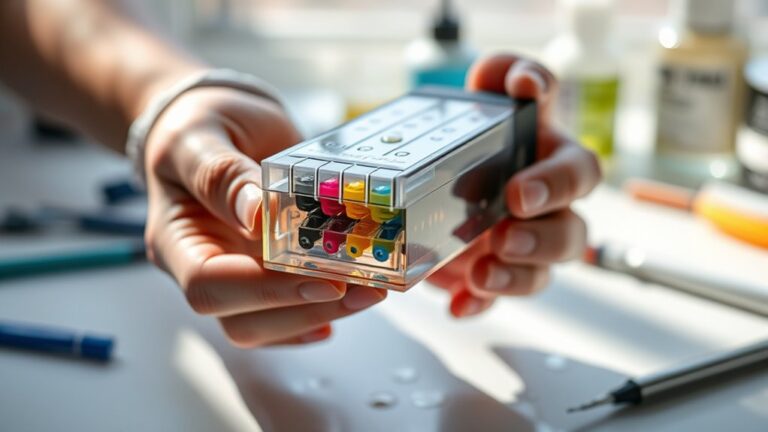
Printer ink can cost between $0.05 and $0.10 per black page and up to $0.50 for color pages, making it surprisingly expensive. The high costs come from expensive research, proprietary chemicals, embedded chips, and brand premiums.
Using high-yield or refillable cartridges can help save money, and third-party options are often cheaper.
If you want to uncover more tips to cut your ink expenses, keep exploring how to make your printing more cost-effective.
Key Takeaways
- Ink costs range from about $0.05 to $0.10 per page for black ink. For color printing, it’s typically between $0.20 and $0.50 per page.
- Ink prices can be quite high, ranging from $13 to $75 per ounce. Sometimes, it’s even more expensive than champagne or perfume.
- When it comes to toner cartridges, they usually cost around $0.02 per page. That’s based on printing roughly 2,500 pages per cartridge.
- The high manufacturing costs are due to research and proprietary chemicals, which drive up retail prices of ink cartridges.
- To save money, many people opt for high-yield, refillable, or third-party compatible cartridges. These options help reduce the cost per page significantly.
Why Is Printer Ink So Expensive Compared to the Printer?
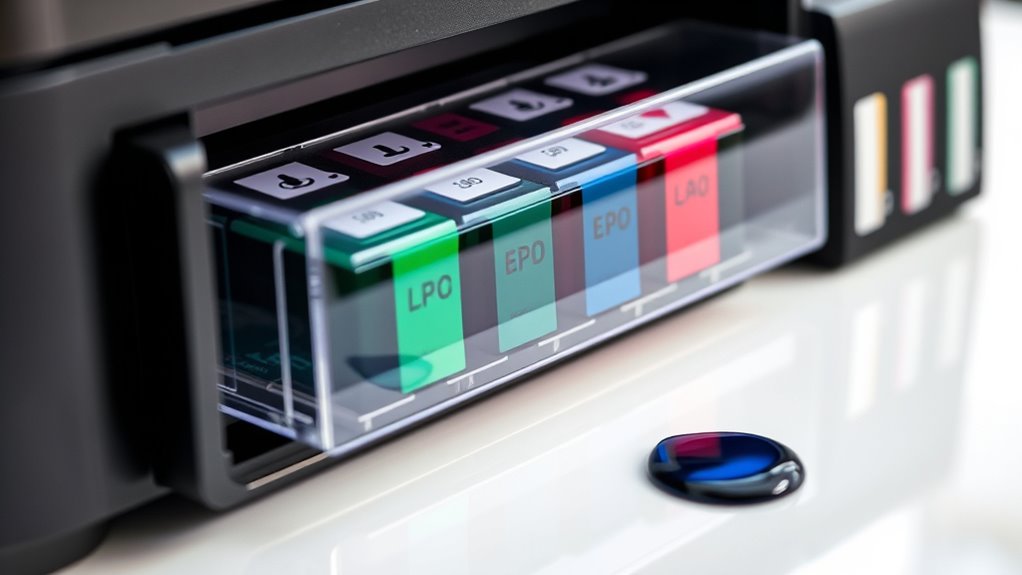
Printer ink costs way more than the printer itself because manufacturers see it as a high-margin product. The high prices come from proprietary cartridges that lock you into specific brands, kind of like the razor-and-blades business model.
While printers are often sold cheaply, the real profit is in the ink. These cartridges are expensive to produce, partly because of proprietary technology and limited competition, which pushes prices higher.
The ink itself is really costly—between $13 and $75 per ounce—making it more expensive than champagne or perfume by volume. Plus, a lot of the ink in cartridges never actually reaches your pages, which makes the real cost even higher.
Manufacturers also spend around $1 billion every year on research and development to create complex, high-tech ink formulas.
How Much Does Printer Ink and Toner Cost Per Page?
Understanding the cost per page can help you manage your printing expenses more effectively. Ink and toner prices vary widely, impacting your overall costs.
Black ink costs about $0.05 to $0.10 per page, while color pages can reach $0.20 to $0.50. This affects both print quality and your budget.
Black ink costs roughly $0.05 to $0.10 per page; color printing can reach $0.20 to $0.50.
OEM toner cartridges typically yield around 2,500 pages at roughly $0.02 per page, making toner more economical for high-volume printing.
High-yield cartridges and compatible third-party supplies can drastically reduce your cost per page. They help balance quality and affordability.
Whether you choose ink or toner, understanding these costs helps you make smarter printing decisions and avoid overspending on cartridges that might seem cheap upfront but cost more over time.
What Factors Drive the Price of Ink Cartridges?
The price of ink cartridges is shaped by the high costs of manufacturing and ongoing research to develop advanced, reliable formulas.
Furthermore, brand premiums and market strategies, like proprietary technology and advertising, considerably influence prices.
These factors combine to make ink cartridges more expensive than many people expect.
Manufacturing Costs and R&D
Manufacturers invest heavily in research and development to produce high-tech inks that meet demanding performance standards, which substantially drives up costs. This focus on innovation impacts manufacturing costs considerably. For example:
- They spend around $1 billion annually on research and development to create inks that can withstand heat and vaporize quickly.
- The complex formulation process needed for rapid drying upon contact with paper adds to production expenses.
- Proprietary chemicals and pigments used in ink cartridges require specialized materials that increase manufacturing costs.
These factors ensure the ink works reliably with advanced printer mechanisms, but they also push up the overall price of ink cartridges. It’s a combination of cutting-edge research, complex formulation, and specialized materials that drives costs higher.
Brand Premium and Market Strategies
Brand premiums and market strategies play a big role in driving up ink cartridge prices, often making consumers pay more for trusted names and advanced features. Manufacturers keep these premiums through proprietary tech, like embedded chips that verify ink levels and block third-party refills, which increases overall costs.
The razor-and-blades model encourages cheap printers while making profits on high-margin ink and toner sales. Retail markup, advertising costs, and licensing restrictions also push prices higher compared to generic alternatives.
Plus, high manufacturing costs—due to premium chemicals, pigments, and the need for quick-drying, heat-resistant ink—are passed on to consumers. These strategies and premium features help branded cartridges stay more profitable, even with cheaper, compatible options available.
Can High-Yield and Refillable Cartridges Save You Money?
High-yield and refillable cartridges can significantly lower your printing costs by making the ink last longer. They help you get more pages out of each refill, which is a big plus.
Plus, refilling tanks multiple times means you’ll save money over time. But keep in mind, you might need to do a bit of extra maintenance to keep your print quality consistent.
Cost Savings Potential
Switching to high-yield or refillable cartridges can significantly cut your printing costs over time. These options lower the cost of ink per page and make print jobs more affordable.
High-yield cartridges like the HP 67XL can print up to 240 pages, often at a small price increase, which decreases your cost per page. Refillable ink offers the chance to buy bulk ink at a lower price, saving you money.
Here are some ways these options help you save:
- Reduce ink costs by up to 50% or more compared to standard cartridges.
- Maximize ink efficiency with high-yield cartridges designed for more pages.
- Lower long-term costs by investing in refillable tanks and compatible third-party cartridges.
These strategies are proven to keep your printing budget in check while maintaining quality.
Refill Convenience Benefits
Have you ever thought about how refillable ink cartridges can save you money? Refill convenience is a big plus, letting you top off your cartridges easily without buying new ones every time.
This helps reduce waste and keeps your printing costs lower. Refillable ink cartridges and tanks let you buy ink in bulk, which saves you a lot over time.
High-yield cartridges can print twice as many pages as standard ones, making each page cheaper. Using refillable systems that work with different printer models gives you more flexibility and long-term savings.
Are Third-Party Ink Cartridges a Cost-Effective Choice?
Third-party ink cartridges can be a tempting option because they often cost considerably less than OEM cartridges—sometimes 30-60% cheaper. But before switching, consider a few factors.
While some third-party ink offers a cost-effective way to save money, the print quality may vary—some are comparable to OEM cartridges, others are not. Compatibility issues can cause printer errors or malfunctions, which might lead to additional repair costs.
Using third-party ink could void your printer’s warranty, especially if damage occurs. Reputable third-party suppliers may offer high-yield or refillable options that reduce per-page costs, but weigh these benefits against potential risks to print quality and compatibility.
Top Strategies to Reduce Ink and Toner Costs
To effectively lower your ink and toner expenses, adopting strategic printing habits can make a big difference. Using high-yield cartridges or XL options helps you print more pages per cartridge, often doubling or tripling your output.
Refillable ink tanks or supertank printers allow you to buy ink in bulk, which cuts costs and reduces waste. Consider subscribing to ink delivery services like HP Instant Ink for automatic, lower-priced replacements.
Adjust your printing modes to draft or economy settings. These settings use less ink and help extend your cartridge life. Additionally, compatible cartridges or third-party supplies can save you up to 50%.
However, make sure to choose reputable brands to avoid damage or poor quality. These strategies help you maximize efficiency while keeping your ink expenses down.
How Do Printer Brand and Usage Affect Your Overall Ink Expenses?
The brand of your printer really impacts your overall ink expenses. Many manufacturers sell affordable printers but charge high prices for their proprietary ink cartridges. So, your choice of brand can make a big difference in how much you spend on ink.
Brands like HP and Canon often promote high-yield cartridges or refillable tanks, which can cut costs over time. Using these options can drastically reduce your per-page ink costs.
Keep in mind that the type of documents you print also matters. Printing color photos uses more ink than simple text, which can influence your total expenses.
Frequently Asked Questions
How Much Does Ink Usually Cost?
Ink usually costs between $13 and $75 per ounce, making it quite expensive per volume. When you buy ink cartridges, expect to pay $20 to $50 for black and $30 to $60 for color.
High-yield or compatible options can lower your costs per page, but overall, ink remains a significant expense. Remember, only about half the ink you pay for actually reaches the paper.
Is Ink More Expensive Than Blood?
Imagine pouring a tiny drop of ink. That drop costs more than a gallon of blood. Yes, ink is more expensive than blood, sometimes by a staggering 50,000 times per ounce.
You might think of ink as a luxury, crafted with complex chemicals and R&D. Meanwhile, blood remains an essential, naturally replenished resource.
How Much Does 1 Gallon of Ink Cost?
A gallon of ink can cost you anywhere from around $1,664 to $9,600, depending on the type and quality. If you’re looking at inkjet ink, expect prices between $2,080 and $12,000 per gallon.
High-end or specialized inks for professional printers tend to be at the higher end. Keep in mind, these costs reflect complex formulations, R&D, and proprietary ingredients, making ink quite expensive per gallon.
How Much Ink Is 30 Pages?
Imagine filling a small pond with a tiny drop of ink.
30 pages are like that drop—a modest splash of about 1.5 to 3 milliliters.
You’re gently transferring just a fraction of the cartridge’s capacity, enough to print your pages without draining the entire pond.
Typically, this small amount costs less than a dollar, depending on your cartridge type.
That makes your printing both efficient and economical.
Conclusion
In the end, understanding the true cost of ink helps you make smarter choices and avoid penny-wise, pound-foolish decisions.
By exploring options like high-yield cartridges, refills, or third-party alternatives, you can keep costs in check.
Remember, knowledge is power—don’t let the expense of ink drain your wallet.
With a little effort, you can stretch your dollars further and keep printing without breaking the bank.
Don’t let the cost of ink be the thorn in your side.