
What Makes Squid Ink Pasta a Delight?
Many food lovers struggle with finding pasta that’s both visually stunning and packed with flavor. If you’re tired of the same old dishes, you’re not alone. Squid ink pasta might just be the exciting twist you’ve been craving.
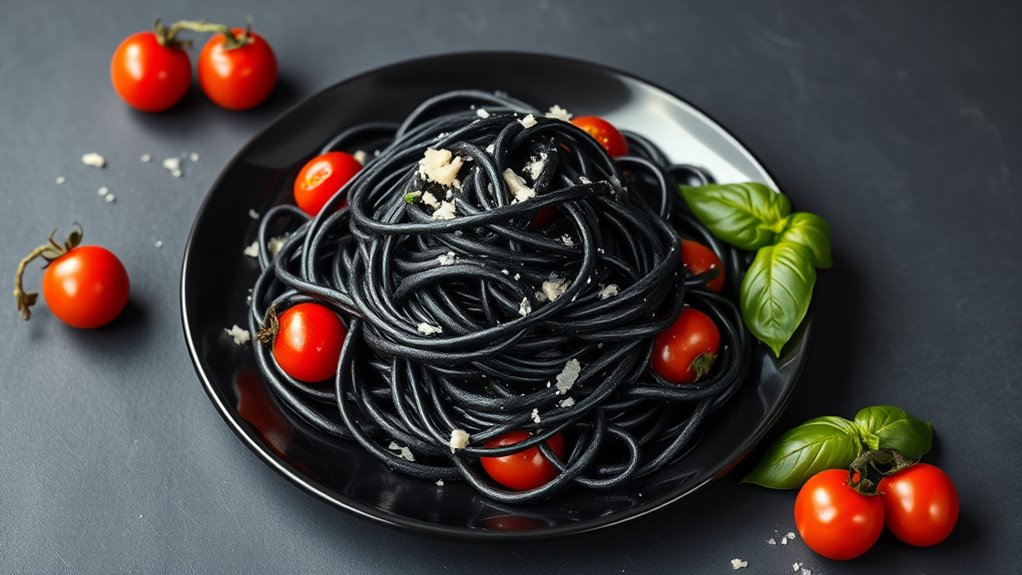
Squid ink pasta is a delight because it offers a striking black color that instantly catches your eye and raises any dish. The rich, umami flavor adds depth and a subtle oceanic saltiness that enhance seafood tastes. Its unique aroma combines earthy, marine, and smoky notes, making each bite memorable.
The vibrant appearance and bold flavors create a sensory experience worth exploring further. There are even more exciting culinary possibilities waiting to be uncovered with this distinctive pasta.
Key Takeaways
- Its striking black color enhances visual appeal, making dishes look memorable and sophisticated.
- The umami-rich flavor boosts seafood taste and adds depth to the overall flavor profile.
- It contains antioxidants and nutrients that support immune health and help protect cells.
- The oceanic aroma and subtle salty notes create a sensory connection to the sea.
- Its versatility allows for use in various dishes, adding depth, color, and a unique culinary experience.
What Is Squid Ink and How Is It Made?
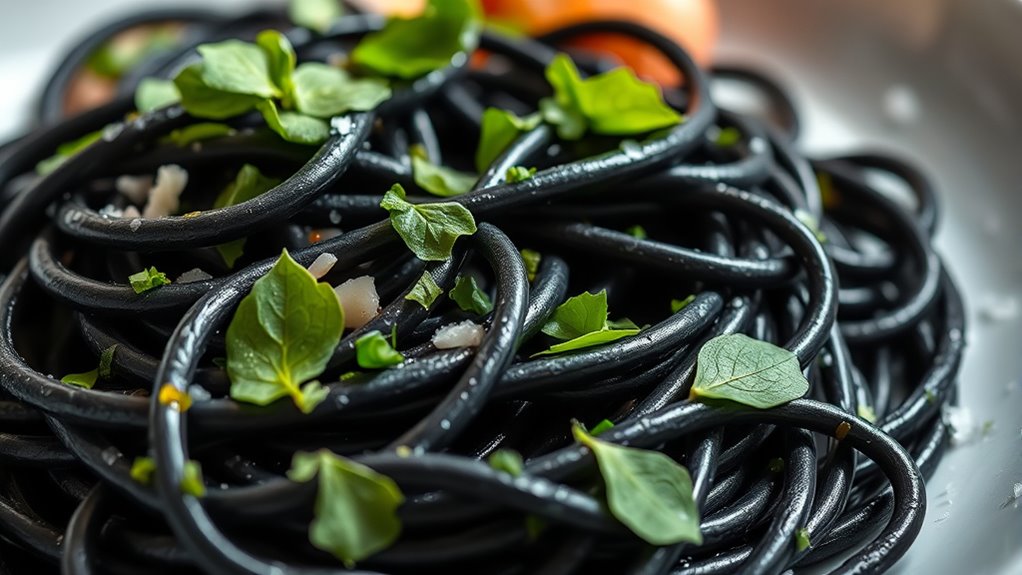
Squid ink comes from a special organ called the ink sac, which holds a dark, melanin-rich liquid. Squids use this ink for defense and camouflage.
When they feel threatened, the squid contracts the ink gland, releasing the ink into the water. This creates a cloud that helps hide the squid from predators.
The ink contains melanin, giving it its deep black color, along with enzymes and organic compounds. It’s usually harvested after the squid is caught or killed.
The ink is then processed, filtered, and packaged for cooking. Its rich texture and flavor come from the melanin and other compounds in the ink.
This natural substance forms the base of squid ink, a popular ingredient known for its bold color and taste.
Why Does Squid Ink Add Depth and Umami to Pasta?
The rich, savory qualities of squid ink really boost the depth and umami flavor of pasta, making it a standout in seafood dishes.
Squid ink is packed with glutamate, which enhances the umami, giving your dish a full-bodied, savory taste. Its briny, oceanic flavor mimics seafood’s natural essence, adding a subtle complexity that lifts the dish.
When cooked, squid ink releases aromatic compounds that deepen the overall flavor profile, creating a more robust experience. The dark pigment also interacts with other ingredients, intensifying the savory notes and enriching the dish’s umami quality.
Adding squid ink to pasta gives it a seafood-infused depth that amplifies flavor and makes every bite more satisfying.
What Are the Distinctive Flavors and Aromas of Squid Ink?
When you taste squid ink pasta, you’ll notice its oceanic umami notes and subtle salty depths that elevate seafood flavors. The aroma offers a smoky, mineral-like quality, reminiscent of the sea’s earthy richness.
This distinctive flavor profile balances boldness with nuance, making each bite a sensory journey.
Oceanic Umami Notes
As you enjoy squid ink pasta, you’ll notice its distinctive oceanic aroma and flavor that instantly evokes the sea. The squid ink gives it a deep, briny taste full of umami, which elevates seafood dishes.
Its aroma is subtly oceanic, reminding you of a fresh sea breeze, and it pairs beautifully with shellfish flavors. The ink’s high glutamate content enhances the savory umami, adding richness and complexity.
During cooking, these flavors develop even more, creating an intricate, ocean-inspired sensory experience. The mild salinity from the squid ink balances the seafood’s richness, boosting overall flavor without overpowering.
This combination of umami, seafood essence, and oceanic aroma makes squid ink pasta a truly unique and delightful culinary treat.
Subtle Salty Depths
Squid ink’s flavor is distinguished by its subtle, salty depths that enhance the dish’s complexity without overpowering the palate. You’ll notice a delicate salinity that brings out other ingredients, balancing richness with a refined touch.
Its high glutamate content boosts the umami, making every bite more savory and satisfying. The aroma is faintly smoky and mineral-like, adding an extra layer of sensory appeal.
This combination of salty flavor and aromatic nuance creates a layered, memorable taste experience. To better understand, here’s a quick overview:
| Flavors & Aromas | Characteristics |
|---|---|
| Salty | Light, natural salinity without overpowering |
| Umami | Rich, savory depth from glutamates |
| Aroma | Faintly smoky, mineral-like scent |
| Flavor Profile | Subtle, oceanic, complex |
| Overall Experience | Enhances seafood essence, elevates the dish |
Earthy, Melanin Aroma
The aroma of squid ink is pretty distinctive, blending earthy, marine notes with a subtle smokiness that deepens the dish’s fragrance. The melanin in squid ink gives off a faint, smoky aroma that adds depth and complexity to the pasta’s scent.
When cooked, it releases an umami-rich aroma that’s both savory and slightly mineral, reminiscent of seaweed and shellfish. This earthy, melanin aroma amplifies the overall sensory experience, making each bite more immersive.
It’s not just about the taste but also the fragrant profile that lifts the dish’s appeal. As you cook, the aroma gets stronger, creating a fragrant, savory profile that highlights the natural salinity of the ocean.
This earthy, melanin aroma is what truly makes squid ink pasta unique and unforgettable.
How Does Squid Ink Enhance the Visual Appeal of Dishes?
The striking black hue of squid ink pasta instantly grabs your attention, creating a bold visual contrast on the plate that makes it stand out from regular pasta dishes. Its deep, glossy look adds a touch of sophistication, elevating the overall presentation.
The bold black hue of squid ink pasta creates striking contrast, elevating presentation and adding sophisticated visual appeal.
The black color makes other ingredients, like colorful seafood or vegetables, really pop and look vibrant. This unique shade helps chefs create visually cohesive dishes that leave a lasting impression.
The dramatic contrast also highlights the freshness and brightness of the ingredients, showing off their quality. Overall, the inky hue not only catches the eye but also boosts the dish’s elegance, perfect for gourmet or special occasions.
Squid ink’s visual impact truly transforms the dining experience, making each dish more memorable and striking.
What Are the Nutritional Benefits of Eating Squid Ink?
Eating squid ink provides you with essential vitamins and minerals like iron, zinc, and magnesium that support your overall health. Its antioxidants, such as melanin, help protect your cells from damage.
Its nutrient density means you get these benefits even in small amounts. Incorporating squid ink can also boost your immune system and improve blood health.
Rich in Vitamins and Minerals
Although squid ink is used in small amounts, it’s packed with essential nutrients. It’s a rich source of vitamins and minerals that boost your overall nutrition.
You get a good dose of iron, zinc, and magnesium, which support blood health, bone strength, and metabolism. These minerals help your body function smoothly and promote overall health.
Plus, the vitamins in squid ink boost your immune system, helping you fight off illnesses. Even in small quantities, adding squid ink to your dishes brings big nutritional benefits.
It makes your meals both flavorful and healthy. Its nutrient profile enriches your diet with valuable minerals and vitamins, enhancing the nutritional value of your pasta and supporting your well-being.
Contains Antioxidants and Melanin
Squid ink is packed with antioxidants like melanin, which help protect your cells from damage caused by oxidative stress. These antioxidants neutralize harmful free radicals, reducing inflammation and supporting overall cellular health.
Melanin, in particular, plays a key role in safeguarding your skin and internal tissues, while also supporting your immune system. By consuming squid ink, you get a natural source of bioactive compounds that may help prevent oxidative damage linked to aging and disease.
The presence of antioxidants and melanin boosts the nutritional value of squid ink, making it more than just a flavor enhancer. Instead, it becomes a potent ingredient that contributes to your body’s defenses, promoting better health and resilience against environmental stressors.
Supports Immune System
Because of its rich nutrient profile, squid ink can give your immune system a meaningful boost. It’s packed with antioxidants like melanin, which help neutralize free radicals and protect your cells.
The minerals in squid ink, such as zinc and magnesium, are essential for immune support and enzyme activity. Plus, B vitamins in squid ink help maintain your immune system and boost energy.
Incorporating squid ink into your meals provides bioactive compounds that improve your immune response and promote overall health.
| Nutrients | Benefits |
|---|---|
| Antioxidants | Protect cells from oxidative stress |
| Zinc & Magnesium | Support immune function |
| B Vitamins | Boost energy and immune health |
| Melanin | Neutralize free radicals |
| Bioactive Compounds | Promote immune response |
How Can You Incorporate Squid Ink Into Different Recipes?
Incorporating squid ink into your recipes is a simple way to add depth, color, and a touch of the ocean’s essence. To make a striking pasta dish, consider adding squid ink directly into the pasta dough, creating black linguine or ravioli that elevate both appearance and flavor.
You can also stir in squid ink into sauces, like tomato or cream-based ones, to deepen the umami taste and give them a rich, oceanic hue. For rice dishes such as risotto or paella, mixing in squid ink imparts a bold black color and amplifies seafood flavors.
Furthermore, a small amount can be added to broths or soups for a savory punch and dramatic visual appeal. Using squid ink in bread or crackers results in unique baked goods with subtle seafood notes and eye-catching black coloration.
Tips for Cooking Perfect Squid Ink Pasta
To achieve perfectly cooked squid ink pasta, start by boiling it in a large pot of salted water, making sure there’s enough space for the noodles to move freely. Since squid ink pasta cooks quickly due to its thin shape, keep an eye on it and cook for 2-4 minutes until al dente.
Remember to reserve some pasta water before draining. This helps you adjust the sauce’s consistency and boosts its flavor. Drain carefully to prevent breakage, and toss the pasta immediately with your sauce to keep the texture ideal and prevent sticking.
Avoid overcooking or overcrowding the pot, as these mistakes can make the pasta mushy or cause it to stick together. Rinsing briefly with cold water stops the cooking process and keeps the ink from bleeding.
How Do You Taste and Appreciate the Flavors of Squid Ink?
Tasting and appreciating the flavors of squid ink pasta is more than just taking a quick bite; it’s about tuning into its subtle, complex profile.
As you savor it, notice the briny, umami richness that enhances the pasta’s natural taste without overwhelming it. The oceanic saltiness adds depth, creating a savory experience that unfolds with each bite.
Recognizing the umami develops as the pasta cooks, revealing a nuanced seafood note that’s both delicate and bold. The striking black color heightens anticipation and complements the flavor.
Pair it with bright elements like lemon or saffron to elevate its seafood profile and deepen your flavor appreciation.
Where Can You Find the Best Squid Ink Pasta Dishes?
If you’re eager to try the best squid ink pasta, your best bet is to look for specialized Italian or seafood restaurants, especially in coastal areas. These places tend to focus on fresh seafood and house-made pasta, giving you an authentic Italian experience.
For example, Mare Oyster Bar in Boston is known for its high-quality squid ink linguine paired with fresh seafood, showing what true craftsmanship can do. Many gourmet eateries include squid ink pasta on their menus because of its striking look and unique flavor.
Online reviews and culinary guides often highlight these spots for their exceptional dishes. Whether you’re in a seaside town or a busy city, finding a restaurant that uses fresh ingredients and authentic techniques will make your squid ink pasta experience unforgettable.
Creative Ways to Use Squid Ink Beyond Pasta
You can add squid ink to risotto to give it a stunning black color and boost its oceanic flavor. It’s a simple way to make your dish more visually striking and delicious.
It also works really well in seafood soups and broths. Not only do they look more memorable, but they also gain a richer, deeper flavor.
Trying out squid ink in different dishes can turn your seafood cooking into a truly eye-catching and flavorful experience.
Seafood Risotto Enhancements
Squid ink isn’t just for pasta; it can also take seafood risottos to a whole new level of sophistication. It adds a striking black color and deepens the flavor with rich umami notes.
Mixing a spoonful of squid ink into your seafood stock boosts that briny, oceanic taste, making the dish more flavorful. When stirred into the rice during cooking, it spreads evenly and creates a visually dramatic, flavorful risotto.
Pairing it with calamari, clams, or shrimp enhances the seafood flavor, making each bite more aromatic and savory. For the finishing touch, add fresh herbs and lemon to bring a bright, citrusy contrast to the rich dish.
Flavorful Seafood Soups
Have you thought about using squid ink to take your seafood soups to the next level? It infuses the broth with a rich, savory flavor and gives it a striking black color.
Whether you’re making chowders or bisques, adding squid ink boosts the oceanic taste and adds depth to your dish. It works beautifully in ramen or hot pots, giving a briny, seafood-forward profile that complements shellfish and white fish.
In seafood stews like cioppino, squid ink enhances richness and creates a dramatic visual. Even in delicate fish-based consommés or clear soups, a touch of squid ink deepens the flavor without overpowering the subtle seafood notes.
It’s a creative way to intensify flavor and make your presentation stand out.
Why Is Squid Ink a Fascinating Ingredient for Food Enthusiasts?
Because of its striking black hue and complex flavor profile, squid ink captivates food enthusiasts eager to elevate their culinary creations. Its deep umami taste, rich in glutamates, brings a savory, oceanic flavor that enhances various ingredients.
The vibrant black color adds a dramatic visual element, inspiring creative presentation and bold color contrasts on the plate. Using squid ink lets you craft visually stunning dishes that truly stand out and make the dining experience more memorable.
Beyond flavor and appearance, squid ink offers nutritional benefits like antioxidants, vitamins, and minerals such as iron and zinc. This perfect mix of striking aesthetics, rich taste, and health perks makes squid ink a fascinating ingredient that excites adventurous cooks and gourmet chefs alike.
Frequently Asked Questions
What Is so Special About Squid Ink Pasta?
You’ll love squid ink pasta because of its striking black color and sophisticated look, perfect for special occasions.
Its deep umami flavor, with subtle seafood and briny notes, adds complexity without overpowering.
The ink also boosts nutritional value with antioxidants and minerals.
When you serve it, you create a visually stunning dish that’s rich in flavor, making every bite a memorable gourmet experience.
Is Squid Good for Diabetics?
Squid is a great choice for diabetics because it’s low in carbs and calories, helping you stay on track. You get beneficial omega-3s and essential minerals like zinc and magnesium, which support your metabolic health.
It’s like hitting two birds with one stone — nourishing your body without causing blood sugar spikes. Just avoid preparing it with high-carb ingredients or added sugars, and you’ll enjoy it as part of a balanced diet.
Do Italians Eat Squid Ink Pasta?
Yes, Italians do eat squid ink pasta, especially in coastal regions like Sicily and Liguria. They incorporate it into traditional dishes such as “spaghetti al nero di seppia” and “linguine al nero di seppia.”
You’ll find fresh squid ink at specialty markets, and chefs use it to create dishes with rich flavor and striking appearance. It’s a beloved part of Italy’s seafood cuisine, celebrated for both taste and cultural significance.
What Does Squid Ink Do to Your Body?
Squid ink acts like a health shield, offering antioxidants like melanin that may boost your immunity and protect your cells. It provides essential minerals such as iron, zinc, and magnesium, supporting overall wellness.
Its bioactive compounds may also have anti-inflammatory and antimicrobial effects, helping your body fight off infections. Eating squid ink in moderation adds nutritional value, but more research is needed to fully understand its health benefits.
Conclusion
Once you immerse yourself in the world of squid ink pasta, you’ll find it’s more than just a meal — it’s an explosion of flavor and artistry. Its rich umami, mesmerizing color, and intriguing history make it a culinary marvel that transforms ordinary dishes into extraordinary experiences.
Welcome this ingredient, and you’ll uncover a taste adventure so sensational. It might just redefine your entire palate, like discovering a hidden treasure chest of flavor in every bite. Squid ink pasta truly is a delight for the senses.