10 Steps to Effectively Remove Ink From Leather
Dealing with ink stains on leather can be really frustrating. Many people struggle with removing these stubborn marks without damaging their favorite items. If you’re tired of seeing ink ruin your leather, you’re not alone—you’re in good company.
To effectively remove ink from leather, start by quickly blotting the stain with a clean cloth to prevent it from setting. Identify your leather type and measure the stain size.
Test mild solutions like soap and water or household remedies on hidden areas first. For stubborn stains, apply diluted rubbing alcohol or vinegar carefully.
After cleaning, condition the leather to restore moisture and gently buff to remove any residue.
For tough or large stains, professional help may be needed—discover more detailed tips if you keep going.
Key Takeaways
- Blot fresh ink immediately with a clean cloth. Be careful not to rub, as this can spread the stain or push it deeper into the leather.
- Avoid any aggressive rubbing or scrubbing. Gently blotting helps lift the ink without causing more damage.
- Next, identify your leather type by doing a water test. This helps you figure out the best cleaning method to use.
- Before applying any cleaning solutions, test them on a hidden area first. That way, you can make sure they won’t damage your leather.
- Use gentle solutions like mild soap, alcohol, or vinegar cautiously. Apply them carefully and sparingly to avoid overexposing the leather.
- After cleaning, don’t forget to apply a leather conditioner. It helps restore moisture and keeps your leather soft and supple.
- Once the conditioner has been absorbed, buff the surface gently. This will bring back the shine and remove any leftover residue.
- For stubborn stains or delicate leather, it’s best to seek professional cleaning. Experts can handle tricky stains without risking damage to your valuable item.
Blot the Ink Immediately to Prevent Setting
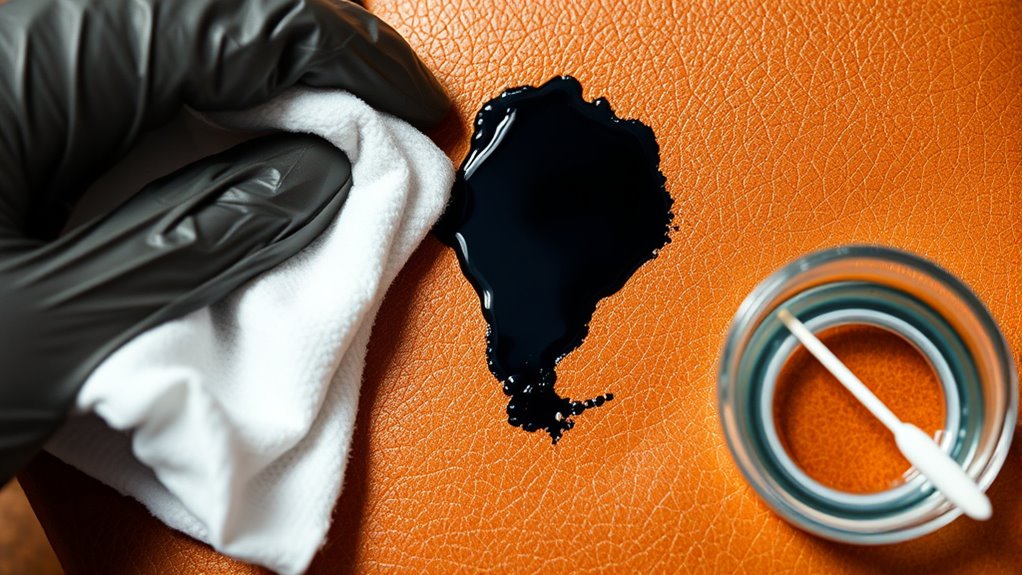
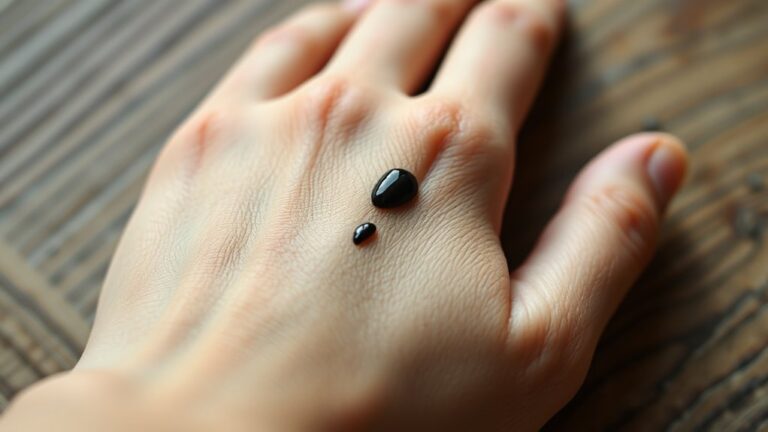
To prevent the ink from setting deeper into the leather, act quickly and blot the stain immediately.
Grab a clean cloth and gently blot the ink to absorb excess ink before it soaks in further. Avoid rubbing or scrubbing, as this can spread the ink and push it deeper into the leather fibers.
Use gentle dabbing motions around the edges of the stain to contain it and prevent it from spreading outward. Acting within minutes makes removal easier since fresh ink is much simpler to clean than dried or set-in stains.
Do not use any liquids or cleaning agents until you’ve blotted the excess ink. This reduces the risk of embedding the stain further into the leather.
Identify Your Leather Type and How Big the Ink Stain Is
After blotting the ink to stop it from setting further, the next step is to identify your leather type and gauge the size of the stain.
Identify your leather type and stain size before cleaning to ensure safe, effective ink removal.
Perform a water test: if water soaks in quickly, you have unfinished leather; if it stays on the surface, it’s finished leather.
Knowing your leather type helps you choose the right cleaning method and avoid damage.
Next, check how big the ink stain is—whether it’s just a small spot or covers a larger area.
Picture a tiny ink spot on soft, unfinished leather, or a broad stain spreading across a polished, finished surface.
Imagine the water test showing quick absorption or water sitting on the surface.
Finally, measure how large the stain is to decide if you need spot treatment or full-area cleaning.
Understanding the stain size and leather type is key to removing ink safely and effectively.
Test a Gentle Cleaning Solution on a Hidden Area First
Before applying any cleaning solution to the ink stain, it’s important to test it on a hidden spot first. This helps make sure the cleaning method is safe and won’t cause damage.
Choose an inconspicuous area, like a seam or the underside of the leather. Apply a small amount of the solution with a soft cloth or cotton swab, then wait 1-2 minutes.
Check the area for any signs of discoloration, dryness, or surface change. If the leather looks fine and shows no fading or damage, you can go ahead and clean the visible stain.
Doing this test reduces the risk of causing further harm and ensures the cleaning solution won’t alter the leather’s color or texture unexpectedly.
Use Mild Soap and Water for Light Ink Stains
When dealing with light ink stains on leather, using a mild soap and water solution can be effective if applied carefully. Mix warm water with 1-2 drops of mild dish or saddle soap to create a gentle cleaning solution.
Dampen a soft cloth with the soapy water, making sure it’s not overly wet to prevent excess moisture on the leather. Gently rub the stained area in circular motions, working from the outer edges toward the center to avoid spreading the ink.
Frequently rinse or replace the cloth to remove ink residue and keep cleaning effective. Afterward, always follow up with a leather conditioner to restore moisture. Imagine a soft cloth gliding over the leather, lifting the stain without damaging the surface.
If the Stain Persists, Try Rubbing Alcohol or Vinegar Carefully
If the stain sticks around, you can carefully try rubbing alcohol or vinegar as a next step. Just make sure to test your chosen solution on a small, hidden area first to avoid any discoloration or damage.
After treating the stain, remember to clean and condition the leather. This helps keep it healthy and looking good.
Proper Application Techniques
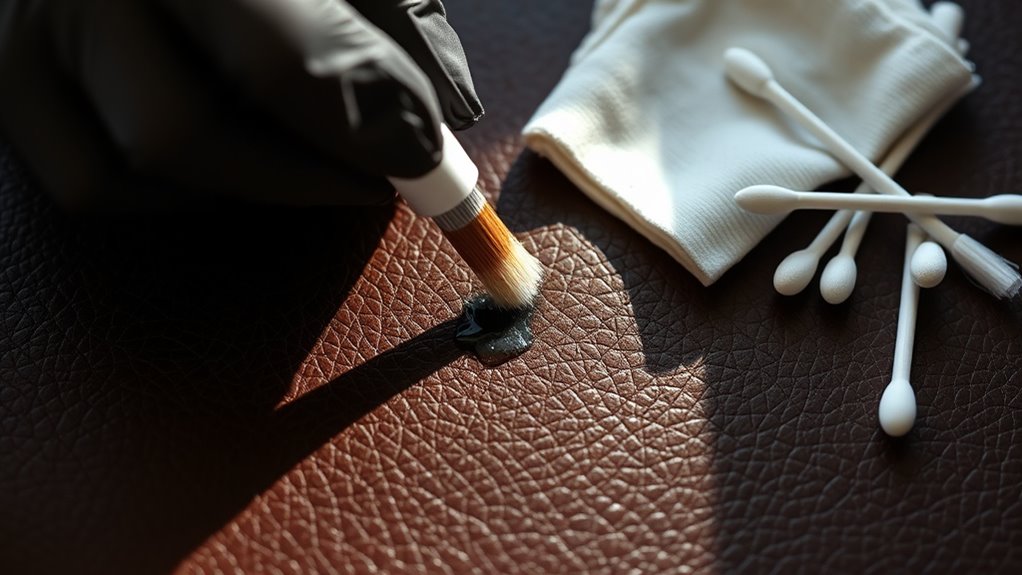
To carefully apply rubbing alcohol or vinegar, dampen a soft cloth or cotton swab instead of pouring the liquid directly onto the leather. Gently dab the stain, starting from the outer edges and working inward, to prevent spreading the ink.
Avoid vigorous scrubbing, as this can damage or discolor the leather surface. Limit the application time to about 10-15 seconds to prevent overexposure.
After treating the stain, immediately wipe the area with a clean, damp cloth to remove any residue and prevent drying or cracking. Once the ink is gone, follow up with a leather conditioner to restore moisture and protect your leather.
Proper application techniques help you treat the stain effectively without harming your leather item. Remember to gently press the damp cloth on the stain, lightly dab from outer edges inward, and keep the application quick and controlled to avoid damage.
Dilution and Safety Measures
Using rubbing alcohol or vinegar directly on leather can cause damage or discoloration, so always dilute these solutions before applying. For rubbing alcohol, mix it with water in a 70% alcohol to 30% water ratio.
Vinegar should be diluted 1:1 with water for a milder option. Always do a spot test on an inconspicuous area to check for colorfastness and avoid potential damage.
Use a soft cloth or cotton swab to apply the diluted solution sparingly. Dab gently around the ink stain and avoid rubbing vigorously. After treatment, immediately follow up with a leather conditioner to restore moisture and prevent cracking.
These safety measures help ensure effective ink removal without risking unnecessary damage to your leather item.
Post-Treatment Conditioning
When ink stains stubbornly remain after initial cleaning, applying a small amount of leather conditioner can help loosen any lingering ink particles. This conditioning treatment restores the leather’s natural moisture and helps prevent drying or cracking.
After applying, let the conditioner sit for 10-15 minutes. This gives it time to penetrate the leather surface and loosen residual ink. Then, gently buff the area with a soft cloth to lift remaining ink and restore the leather’s smoothness.
Visualize a soft cloth gliding over the surface, absorbing excess conditioner. Think of the leather becoming supple again, with moisture replenished. Remember, using a leather conditioner is key to maintaining the leather’s integrity and appearance.
It’s especially important after aggressive cleaning. It helps prevent drying and keeps your leather looking its best.
Explore Safe Household Remedies Like Hairspray or Magic Eraser
Household remedies like hairspray and Magic Eraser can be effective for tackling ink stains on leather, but they need to be used carefully.
Hairspray contains alcohol and polymers that can dissolve ink stains. Spray it gently onto the stain, let it sit for 3-5 minutes, then wipe with a clean cloth.
Always test first on a hidden area to make sure it doesn’t cause discoloration. The Magic Eraser is a mild abrasive sponge that can lightly rub over ink stains, but use it gently to avoid dulling or damaging the leather surface.
Remember, these remedies should be used with caution. After treating the stain, conditioning the leather can help restore moisture and keep it looking good.
Testing first and being gentle are key to avoiding surface damage.
Apply Leather Conditioner to Restore Moisture and Flexibility
Applying leather conditioner properly helps restore moisture and keeps the leather flexible after cleaning. Use a soft cloth to evenly spread a small amount over the surface, focusing on treated areas, and let it sit for 15-30 minutes.
Regular conditioning prevents cracking and extends the lifespan of your leather item.
Proper Application Techniques
To effectively restore moisture and flexibility to your leather after cleaning, start by applying a high-quality leather conditioner evenly over the surface. Proper application involves using a soft cloth to spread the conditioner in gentle circular motions, ensuring it penetrates and loosens residual ink particles.
This helps restore the leather’s natural softness and prevents cracking. As you work, imagine the conditioner seamlessly absorbing into the leather, working beneath the surface. Once the conditioner has sat for 15-30 minutes, use a clean, dry cloth to buff the leather, restoring its shine and smoothness.
Proper application techniques are vital for maintaining the leather’s appearance and prolonging its life. Visualize a soft cloth gliding smoothly over the surface, with conditioner evenly distributed in gentle circles. Over time, the leather gradually regains its natural luster.
Benefits of Regular Conditioning
Regular conditioning plays a crucial role in preserving your leather’s quality by restoring its natural moisture and flexibility. Using a good leather conditioner helps prevent drying out and cracking, keeping the material soft and supple.
Conditioning after cleaning rehydrates the leather, ensuring it stays soft and flexible over time. It also creates a protective barrier that repels stains and dirt, making future cleanings easier.
Consistent use of leather conditioner improves its longevity by maintaining its structural integrity and preventing deterioration. When you apply the right conditioner periodically, you help preserve the leather’s appearance, softness, and durability.
Let the Conditioner Sit to Loosen Remaining Ink
Allow the conditioner to sit on the leather for at least 15 to 30 minutes, giving it time to penetrate and loosen residual ink particles. During this soaking time, the leather conditioner’s moisturizing agents soften the ink, making it easier to break down ink bonds with the leather fibers.
This process reduces the need for aggressive scrubbing, which could damage the leather surface. Patience allows the conditioner to work effectively, enhancing the overall cleaning process and preserving the leather’s integrity.
- The conditioner seeps into the grain, softening the ink stuck deep within.
- Moisturizing agents hydrate and loosen residual ink gently.
- Extended soaking helps the conditioner break down ink bonds without harming the leather.
Gently Buff the Leather to Remove Residue and Shine
Once the ink residue has been loosened and the conditioner has had time to work, gently buff the leather with a soft microfiber cloth. Use circular motions with light pressure to evenly spread the conditioner and lift any remaining residue.
Gently buff leather with a microfiber cloth using light circular motions to remove residue and restore shine.
Be gentle—pressing too hard can scratch or damage the leather’s finish. As you buff, you’ll see the residue diminish and the leather start to shine naturally.
After removing the residue, briskly buff the surface with a dry cloth to boost its luster and soft feel. Regular buffing after cleaning helps keep the leather looking its best and prevents dirt or ink stains from building up.
Keep your leather looking great with this simple, gentle cleaning step.
When Stains Are Stubborn or Large, Seek Professional Help
If the ink stain is stubborn or covers a large area, it’s best to get professional help to avoid further damage.
Experts have specialized tools and solutions that can safely handle delicate or heavily affected leather, especially vintage or exotic pieces.
While professional cleaning costs vary, spending between $75 and $200 can save your leather from irreversible harm.
Severe or Deep Stains
When dealing with large or deeply penetrating ink stains on leather, it’s best to turn to professional cleaning services rather than trying to remove the stain yourself. Deep stains and stubborn ink can cause serious damage if mishandled.
Professional leather cleaning uses special solutions and techniques designed to extract ink without risking damage or discoloration. These experts avoid harsh chemicals that could make the stain worse or harm the surface.
Imagine a technician carefully applying a targeted treatment, with the leather responding as the ink lifts away. It’s a safe, effective process that helps preserve your leather’s look and integrity.
Getting professional help ensures your leather gets the expert care it needs. It also helps you avoid mistakes that could make the stain worse or cause more costly damage later.
Delicate or Vintage Leather
For delicate or vintage leather, trying to remove stubborn or large ink stains yourself can often cause more harm than good. These types of leather need specialized cleaning techniques to avoid damage, so professional cleaning is usually the safest choice.
Experts use gentle solutions that effectively remove ink stains without harming the leather’s finish, patina, or authenticity. DIY methods can risk irreversible damage like discoloration, cracking, or losing the leather’s character.
When stains are deep or widespread, professional leather restoration ensures safe and thorough stain removal. Investing in professional cleaning also helps maintain your leather’s condition and prevent future stains.
Professional Removal Costs
Professional leather stain removal services typically range from $75 to $200, depending on the size and severity of the ink stain. For stubborn or large ink stains, professional removal costs are a worthwhile investment, especially for delicate or luxury leather cleaning.
Specialists use proprietary, gentle solutions that target deep-set ink without harming delicate leather surfaces. When dealing with old ink stains or vintage items, professional leather care guarantees proper handling with specialized leather solutions, preserving the leather’s integrity.
If the stain is extensive, set-in, or you’re unsure about using chemicals, seeking expert help is the safest option. Imagine a skilled technician carefully cleaning a vintage handbag with gentle, specialized leather solutions.
Visualize a professional handling luxury leather items, ensuring preservation and shine. Think of a precise, delicate process that restores your leather without damage.
Frequently Asked Questions
How to Get Ink Out of Leather Without Damaging It?
To get ink out of leather without damaging it, start by gently blotting the stain with a dry cloth. This helps prevent the ink from sinking deeper into the leather.
Next, take a small amount of rubbing alcohol or a leather-specific cleaner on a cotton swab. Work carefully from the outside of the stain inward, avoiding any scrubbing.
After treating the stain, always follow up with a leather conditioner. This keeps the surface moisturized and protected, helping your leather stay its best.
What Is Good to Remove Ink From Leather?
Removing ink from leather is like trying to erase a chalkboard’s scribbles—you need the right tools. Rubbing alcohol or acetone-free nail polish remover works well for fresh stains.
White vinegar diluted with water offers a gentle, natural option. Leather-specific ink removers are safe choices too.
Always test any product on a hidden spot first to avoid damage. Act quickly for the best results.
What Takes a Ballpoint Pen Out of Leather?
To remove a ballpoint pen from leather, start by gently blotting the stain with a soft cloth dipped in a mixture of mild soap and water.
Next, apply rubbing alcohol with a cotton swab to the ink spot, but make sure to test it on an inconspicuous area first.
For stubborn stains, consider using a professional leather cleaner or saddle soap to lift the ink without damaging the leather.
Does Dawn Dish Soap Remove Ink?
Dawn dish soap isn’t specially formulated to remove ink from leather, so it might not do the job effectively. While it can help clean surface dirt and some stains, it often won’t dissolve deep-set ink stains.
If you want better results, try combining Dawn with rubbing alcohol or a leather-specific cleaner. Always test a small area first to prevent damage or discoloration.
Don’t rely on Dawn alone for tough ink stains.
Conclusion
By following these steps, you can give ink stains the boot and keep your leather looking its best. Remember, it’s better to nip problems in the bud rather than let them fester.
With patience and a gentle touch, you’ll avoid making a mountain out of a molehill. When all else fails, don’t hesitate to call in the pros.
Sometimes, it’s better to leave it to the experts rather than bite off more than you can chew. This is especially true when trying to remove stubborn ink from leather.