What Is India Ink?
Are you tired of inks that fade, smudge, or don’t give you that bold, striking look you desire? Many artists, calligraphers, and crafters face this frustration when searching for a reliable, long-lasting ink.
India ink is a highly durable, deep black ink made from fine soot called lampblack suspended in water, often combined with natural binders like shellac or gum arabic. It’s widely used in art, calligraphy, and scientific applications because of its permanence, water resistance, and intense contrast.
Its unique composition creates bold lines and rich tones, making it a favorite for detailed drawings and traditional crafts. To uncover more about its history, uses, and techniques, keep exploring.
Key Takeaways
- India ink is a traditional black ink made from carbon black pigment suspended in water with natural binders.
- It has been used historically in Chinese, Indian, and European art because of its permanence and deep black color.
- Known for being water-resistant, it offers high contrast and durability once dried.
- That makes it ideal for calligraphy and illustrations.
- Modern versions may include synthetic pigments and additives to improve flow and longevity.
- It’s used in art, microbiology, medical procedures, and industrial applications because of its strong, permanent black pigmentation.
What Is India Ink and How Is It Made?
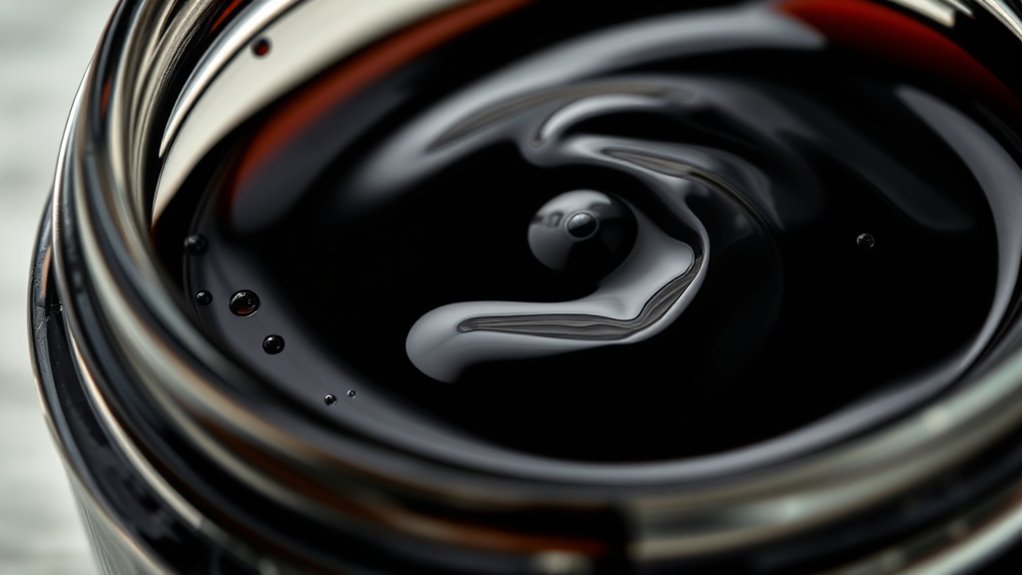
India ink is a traditional black ink made mainly from fine soot called lampblack, which is suspended in water. During ink-making, organic materials like wood, oil, or resin burn to produce soot, forming tiny carbon particles.
India ink is made from soot called lampblack suspended in water for durable, detailed artwork.
These particles create the dense, black pigment that characterizes India ink. To make sure the soot sticks well and the ink stays durable, a binder like shellac or gum arabic is added.
Shellac helps the ink stick better and makes it waterproof once dried, so it doesn’t smudge or fade. In traditional Indian practices, shellac is commonly used, but modern versions may include synthetic or acrylic binders.
This careful suspension of soot and binder results in a versatile, waterproof ink perfect for detailed artwork and calligraphy.
The History and Cultural Significance of India Ink
Have you ever wondered how a simple black ink has traveled across continents and centuries, shaping art, religion, and record-keeping? India ink’s history dates back to ancient China around 3000 BC, where it was made from soot and natural binders, valued for its permanence. Its cultural significance extends through centuries, used in religious scripts, calligraphy, and traditional paintings.
In ancient China, ink making involved grinding lampblack soot with glue, creating a durable black pigment.
In India, ink called “masi” was crafted from ashes, water, and animal glue, used for manuscripts since the 4th century BC.
The term “India ink” became popular in Europe in the 17th century, reflecting its widespread influence.
What Are the Main Ingredients in Traditional and Modern India Ink?
The ingredients that make up traditional and modern India ink reveal a fascinating evolution rooted in centuries of craftsmanship. Traditional ink mainly consists of carbon black pigment, obtained by burning organic materials like wood, resin, or oil.
This pigment is then mixed with water and a natural binder such as shellac or gum arabic to form a smooth ink. Shellac, a natural resin secreted by lac bugs, provides waterproof qualities and durability.
Modern India inks often incorporate synthetic pigments or dyes, which expand the color range and improve stability. Some formulations include additional stabilizers and fillers to enhance flow, drying time, and longevity.
Whether natural or synthetic, these ingredients guarantee India ink remains versatile and enduring for artists and calligraphers alike.
How Does India Ink Differ From Other Types of Ink?
India ink stands out from other inks mainly because of its high carbon black pigment content, which gives it a deep, intense black color unmatched by most other varieties. Unlike dye-based inks that fade over time, India ink is made from solid carbon particles suspended in water with a binder, making it highly permanent and lightfast.
Once dry, it’s water-resistant, unlike water-soluble inks such as fountain pen or acrylic inks. Traditional India ink contains natural binders like shellac or gum arabic, but modern versions may use synthetic binders for specific effects.
You’ll notice these key differences:
- The carbon black pigment provides a deep black, ensuring high contrast.
- The suspension in a binder makes it water-resistant and permanent.
- Its monochromatic, traditional composition emphasizes durability and contrast.
Common Uses of India Ink in Art and Calligraphy
India ink is a popular choice in art and calligraphy for creating bold, permanent black lines that resist water and smudging once dry. Its deep black pigment makes it perfect for detailed illustrations, ink wash paintings, and monochromatic artwork.
Artists use India ink with dip pens, brushes, or technical pens to achieve varied line widths and expressive brushwork. Its waterproof quality allows layering over watercolors and other water-based media without smudging.
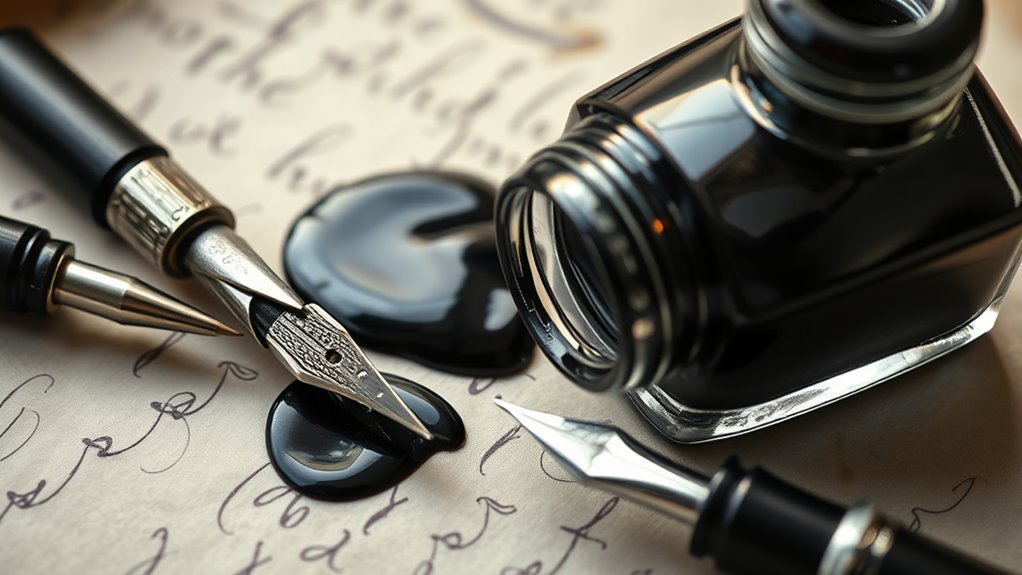
India ink enables artists to create dynamic lines and textures with waterproof, smudge-resistant strokes.
Calligraphers favor India ink because it’s permanent, helping them create crisp, clean lettering that can last for centuries. Its versatility makes it great for outlining, shading, and creating intricate textures.
Whether in traditional ink techniques or modern art, India ink remains a staple for producing striking, durable artwork.
How to Choose the Right India Ink for Your Artwork
When choosing India ink, think about whether you need waterproof options with shellac or synthetic binders. These are great for layered washes that won’t bleed or smudge.
Consider your tools and surfaces too. Some inks work better with dip pens or brushes, and certain materials may require specific ink types for the best results.
Lastly, pick a color range that matches your project. From classic black to vibrant hues, there’s an India ink for every artistic need.
Waterproof vs. Non-Waterproof Options
Choosing between waterproof and non-waterproof India ink depends on how you plan to use your artwork. Waterproof ink contains shellac or acrylic binders that form a water-resistant film once dry. It’s great for watercolor washes, layered techniques, and projects that need to last.
Non-waterproof ink doesn’t have these binders, so it can smudge or wash out if exposed to water after drying. You’ll need to handle it carefully to avoid smearing.
To decide, think about your needs. If you want water resistance and permanence, go with waterproof ink. It’s perfect for fine art and calligraphy.
For sketching or temporary markings, non-waterproof is enough but less durable. Always check the label for “waterproof” or “water-resistant” to match your project’s needs for durability and water resistance.
Suitable Tools and Surfaces
Ever wondered how to pick the best tools and surfaces for your India ink artwork? Start by choosing surfaces that match your technique. Smooth, absorbent surfaces like hot-pressed watercolor paper or Bristol board are great for fine lines with dip pens or brushes.
If you like loose sketches, textured papers such as rough watercolor paper can add character. Just keep in mind that the texture might affect ink flow. Use waterproof Indian ink with shellac binders when working with washes or layered water-based techniques to prevent bleeding.
Make sure your brushes and pens are compatible with your ink. Some inks can clog or damage certain nibs or tips. Always test your ink and surface combo first to check drying times, adhesion, and overall compatibility. This way, you’ll know your tools perform as expected.
Techniques for Working With India Ink: Tips and Tricks
Working effectively with India ink involves mastering a variety of techniques that can improve your artwork’s texture and depth. To do this, experiment with different brushes, pens, and tools to create varied line qualities and textures.
Dilute the ink with water to produce washes and subtle shading effects, adding dimension to your work. Try techniques like wet-on-wet for smooth blending, dry brush for rough textures, and salt resist for atmospheric effects.
Use masking fluid or wax resist to preserve white areas and add intricate details. Remember to layer carefully—wait for each layer to dry completely before adding more ink or washes to prevent smudging.
With practice, these techniques will help you develop rich, dynamic artwork with depth and texture.
Practical Applications of India Ink Beyond Art
India ink plays a crucial role beyond the domain of art, finding practical applications across various fields such as medicine, microbiology, and industry.
In medical diagnostics, it’s used for tissue staining, helping identify tumor margins and microorganisms. Microbiologists rely on India ink for capsule highlighting, making bacteria like Cryptococcus species easier to see under the microscope.
In ophthalmology, it’s employed for corneal tattooing, permanently obscuring or decorating the eye. Industrially, India ink contributes to creating conductive surfaces on paper for high-voltage equipment and polishing aluminum mirrors in aerospace applications.
Its ability to visualize blood vessels and cellular processes also supports research and clinical assessments. These diverse uses demonstrate India ink’s importance far beyond its artistic origins, impacting science, medicine, and technology.
Tips for Handling, Preserving, and Framing India Ink Artworks
To keep your India ink artworks looking their best, use acid-free materials for framing and handling with clean hands or gloves to prevent damage.
Protect the surface with a suitable fixative spray and avoid exposing the pieces to direct sunlight, high humidity, or temperature changes.
Proper storage, whether flat or mounted, helps preserve their vibrancy and prevent warping or cracking.
Proper Preservation Techniques
Proper preservation of ink artworks begins with careful handling and thoughtful framing. To ensure they last, always use acid-free, archival-quality materials for mounting and framing.
Applying a spray fixative or clear varnish designed for ink art creates a protective barrier against smudging and environmental damage. Keep your artwork away from direct sunlight, high humidity, and temperature fluctuations to prevent fading and preserve vibrant colors.
When storing finished pieces, lay them flat or keep them upright in a cool, dry, dust-free environment. Use acid-free sleeves or portfolios for long-term preservation.
Here are some essential tips:
- Handle artworks with clean, dry hands or gloves.
- Use archival-quality materials for mounting and storage.
- Apply protective sprays for added surface durability.
Framing and Display Tips
When displaying your ink artworks, choosing the right framing and handling techniques is essential to keep their quality over time. Use acid-free matting and framing materials to prevent deterioration and yellowing.
Keep your pieces away from direct sunlight and high humidity, which can fade colors and cause damage. Seal finished artworks with a clear, archival-quality fixative or varnish to protect the surface from dust, dirt, and moisture.
Always handle your artwork with clean, dry hands or gloves to avoid transferring oils or dirt that can affect the ink’s vibrancy. Store or display your pieces in a stable environment with consistent temperature and light levels to maximize longevity.
Proper framing and display techniques ensure your India ink art remains vibrant and well-preserved for years to come.
Pros and Cons of Using India Ink in Your Projects
India ink offers striking, deep blacks that stand out in any project, making it a popular choice for artists seeking bold contrasts. Its high pigment content guarantees permanence and waterproof qualities once dried, ideal for layered water-based techniques and long-lasting artworks. However, it has some drawbacks.
Its permanence and waterproof nature make correction difficult because smudges are hard to fix and the ink doesn’t rework well. The high pigment concentration can clog pens and brushes, so careful cleaning is needed to avoid issues with your techniques.
Its fast drying time can be a pro or con. It limits opportunities for blending or reworking layers once applied. Overall, India ink’s durability is great, but its correction and layering challenges require careful handling.
Frequently Asked Questions
What Is the Difference Between India Ink and Regular Ink?
You’ll notice that India ink is much more permanent and water-resistant than regular ink. It contains carbon black particles suspended in a binder, giving it a deep, opaque black color that stays intact over time.
Regular ink, on the other hand, often uses dyes that can fade or smudge when exposed to water. India ink is ideal for fine art, calligraphy, and technical drawings, while regular ink is better for casual writing.
What Is Special About Indian Ink?
Indian ink stands out because of its deep, velvety black color that’s both intense and permanent. You’ll appreciate its water resistance once dry, making your artwork durable.
Its tiny carbon black particles create a consistent, opaque tone, perfect for detailed work like calligraphy or stippling. Plus, the traditional binders like shellac or gum arabic give it added durability, allowing you to make bold, lasting lines with ease.
Is India Ink the Same as Tattoo Ink?
No, India ink isn’t the same as tattoo ink. You shouldn’t use India ink for tattoos because it’s made from soot and shellac, which aren’t safe for your skin.
Tattoo ink contains specially formulated, sterile pigments designed for long-term body use. This helps reduce risks like infections or allergic reactions.
If you’re thinking about getting a tattoo, always choose professional, approved tattoo ink to protect your health and get the best results.
Why Do They Call It India Ink?
They call it India ink because, historically, the ink was imported into Europe from India, which gave it its name.
Back in the 17th and 18th centuries, trade routes between India and Europe made this durable, black ink widely known.
Although made elsewhere, the name stuck because of its association with Asian origins.
You’ll find it used in art, calligraphy, and even traditional Indian scripts, maintaining that cultural connection.
Conclusion
Now that you understand what makes India ink special, you’re ready to explore its timeless appeal—like an artist from the Renaissance, wielding a quill in a digital world.
Whether you’re into calligraphy or detailed illustrations, this ink provides rich, deep blacks that last over time. It’s perfect for creating art that stands out and endures.
Embrace the craft, handle the ink with care, and let your creativity flow. With India ink, you’re joining a centuries-old tradition that’s still vibrant today.