Why Is Printer Ink So Expensive?
If you’ve ever gone to buy printer ink, you know how quickly those costs can add up. Many people struggle with the high price of ink, feeling like they’re paying more than they should for printing supplies. You’re not alone in this frustration.
Printer ink is so expensive because manufacturers invest over a billion dollars annually in research, proprietary technology, and complex manufacturing processes to produce high-quality, durable inks in tiny quantities. They also embed microchips and use patented cartridges to lock you into their brand, keeping prices high.
Supply chain issues and high R&D costs add to the expense. If you want to uncover simple ways to save and cut costs, there’s more to learn.
Key Takeaways
- Manufacturers spend over $1 billion each year on R&D to create proprietary inks, microchips, and advanced technology. This investment drives up the costs of the inks.
- OEM cartridges have microchips that check ink levels and stop third-party refills. This helps keep prices high and encourages brand loyalty.
- Creating vibrant, long-lasting inks is complex. It involves sophisticated formulations and high-end manufacturing processes, which make production more expensive.
- The business model often involves selling low-cost printers but making most of the money from the ink. This strategy maximizes profits from consumables.
- Refillable and third-party ink options, along with subscription plans, can save you money. These alternatives highlight just how high the original ink prices can be.
Why Is Printer Ink So Expensive? Key Cost Drivers Explained
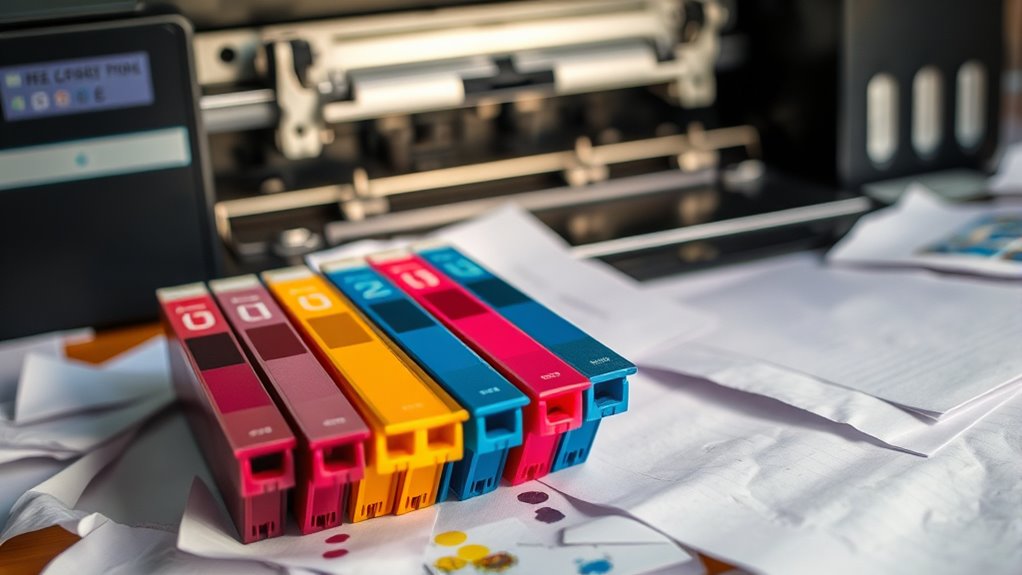
Printer ink is so expensive mainly because of the high costs involved in its research, development, and manufacturing. Ink can cost anywhere from $13 to $75 per ounce, making it more expensive than many luxury items.
Manufacturers spend about $1 billion each year on R&D to develop proprietary technology, microchips, and complex manufacturing processes. This investment helps keep vendor lock-in through OEM cartridges, which only work with specific printers.
The business model is built around selling inexpensive printers while making most of the profit from high-margin ink sales. They often use a razor-and-blades approach, where the printer is cheap, but the ink is costly.
High-yield cartridges are priced even higher, offering more ink at a premium. All these factors, along with limited competition, help keep OEM ink prices high despite consumer demand.
How Supply and Demand Push Up Printer Ink Prices
You notice how the demand for printer ink keeps rising, especially with more people working from home.
At the same time, limited competition and supply constraints give manufacturers the power to keep prices high.
These market forces, combined with reliance on expensive OEM cartridges, keep ink prices stubbornly heightened.
Market Demand Growth
As the demand for printers surged during the COVID pandemic, so did the need for ink, leading to a sharp increase in market demand. This spike, along with limited competition, allows manufacturers to justify higher prices for consumables.
You’ll notice that high costs come from investments in research, development, and proprietary tech, which help maintain premium pricing. Companies often sell printers at a loss, relying on profits from expensive ink cartridges.
This growing demand keeps prices elevated despite supply chain issues. The high demand for ink, combined with controlled supply, ensures prices stay high, making ink a high-demand, low-supply commodity.
These factors push prices even higher, benefiting manufacturers at your expense.
Limited Supply Constraints
Limited supply constraints play a big role in keeping ink prices high, even when demand stays strong. OEM manufacturers tightly control the supply chain, often relying on proprietary technology that limits competition and availability.
These supply constraints mean there are fewer third-party options, which are often less reliable or harder to find. That pushes prices upward because OEMs can keep prices high when fewer alternatives exist.
The high costs of maintaining proprietary technology and managing complex supply chains also add to reduced availability and higher prices. Major companies invest heavily in R&D and hold patents that block cheaper, innovative alternatives from entering the market.
This tight control over supply and the high costs involved make printer ink expensive. Demand outpaces the limited supply, allowing OEMs to keep prices at a premium.
Pricing Power Dynamics
High demand for frequent printing, especially in offices and homes, keeps printer ink prices high even after considering manufacturing costs. Manufacturers have strong pricing power because of limited competition and supply constraints.
They set high prices for OEM cartridges by using embedded microchips and proprietary technology, which lock consumers into their brand. This makes switching brands difficult and helps maintain high profit margins.
Additionally, the companies invest around $1 billion annually in R&D, which increases production costs for advanced ink formulas. All these factors let manufacturers keep costs high and protect their profits.
Basically, the business model of cheap printers with expensive consumables allows companies to control ink prices. This makes it tough for consumers to find affordable alternatives.
The High Cost of R&D and Manufacturing in Ink Production
You may not realize how much goes into making quality printer ink—from complex formulation processes to proprietary manufacturing techniques.
Manufacturers invest billions each year to develop durable, vibrant, and quick-drying inks that meet strict safety and quality standards.
These high R&D and production costs are a big reason why OEM cartridges come with premium prices.
Complex Formulation Processes
Creating printer ink involves a highly complex formulation process that drives up costs considerably. Developing pigment compositions that deliver vibrant colors, quick drying, and durability requires extensive research and precise blending.
This complex formulation guarantees the ink remains water- and smear-resistant, which is crucial for high-quality printing. During ink manufacturing, specialized equipment and strict standards for color accuracy, durability, and compatibility significantly raise production costs.
The R&D process focuses on preventing nozzle clogs and ensuring consistent print quality, adding to the high costs. When producing OEM cartridges, manufacturers invest heavily in technology and quality controls.
Formulating stable, high-performance inks involves precise blending of dyes, pigments, and vehicles. Ensuring compatibility with various printers demands rigorous testing and refinement.
High-tech equipment in ink manufacturing increases production expenses.
High R&D Investment
Developing top-tier printer ink requires significant investment in research and development. Companies spend around $1 billion each year to perfect ink formulations, including pigments, dyes, and vehicles that ensure longevity and high quality.
Extensive research is needed to create inks that dry quickly, resist water and smearing, and prevent nozzle clogging. Manufacturing costs also rise due to advanced technology, specialized materials, and microchips integrated into OEM cartridges.
These chips help with compatibility and security, but they also add to production costs while improving functionality. Manufacturers focus on quality and performance, which involves costly testing, innovation, and patent protections.
All these efforts—rigorous research, complex manufacturing, and safeguarding intellectual property—significantly drive up the price of printer ink.
Proprietary Manufacturing Techniques
Proprietary manufacturing techniques play a central role in driving up the costs of printer ink, as companies invest heavily in specialized technology to produce high-quality, reliable cartridges. These techniques involve complex processes like blending advanced ink formulas for vibrancy and quick-drying properties, often requiring significant R&D investment.
OEM cartridges feature proprietary manufacturing, microchips, and specialized components that add to production expenses. Developing innovative inkjet and toner methods, such as thermal and piezoelectric techniques, complicates manufacturing further.
Companies also maintain extensive patent portfolios, like HP’s 9,000 imaging patents, reflecting the high level of innovation and costs involved. Use of proprietary manufacturing processes ensures ink stability, while integration of microchips and advanced components boosts costs.
Continual investment in R&D for innovative ink formulas keeps the process cutting-edge, but it also makes manufacturing more complex and expensive.
Proprietary Technology and Microchips: Why Cartridges Cost More
Microchips embedded in printer cartridges play a key role in driving up their costs by verifying ink levels and authenticating each cartridge. These microchips are protected by patents as part of proprietary technology, making OEM cartridges more expensive to produce.
They prevent third-party refills by detecting non-original cartridges and rejecting refilled ones, which helps ensure vendor lock-in. The chips also help printers monitor ink levels accurately, which manufacturers say maintains the best print quality and security.
Adding advanced microchip technology increases both the complexity and cost of manufacturing cartridges. This extra layer of technology allows companies to justify higher prices for OEM cartridges, as consumers pay for the security, performance, and authenticity these proprietary microchips provide.
Market Trends and Consumer Demand Keeping Ink Prices High
You’re probably printing more than ever, which keeps the demand for ink high and prices elevated. Since manufacturers depend on ink sales for profit, limited competition and supply chain issues make lowering costs difficult.
These market trends ensure that ink remains a profitable product, despite the availability of alternative options. So, prices are likely to stay high for the foreseeable future.
High Demand in Markets
The surge in demand for printer ink has kept prices high across markets, mainly because more people are using printers at home and in offices. This increased demand, especially during remote work and learning, helps keep OEM ink prices high, giving manufacturers a steady income.
Supply constraints and limited competition also play a role in keeping prices elevated. Many printers only work with proprietary cartridges, which lock consumers into buying specific brands.
Market strategies, like designing cartridges that only fit certain printers, stop people from switching easily. This keeps prices high and profits steady.
Because of all this, demand remains strong, helping manufacturers stay profitable even when needs change. This ongoing demand is a big reason why printer ink stays so expensive.
Limited Competition Effects
Limited competition plays a big role in keeping printer ink prices high. Most consumers are stuck buying OEM cartridges that are protected by proprietary technology and patents.
This market dominance means there are fewer affordable options, which keeps vendors locked in. Major manufacturers spend around $1 billion each year on R&D, making their cartridges complicated and expensive to copy.
They use proprietary tech and microchips to block third-party alternatives from gaining ground. This vendor lock-in discourages price competition, so prices stay high.
The table below shows how limited competition keeps prices elevated:
| Aspect | Impact | Example |
|---|---|---|
| Proprietary tech | Limits third-party options | Microchip restrictions |
| Market dominance | Reduces vendor choices | Few major companies |
| R&D investment | Justifies high prices | $1 billion yearly spend |
| Consumer lock-in | Ensures steady demand and high prices | Office and home use |
Supply Chain Constraints
Supply chain constraints significantly impact the high cost of printer ink, even as manufacturers deal with fluctuating availability. These constraints come from shortages of raw materials and manufacturing complexities that disrupt production.
As a result, ink becomes less available, which drives prices higher. Market strategies also play a part, with companies often selling printers at a loss and making profits from expensive consumables.
Proprietary technology and intellectual property restrictions limit competition, helping maintain high prices despite supply issues. Increased R&D investments, around $1 billion annually, also raise production costs that are passed on to consumers.
Raw material shortages delay production and increase costs. Manufacturing complexities make the process more expensive. Limited availability keeps prices high in the market.
Is Paying More for Premium Ink Worth It? Pros and Cons
Deciding whether to spend more on premium ink depends on your printing needs and priorities. Premium ink, especially OEM inks, often costs quite a bit—ranging from $13 to $75 per ounce—because of extensive R&D and proprietary technology.
This high cost can be worth it if you care about top-notch print quality, color accuracy, quick drying, and long-lasting prints. These features are especially important for professional or archival work.
On the flip side, third-party inks and refillable options can cut costs while offering similar quality. But they might also affect your printer’s reliability or void your warranty.
If you print only occasionally, the extra expense for premium ink might not be justified. However, high-volume users or those needing the best results might find paying more for OEM inks a smart investment.
What Factors Make Ink Cartridges Costly to Produce?
Ink cartridges are costly to produce because they contain complex formulations with pigments, dyes, and vehicles that require precise manufacturing and extensive research. Developing vibrant, quick-drying, and smear-resistant inks involves significant R&D investments, often exceeding $1 billion annually for major brands.
The production process uses sophisticated techniques like thermal and piezoelectric droplet ejection to ensure accuracy and quality. These advanced methods help produce consistent, high-quality ink droplets for reliable printing.
Furthermore, OEM cartridges include microchips that verify authenticity and compatibility, adding to manufacturing costs. These chips help prevent counterfeiting and ensure proper functioning.
Proprietary technology and specialized packaging also increase expenses. Strict quality controls are in place to ensure durability and performance, which further raise production costs.
All these factors combine to make ink cartridges expensive, as each component and process is designed to meet high standards. This results in the overall high cost of producing high-quality ink cartridges.
How to Save Money With Alternative Ink Options
If you want to cut printing costs, exploring alternative ink options can make a big difference. Refillable ink cartridges and tanks let you buy ink in bulk, which reduces your reliance on pricey OEM cartridges.
Using third-party compatible cartridges can save you 60-70%, though quality can vary. Ink refill kits allow you to refill cartridges yourself, saving money but they can be messy and less reliable than pre-filled, compatible options.
OEM cartridges offer the original quality but come at a higher price. Ink delivery services like HP Instant Ink provide automatic, discounted replacements, lowering your per-page costs.
Reputable third-party suppliers with coupons and free shipping can help you save even more without sacrificing quality.
Tips to Extend Cartridge Life and Cut Printing Expenses
To make your printing budget go further, focus on strategies that extend your cartridge life and save money. Using high-yield cartridges or refillable tanks can double your page output and reduce how often you need replacements, lowering overall ink costs.
Maximize savings by using high-yield cartridges or refillable tanks to double your pages and cut ink costs.
Printing in draft mode, limiting color use, and choosing grayscale help conserve ink and extend cartridge life. Regularly performing printhead cleanings and storing cartridges in cool, dry places prevents ink from drying out and clogging.
For even better savings, consider switching to laser printers for black-and-white documents, as they offer higher toner yields and lower printing expenses.
- Use refillable tanks or high-yield cartridges
- Print in draft mode and limit color use
- Store cartridges properly and perform regular maintenance
Top Strategies to Avoid Overpaying for Printer Ink
Avoiding overspending on printer ink requires smart choices and proactive strategies. Using refillable cartridges can drastically lower the cost per page since you only pay for the ink refills, not new cartridges each time.
Switching to remanufactured cartridges from reputable third-party suppliers offers significant savings without sacrificing quality. These third-party inks can be a budget-friendly alternative to pricey OEM options, reducing overall ink costs.
Furthermore, consider subscribing to programs like HP Instant Ink, which provide automatic, cost-effective replacements, saving up to 50%. Adjust your printing habits by printing in draft mode, limiting color use, and choosing black-and-white printing when possible.
These tactics help you stretch your ink supply and keep costs manageable while maintaining print quality.
Frequently Asked Questions
Why Has Printer Ink Become so Expensive?
Printer ink has become so expensive because manufacturers rely on high-margin sales, knowing many customers will need replacement cartridges often. They embed proprietary microchips and complex tech, which increases production costs.
Extensive research and development, along with the demand for vibrant, quick-drying ink, also drive up prices. Plus, limited competition allows companies to keep prices high.
You end up paying more for ink than the printer itself because they profit from ongoing cartridge sales rather than the hardware.
How Much Does 1 Gallon of Printer Ink Cost?
A gallon of printer ink can cost you anywhere from $13,000 to $75,000, depending on the brand and formulation. Think of it as liquid gold, crafted through complex processes, proprietary formulas, and hefty R&D investments.
Since cartridges hold less than an ounce, that tiny drop packs a hefty price tag. This steep cost reflects the specialized chemistry and high standards required for quality inkjet printing.
How to Spend Less on Printer Ink?
You can spend less on printer ink by choosing high-yield or refillable cartridges, which lower the cost per page. Subscribe to programs like HP Instant Ink for discounted, automatic replacements.
Opt for monochrome laser printers for black-and-white printing, and buy reputable third-party cartridges for savings. Moreover, print in draft mode, limit color use, and avoid unnecessary color printing to extend cartridge life and reduce expenses.
Is It Cheaper to Refill or Buy New Ink?
Refilling your cartridges can be like patching a leaking boat—cheaper at first but risky if not done carefully.
Buying new OEM cartridges gives you consistency and peace of mind, though it costs more upfront.
If you print occasionally, refilling can save you money. For frequent printing, new cartridges tend to be more reliable.
Weigh the effort against the expense because shortcuts might cause more trouble than they’re worth in the long run.
Conclusion
You might think printer ink prices are just a scam, but understanding the costs behind production and technology shows why they’re high. Don’t let the expense discourage you—exploring alternative inks and proper cartridge care can save you money.
It’s worth investing a little effort now to cut costs later. So, go ahead, try some tips, and enjoy printing without feeling like you’re throwing money away.
You’ll find it’s easier and more affordable than you think. When you understand why printer ink is so expensive, it’s easier to find ways to save and make your ink last longer.