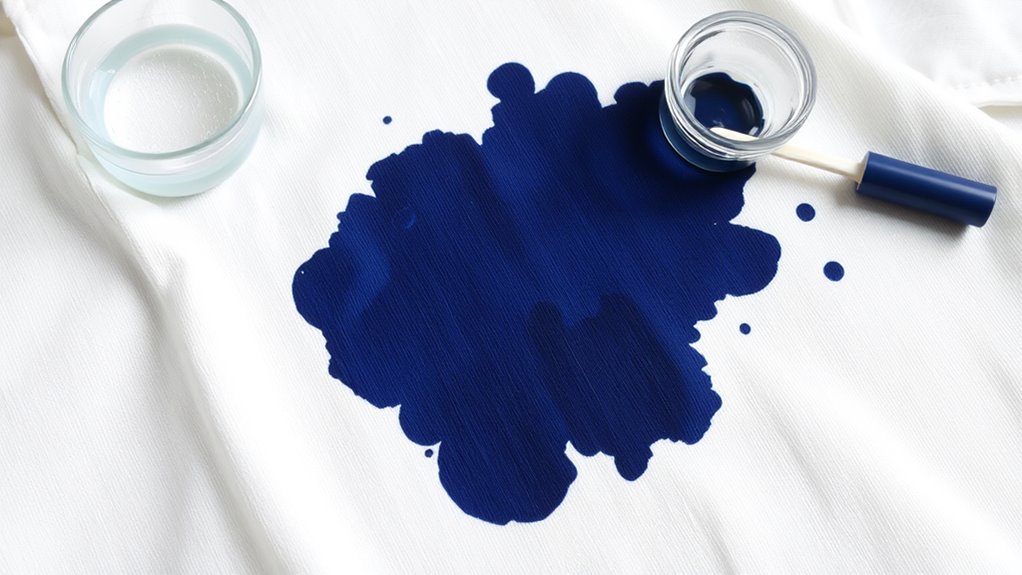
How to Get Ink Out of Clothes: A Step-by-Step Guide
Dealing with ink stains on clothes is a common frustration many people face. You’re not alone—these stubborn marks can feel impossible to remove. But don’t worry, with a little quick action and the right techniques, you can get your clothes looking fresh again.
To remove ink from clothes, act quickly. Blot the stain with paper towels without rubbing, then dab from behind with rubbing alcohol or vinegar. Rinse with cold water and apply a stain remover or detergent.
Wash in the hottest water safe for the fabric. For dried stains, use stronger solutions or soak for several hours. Careful handling and prompt treatment are key.
Keep exploring for detailed steps and tips to keep your clothes ink-free longer.
Key Takeaways
- Act quickly by blotting the stain and applying rubbing alcohol from the back side to stop the ink from setting.
- Rinse well with cold water after applying the alcohol, then move on to stain remover or detergent.
- Use the right stain remover and wash the clothing in the hottest water safe for the fabric.
- If the stain has dried, soak it in warm solutions or try stronger stain removers. Repeat the process if needed.
- Keep in mind, avoid using heat like dryers until the stain is completely gone. That way, you prevent the ink from setting permanently.
Act Fast: the Key to Removing Ink Stains From Clothes
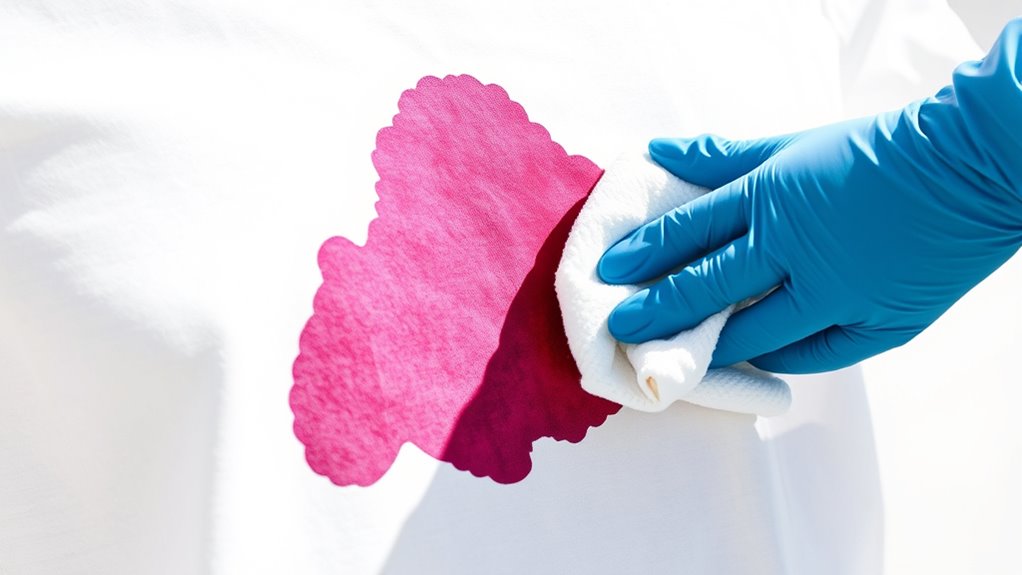
When you notice an ink stain on your clothes, acting quickly can make all the difference. To effectively remove ink, you need to act fast before the stain dries and sets deeper into the fabric.
Start by gently blotting the stain with a clean cloth to lift excess ink, preventing it from penetrating further. Using a quick-acting solvent like rubbing alcohol or vinegar right away can prevent the ink from becoming permanent.
The key is to stop drying ink from bonding with the fabric fibers, which makes stain removal much harder later. The sooner you treat the stain, the better your chances of completely removing ink from your clothes.
Identify Your Fabric and Ink Type to Choose the Right Method
To choose the best removal method, you need to identify both your fabric type and the ink’s composition.
Different fabrics react differently to cleaning agents, so knowing whether the ink is water-based or permanent helps guide your approach.
Fresh stains are easier to treat than dried ones, which often require more intensive methods.
Fabric Compatibility Considerations
Identifying your fabric type and ink kind is key to choosing the safest and most effective stain removal method. Your care label gives important cleaning tips—like whether to use cold water, avoid bleach, or opt for dry cleaning.
Porous fabrics like linen or wool absorb ink more deeply, so they need gentler treatments or professional help. For water-based ink, light cleaning usually works, but permanent ink calls for stronger solutions.
Always test your chosen method on a hidden area first to avoid discoloration or fiber damage. Keep fabric durability in mind when selecting your approach.
Use this guide to match your fabric and ink type with the right stain removal method:
| Fabric Type | Best Stain Removal Approach |
|---|---|
| Cotton | Water-based ink: gentle washing |
| Silk | Avoid harsh chemicals, dry clean first |
| Polyester | Spot treatment with mild solutions |
| Linen | Test cleaning solutions, consider professional help |
| Wool | Use specialized wool-safe stain removal |
Ink Composition Differences
Understanding the composition of the ink is key to choosing the right stain removal method. Ink composition varies widely, affecting how you should treat the stain.
Water-based ink, like fountain pen ink and washable markers, mainly uses water as a solvent. This makes it easier to remove when fresh.
Permanent ink contains resins and dyes that aren’t water-soluble. So, you’ll need stronger solvents or specialized stain removers.
Ballpoint ink combines dyes with oil and solvents, making it more resistant once dry. Recognizing whether the ink is water-based or permanent helps you decide if simple water or a solvent-based stain removal is necessary.
Knowing the ink type guarantees you apply the most effective method, saving you time and effort in cleaning your clothes.
Fresh vs. Dried Stains
Have you ever wondered why some ink stains come out easily while others seem permanent? The secret is whether the stain is fresh or dried.
Fresh ink stains are easier to remove because the ink hasn’t set into the fabric fibers yet. That makes the initial stain removal steps more effective.
Dried ink stains are trickier and usually need stronger treatments, like alcohol-based solutions or special stain removers.
Knowing your fabric type is key to choosing safe and effective stain removal methods. Delicate fabrics need gentle approaches.
Also, identify if the ink is water-based or permanent. This helps you decide whether to use water, alcohol, or other solutions for the best results.
Acting quickly is really important for the best chance of removing the stain completely.
Step-by-Step: How to Remove Fresh Ink Stains Effectively
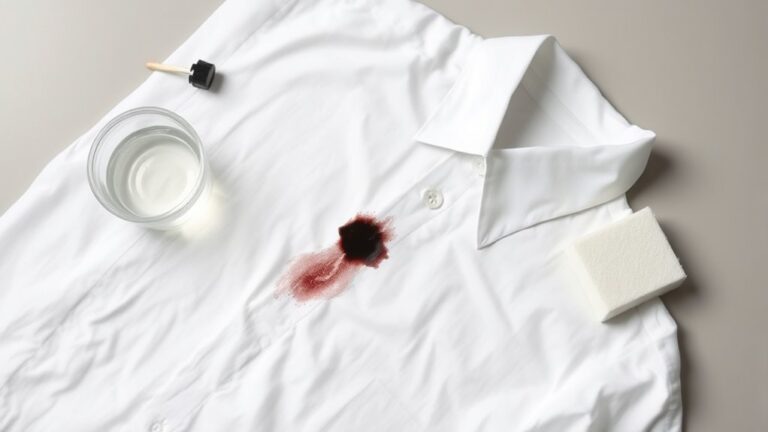
When a fresh ink stain happens, acting quickly can really help. Start by blotting the stain immediately with a clean cloth or paper towel to soak up excess ink without spreading it around.
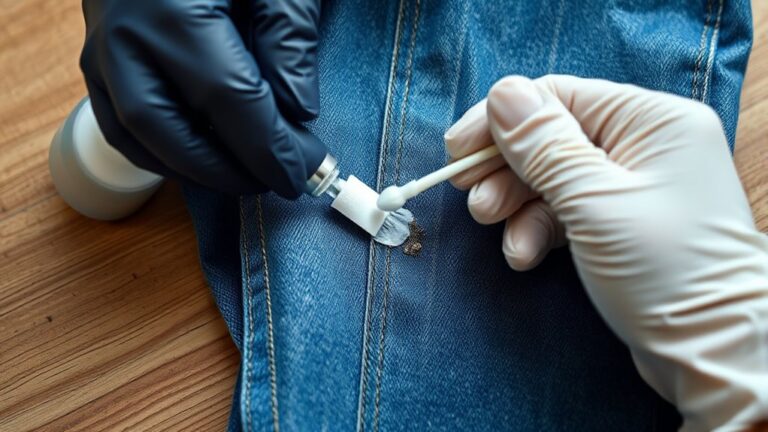
Dampen a cotton ball or clean cloth with rubbing alcohol, then gently dab the stain from the back to lift the ink out of the fabric. Rinse the area thoroughly with cold water to remove any leftover ink and alcohol.
Next, apply a pre-treatment stain remover or liquid laundry detergent directly onto the stain. Let it sit for 5-10 minutes before washing.
Finally, wash the clothing in the hottest water safe for the fabric, as indicated on the care label. Check if the stain is gone before drying to prevent it from setting in.
Removing Dried or Set-In Ink Stains Safely and Successfully
Removing dried or set-in ink stains requires a different approach since the ink has already penetrated and set into the fabric fibers. For stubborn stains, using a targeted stain remover like OxiClean Max Force can be very effective.
Let it sit for several minutes up to a week, depending on how severe the stain is. To treat ink, try soaking the fabric in a warm OxiClean solution for around 6 hours, especially on white or colorfast fabrics.
Patience is key because dried ink stains often need multiple treatments. Always test any stain remover on an inconspicuous area first to avoid damaging the fabric.
Household Remedies vs. Commercial Products: When to Use Each
Household remedies are affordable and easy to find, making them great for fresh or small ink stains. They’re simple to try and won’t cost much.
Commercial products are more powerful and designed for stubborn or dried stains. They tend to be more expensive and may require careful testing first.
Choosing between them depends on how severe the stain is, safety considerations, and what supplies you have available.
Effectiveness and Safety
Choosing between household remedies and commercial stain removers depends on the stain’s age, fabric type, and your safety concerns.
Household remedies like vinegar, baking soda, or rubbing alcohol can work well for fresh ink stains on durable fabrics. But be careful—they might damage the fabric or cause color fading if you don’t test first.
Always do a patch test on a hidden area to avoid surprises. Commercial products are specifically made for stain removal and tend to be safer on delicate fabrics when used as directed.
While household remedies are budget-friendly and quick for minor stains, stubborn or set-in ink stains usually need commercial solutions for better results. Prioritizing safety helps you avoid damaging your clothes while getting rid of ink effectively.
Accessibility and Cost
Wondering when to reach for simple household remedies versus commercial stain removers? If the ink stain is fresh and minor, household remedies like vinegar or hand sanitizer are affordable, accessible supplies that can offer a quick treatment. They’re a cost-effective way to handle small, everyday stains with DIY solutions you already have at home.
However, for set-in or stubborn ink marks, commercial stain removal products like OxiClean Max Force are often more potent, providing faster results and reducing the need for multiple applications. Choosing between these options depends on the stain’s age, fabric type, and your budget.
Here’s what to weigh: Household remedies are budget-friendly and easy to find. Commercial stain removers are more effective for dried or tough stains. DIY solutions are suitable for quick, minor stains. Home cleaning with accessible supplies saves time and money. Select products based on stain severity and fabric considerations.
Prevent Ink Stains: Tips to Protect Your Clothes in the Future
To prevent ink stains from ruining your clothes, be proactive with handling and storing your pens and ink supplies. Always handle ink stains over a protected surface or paper to avoid getting ink on your clothes.
Store ink cartridges and pens in secure, capped containers to prevent leaks and spills. Keep them away from pockets or areas that experience pressure or movement. Regularly check and maintain your ink cartridges to avoid leaks and ensure safe storage.
When spills happen, act quickly by blotting with absorbent paper towels or cloths before the ink sets into fabric. Following these simple tips can help prevent ink stains and keep your clothes protected.
Final Tips: Keep Your Clothes Ink-Free and Looking Fresh
Keeping your clothes looking fresh and ink-free requires good habits and quick action. Regularly inspecting and treating ink stains can stop them from setting and becoming permanent.
Quick action and good habits keep your clothes ink-free and looking fresh.
Use protective measures like aprons or old clothing when handling ink or doing pen-related tasks. Store pens and ink bottles securely with caps tightly sealed to prevent accidental leaks.
Avoid exposing ink-stained clothes to heat sources like dryers or irons until the stain is fully gone. Incorporate stain prevention routines, such as careful handling and acting quickly, to keep your clothes looking their best.
Always treat ink stains promptly to improve your chances of removing them. Use gentle methods and proper cleaning solutions suited for your fabric.
Employ stain prevention techniques in your daily laundry routine. Protect your clothing with barriers during ink-related tasks to minimize the risk of stains.
And remember, don’t expose ink-stained clothes to heat until the stain has been completely removed.
Frequently Asked Questions
How Can I Remove Ink Stains From My Clothes?
To remove ink stains from your clothes, start by testing rubbing alcohol on a hidden area.
Gently blot the stain with a clean cloth to lift the ink, being careful not to spread it.
For dried stains, soak the fabric in vinegar and water or apply a baking soda paste.
Rinse thoroughly and wash in the hottest water safe for the fabric to make sure the stain’s gone.
Does Dawn Soap Remove Ink?
Imagine a drop of ink spreading across fabric like a dark cloud. Dawn soap can sometimes help lift water-based ink stains because of its degreasing powers. You can apply it directly, then rinse and wash.
However, don’t rely solely on Dawn for permanent or oil-based inks. Those may need specialized treatments. Think of Dawn as a first step—sometimes enough, sometimes just part of the battle.
Does Toothpaste Remove Ink?
Yes, toothpaste can help remove ink stains from clothes. You just need to put a small amount directly on the stain and gently scrub. This helps break down the ink particles.
Keep in mind, it works best on fresh stains and on fabrics that can handle mild abrasives. Always test on a hidden area first to avoid damage.
Then rinse thoroughly and wash promptly for the best results.
Conclusion
By acting quickly and choosing the right method, you can save your clothes from stubborn ink stains. Imagine spilling ink on your favorite shirt; with prompt treatment, you might prevent a permanent mark.
For example, Sarah used rubbing alcohol immediately, and her shirt looked brand new. Stay prepared by keeping household remedies handy and protecting your clothes.
With these tips, you’ll keep your wardrobe fresh and ink-free, no matter what mishaps come your way. Remember, quick action is key to getting ink out of clothes successfully.