
What Does Squid Ink Taste Like?
Many food lovers struggle to find ingredients that truly elevate their dishes and add that wow factor. If you’re curious about bold flavors that can transform your seafood recipes, squid ink might be just what you need. You’re not alone—exploring new ingredients can feel overwhelming, but it’s worth the effort.
Squid ink offers a bold, briny flavor with oceanic, umami qualities that evoke the depths of the sea. It’s mildly salty, with a rich, earthy taste that enhances seafood dishes. Its complex flavor combines subtle sea notes and minerals, making your dish more vibrant and savory.
The texture is slimy and velvety, adding visual drama and sensory richness. Curious about how it all comes together? Keep exploring to uncover how squid ink can elevate your culinary creations.
Key Takeaways
– Squid ink has a briny, oceanic flavor with a mild taste and subtle saltiness, reminiscent of the sea’s depth.
It offers a rich umami note thanks to its high glutamate content. This adds a savory depth that really enhances seafood dishes.
The flavor also includes earthy, mineral undertones from compounds like melanin. These contribute to its complex and layered taste profile.
Overall, the taste is generally mild but can become more pronounced and concentrated in dishes. That really emphasizes the marine essence.
Squid ink pairs well with ingredients like garlic, saffron, and lemon. These help balance its oceanic and savory qualities, creating a well-rounded flavor.
What Is Squid Ink and How Is It Used in Cooking?

Squid ink is a dark, viscous fluid containing melanin that squids secrete mainly for defense. In cooking, it’s loved for its striking black color and briny, oceanic flavor.
Squid ink is a dark, viscous fluid with a striking black hue and a briny, oceanic taste.
You’ll see squid ink used in dishes like pasta, risotto, and sauces. It adds depth and a subtle seafood taste, making the dishes more vibrant and flavorful.
It’s usually harvested from fresh squid or bought pre-packaged at specialty stores. When added to recipes, squid ink brings a savory umami note and enhances the dish’s salinity.
This ingredient is popular in regional cuisines like Spanish *arroz negro* and Venetian *spaghetti al nero di seppia*. Its main role is to elevate seafood dishes with visual appeal and complex flavors, emphasizing the ocean’s brininess.
How Does Squid Ink Taste? Key Flavors Explained
When you taste squid ink, you’ll notice a subtle yet distinct briny flavor that immediately evokes the ocean’s depth. This briny taste is complemented by a rich umami that enhances seafood dishes, adding savory complexity.
The flavor is generally mild, with a slightly salty, oceanic quality reminiscent of oysters and sea urchins. You might also pick up earthy, mineral notes thanks to compounds like melanin, giving the ink a deeper, layered flavor.
When used in recipes, squid ink imparts a smooth and slightly smoky undertone, balancing saltiness with complex umami richness. Overall, it’s a flavor that enriches dishes without overpowering, making it a versatile ingredient for seafood lovers seeking depth and sophistication.
What Does Eating Squid Ink Feel Like? Texture and Mouthfeel
When you eat squid ink, you’ll notice its slimy yet tender texture that coats your mouth, creating a velvety sensation.
Its distinctive chewiness adds a subtle, satisfying resistance, making each bite more interesting.
The dark, glossy appearance also provides a striking visual contrast, heightening the overall sensory experience.
Slimy Yet Tender Texture
Eating squid ink offers a distinctive, slightly slimy or viscous sensation that coats your palate with a silky, smooth texture. This slimy mouthfeel is balanced by the tender, gelatinous quality of the ink, creating a unique experience.
Here’s what you can expect: The ink’s viscous nature provides a subtle, unctuous feeling that feels luxurious on your tongue. Its tender consistency ensures it’s not overwhelming, blending seamlessly with pasta or seafood.
The overall mouthfeel is both slimy and tender, offering a pleasant contrast that elevates the dish’s richness. This combination makes eating squid ink a fascinating sensory experience, adding depth with its unctuous yet tender texture.
Distinctive Chewy Feel
Consuming squid ink introduces a distinctively chewy or slightly sticky sensation that enhances the tactile experience of your dish. The ink itself has a viscous, gelatinous consistency that feels smooth and slightly sticky in your mouth.
When incorporated into pasta or rice, it adds a chewy texture that contrasts with the tender seafood or grains around it. This chewiness makes each bite more engaging and interesting.
The ink’s slimy, viscous nature balances with the moist, tender components, creating a multi-layered mouthfeel. Overall, the chewy texture of squid ink adds a unique dimension to your eating experience, emphasizing both flavor and tactile richness.
Visual Contrast and Impact
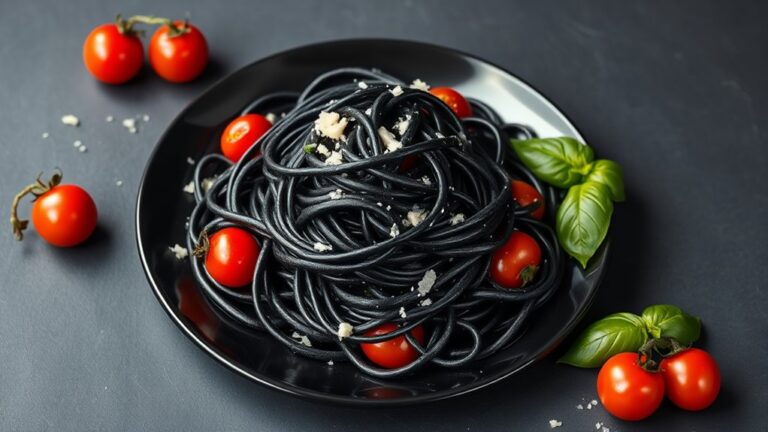
The striking black hue of squid ink instantly grabs your attention and transforms the visual appeal of the dish. Its deep, dark color creates a powerful visual contrast against lighter ingredients, making the dish look dramatic and sophisticated. This striking presentation heightens the sensory impact, engaging your eyes before tasting.
Consider these points:
- The bold black color adds a dramatic visual contrast, elevating the dish’s appearance.
- The glossy, slightly slimy texture of squid ink enhances both the visual and tactile experience.
- When used in pasta or rice, it keeps a smooth, tender consistency that pairs perfectly with seafood’s firmness.
Together, these elements create a mesmerizing visual contrast and a memorable sensory impact that invites curiosity and anticipation.
How Does Squid Ink Enhance the Flavor of Dishes?
When you add squid ink to your dishes, it boosts the umami flavor, making the seafood taste richer and more savory. Its oceanic notes bring a subtle saltiness and complexity that uplift sauces, rice, and pasta.
Depth of Umami Flavor
Squid ink boosts dishes by infusing them with a rich, savory umami flavor that deepens with each bite. Its high glutamate content enhances the overall seafood profile, making every dish more complex and satisfying. When you add squid ink to sauces, rice, or pasta, you reveal a full-bodied flavor that emphasizes the natural tastes of seafood.
Here are three key ways squid ink deepens the umami flavor:
- It amplifies seafood’s natural richness by adding layers of savory depth.
- The amino acids in squid ink elevate the dish’s overall umami profile.
- Its intense flavor allows you to reduce salt without sacrificing taste.
Incorporating squid ink results in a fuller, more satisfying flavor experience that truly highlights seafood’s essence.
Oceanic Salinity Boost
Because of its natural briny quality, squid ink boosts the oceanic salinity of dishes by adding a subtle saltiness that mimics the taste of the sea. This amplifies the seafood flavor, making each bite feel more authentic and immersive.
The ink’s oceanic notes deepen the marine essence, creating a richer, more complex flavor profile. Its natural saltiness also lifts the umami, balancing other ingredients while reducing the need for additional salt.
When you incorporate squid ink into rice, pasta, or broths, it intensifies the salinity levels, giving your dishes a bold, maritime character. This oceanic salinity boost not only intensifies the overall flavor but also highlights the freshness of seafood, making your culinary creations more vibrant and true to the sea.
Are Squid Ink’s Oceanic Notes Salty or Briny?
Are squid ink’s oceanic notes truly salty or more briny? It’s a subtle but important distinction. The flavor leans more toward briny than outright salty, reflecting its marine origins. Here are three key points to understand:
- The briny taste comes from natural minerals and sea flavors, giving it a fresh oceanic vibe.
- Compounds like glutamates and polysaccharides boost its umami profile, balancing the saltiness with savory depth.
- When used in concentrated dishes, these briny, oceanic nuances become more pronounced, creating a complex, sea-inspired flavor.
While saltiness is there, it’s the briny and umami qualities that define squid ink’s oceanic character. It’s more than just salty—truly a taste of the sea.
How Does Squid Ink Compare to Other Seafood Flavors?
You’ll notice that squid ink has a subtler oceanic and briny flavor compared to raw seafood like oysters or anchovies. Its umami richness offers depth similar to sea urchin or clam broth but with a cleaner, mineral note.
Oceanic and Briny Notes
Squid ink offers a distinct oceanic flavor that sets it apart from other seafood. Its briny taste is deep, salty, and reminiscent of the sea and shellfish, but with a smoother finish. Here’s what makes it stand out:
- The oceanic flavor is concentrated, giving dishes a powerful maritime essence.
- Its briny notes are similar to oysters and sea urchins but lack the metallic aftertaste.
- The subtle mineral and umami undertones make it an excellent seafood boost, adding savory depth without overwhelming other flavors.
Compared to other seafood, squid ink delivers a more refined, less fishy profile, making it perfect for elevating seafood dishes with authentic briny richness.
Umami Intensity and Depth
Compared to other seafood ingredients, squid ink offers a richer and more intense umami flavor, mainly because of its high glutamate content. This makes it stand out among seafood flavors, providing a deep, savory profile that enhances the dish’s overall complexity.
Unlike the delicate umami of fish or shellfish, squid ink brings a robust, earthy note with a velvety texture that boosts natural oceanic flavors. It adds a balanced saltiness and richness, turning simple recipes into multi-layered seafood experiences.
Its concentrated umami not only deepens flavor but also acts as a strong enhancer, making dishes more savory and satisfying. Overall, squid ink’s umami is more profound and impactful, offering a distinctive depth that other seafood ingredients might lack.
What Are Popular Dishes Made With Squid Ink?
Many popular dishes showcase the rich, striking flavor of squid ink, adding both color and depth to the culinary experience. If you’re exploring dishes with squid ink, here are three favorites:
- Arroz negro is a Spanish rice dish cooked with seafood and squid ink, giving it a briny flavor and a dramatic black color. It’s a bold, flavorful dish that’s both visually stunning and delicious.
- Spaghetti al nero di seppia is an Italian squid ink pasta that offers a savory, oceanic taste along with its striking black appearance. It’s a perfect choice for seafood lovers wanting something unique.
- Chipirones en su tinta features small squid cooked in ink, providing a deep salty flavor and moist texture. It’s a flavorful way to enjoy the richness of squid ink in a tender dish.
These dishes highlight the squid ink taste, which combines briny, umami notes with a unique visual appeal. Each one makes the ink’s flavor a central feature.
How Do You Prepare and Cook With Squid Ink?
To effectively incorporate squid ink into your dishes, start by gently heating it in a small saucepan to release its rich flavors without overpowering the dish. This helps mellow the ink’s intensity and makes it easier to cook with.
When preparing squid ink pasta, toss it with a little olive oil and cook briefly—just enough to warm it through—so the delicate ink flavor remains prominent. For sauces and risottos, stir in squid ink towards the end of cooking to keep its vibrant color and oceanic taste.
Always measure carefully, usually a teaspoon per serving, to avoid an overly fishy or salty flavor. To boost the savory notes, balance squid ink with ingredients like garlic, seafood, and saffron.
What Visual and Textural Effects Does Squid Ink Add to Food?
When incorporating squid ink into your dishes, you’ll immediately notice its striking visual impact. Its dark hue transforms simple ingredients into a dramatic presentation.
It adds a velvety appearance, giving the dish a glossy, rich look that really elevates the overall presentation. The ink’s deep color contrasts vividly with lighter ingredients, making the dish look more exotic and intriguing.
Squid ink also imparts a unique mouthfeel, adding a slightly slimy or chewy texture to pasta and rice. This not only enhances the visual appeal but also enriches the sensory experience.
These visual and textural effects make your dishes more appealing and memorable for anyone who tastes them.
Is Squid Ink Suitable for First-Time Tasters? Tips for Beginners
Squid ink can be a bold and unexpected ingredient for first-time tasters, but with a few simple tips, you can enjoy its unique flavor without feeling overwhelmed.
Start small—add a tiny amount of squid ink to dishes like pasta or risotto to experience its subtle, briny flavor without overpowering the dish.
The salty, oceanic taste, similar to oysters or sea urchins, is generally mild if prepared properly.
Look for recipes where the squid ink is balanced with other ingredients, like seafood, lemon, or saffron, to amplify the flavor.
Since the ink’s color and texture can be surprising, beginning with familiar dishes makes the experience more approachable.
Follow these beginner tips, and you’ll find that squid ink can be an exciting and delicious addition to your culinary repertoire.
Frequently Asked Questions
What Does Squid in Ink Taste Like?
You’ll find that squid in ink has a subtle, briny flavor with a rich umami taste that echoes the ocean’s depths. It’s mildly salty, similar to oysters or sea urchin, adding a savory note to your dishes.
If prepared properly, it’s not overly fishy. Instead, it offers a mineral, slightly smoky undertone that complements the natural sweetness of the squid. This enhances your seafood dishes without overpowering them.
Does Squid Ink Pasta Stain Your Mouth?
Yes, squid ink pasta can stain your mouth temporarily. The dark pigment, rich in melanin, might leave a visible mark on your teeth and tongue, especially if you eat a lot.
But don’t worry, this staining is superficial and easy to clean off with brushing or rinsing. It doesn’t pose any health risks, and the stain usually fades quickly after you finish eating or drinking.
Just be mindful if you’re eating large amounts, as the marks might be more noticeable.
Is Squid Ink Yummy?
Yes, squid ink is yummy. Picture a silky, black ribbon of pasta coated in a rich, savory sauce that hints at the ocean’s depths.
You taste a subtle briny saltiness, reminiscent of sea air and fresh oysters, balanced by a gentle umami richness. Its unique flavor adds depth and sophistication to your dish.
Every bite feels like a delightful plunge into the sea’s mysterious, delicious world.
Are Squids Killed for Ink?
Most squids aren’t killed just for their ink. When they’re caught for food, their ink sacs are often carefully removed without harming the animal, so the ink can be collected sustainably.
Sometimes, squids are sacrificed to get ink, but many producers prefer to extract ink from live or freshly caught squids. So, usually, the ink is a byproduct of harvesting squids for eating, not the main reason they’re killed.
Conclusion
Imagine the dark, glossy swirl on your plate, hinting at depths of flavor yet to be fully uncovered. As you take a bite, the rich, briny notes mingle with a subtle, savory undertone, transforming your dish into an oceanic adventure.
With each taste, you’re drawn closer to the mysterious world of squid ink. Its flavor is bold and complex, with a slightly salty, umami punch that hints at the ocean’s depths.
So, what does squid ink taste like? It’s a unique blend of briny, savory, and slightly sweet flavors that create a truly distinctive experience. Are you ready to reveal its secrets and plunge into this bold, flavorful adventure?