How to Effectively Remove Ink From Clothes
Dealing with ink stains on clothes is a common frustration many people face. It’s especially annoying when those stubborn marks seem impossible to remove. But don’t worry—you’re not alone, and there are simple tricks to get your clothes looking fresh again.
To effectively remove ink from clothes, act fast by blotting the stain with a clean cloth and rinsing with cold water.
Identify if the ink is water- or oil-based, then use the appropriate solvent, like rubbing alcohol or hand sanitizer, testing on hidden areas first.
For stubborn or dried stains, apply the solvent generously, let it sit, then gently blot or scrape.
To learn more tips on safe removal and fabric care, keep exploring for the best results.
Key Takeaways
- Act quickly by blotting away any excess ink and rinsing the spot with cold water. This helps prevent the stain from setting in.
- Try to figure out whether the ink is water-based or oil-based. Knowing this will help you pick the most effective way to remove it.
- For tougher stains, household solvents like rubbing alcohol or nail polish remover can do the trick. Just make sure to test these on a hidden part of the fabric first to avoid any damage.
- Avoid using heat or putting the garment in the dryer until the stain is completely gone. Heat can cause the ink to set permanently.
- Once you’ve treated the stain, rinse the area well and wash the clothes with cold water. Air dry to keep an eye on whether the stain has disappeared or if you need to try again.
Quick Steps to Prevent Ink From Setting in Clothes
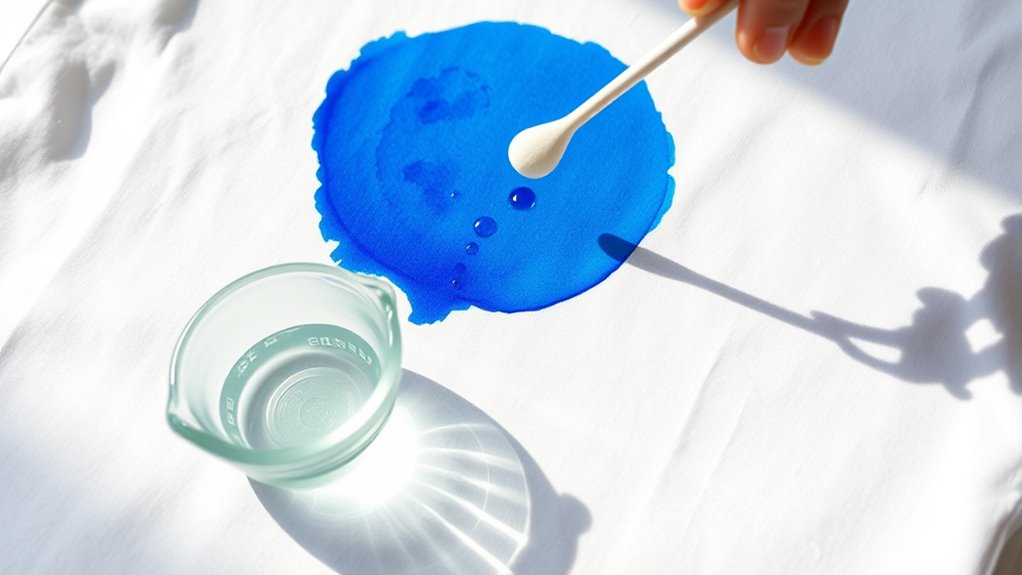
To prevent ink from setting in your clothes, act quickly as soon as you notice the stain. The key to removing ink stains effectively is to act fast and avoid letting the ink penetrate deeply.
Act quickly to prevent ink from setting and make stain removal easier.
Blot the ink stain with a clean cloth or paper towel to absorb excess ink without rubbing, which can spread the stain further. Rinse the area immediately with cold water to dilute the ink and help prevent it from setting with heat.
Applying a stain remover or rubbing alcohol while the stain is fresh increases your chances of success. Remember, don’t put the garment in the dryer until the stain is fully gone, as heat will set the ink permanently.
Quick action is essential to remove ink stains efficiently and keep your clothes looking their best.
Identify Your Ink Type: Water-Based vs. Oil-Based
Understanding the type of ink on your fabric is essential because water-based and oil-based inks respond differently to stain removal. Water-based inks, like gel or fountain pen ink, are water-soluble and easier to treat, especially when fresh.
Oil-based inks, such as ballpoint pens, contain dyes suspended in oils and solvents, making them more resistant. Permanent markers often have resins that bond tightly with fibers, requiring specialized solvents.
To identify your ink, check if the ink smears or dissolves with water. Consider the pen type used and observe how the stain reacts to water or solvents.
Think about how long the stain has been there. Knowing your ink type helps you choose the right cleaning method and increases your chances of successful stain removal.
How to Prepare Your Clothes for Ink Stain Removal
Start by checking the fabric care label to make sure your clothes can handle stain removal.
Gently remove excess ink with a clean cloth or paper towel, but avoid rubbing so you don’t spread the stain further.
Before applying any stain remover, test it on a hidden part of the fabric to ensure it won’t cause damage.
Inspect Fabric Carefully
Have you checked your fabric’s care label? It’s really important before you start stain removal. The label tells you if the fabric is washable and suitable for different treatments, helping you avoid damage.
To ensure safe cleaning, try these steps: Test stain removal solutions on a hidden area first to prevent discoloration. Gently blot excess ink with a clean cloth—rubbing can make the stain worse. Be careful with delicate fabrics like silk or suede; professional cleaning might be a better choice.
Address fresh ink stains quickly because dried stains are tougher to remove and may need stronger methods.
Remove Excess Ink
Before applying any stain removal solutions, it’s important to prepare your clothes by removing excess ink. Start by gently blotting the ink stain with a clean cloth or paper towel to absorb the excess ink without spreading it further. Avoid rubbing, as this can push the ink deeper into the fabric fibers.
If there’s dried ink or excess ink droplets on the surface, carefully scrape them off using a dull knife or spoon. If the ink is still wet, gently run cold water through the back of the stain to loosen and flush out as much ink as possible.
Always test any cleaning solution on an inconspicuous area first. Removing excess ink properly sets the stage for effective stain removal without causing additional damage.
Best Household Solvents for Removing Water-Based and Oil-Based Ink
Household solvents like rubbing alcohol and hand sanitizer work well on oil-based ink stains, but you need to use them carefully to avoid damaging the fabric.
For water-based inks, soap and water often do the trick, making removal much simpler. Knowing which solvent to use and how to apply it helps you get the best results without harming your clothes.
Effectiveness on Different Inks
Different inks respond best to specific household solvents, so it’s important to figure out whether the stain is water-based or oil-based for effective removal.
Water-based inks, like fountain or gel pen ink, dissolve easily with rubbing alcohol or hand sanitizer. On the other hand, oil-based inks such as ballpoint or marker ink need stronger solvents like acetone-based nail polish remover or specialized stain removers.
Rubbing alcohol works well on water-based inks and can help partially dissolve some oil-based inks if you apply it thoroughly. However, for stubborn oil-based stains, stronger solvents are usually necessary.
Keep in mind that acetone-based removers are more effective on oil-based inks but can damage delicate fabrics. Always test on a small, hidden area first to avoid any damage.
Safety for Fabrics
Using the right household solvents can effectively remove ink stains from fabrics, but it’s essential to prioritize fabric safety. Alcohol-based solvents like rubbing alcohol and hand sanitizer are great for dissolving water-based and oil-based ink stains by breaking down fabric dyes and resins.
Always test these solvents on a small, hidden area first to prevent potential damage or discoloration. For delicate fabrics like silk or wool, use alcohol sparingly and consider professional cleaning to avoid damage.
After applying the solvent, rinse the area thoroughly with cold water to remove residual ink and prevent further setting. Being cautious helps protect your fabrics while effectively removing stubborn ink stains.
Application Techniques
To effectively remove water-based and oil-based ink stains, apply the appropriate solvent directly onto the affected area. Use a cotton ball or cloth to gently apply the solvent, making sure it saturates the ink. Let it sit for a few minutes to loosen the stain.
Then, carefully blot or dab the area to lift the ink without spreading it further. For water-based ink stains, use rubbing alcohol or hand sanitizer. For oil-based inks, try acetone-based nail polish remover, but test it on a hidden spot first.
Always perform a patch test to check the fabric’s colorfastness. Repeat the process until the stain lifts, then wash the garment thoroughly to remove any residual solvent and ink.
How to Safely Use Rubbing Alcohol and Hand Sanitizer on Clothes
Because both rubbing alcohol and hand sanitizer contain high levels of alcohol, they can effectively break down ink stains on washable fabrics, but you need to be careful.
Start by testing a small, hidden area of the fabric to make sure the alcohol doesn’t cause any discoloration or damage.
Test a hidden fabric area first to ensure alcohol won’t cause discoloration or damage.
If it’s safe, apply rubbing alcohol or hand sanitizer directly onto the ink stain using a clean cloth or cotton pad.
Gently dab the stain—avoid rubbing aggressively—so you don’t spread it further.
Let the alcohol sit for 5-10 minutes to loosen the ink before rinsing with cold water.
After treating the stain, wash the garment promptly in cold water to remove any leftover alcohol and ink particles.
Make sure the stain is gone before drying, as drying can set the stain permanently.
Using Nail Polish Remover and Hair Spray to Treat Ink Stains
Nail polish remover with acetone can dissolve ink stains quickly, but it also risks damaging your fabric if you’re not careful.
Hair spray can loosen ink by breaking down the dye, making stain removal easier.
Always test these products on a hidden area first and blot gently to prevent spreading or embedding the ink further.
Effectiveness and Risks
Are nail polish remover and hair spray effective at removing ink stains? They can work, but there are significant risks involved. Nail polish remover, which contains acetone, can dissolve some ink stains, but it might also damage the fabric or cause colors to bleed.
Hair spray’s alcohol and solvents may loosen the ink pigments, but it can also stain or weaken the fibers. Both products may temporarily brighten or spread the ink if used incorrectly, making the stain worse.
It’s important to test first on a hidden area before applying. Harsh chemicals can cause discoloration or damage to the fabric.
Their effectiveness is usually limited to small, recent stains. Overusing these products can lead to permanent damage to your clothing.
While they might help in a pinch, these methods are risky. Use them cautiously to avoid irreversible harm to your fabric.
Application Techniques
To effectively apply nail polish remover or hair spray to ink stains, start by testing these products on a hidden part of your fabric. This way, you can make sure they won’t cause discoloration or damage.
For nail polish remover, soak a cotton pad in acetone-based remover and gently dab onto the ink stain. Avoid rubbing, as it can spread the ink further.
When using hair spray, spray generously over the stain and let it sit for a few minutes to loosen the ink. Afterward, blot the area with a clean cloth to lift the ink.
Always rinse thoroughly with cold water to remove any leftover chemicals. Finish with a regular wash to make sure all ink and treatment residues are gone.
These techniques help you get rid of the stain effectively while protecting your fabric.
Treating Dried Ink Stains: What Works Best?
Treating dried ink stains can be tricky, but with the right approach, you can often remove them effectively. For stubborn dried ink stains, stronger solutions like rubbing alcohol or a commercial stain remover work best.
Start by applying the rubbing alcohol or stain remover directly onto the stain and let it sit for at least 10 minutes. To avoid spreading the ink, gently dab or blot the area instead of rubbing.
Apply rubbing alcohol or stain remover, then gently dab and wait at least 10 minutes before rinsing.
You may need to repeat this process several times, especially on durable fabrics like cotton or denim. After treatment, thoroughly rinse the fabric and wash it as usual. Remember, don’t dry the garment until the stain is completely gone to prevent it from setting permanently.
- Use rubbing alcohol or stain remover directly on the stain
- Let it sit for 10 minutes or more
- Dab gently, don’t rub
- Repeat if necessary before washing
Washing Tips After Ink Stain Treatment to Avoid Setting Stains
Once you’ve treated an ink stain, handle the washing process carefully to prevent it from setting permanently. Always check that the stain is fully gone before drying.
Use cold or warm wash cycles, depending on your fabric, to avoid setting any remaining ink. Rinse the area with cold water after applying stain removers to help lift residual ink.
Avoid using the dryer until you’re sure the stain is gone—heat can fix the stain permanently. Instead, air dry the garment so you can monitor if any ink reappears.
This step helps prevent heat from setting stubborn ink stains. Follow these tips to keep your clothes ink-free and fresh after washing.
Special Tips for White Clothes and Delicate Fabrics
White clothes and delicate fabrics need extra care when removing ink stains to avoid damage or discoloration. For white clothes, soaking in OxiClean White Revive for about 6 hours can help lift the stain and brighten the fabric.
When dealing with delicate fabrics like silk or velvet, always test stain removers on a hidden area first. Use cold water and gentle blotting to prevent fraying or color bleeding.
Avoid harsh chemicals or bleach, as they can cause discoloration or damage to fragile materials. After treatment, air dry your clothes to monitor how well the stain is coming out and prevent heat from setting the stain.
When and How to Use OxiClean or Other Commercial Stain Removers
Knowing when and how to use OxiClean or other commercial stain removers can really make a difference in getting rid of ink stains.
For best results, apply OxiClean Max Force or White Revive directly on the stain and let it sit for at least 5 minutes. For stubborn spots, leave it overnight.
These products work well on dried or set-in stains, giving you a better chance at complete removal.
Always test OxiClean on a hidden part of the fabric first to prevent any discoloration or damage.
Use powders or sprays as directed by the manufacturer, dissolving in water or applying directly.
For white fabrics, soaking in OxiClean White Revive can help restore brightness while removing ink stains effectively.
Getting the timing and application right is key to successfully removing stains.
Troubleshooting Persistent Ink Stains and When to Seek Help
Sometimes, despite your best efforts, ink stains refuse to fade after multiple treatments. When this happens, it’s a good sign that you might need professional help. Persistent or set-in stains can be tougher to remove and often require stronger solvents or enzymatic cleaners.
If the stain stays after several household attempts, it’s time to consider professional cleaning. Keep an eye out for signs of fabric damage, discoloration, or fading. These issues suggest you should stop and consult an expert.
Trying to remove stubborn stains yourself can sometimes make things worse or harm delicate fabrics. Remember, when you’re unsure, professional cleaners are equipped to handle difficult stains safely and effectively. They can prevent permanent damage and help your clothes look their best.
Preventative Tips to Keep Ink Stains Away in the Future
Taking proactive steps can significantly lower the chances of ink stains ruining your clothes. One of the best ways is to store pens and markers tightly capped and away from clothing. This helps prevent accidental leaks that can cause stains.
Handle ink pens carefully, especially near delicate fabrics, to avoid spills. Wearing protective clothing or an apron when working with ink-based products also helps reduce the risk of stains.
Regularly check your pens and replace any old or leaking ones. This prevents ink from seeping onto your clothes during storage or use. Keep ink containers in designated, clearly labeled storage areas to avoid accidental spills.
Frequently Asked Questions
How Can I Get Ink Out of Clothes Without Ruining Them?
To get ink out of clothes without ruining them, act quickly by blotting the stain with a clean cloth and applying an alcohol-based solution like rubbing alcohol or hand sanitizer.
Always test a small hidden area first to make sure it doesn’t damage the fabric. Avoid rubbing too hard, as that can spread the stain.
After treating, rinse the area with cold water and then rewash the garment.
Air dry and check if the stain is gone. Be sure not to use heat, like a dryer, which can set the ink permanently.
Does Dawn Soap Remove Ink?
Dawn soap alone doesn’t effectively remove ink stains from clothes because it’s designed to target grease, not ink. While its strong degreasing properties might loosen some oil-based ink, it usually isn’t enough to fully lift the stain.
For better results, use Dawn as a pre-treatment, then apply rubbing alcohol or hand sanitizer. Combining methods increases your chances of successfully removing ink without damaging your fabric.
What Removes a Ballpoint Pen From Clothes?
You can remove a ballpoint pen from clothes using rubbing alcohol or isopropyl alcohol. Dab it onto the stain with a cotton ball or cloth, then rinse and wash the garment promptly.
For dried stains, soak the fabric in an alcohol-water solution before washing. Always test the alcohol on a hidden area first to prevent damage or color bleeding.
You can also try stain removers with alcohol or hand sanitizer for better results.
Can You Get Ink Out of Clothes After They’ve Been Dried?
Yes, you can still try to remove dried ink from clothes.
Applying alcohol-based solutions like rubbing alcohol or hand sanitizer directly on the stain can help. Gently blot to loosen the ink and lift it away.
You can also use stain removers or consider taking the garment to a professional cleaner for stubborn spots.
While it might be tricky and success isn’t guaranteed, persistence and the right treatments can give you a good chance to save your favorite clothes from permanent ink marks.
Conclusion
So, next time you find ink on your clothes, remember it’s not a lost cause—just a challenge waiting to be conquered. With a little prep and patience, you can turn that ink disaster into a minor blip on your laundry radar.
Ironically, the same ink that once seemed impossible to remove might just become your secret weapon for mastering stain removal. After all, who knew a little ink could make you a laundry hero?
And when it comes to removing ink from clothes, a bit of know-how can go a long way. With the right approach, you’ll have those stains gone in no time.