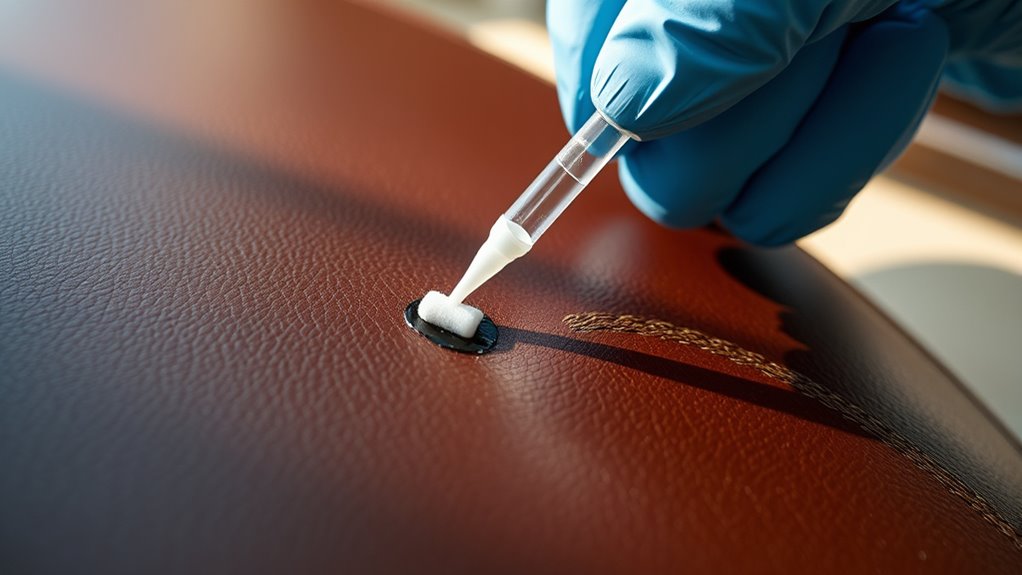
How to Remove Ink From Leather With This Step-By-Step Guide
Dealing with ink stains on leather can be really frustrating—many people struggle with removing these tough marks without damaging their favorite items. If you’re tired of seeing that unsightly ink spot, you’re not alone. Luckily, there are simple, effective ways to get your leather looking fresh again.
To remove ink from leather, start by blotting the stain immediately to prevent it from spreading. Test your chosen cleaning method, like rubbing alcohol or a vinegar mixture, on a hidden spot to avoid damage.
Gently dab the stain with a cotton swab or soft cloth, avoiding harsh scrubbing. After removing the ink, condition the leather to restore moisture.
If stains persist, proper techniques and tips to prevent future spills can help—keep exploring for detailed steps.
Key Takeaways
- Conduct a patch test on hidden areas with a small amount of cleaning solution before applying it to the entire stain.
- Blot the excess ink immediately. Use gentle dabbing with rubbing alcohol or household remedies.
- Apply minimal moisture and avoid scrubbing. This helps prevent damage and stops the stain from spreading.
- After cleaning, remember to condition the leather. This restores moisture and keeps the leather flexible.
- If the stain is stubborn or you notice any damage during cleaning, it’s best to seek professional help.
Quick Guide: How to Remove Ink From Leather
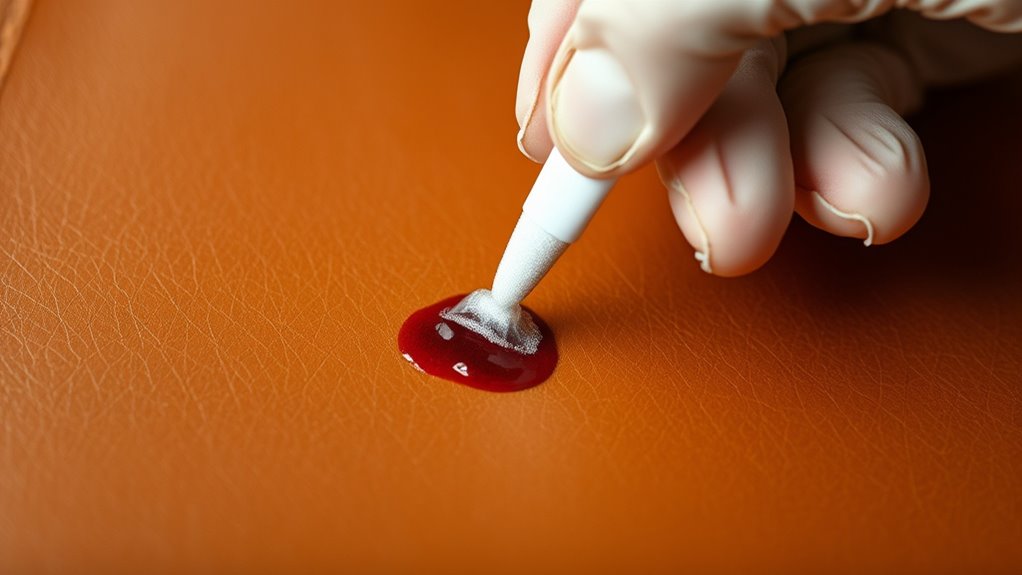
If you notice an ink stain on your leather item, acting quickly can prevent it from setting. To remove the stain, start by blotting the area immediately with a dry cloth or paper towel to soak up excess ink. Be careful not to rub, as that could spread the stain further.
For cleaning, test alcohol or leather-specific removers on a hidden spot first. This helps avoid any damage or discoloration. Gently dab the ink stain with a cotton swab or soft cloth soaked in your chosen solution, working from the outside toward the center.
Once the ink lifts, follow up with a leather conditioner to restore moisture and prevent cracking. Let the leather dry completely before buffing or conditioning again, so your leather stays looking its best.
Identify Your Leather Type to Choose the Right Method
Knowing whether your leather is finished or unfinished is key to choosing the right ink removal method. Finished leather has a protective coating that resists liquids, making it easier to clean with the right cleaning agents.
To figure out your leather type, do a water test: if water beads up, it’s probably finished; if it soaks in, it’s likely unfinished. Also, look at the surface—smooth or pebbled textures usually mean finished leather, while suede or rough textures point to unfinished leather.
Different types of leather respond differently to cleaning agents, so always test any solution on a hidden spot first. Understanding your leather’s treatment and surface helps you pick safe, effective methods and prevents damage during cleaning.
Act Fast: Blotting Ink Stains Immediately
Have you noticed an ink stain on your leather? Act immediately to prevent it from setting. Blot the ink stain gently with a clean, dry cloth or paper towel to absorb excess ink. Remember, avoid rubbing, as this can spread the ink and push it deeper into the leather fibers.
Acting within the first few minutes is crucial—your quick response can make all the difference. Here are four key steps to keep in mind:
- Blot gently to lift ink without spreading it.
- Use a dry cloth to absorb as much ink as possible.
- Act immediately to prevent the stain from setting.
- Handle the leather delicately to avoid pushing the ink further in.
The sooner you respond, the better your chances are to prevent a permanent ink stain.
Test Cleaning Methods First in Hidden Areas
Before using any cleaning method to remove ink from leather, it’s really important to test the solution in a hidden spot first. This patch test helps you see how the leather reacts and if the color stays intact.
Pick a small, inconspicuous area like inside a pocket or under a seam. Apply a tiny amount of the cleaner and wait at least 10-15 minutes. Watch for any discoloration or damage during this time.
Make sure to note the test results so you can compare before moving forward. This step helps you avoid damaging the leather or causing unwanted color changes.
Remember, testing near visible areas can lead to unwanted effects. Carefully doing this patch test will give you confidence in your cleaning method and reduce the risk of damage or stains setting in.
| Inconspicuous Area | Cleaning Solution | Test Results |
|---|---|---|
| Inside pocket | Small amount | No discoloration |
| Under seam | Full strength | Leather reaction |
| Hidden corner | Diluted solution | Colorfastness |
| Unseen patch | Alternative cleaner | Damage avoided |
Safe Household Tips for Ink Removal
When dealing with fresh ink stains on leather, household items can often provide quick and effective solutions. Here are some safe tips for ink removal:
Use a cotton ball soaked in rubbing alcohol to gently dab the ink stain, being careful not to oversaturate.
Gently dab the ink stain with a cotton ball soaked in rubbing alcohol, avoiding oversaturation.
Apply a household remedy like a baking soda paste—mix with water and gently rub it onto the stain to lift the ink.
Spray hairspray, which contains high alcohol levels, close to the stain and let it sit for a few minutes.
Always perform a spot test on a hidden area before applying vinegar or nail polish remover to prevent damage.
After treatment, follow up with a leather cleaner and leather conditioner to restore moisture and protect the leather’s surface.
How to Use Rubbing Alcohol and Hairspray on Leather
Before you start, make sure to do a patch test on a hidden spot to avoid any damage.
When using rubbing alcohol, gently dab it onto the stain with a cotton swab, working from the outside in.
For hairspray, spray it close to the stain, wait a few minutes, then softly blot with a damp cloth.
Precautions Before Application
To guarantee safe and effective removal of ink from leather, it’s essential to take some precautionary steps before applying rubbing alcohol or hairspray. First, perform a patch test on an inconspicuous area to check for adverse reactions or damage. This helps you avoid unwanted discoloration or finish damage.
Second, use a small amount of rubbing alcohol or hairspray on a cotton swab instead of spraying directly, preventing over-saturation. Third, avoid excessive rubbing or scrubbing, which can harm or discolor the leather surface.
Finally, wait for the leather to dry completely before conditioning or further cleaning. These precautions protect the leather’s finish and help you avoid damaging it during ink removal.
Applying Rubbing Alcohol
Have you dampened a cotton swab with rubbing alcohol yet? If not, gently dab the ink stain on your leather with the alcohol-dampened cotton.
Start from the outside of the stain and work inward to prevent spreading. Be careful not to oversaturate the leather; use just enough rubbing alcohol to lightly moisten the ink.
Before proceeding, test the alcohol on a hidden area to verify it won’t harm the finish or color. Rubbing alcohol works best on fresh ink stains and may need multiple gentle applications.
After treatment, immediately wipe the area with a damp cloth to remove any residual alcohol. Finish by applying a leather conditioner to restore moisture and keep your leather soft and protected.
Using Hairspray Effectively
Hairspray can be a helpful tool for removing ink stains from leather because it has alcohol and other solvents that break down ink pigments. Spray the hairspray from about 6-8 inches onto the stain, but avoid soaking it.
Let it sit for 3-5 minutes to loosen the ink. Then, gently blot the stain with a clean cloth to lift the ink without harming the leather. Use a soft toothbrush or cotton swab to carefully work the hairspray into the stain, boosting the cleaning process.
Always test the hairspray on a hidden area first to prevent discoloration or damage. Remember, gentle cleaning and avoiding damage are key to keeping your leather looking good while removing the ink stain.
Applying Leather-Safe Cleaners and Gentle Techniques
Choose leather-specific, pH-balanced cleaners and use small applicators like cotton buds for precise application.
Always test your cleaner on an inconspicuous spot first to check for any damage or discoloration.
Apply the product gently with a dabbing motion, working from the outside of the stain inward to prevent spreading.
Choosing Leather-Friendly Products
Wondering how to protect your leather while removing ink? Choosing the right products is essential.
First, pick a leather cleaner or a gentle solution like mild soap and water. Avoid harsh chemicals that could damage the surface.
Next, always do a test patch on a hidden spot to make sure the cleaner won’t discolor or harm your leather.
Use small, soft applicators like cotton swabs or soft cloths for precise application. This helps minimize the risk of damage.
After cleaning, apply a high-quality leather conditioner. It keeps the leather flexible and prevents cracking.
Testing on Hidden Areas
Have you tested your cleaning method on a hidden area of the leather before using it on a visible spot? Doing a patch test is really important in leather cleaning.
Pick a small, discreet spot like the inside seam, under a flap, or inside a pocket to see how the leather reacts. Use a soft cloth or cotton swab to apply a tiny amount of your test solution, making sure it lightly touches the surface without oversaturating.
Wait at least 10-15 minutes and look for any signs of discoloration, peeling, or damage. This step helps ensure the cleaner won’t harm or discolor the leather.
Keep a record of the results so you know it’s safe and effective. This way, you reduce the risk of accidental damage when you go ahead with the actual cleaning.
Gentle Application Techniques
When applying leather-safe cleaners, use a soft cloth or cotton swab to gently dab the stain instead of rubbing. This helps prevent spreading the ink and damaging the leather surface.
Apply the cleaner with gentle dabbing motions, working from the outside of the stain inward in small, circular movements. This minimizes ink spread and protects the leather.
Remember to use minimal pressure to avoid embedding the ink deeper or causing surface damage. Always test the cleaner on a hidden area first to check for discoloration or deterioration.
Once the cleaner has sat briefly, gently blot the ink without harsh scrubbing. Follow these steps carefully to protect your leather while effectively removing ink stains.
Using Vinegar and Baking Soda to Lift Ink Stains
To effectively lift ink stains from leather, a simple mixture of white vinegar and water can be very helpful. Mix equal parts vinegar and water to create a gentle cleaning solution. Using a soft cloth or cotton swab, apply a small amount of this vinegar solution directly onto the ink stain, dabbing gently without rubbing.
Next, make a paste by combining baking soda with a few drops of water. Gently spread this paste over the stained area to help lift the ink from the leather surface. Let the mixture sit for 10-15 minutes to allow it to break down the ink particles.
Finally, wipe away the residue with a damp cloth, ensuring you don’t oversaturate the leather. This method helps lift the ink stain safely and effectively.
Restoring Leather After Cleaning With Conditioner
After cleaning your leather, applying a conditioner is essential to restore its natural moisture and flexibility. Using a quality leather conditioner helps bring back its softness and prevents cracking.
Proper conditioning keeps your leather smooth, supple, and resilient over time. Here are some key steps to follow:
- Choose a leather conditioner made specifically for leather care.
- Apply it with a soft cloth using gentle circular motions.
- Let the conditioner sit for 15-30 minutes to allow deep absorption.
- Buff the leather with a clean, dry cloth to remove excess and add shine.
Troubleshooting Persistent Stains and When to Call a Professional
Even with careful cleaning and conditioning, some ink stains can be stubborn, especially if they’ve set for more than a day. Persistent stains that resist multiple cleaning attempts or keep spreading are signs you should call in a professional.
Deeply penetrating stains on delicate or exotic leather are especially tricky and can risk damaging the leather further if handled improperly.
Using harsh chemicals or aggressive scrubbing can make stubborn stains worse and harm the material.
In such cases, professional leather cleaners are your best bet—they use special solutions and techniques to safely remove deep stains without damaging the leather.
If you notice signs of damage or if the stain won’t go away despite your efforts, it’s best to consult a specialist. That way, you can ensure your leather item stays safe and well-preserved.
Tips to Prevent Ink Stains on Leather Items
Preventing ink stains on leather items starts with simple, proactive steps. First, apply a leather protector spray before use to create a barrier that helps prevent ink stains and resist liquids.
Second, store pens and markers in separate, capped containers or cases to prevent ink spills and leaks on your leather. Third, use protective covers like washable seat covers or leather bag liners to shield surfaces from accidental ink marks.
Fourth, regularly condition your leather with appropriate products to maintain its natural resistance and make stains easier to clean if spills occur. Keep pens away from leather items when not in use, handling them carefully to avoid ink leaks.
These tips help you avoid ink marks and preserve your leather’s appearance.
Common Mistakes to Avoid When Cleaning Leather
You should avoid rubbing the leather too hard or scrubbing aggressively, as this can push ink deeper or cause permanent damage.
Using harsh chemicals or abrasive tools can scratch or weaken the finish, making things worse. Always test cleaning agents on a hidden area first to make sure they won’t discolor or harm your leather.
Rubbing Too Hard
Rubbing leather too hard might seem like a quick fix, but it can actually cause serious damage. Excessive rubbing can scratch the surface, remove its protective finish, or cause discoloration.
Applying too much pressure pushes ink deeper into the leather pores, making stains much harder to remove and potentially permanent. Overly aggressive cleaning can strip away the leather’s natural oils.
This can lead to drying and cracking over time. To avoid damaging your leather, keep these tips in mind:
- Rubbing too vigorously can create scratches and uneven patches.
- Use gentle, light circular motions instead of harsh scrubbing.
- Too much pressure can cause lasting damage to the surface.
- Be patient—slow, careful cleaning helps preserve the leather’s look and feel.
Using Harsh Chemicals
While gentle techniques are key to protecting leather, using harsh chemicals can undo that effort and cause serious damage. Avoid applying harsh chemicals like bleach, ammonia, or industrial cleaners directly to leather. These substances can strip away the protective finish and weaken the material, leading to damage.
Even acetone-free nail polish remover and rubbing alcohol should be used cautiously—always test on a hidden area first. Refrain from using abrasive tools or harsh abrasives, which can scratch or mar the surface. Remember, aggressive cleaning can cause more harm than good.
To prevent issues, follow up cleaning with a leather conditioner to restore moisture. Here’s a quick guide:
| Chemical Type | Effect on Leather | Precaution |
|---|---|---|
| Bleach | Discoloration | Avoid entirely |
| Industrial | Strips protective | Use with caution |
| Nail Polish | Risk of staining | Test first |
Skipping Test Spots
Skipping the step of testing cleaning solutions on a hidden area can lead to unexpected damage. An initial test spot is really important to check for discoloration, damage, or changes to the leather finish. Without doing this, you risk making the stain worse or harming the surface permanently.
Always pick a small, inconspicuous spot — like inside a pocket or under a seam — to do your first test. Make sure to wait until it dries completely before checking the results. Skipping this step can cause unintended damage, making repairs costly or even impossible.
Here are the key points to remember:
- Test cleaning solutions on an inconspicuous area first.
- Check for discoloration or damage after it dries.
- Don’t use harsh cleaning solutions without testing first.
- Always perform a test spot to protect your leather’s finish.
Frequently Asked Questions
What Is the Best Way to Get Ink Out of Leather?
The best way to get ink out of leather is to act quickly. Blot the stain with a dry cloth to stop it from setting.
Use a cotton swab dipped in rubbing alcohol or a leather-specific ink remover. Gently dab from the outside of the stain inward.
Always test the cleaner on a hidden spot first to make sure it doesn’t damage the leather. After cleaning, apply a leather conditioner to restore moisture and keep your leather looking its best.
What Is Good to Remove Ink From Leather?
To effectively remove ink from leather, try using a small amount of rubbing alcohol or household hairspray. Both can break down stubborn stains.
Test these solutions on a hidden spot first to avoid damage. Gently blot the ink with a soft cloth.
If needed, follow up with mild soap and water for a thorough clean. Patience and proper products are key to preserving your leather’s pristine condition.
Does Dawn Dish Soap Remove Ink?
Yes, Dawn dish soap can help remove ink from leather, especially fresh or water-based stains. Its grease-cutting properties lift ink when mixed with warm water and gently applied with a soft cloth.
You should blot the stain carefully, not rub, to avoid spreading it. Afterward, rinse thoroughly to prevent residue buildup.
Keep in mind, it works best on newer stains and less so on permanent or older ink marks.
Is Ink Permanent on Leather?
Ink can be permanent on leather, especially if it’s deeply embedded or if it’s a permanent marker designed to resist removal. You might find some stains fade with proper cleaning, but others could be very difficult or impossible to fully remove.
Acting quickly helps prevent it from setting further. If the ink has dried or penetrated deeply, chances are higher that the stain is semi-permanent or permanent, requiring specialized treatment.
Conclusion
Think of cleaning ink from leather as caring for a delicate garden—you need patience and the right tools. Acting quickly can make a big difference. Testing your method first helps avoid any surprises.
Use gentle household tips to restore your leather’s beauty. Each stain is like a tiny storm that might just need a little care to settle.
With the right approach, your leather will bloom again, shining bright and resilient. It’ll be ready for many more adventures ahead, even with ink stains.