7 Factors That Determine How Much Printer Ink Costs
If you’ve ever been hit with surprise ink cartridge costs, you’re not alone. Many people struggle with how quickly printer ink can drain their wallet.
Luckily, understanding what affects ink prices can help you make smarter choices and save money.
Your printer ink costs are driven by factors like manufacturing complexity, proprietary technology, and limited competition, which allow manufacturers to set high prices.
The type of cartridge you choose—high-yield, compatible, or remanufactured—can save you money.
Your printing habits, such as printing in draft mode or using fewer colors, also matter.
Furthermore, brands profit from high-margin ink sales and supply restrictions.
Keep exploring to find out more ways to cut costs and make smarter choices.
Key Takeaways
– Manufacturing complexity, proprietary technology, and research add to production costs, which in turn raise ink prices.
These factors make it more expensive to produce the ink cartridges.
Printer model and cartridge type also play a role.
They influence the cost per page and overall ink expenses.
Limited competition and brand strategies help keep OEM cartridge prices high.
That’s why these branded cartridges tend to be more expensive.
Luckily, options like high-yield, compatible, and remanufactured cartridges can be more budget-friendly.
They offer a more cost-effective way to keep your printer running.
Ink consumption depends on your print settings, cartridge capacity, and whether you’re printing in color or black-and-white.
Why Is Printer Ink So Expensive?
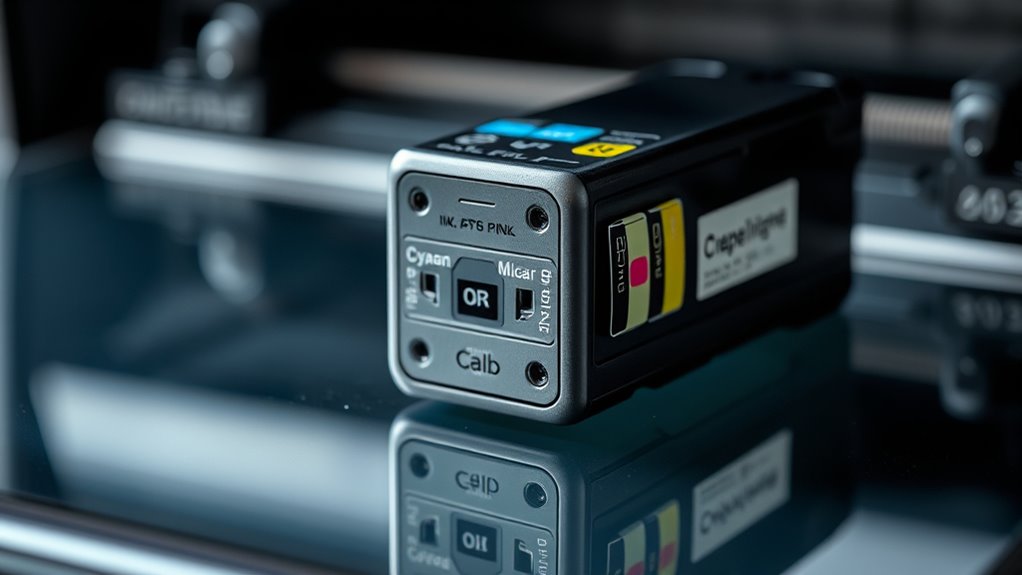
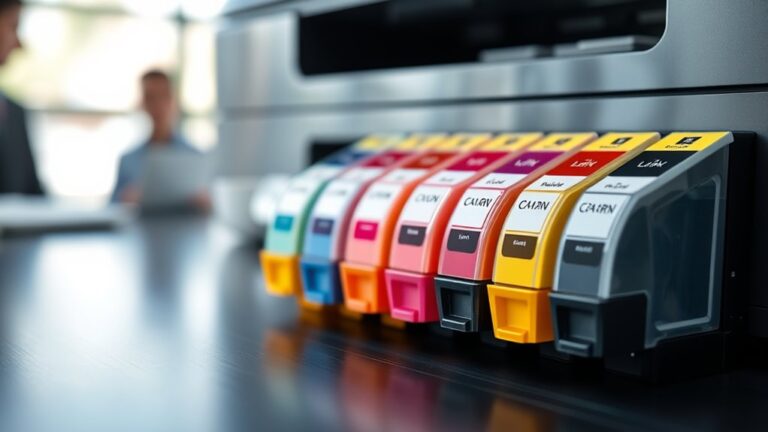
Printer ink is so expensive mainly because of the complex research, development, and specialized manufacturing processes needed to produce vibrant, quick-drying colors. The high cost also comes from proprietary technology, like microchips and unique cartridge designs that limit compatibility.
Printer ink costs are driven by complex research, specialized manufacturing, and proprietary technology like microchips and unique cartridge designs.
This allows manufacturers to keep prices high and maintain a premium. The razor-and-blades business model plays a role, where printers are sold cheaply but ink cartridges generate ongoing revenue.
Supply constraints and limited competition also help keep prices high, even though raw material costs are low. Additionally, the expenses involved in packaging, distribution, and microchip integration add to the cost.
Your brand loyalty often means sticking with specific manufacturers, even if it means paying more for consistent quality and compatibility.
What Are the Best Cartridge Types to Save Money?
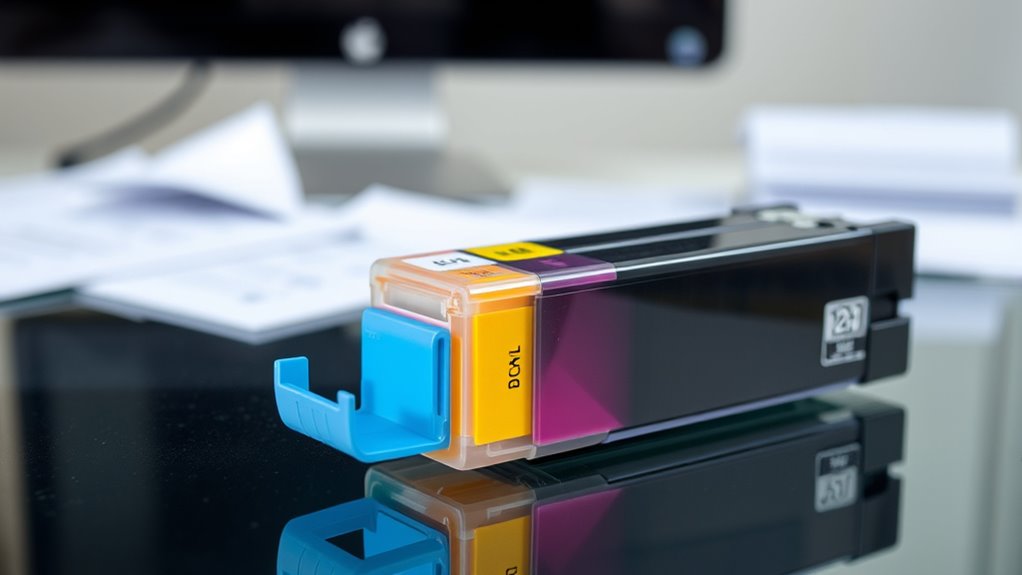
To save money on ink, choosing the right cartridge type can make a big difference in your printing costs. High-yield or XL cartridges, even though they’re more expensive upfront, lower the cost per page and are more economical over time.
Refillable systems and compatible third-party cartridges can cut expenses compared to original cartridges, especially if you print a lot. Re-manufactured cartridges are another cost-effective, eco-friendly option that often match the quality of original ones at a lower price.
For laser printers, toner cartridges usually offer higher yields and lower per-page costs, especially for black-and-white printing. Picking cartridges with larger capacities or higher page yields means fewer replacements, saving you money on ink and toner in the long run.
How Can You Reduce Printer Ink Costs?
Reducing ink costs starts with making smarter printing choices and optimizing your printer settings.
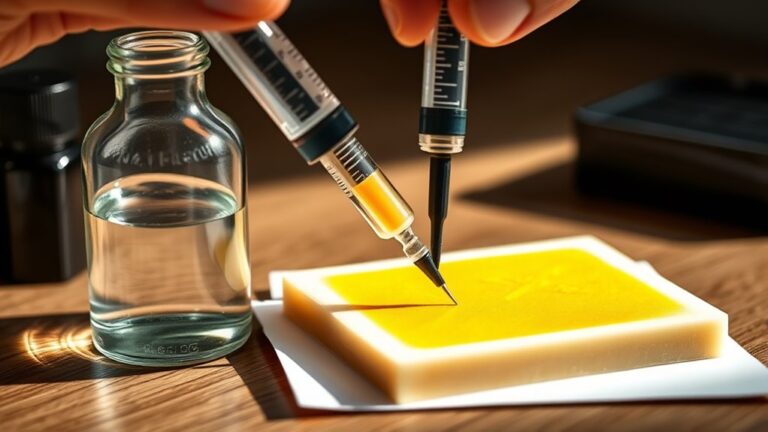
Using refillable ink and ink refill kits can lower your ink costs by letting you refill cartridges instead of buying new ones.
Switch to high-yield cartridges or compatible cartridges designed for your printer model, which can print more pages and save money.
Printing in draft mode and limiting color use can extend cartridge lifespan while still giving you acceptable print quality.
Furthermore, subscribing to services like HP Instant Ink ensures you get cost-effective replacements and reduce waste.
For black-and-white documents, consider a laser printer, which offers higher toner yields and a lower cost per page.
These strategies help you cut expenses without sacrificing the quality of your prints.
Are Eco-Friendly and Cheaper Ink Alternatives Available?
Eco-friendly and cheaper ink options, like recycled cartridges and refill kits, are widely available and can help cut costs significantly. They also help reduce waste and environmental impact without sacrificing print quality, but it’s a good idea to check your warranty coverage.
Many third-party suppliers now offer sustainable alternatives that meet industry standards, making it easier to choose greener options. So, if you’re looking to save money and be eco-conscious, there are plenty of options to explore.
Recycled Cartridge Options
Recycled or remanufactured cartridges are a practical and eco-friendly alternative to new OEM products. These cartridges are made from used OEM units that are cleaned, refilled, and tested to meet original quality standards.
They typically cost 30% to 50% less than OEM cartridges, helping you save on printer ink and printing costs. Compatible cartridges, including remanufactured options, reduce plastic waste and conserve resources, making them a greener choice.
While the quality can vary depending on the supplier, reputable companies ensure high performance comparable to OEM cartridges. These eco-friendly options often come with warranties and won’t void your printer’s warranty, making them a reliable and cost-effective choice for eco-conscious consumers.
Cost Savings Potential
Many printer users find that switching to alternative ink options can lead to substantial savings. Compatible cartridges and remanufactured ink cost up to 60-80% less than OEM options, providing comparable quality.
Eco-friendly refillable systems and supertank printers further reduce per-page costs by enabling bulk refilling of cartridges or tanks. Many third-party ink suppliers offer eco-friendly ink made from recycled materials, lowering environmental impact and expenses.
Switching to these alternatives can markedly cut long-term printer ink prices without voiding your printer warranty. Plus, many suppliers provide discounts, coupons, and free shipping, enhancing cost savings.
While the initial investment might vary, the potential for lower per-page costs and eco-conscious options makes exploring compatible cartridges and remanufactured ink a smart choice.
Quality and Warranty Considerations
While some worry that cheaper, eco-friendly ink options might compromise quality or void warranties, reputable suppliers guarantee these alternatives meet industry standards. Remanufactured and compatible cartridges, often made from recycled OEM parts, undergo rigorous testing to verify they match OEM performance without voiding warranties.
The Magnuson-Moss Warranty Act protects you when using third-party inks, as long as products meet specific standards. Many eco-friendly inks hold certifications like ISO or Blue Angel, confirming safety, quality, and sustainability.
The table below highlights key differences:
| Aspect | OEM | Remanufactured | Compatible |
|---|---|---|---|
| Certification | Yes | Yes | Yes |
| Warranty Impact | Yes | No, if tested | No, if standards met |
| Environmental | Moderate | High | High |
These options help balance quality, warranty, and environmental benefits.
How Do Printer Manufacturers Profit From Ink Sales?
Have you ever wondered how printer manufacturers make money even though they sell printers at low prices? It all comes down to their profit from ink sales.
They follow the razor-and-blades model, where the printer itself is cheap, but consumables like cartridges bring in high-margin income.
Printers are inexpensive, but high-margin ink sales keep manufacturers profitable.
As an original equipment manufacturer, they design proprietary cartridges with embedded chips that limit compatibility, ensuring you buy official replacements.
The high research, development, and manufacturing costs for specialized, vibrant inks make these cartridges costly.
Limited competition and control over the supply chain allow manufacturers to keep ink prices high, maximizing their profits.
This strategy keeps them profitable over time, even when the initial printer purchase is inexpensive, relying heavily on ongoing ink sales to stay afloat.
What Practical Tips Help You Save on Ink?
To save on ink, start by adjusting your printer settings to draft mode or black-and-white printing when you don’t need high-quality color. This simple step can significantly extend your ink cartridges’ lifespan and cut down ink use.
Think about using high-yield cartridges, which lower the cost per page and don’t need to be replaced as often. Refillable ink systems and third-party cartridges are also affordable options that can save you money.
Regularly turning on your printer helps prevent ink from drying out, meaning you won’t need to replace cartridges as early. Buying ink online from trusted suppliers or signing up for ink programs can also lead to big savings.
These practical tips will help you get the most out of your ink cartridges and keep your printing costs down.
What Are the Top Tips for Choosing Cost-Effective Printing Supplies?
Choosing the right printing supplies can really impact your overall costs. Start by picking high-yield or XL ink cartridges, which print more pages and reduce the cost per page.
Consider compatible or remanufactured cartridges from reputable suppliers to save up to 60% compared to OEM prices. Just make sure these cartridges work with your printer for the best performance.
Using subscription services like HP Instant Ink can give you automatic, low-cost replacements and minimize waste. To save even more, compare prices across retailers and look for coupons, discounts, and free shipping offers.
This way, you get quality printing at a lower price. Check out the tips below to maximize your savings:
| Printing Supplies | Cost Savings Tips |
|---|---|
| Compatible cartridges | Use remanufactured cartridges |
| High-yield cartridges | Print in draft mode |
| Ink cartridges | Limit color use |
| Printer models | Take advantage of discounts |
| Free shipping | Choose cost-effective printing supplies |
Frequently Asked Questions
Why Does Ink Cost as Much as the Printer?
You might wonder why ink costs as much as the printer. Manufacturers sell printers cheaply to get you in the door but make their real money from expensive, proprietary ink cartridges.
They embed microchips to prevent reuse and lock-in, making sure you keep buying their ink. Creating vibrant, quick-drying ink also adds to the costs.
This business model, similar to razor-and-blades, keeps ink prices high. Over time, it might seem like ink costs match the printer’s price.
What Are the Factors That Influence the Quality of a Printer?
When you look at a printer, you notice its sharpness and vibrant colors. Those are influenced by print resolution and ink quality.
The technology inside, like inkjet or laser, shapes how quickly and efficiently it works.
Durable build quality and extra features, such as wireless or double-sided printing, also boost performance.
Ultimately, the type of cartridges and materials used directly impact both print quality and how long your printer lasts.
How Much Does Printer Ink Typically Cost?
Printer ink typically costs between $13 and $75 per ounce, making it quite expensive compared to other liquids. A standard cartridge can print around 250 pages, costing you about 5 cents per page.
The high price comes from complex manufacturing, research, and proprietary tech like microchips. So, depending on your printer and cartridge, your ink expenses can vary a lot.
But you can expect to pay a premium for quality and convenience.
How to Determine Printing Cost?
You can figure out your printing costs by keeping track of how much you spend on ink and dividing that by the number of pages you print.
Start by noting the price of your ink cartridges and how many pages they usually produce. If you mostly print in black and white, laser printers tend to be more affordable.
Color printing costs are generally higher, so keep that in mind. Also, watch out for paper quality and printer maintenance, as both can impact your overall expenses.
Conclusion
Exploring the world of printer ink is like sailing through a sea of options, where each wave brings new costs and opportunities. By understanding the factors at play and choosing smarter strategies, you can steer clear of costly storms.
Think of your printer as a trusty steed. Caring for it with savvy choices keeps your printing journey smooth and affordable.
With these tips, you’re ready to conquer the ink landscape and keep your wallet afloat. Remember, knowing what affects printer ink costs is the key to saving money in the long run.