What Ingredients Are Made in Ink?
Are you curious about what ingredients go into making ink? Many people struggle to understand what makes up this everyday product we often take for granted. Whether you’re into art, printing, or just want to know more, understanding ink’s ingredients can be surprisingly fascinating.
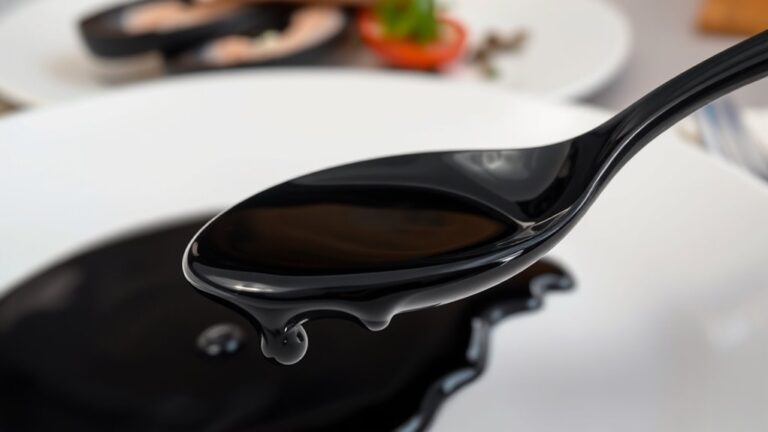
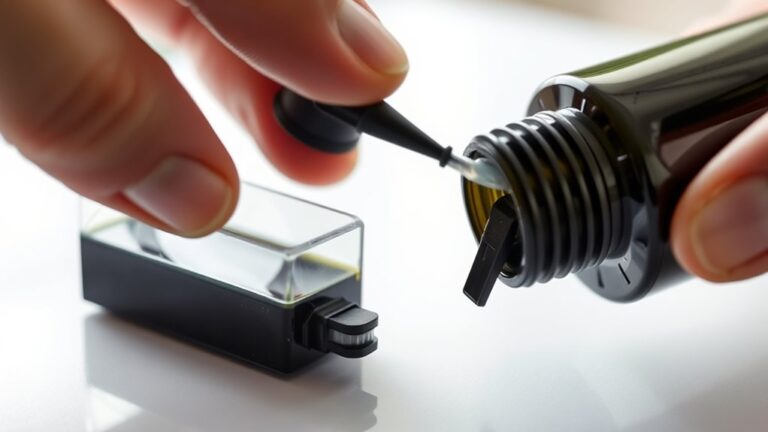
Ink is made from a mix of ingredients like pigments or dyes for color, solvents to dissolve or suspend these, resins as binders for adhesion, and various additives to improve flow, stability, and drying.
Pigments provide opacity and durability, while dyes create vibrant, transparent hues. Solvents like water or alcohol help with drying, and additives ensure the ink stays stable and performs well over time.
If you want to uncover more details, keep exploring.
Key Takeaways
- Ink contains pigments or dyes that give it color and opacity. These are what make the ink visible and vibrant on the surface.
- Solvents like water or alcohol help dissolve or suspend the ink ingredients, making it flow smoothly. They’re essential for applying the ink evenly.
- Resins act as binders, sticking the pigments or dyes to the surface. They also help the ink stay durable and resistant to wear over time.
- Additives such as surfactants and stabilizers are included to improve stability, flow, and ease of application. They help prevent the ink from drying out or separating.
- Inks dry either through evaporation or oxidation. The specific ingredients in the ink influence how quickly and effectively this drying process happens.
What Are the Main Ingredients in Ink?
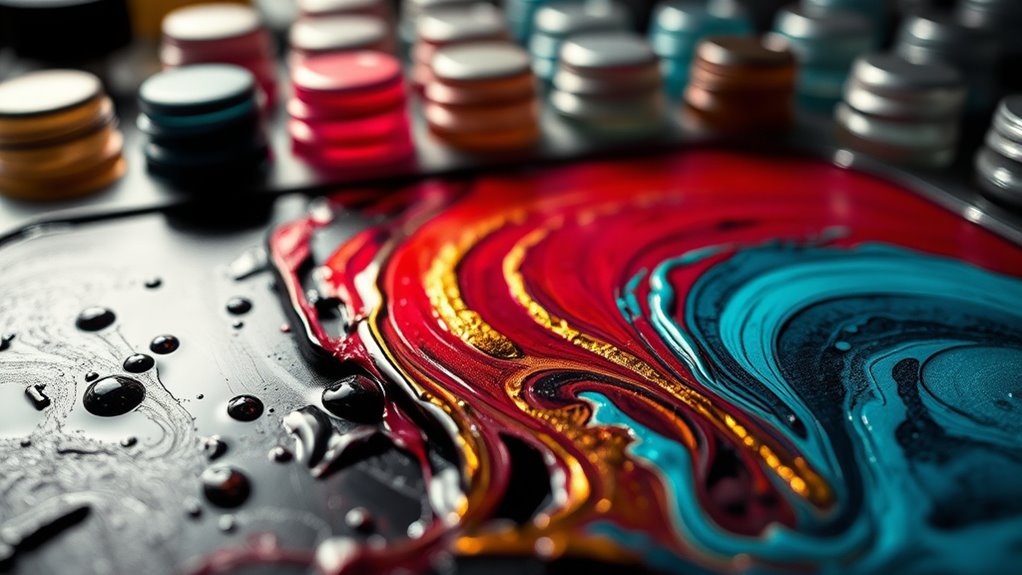
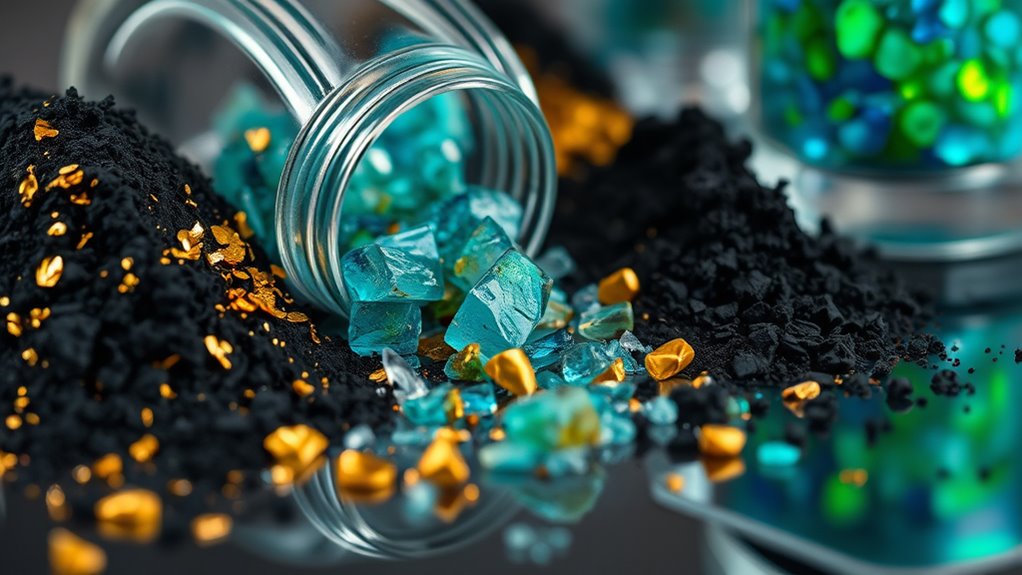
The main ingredients in ink include pigments or dyes, solvents, resins, and various additives. Pigments are solid particles that give ink its color and opacity, like carbon black or metallic flakes. Dyes are soluble colorants that dissolve in the liquid medium, creating vibrant hues.
Solvents like water or alcohol help dissolve or suspend these ingredients, affecting how the ink flows and dries. Resins act as binders, providing adhesion and durability to the ink. Additives such as stabilizers, surfactants, and thickeners modify properties like flow, stability, and how well the ink sticks.
Together, these components determine the ink’s color, flow characteristics, and drying behavior. Understanding these main ingredients helps in customizing inks for different uses and ensuring consistent quality.
How Do Pigments and Dyes Affect Ink’s Color and Opacity?
Pigments and dyes are key in shaping an ink’s color and opacity, each affecting these qualities in different ways.
Pigments are solid particles that give ink its opacity and permanence. They sit on or within the paper surface to block light and hide what’s underneath.
Pigments are solid particles that provide opacity and permanence, blocking light and concealing what lies beneath.
Dyes dissolve completely in the liquid, creating vibrant and transparent colors that let light pass through. Organic pigments like carbon black produce bright, intense colors with high lightfastness, while inorganic pigments are more stable and resistant to fading over time.
Dyes tend to be more vivid but are also more prone to fading and bleeding, especially when exposed to light or moisture. Choosing between them impacts the ink’s vibrancy, transparency, stability, and durability over the long run.
What Common Solvents Are Used in Ink Formulation?
In ink formulation, choosing the right solvent is crucial because it affects how the ink flows, dries, and sticks to surfaces. Common solvents include water, alcohols like ethanol and isopropanol, ketones such as acetone, and glycols like propylene glycol.
Water-based solvents are eco-friendly and are used in aqueous inks for printers and pens. Organic solvents like alcohols and ketones help the ink dry faster and stick better to surfaces.
The type of solvent you choose impacts drying time, viscosity, and how well the ink adheres. To understand their roles better:
| Solvent Type | Benefits | Applications |
|---|---|---|
| Water-based | Environmentally friendly, easy cleanup | Aqueous inks, inkjet |
| Alcohols | Fast drying, good surface compatibility | Solvent-based inks |
| Ketones | Rapid evaporation, strong surface adhesion | Commercial inks |
Which Additives Improve Ink’s Performance and Stability?
Additives play a vital role in improving ink’s performance and stability, making sure it flows smoothly, sticks properly, and stays consistent over time.
Surfactants and dispersants help with ink flow, prevent clogging, and promote even pigment dispersion. Stabilizers and antioxidants keep the chemical makeup intact, preventing spoilage and sedimentation.
UV stabilizers and optical brighteners boost lightfastness, reducing fading and discoloration from light exposure. Thickeners adjust viscosity for better application, while drying agents speed up drying times and improve surface adhesion.
pH adjusters help maintain the right level of acidity or alkalinity, keeping the ink stable during storage. Anti-foaming agents prevent bubbles during production.
How Do Drying Mechanisms Depend on Ink Ingredients?
Ever wondered how the ingredients in ink influence its drying process? The drying mechanism mainly depends on solvents, which evaporate based on their volatility and chemical composition.
Water-based inks dry as water rapidly evaporates, with factors like temperature, humidity, and airflow affecting evaporation rates. Oil-based inks dry through oxidation, where oil components chemically react with oxygen to form a solid film.
Water-based inks dry quickly through evaporation, while oil-based inks rely on oxidation to form a solid film.
Pigments and binders impact how quickly ink absorbs into paper, influencing drying time. Additives like drying agents or surfactants reduce surface tension and viscosity, speeding up evaporation and drying.
The chemical makeup of these ingredients determines whether the ink dries via evaporation or chemical reactions, shaping the overall drying process and efficiency.
What Are Some Special Ingredients in Modern Inks?
Modern inks incorporate a variety of special ingredients that enable unique visual and functional effects. Fluorescent dyes and phosphorescent compounds make inks visible under UV light or in darkness, adding security and aesthetic appeal.
Thermochromic and photochromic pigments allow inks to change color with temperature shifts or light exposure, creating interactive designs. Microencapsulated dyes are used for security features, revealing hidden messages when scratched or heated.
Rare-earth elements like europium and terbium produce vibrant, long-lasting luminescence, enhancing security printing. Nanomaterials, such as carbon nanotubes, are integrated into conductive inks for flexible electronics and smart packaging.
These ingredients make modern inks versatile, combining visual effects and advanced functionalities to meet diverse technological and aesthetic needs.
Frequently Asked Questions
What Is the Main Ingredient in Ink?
The main ingredient in ink depends on its type, but traditionally, carbon black or soot is used as the primary component for black ink.
In modern inks, dyes or pigments are the main colorants. Pigments are solid particles, while dyes are dissolved in the liquid.
You’ll also find binders like gum arabic that help the ink stick to surfaces, making sure it stays durable and vibrant over time.
Does Pen Ink Contain Harmful Chemicals?
Pen ink can contain harmful chemicals that might pose health risks. Many inks include solvents, dyes, and heavy metals, which can cause skin irritation, allergic reactions, or even more serious health issues if ingested or inhaled regularly.
While modern regulations try to limit these dangers, some older or poorly formulated inks still harbor toxic substances. It’s important to handle and dispose of ink carefully to avoid potential harm.
What Is Bic Pen Ink Made Of?
Bic pen ink is made of dye-based colorants dissolved in a water-soluble solvent that helps the ink flow smoothly. You’ll also find surfactants that improve wetting on paper, along with humectants like glycol to keep it from drying out.
The formulation includes a sealed reservoir to regulate ink flow and ingredients that make the ink quick-drying, water-resistant, and stable. This ensures your writing stays clear and reliable.
Is Ink Natural or Man-Made?
Ink is a mix of both natural and man-made ingredients. You’ll find natural components like plant-based dyes and mineral pigments, which come straight from nature.
But many inks also include synthetic dyes, solvents, and additives created in laboratories for better performance. So, whether it’s natural or man-made depends on the ingredients’ origins.
You’re using a product that often blends these elements to achieve the desired color, consistency, and longevity.
Conclusion
Understanding the ingredients in ink is like opening a treasure chest of chemistry, showing how pigments, solvents, and additives work together to create vibrant, durable marks.
Each component plays a crucial role in shaping the ink’s color, flow, and longevity. By knowing what’s inside, you can appreciate ink’s intricate dance of science and art.
It’s like a symphony where every note matters, ensuring your writing or printing lasts with elegance and precision.
Main keyword: what ingredients are made in ink