Key Differences Between Toner and Ink: Are They the Same?
Are you tired of choosing between blurry prints or frequent ink replacements? You’re not alone. Many people struggle with understanding the differences between toner and ink, making it hard to pick the right option for their needs.
Toner and ink are different materials used in printers, with distinct mechanisms and qualities. Inkjet printers spray liquid ink onto paper, offering vibrant colors and smooth images, but may smudge or fade over time.
Laser printers use toner, a powder fused onto paper with heat, producing sharp text and durable pages suited for high-volume printing.
If you want to understand which option fits your needs better, you’ll find the details below.
Key Takeaways
- Toner is a powdered substance that’s fused onto paper using heat. Ink, on the other hand, is a liquid that dries naturally after printing.
- Inkjet printers spray liquid ink directly onto paper. Laser printers use electrostatically charged toner particles to create images.
- Toner gives you durable, smudge-resistant prints, making it great for high-volume, professional printing. Ink is known for its vibrant colors, especially for photos.
- Toner cartridges tend to last longer and usually cost less per page compared to ink cartridges.
- Producing toner involves fewer chemicals, which makes it more environmentally friendly than liquid ink.
What Are the Key Differences Between Ink and Toner?
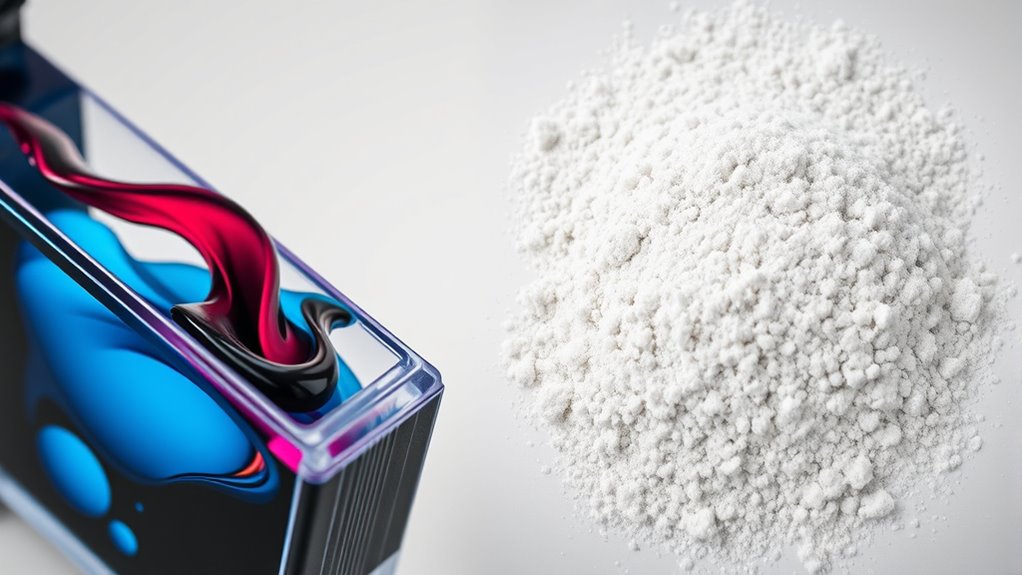
Understanding the key differences between ink and toner is important when choosing your printing supplies. Inkjet printers use liquid ink stored in cartridges, which produce vibrant colors perfect for photos and detailed graphics.
Laser printers use dry powder toner, which is fused onto paper with heat. This results in sharp, professional-looking text documents.
Ink cartridges tend to cost less upfront but need frequent replacements, which can impact your page yield. Toner cartridges are more expensive initially but last longer, offering better durability and faster printing speeds.
While ink provides superior color quality, toner prints are more resistant to smudging. Your decision depends on what matters most to you—cost, print quality, page yield, or durability.
How Do Inkjet and Laser Printers Use Ink and Toner Differently?
Inkjet and laser printers use ink and toner in different ways. Inkjets spray liquid ink directly onto paper, while laser printers use a laser to transfer toner powder onto a drum.
Then, the toner is fused to the paper with heat to create the print. These differences affect how the ink and toner are applied, which impacts print speed, quality, and durability.
Knowing how each works can help you pick the right printer for your needs.
Printing Mechanism Differences
While both inkjet and laser printers print images and text, they do so through very different mechanisms. Inkjet printers spray tiny droplets of liquid ink through microscopic nozzles onto paper, while laser printers use a laser to create an electrostatic charge on a drum that attracts toner particles.
In the inkjet process, liquid ink is directly applied and dries quickly. Laser printers, on the other hand, heat toner powder, melting it onto paper during heat fusion.
Here’s a quick comparison:
| Feature | Inkjet Printer | Laser Printer |
|---|---|---|
| Printing process | Liquid ink spray | Toner electrostatic transfer |
| Ink type | Liquid ink | Toner powder |
| Application method | Nozzles deposit ink | Heat fusion of toner |
| Drying method | Ink dries naturally | Fused with heat |
| Core mechanism | Spray nozzles | Laser plus electrostatic charge |
This difference influences their performance, quality, and best uses.
Ink and Toner Application
The way ink and toner are applied to paper differs a lot between the two types of printers, affecting both the quality and durability of the final print. Ink application in inkjet technology sprays tiny droplets of liquid ink directly onto the paper through tiny nozzles. This allows for detailed, high-resolution color images.
In contrast, toner application in laser printers uses a laser beam to electrostatically charge a drum. The drum then attracts toner powder to form the image. The toner is fused onto the paper with heat, making the print durable and resistant to smudging.
This method results in faster printing speeds and more resilient prints. The fundamental differences in how they work influence the final output’s quality. Inkjet offers vibrant colors, while laser printing provides quick, long-lasting results.
Speed and Quality Variations
Understanding how these printers use their supplies shows key differences in speed and quality. Laser printers are great for high-volume printing, with speeds reaching up to 55 pages per minute. They’re perfect for quick, professional-looking documents.
They use toner to produce sharp images and text with excellent clarity and durability, especially on color-rich documents. Inkjet printers, on the other hand, usually print between 10 and 20 pages per minute.
They’re better for detailed photo printing and vibrant colors. While inkjet images can smudge or fade over time, laser prints tend to be more water-resistant and last longer.
If you need fast, consistent output, laser printers are the way to go for large jobs. But if you want detailed, colorful images, inkjet printers are usually the better choice.
Which Printing Tech Produces Better Color or Sharp Text?
If you’re after vibrant, true-to-life colors, inkjet printers usually give you richer hues and smoother gradients. They’re great for photos and images that need a lot of color detail.
On the other hand, for sharp, clean text that resists smudging and fading, toner-based laser printers tend to perform better. They’re ideal for documents that need to stay crisp and professional.
Think about what matters most—durability and clarity—when choosing between the two. Each has its own strengths depending on your printing needs.
Color Accuracy and Brightness
When it comes to color accuracy and brightness, inkjet printers generally produce more vibrant and true-to-life images than toner-based laser printers. They excel at delivering vivid colors, smooth gradients, and high color saturation, making them ideal for photo and color-rich printing.
Ink cartridges, with dye-based pigments, improve color gamut and produce brighter, more accurate hues. In contrast, toner-based printers tend to have a limited color range, resulting in less lively images.
While laser printers provide crisp, high-resolution text, their image quality and color richness often fall short. For color accuracy and vividness, inkjet printers outperform toner printers, especially when reproducing subtle color variations and high-detail images.
This makes inkjet a better choice for color-rich printing needs.
Text Sharpness and Clarity
Laser printers produce sharper, more defined text thanks to the precise fusing of toner particles onto paper. This creates clear edges and high-resolution characters, making the text look professional.
Toner-based printing delivers superior sharpness and crispness, which is why it’s ideal for professional documents where clarity really matters. These prints keep their quality over time without fading or smudging.
In contrast, inkjet printers excel at vibrant colors and smooth gradients. But they can sometimes produce less sharp text, especially if the printhead clogs or ink dries unevenly.
Inkjet text quality can also be affected by smudging, which reduces overall print resolution. For clear, professional-looking text with sharp edges, toner-based laser printing usually outperforms inkjet in resolution and clarity.
Print Durability and Resistance
Toner prints generally offer better durability and resistance than inkjet prints, making them ideal for long-lasting, professional documents. Thanks to the heat-fused powder, toner creates prints that are water-resistant and smudge-proof, so your documents stay intact over time.
Inkjet prints, especially dye-based ones, are more prone to fading and smudging when exposed to moisture or handling. Laser toner produces sharp, crisp text with high resolution, often exceeding 1200 dpi, which is perfect for professional quality.
Plus, toner’s environmental resistance helps maintain color accuracy and sharpness longer, even in high-volume or outdoor settings.
- Water-resistant and smudge-proof
- Maintains color fidelity longer
- Resistant to fading and moisture
- Produces high-resolution, sharp text
How Do Cost and Cartridge Lifespan Affect Your Printing Choices?
Your choice between ink and toner cartridges is heavily influenced by their costs and how long they last.
Toner cartridges usually have a longer lifespan and higher page yield, making them great for high-volume printing.
Even though toner printers cost more upfront, their lower cost per page and durability help cut down on ongoing maintenance costs.
Ink cartridges tend to need frequent replacements because they don’t last as long, which can add up in cost if you print a lot.
If you’re printing often, toner cartridges are more cost-effective because they don’t need to be replaced as often.
In the end, balancing the initial price with your expected print volume helps you decide whether toner or ink cartridges are the better, more economical choice.
Is Ink or Toner More Environmentally Friendly?
When considering the environmental impact of printing options, it’s important to look beyond costs and lifespan to understand how each type affects our planet.
Remanufactured and compatible toner cartridges are often more environmentally friendly because they reuse materials, reducing waste and plastic.
Toner cartridges tend to have a longer lifespan and higher page yields, which means less frequent disposal and waste.
Furthermore, the production of toner involves fewer liquid chemicals, lowering the carbon footprint.
Recycling programs for toner cartridges are well-established and promote responsible disposal, supporting sustainability efforts.
In contrast, ink cartridges often generate more plastic waste due to frequent replacements, and their recycling options are less widespread.
How to Decide Whether Ink or Toner Is Right for You?
Deciding whether to choose ink or toner depends on understanding your specific printing needs. If you mainly print vibrant photos and occasional documents, ink is ideal because of its superior print quality and media versatility.
For high-volume, professional documents with sharp text, toner is more suitable. It offers faster speeds and longer-lasting prints, making it a good choice for frequent printing.
Consider your print volume. Toner cartridges last longer and are more cost-effective when you print a lot, while ink cartridges work well for lower volumes.
Your budget also matters. Inkjet printers tend to have a lower initial cost, but toner printers usually have a lower cost per page over time.
Match your media types, print quality expectations, and volume to decide whether ink or toner offers the best value for your printing needs.
Frequently Asked Questions
What Is the Difference Between Toner and Ink?
Toner is a dry powder used in laser printers, while ink is a liquid for inkjet printers. You’ll notice toner fuses onto paper with heat, making prints more durable. Ink dries through evaporation.
Toner usually lasts longer and yields more pages, making it great for bulk printing. Ink offers vibrant colors and high detail, which is perfect for photos and graphics.
The main difference is in their technology: toner uses heat, while ink relies on liquid spraying.
What Ink Cartridge for Canon TS3700?
Think of your Canon TS3700 like a painter needing the right brushes—your ink cartridges are PG-240 for black and CL-241 for color.
You’ll want to use genuine Canon or compatible cartridges that fit easily into the printer.
When your print quality drops or ink levels are low, it’s time to replace them.
These cartridges are simple to swap out by opening the front cover and pulling out the empty ones.
Is Toner Just Black Ink?
Toner isn’t just black ink; it’s a dry powder used in laser printers and copiers. Unlike liquid ink, toner can be black or color, like cyan, magenta, and yellow.
It provides high durability and resistance to smudging. Black toner is the most common, especially for text documents, and usually comes in larger cartridges with a higher page yield than ink cartridges.
Conclusion
In the end, choosing between ink and toner is like picking between a trusty steed and a swift chariot—you want what fits your needs best. Whether you’re after vibrant colors, sharp text, or saving money, understanding the differences helps you make a smarter choice.
Keep in mind, in today’s world, it’s less about the wheel and more about your printing journey. So, take your time to weigh your options carefully.
When it comes to ink versus toner, knowing what each offers will help you pick the right one for your printing needs. Print with confidence and find your perfect match for inkjet or laser printing.