How Do You Remove Pen Ink From Fabric?
Dealing with pen ink on fabric can be really frustrating. You’re not alone—many people struggle with removing stubborn ink stains from their favorite clothes. Luckily, there are quick and effective ways to tackle this problem before it sets in.
To remove pen ink from fabric, act quickly before the ink sets. Blot gently to lift excess ink without spreading it, and test any solutions on hidden areas first.
Use alcohol-based products like rubbing alcohol or hand sanitizer on cotton or denim fabrics, applying with a small cloth or cotton swab. For delicate fabrics, try gentler methods like vinegar or cornstarch paste.
If you’re curious about more tips to effectively tackle stubborn stains, keep exploring.
Key Takeaways
- Act quickly to blot excess ink with a clean cloth. This helps stop it from setting deeper into the fabric.
- Use alcohol-based solutions like rubbing alcohol or hand sanitizer. Gently apply with a cotton swab.
- Before treating the stain, test your method on a hidden area of the fabric. This way, you can avoid any potential damage.
- Dab gently with alcohol and let it sit for a few minutes. This helps dissolve the ink before you rinse it out.
- Avoid rubbing, scrubbing, or applying heat until the stain is fully treated and gone.
How Ink Pen Stains Penetrate Fabric and Why It Matters
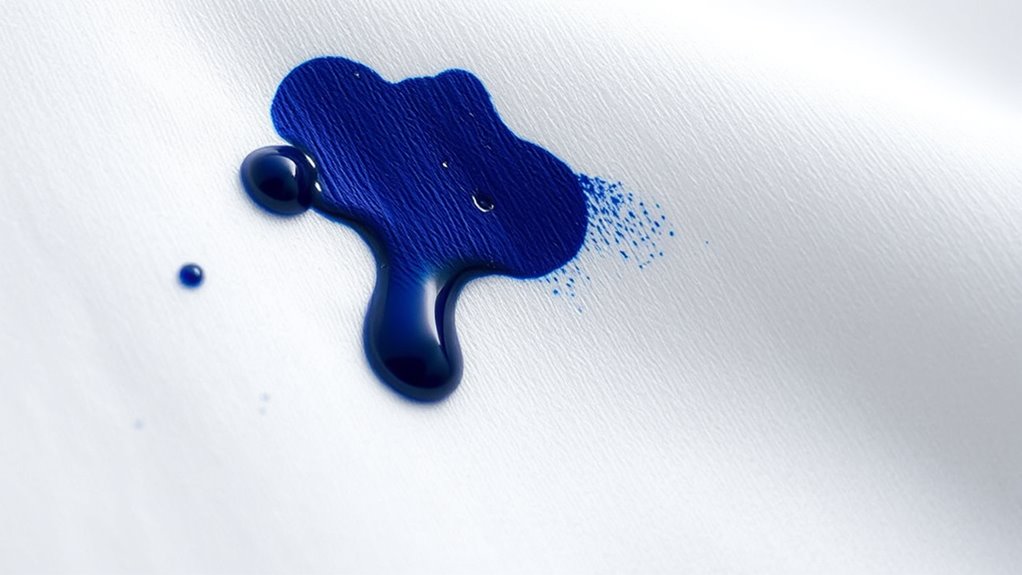
Ever wonder how ink from a pen so quickly soaks into fabric? It all comes down to ink penetration and fabric fibers. When you write on fabric, the ink doesn’t just sit on the surface; it seeps deep into the material.
Oil-based inks, like those from ballpoint pens, dissolve into fibers because of their solvent properties, making stain removal more difficult. Water alone isn’t enough to lift the stain because ink particles embed within the fabric’s pores.
The faster the ink penetrates, the harder it becomes to remove completely. Knowing how ink infiltrates fabric helps you understand why certain stains are stubborn.
To effectively remove ink, you need to target it at different depths, especially when dealing with oil-based ink that’s deeply embedded in the fibers.
Getting Your Fabric Ready for Ink Removal
To start, act quickly to prevent the ink from setting into the fabric fibers.
Gently blot the stain with a clean cloth to lift excess ink without spreading it.
Always test any cleaning solution on a hidden area first to avoid damaging or discoloring your fabric.
Act Quickly, Act Carefully
When you notice ink on your fabric, acting quickly is key to stopping the stain from setting deeper. First, try to minimize damage by acting fast.
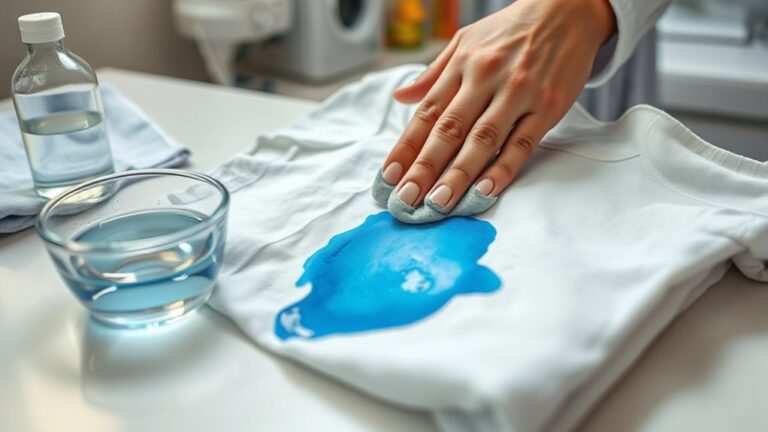
Gently blot the stain with a damp cloth or paper towel to absorb the excess ink. Be careful not to spread it further. Rubbing or scrubbing can push the ink deeper into the fabric, making it harder to remove later.
Before using any stain remover, test it on a hidden part of the fabric. This helps ensure it won’t cause discoloration or damage. Keep the fabric damp with water to help lift the ink more effectively.
Taking these quick, careful steps can make all the difference in removing the stain and saving your fabric.
Test Before Applying
How can you guarantee your fabric can handle the stain removal process without damage? Start by testing the stain removal method on a small, inconspicuous area of your fabric. This helps you check for colorfastness and makes sure the solution won’t cause discoloration or damage.
Use a cotton swab or hide a seam to apply a small amount of the cleaning solution, like rubbing alcohol or vinegar. Wait at least 10-15 minutes to see if there are any color changes or fabric damage.
Make sure the fabric is clean and dry before applying the stain removal treatment. This prevents spreading and ensures better results.
Also, double-check that the fabric is compatible with your chosen solvent. Testing first lets you move forward confidently and helps minimize any risks during stain removal.
Best Ways to Remove Ink From Different Fabrics
Different fabrics need different techniques to remove ink effectively. For example, cotton and denim respond well to alcohol-based solutions.
But delicate materials like silk require gentler methods. Knowing which approach to use helps you remove stains without damaging your fabric.
Effective Stain Removal Techniques
Removing pen ink from fabric requires prompt action and the right techniques tailored to the type of material. For ink stains, quick treatment is essential to prevent permanent damage. Rubbing alcohol or hand sanitizer containing alcohol is highly effective for removing ink, often fading stains after application and washing.
Gently blot the stain with a cotton ball soaked in alcohol, avoiding rubbing, which can spread the ink. Always test the solution on a small, inconspicuous area first to make sure the fabric’s colorfast. For water-based inks, vinegar or plant-based stain removers can help loosen the ink before washing.
Fabric-Specific Cleaning Tips
To effectively remove ink from various fabrics, it’s important to tailor your approach to the specific material you’re working with.
For cotton, apply rubbing alcohol or hand sanitizer directly, then blot gently before washing. Denim responds well to hairspray containing alcohol; let it sit before laundering in hot water.
Silk requires very gentle treatment. Mix white vinegar and cornstarch to create a paste and avoid damage. For polyester and nylon, rubbing alcohol or a vinegar-cornstarch paste can effectively lift ink stains.
Always test your stain removal method on a small, hidden area first to prevent discoloration or damage. Using fabric-specific techniques and gentle treatment guarantees you remove ink stains effectively while protecting your fabric.
How to Safely Use Alcohol-Based Solvents on Fabric
Before applying alcohol-based solvents to fabric, it’s a good idea to test a small, hidden area first. This helps check for color fastness and makes sure the solvent won’t cause discoloration.
Always test a hidden fabric area first to prevent discoloration before using alcohol-based solvents.
When you’re ready to remove a stain, use a cotton swab or cloth with a small amount of isopropyl or rubbing alcohol. Dab gently on the ink stain—don’t rub vigorously, as that could damage the fibers or spread the ink.
Let the alcohol sit for a few minutes to dissolve the ink. Afterward, rinse the area with cold water to remove any leftover residue.
Finally, wash the fabric in cold water and let it air dry. Following these steps helps you safely use alcohol-based solvents without risking damage or setting the stain.
Tips for Removing Stubborn Ink and Caring for Delicate Fabrics
When dealing with stubborn ink stains, applying a high-concentration alcohol-based solution like rubbing alcohol or hand sanitizer and letting it sit can greatly improve your chances of removing the stain, especially on durable fabrics.
For delicate fabrics such as silk or fine linen, treat the stain gently by lightly dabbing with diluted solutions and avoid rubbing to prevent damage or color loss.
Always test your stain removal method on a small, hidden area first to avoid any unwanted discoloration.
Combining treatments—like applying alcohol followed by a gentle soap or vinegar solution—can help tackle persistent ink stains more effectively.
After treatment, let the fabric air dry to prevent the remaining ink from setting.
You might need to repeat the process for complete removal, and patience is essential.
Common Mistakes to Avoid When Treating Ink Stains
One of the most common mistakes when treating ink stains is rubbing or scrubbing the affected area. This can push the ink deeper into the fabric fibers and make removal more difficult.
Avoid over-wetting the fabric, as too much moisture can cause the ink to spread further or even damage the material. Don’t use heat like a hot iron or dryer too soon; heat can set the stain permanently.
Be cautious with harsh chemicals—it’s best to test them on a small, hidden area first to prevent discoloration or damage. Waiting too long to treat the stain allows the ink to dry and bond more firmly, making it harder to remove.
Steer clear of rushing the process or using aggressive cleaning methods. These can worsen the stain or damage delicate fabrics.
How to Prevent Ink Stains in the Future
To prevent ink stains from happening in the first place, it’s essential to handle your pen with care and attention. Store pens properly, keeping caps on or retracting tips to prevent leaks that could cause ink stains on fabric.
Choose high-quality pens with controlled ink flow, like Bastion Bolt Action Pens, to prevent accidental splatters. Handle pens carefully, avoiding rolling or dropping them, which can lead to ink leaks.
Regularly check and replace refills or tips to guarantee your pen doesn’t malfunction or leak during use. Also, cover writing surfaces with scrap paper or a protective barrier to catch any accidental ink drips.
These simple steps help you prevent ink stains and keep your fabric looking clean and stain-free.
Frequently Asked Questions
How Do You Remove Ballpoint Pen Ink From Fabric?
To remove ballpoint pen ink from fabric, apply rubbing alcohol or hand sanitizer directly to the stain. Gently dab it in, then let it sit for a few minutes.
Rinse with cold water afterward and rewash the fabric. For stubborn stains, repeat the process or try using vinegar or a baking soda paste.
Always test on a hidden area first to prevent any damage to your fabric.
Does Dawn Soap Remove Ink?
Yes, Dawn soap can work like a cleanup hero for ink stains. It breaks down the ink’s oily grip, helping lift the mark from your fabric.
You simply dab Dawn on the stain and gently blot with a damp cloth. For stubborn ink, combine Dawn with rubbing alcohol or hand sanitizer.
Just remember to rinse thoroughly afterward to prevent any soap from trapping the stain deeper, leaving your fabric fresh and clean.
Does Dried Pen Ink Come Out of Clothes?
Dried pen ink can often come out of clothes, but it depends on the fabric and how long the stain has set.
You should treat the stain with rubbing alcohol or hand sanitizer, gently dabbing it to dissolve the ink. Repeating this process and washing the garment afterward can increase your chances of success.
However, some stubborn stains may need professional cleaning, especially if the ink has been set for a long time.
What Can Dissolve Ballpoint Ink?
You can dissolve ballpoint ink using rubbing alcohol or isopropyl alcohol. Hand sanitizer containing alcohol also works as a quick alternative.
To use it, just apply the alcohol directly to the stain and gently dab. This helps break down the ink’s oils and pigments. Always test on a hidden fabric area first to avoid any damage.
For stubborn stains, repeat the process and then wash the fabric afterward for the best results.
Conclusion
Removing pen ink from fabric can seem intimidating, but with the right methods, you can restore your clothes. Did you know that over 70% of ink stains can be successfully removed if treated promptly?
Always act quickly, use safe solvents, and test on small areas first. With patience and care, you’ll keep your fabrics looking their best and prevent future mishaps.
Remember, putting in a little effort now can save you from costly replacements later. When it comes to removing pen ink from fabric, quick action and proper techniques are key.