How Do You Effectively Remove Ink Stains From Your Hands?
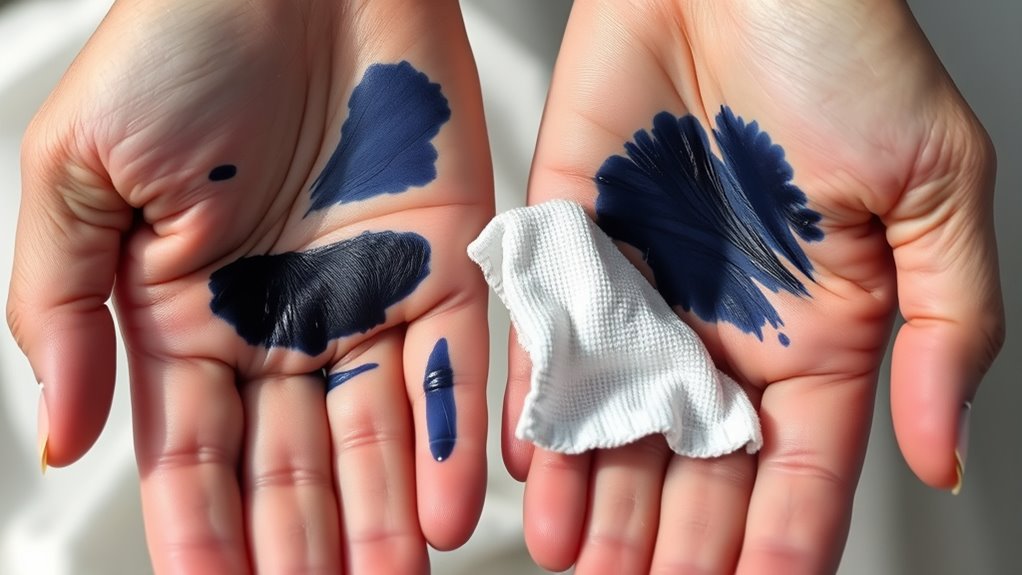
Getting ink stains on your hands can be frustrating, and you’re definitely not alone in this struggle. Many people find it tricky to completely remove those stubborn marks without harsh scrubbing or damaging their skin.
Luckily, there are simple and effective ways to tackle ink stains and keep your hands clean.
To effectively remove ink stains from your hands, start by rinsing with warm water and applying rubbing alcohol or hand sanitizer to break down the ink. Gently scrub with a soft cloth, toothbrush, or a baking soda paste to lift it off.
For stubborn stains, oil like olive or coconut can help loosen ink before washing again.
For more detailed tips and safe routines, keep exploring how to clean your hands thoroughly and protect your skin.
Key Takeaways
- Rinse your hands with warm water right away. This helps stop the ink from setting deeper into your skin.
- Next, use rubbing alcohol or a good hand sanitizer with high alcohol content. These can really help dissolve and lift the ink stains.
- Gently scrub the stained area with a soft cloth, a baking soda paste, or a gentle toothbrush. This helps loosen stubborn ink spots.
- You can also apply natural oils like olive or coconut oil before scrubbing. They help loosen the ink particles and make cleaning easier.
- After you’re done, moisturize your skin with aloe vera or lotion. This keeps your skin soothing and prevents dryness or irritation.
Why Are Ink Stains so Hard to Remove From Skin?
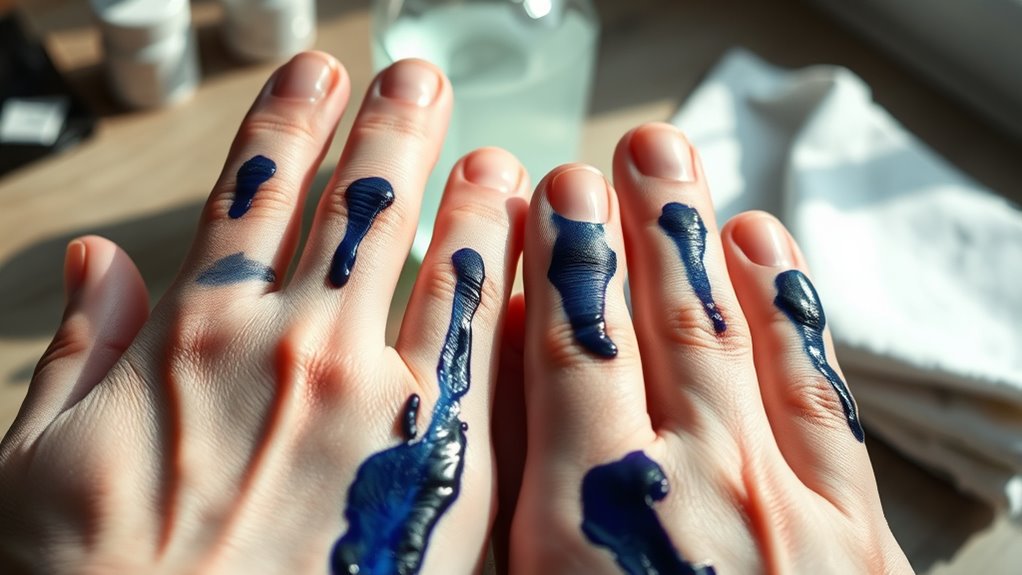
Ink stains are hard to remove from skin because the dyes and pigments penetrate deeply into the outer layers, making simple washing ineffective. When you get ink on your skin, it doesn’t just sit on the surface; it seeps into the epidermis and sometimes even into the dermis.
The chemical makeup of ink, including dyes and binders, helps it cling tightly to your skin, preventing easy removal. Porous and textured areas trap ink particles, making it even tougher to clean completely.
Plus, prolonged contact causes the ink to set, forming stubborn stains that resist regular washing methods. The very components that give ink its vibrant, durable color also make it difficult to remove from skin, so you need special techniques beyond basic soap and water.
What Are the Different Types of Printer Ink and Toner That Can Stain Skin?
Different types of printer ink and toner pose unique challenges when they come into contact with your skin. Printer ink, especially liquid ink from inkjet printers, is water-soluble and can easily stain skin because of its fine droplets and dyes or pigments. Toner, used in laser printers, contains fine plastic particles and pigment, which can cause stubborn stains that are tough to remove.
Here are the main types:
- Inkjet printer ink is water-based, quick to stain, and often easier to clean initially.
- Laser printer toner is dry, powdery, and more persistent, requiring specific removal methods.
- Specialty inks may contain solvents or binders, making stains more resistant.
Knowing these types helps you choose the right removal approach.
How Can Natural Methods Help Remove Ink From Hands Quickly?
Natural cleaning agents like lemon juice, vinegar, and baking soda can quickly lift ink stains from your skin by breaking down pigment particles.
Gently scrubbing with a soft cloth or brush helps remove any remaining ink without irritating your hands.
Using these methods promptly makes stain removal fast and effective.
Effective Natural Cleaning Agents
Using natural cleaning agents can be an effective way to quickly lift ink stains from your skin without harsh chemicals. Lemon juice’s natural acidity helps break down ink, making it easier to wipe away.
Olive oil, on the other hand, loosens ink pigments from your skin’s surface, aiding in removal. Here are some effective options:
- Lemon juice – Apply directly to the stain and let sit for a few minutes before rinsing.
- Olive oil – Rub a small amount onto your hands, then wipe with a cloth or rinse.
- White vinegar – Dab onto the stain, letting the acetic acid dissolve ink residues.
These natural agents are gentle but may need multiple applications for stubborn stains.
Gentle Scrubbing Techniques
Gentle scrubbing with soap and water is a great way to lift ink stains from your hands without irritating your skin, especially if you do it quickly. Using a soft brush or a damp cloth can help increase friction slightly, which loosens the ink particles while protecting your skin.
Natural options like baking soda mixed with water make a mild scrub that removes ink effectively without harsh chemicals. Applying a small amount of lemon juice or vinegar before scrubbing can help break down stains naturally.
Be sure to rinse thoroughly afterward to wash away any leftover ink and keep your skin healthy.
| Method | Description |
|---|---|
| Soft brush or cloth | Gently increases friction for better ink removal |
| Baking soda paste | Mild abrasive that lifts ink without damaging skin |
| Lemon juice/vinegar | Natural acids that help break down stains |
What Household Products Are Effective for Removing Ink Residue?
Here is the modified text with alternative words replacing “when it comes to”:
—
If you’re trying to remove ink residue from your hands, household products with strong cleaning power can be surprisingly effective. Rubbing alcohol is one of the best options, as it dissolves ink quickly when applied to the skin. Baking soda mixed with water creates a gentle abrasive paste that lifts ink stains when you scrub lightly.
Household cleaning products like rubbing alcohol and baking soda effectively remove stubborn ink stains from hands.
You can also try using lemon juice, which’s natural acidity helps break down ink stains, especially with gentle rubbing. These household products are easily accessible and work well for stubborn ink marks.
Here are some effective options:
- Rubbing alcohol or high-alcohol hand sanitizer
- Baking soda mixed into a paste
- Lemon juice for natural stain breakdown
These methods are simple and effective for tackling tough ink stains.
How to Safely Use Professional Ink and Toner Removers on Skin?
When using professional ink and toner removers on your skin, make sure your hands are dry first. Gently apply the product and rub it in carefully.
Always follow the instructions provided by the manufacturer, and it’s a good idea to do a patch test beforehand. This helps check for any sensitivities or allergies.
After you’re done, rinse your skin thoroughly with water. Be sure to take care of your skin afterward by keeping it hydrated to help prevent irritation.
Proper Application Techniques
To guarantee safe and effective removal of ink stains from your skin, it’s essential to follow proper application techniques carefully. First, always read and follow the manufacturer’s instructions before applying any professional ink or toner remover on your hands.
Second, apply the remover directly to the stained area using a cotton swab or pad. Be careful not to use excess, as that can cause irritation.
Next, gently massage the product into your skin in circular motions for 10-15 seconds. This helps emulsify the ink particles.
After that, rinse thoroughly with lukewarm water to remove all residues. Pat your hands dry and immediately apply a moisturizer to soothe your skin and restore its natural barrier.
Following these steps guarantees safe, effective ink stain removal while protecting your skin.
Skin Sensitivity Precautions
Using professional ink and toner removers safely is key to avoiding skin irritation or allergic reactions. Always do a patch test on a small skin area first to check for any adverse reactions before using it fully.
Follow the manufacturer’s instructions carefully, including how long to leave it on and the application method. This helps reduce the risk of skin sensitivity. Wear protective gloves to prevent direct contact, especially if you have sensitive skin.
Avoid using harsh solvents like acetone on broken or irritated skin, as it can cause further damage. After treatment, rinse your skin thoroughly with water, then apply a gentle moisturizer to soothe and protect it.
Post-Use Skin Care
After applying professional ink or toner removers to your skin, it’s important to rinse the area thoroughly with lukewarm water to wash away any leftover chemicals. Once clean, focus on restoring your skin’s health with proper skincare.
Here are three key steps:
- Gently wash the area with a mild soap to remove any remaining traces of chemicals without causing irritation.
- Apply a moisturizer that contains soothing ingredients like aloe vera or shea butter to hydrate your skin and help reduce irritation.
- Avoid harsh scrubbing or exfoliants to prevent damage or increased sensitivity.
If irritation happens, cleanse with soap and water, then use a hypoallergenic moisturizer or barrier ointment. Regularly using skin-repair products helps keep your skin healthy after chemical treatments.
How to Remove Liquid Printer Ink From Your Hands Step-By-Step?
When dealing with liquid printer ink on your hands, acting quickly can make a big difference. Start by rinsing your hands thoroughly with warm water to loosen the ink and prevent it from setting deeper into your skin.
Quickly rinse with warm water to loosen ink and prevent it from setting deeper.
Next, apply a small amount of rubbing alcohol or hand sanitizer to a cotton ball or cloth. Gently rub the ink-stained areas, focusing on breaking down the ink without irritating your skin.
Afterward, wash your hands thoroughly with soap and water to remove any residual ink and alcohol. For stubborn stains, repeat the alcohol application and gentle scrubbing until the ink starts to fade.
Finish by applying a moisturizing hand cream to soothe your skin and restore moisture after cleaning.
What Are Best Practices for Removing Stubborn Toner Ink With Household Items?
To remove stubborn toner ink, you can try household solutions like rubbing alcohol or hand sanitizer with at least 60% alcohol, which dissolves the ink effectively.
Gently scrubbing with a baking soda and water paste or using oils like olive or coconut can loosen the toner without irritating your skin.
Remember to rinse thoroughly with soap and warm water afterward to make sure all residue is gone.
Effective Household Cleaning Solutions
Removing stubborn toner ink from your hands can often be done with simple household items. The trick is to use common solutions to break down the ink stains.
For example, rubbing alcohol or hand sanitizer with at least 60% alcohol can dissolve the ink, making it easier to wash away. You can also make a paste of baking soda and water, then gently scrub the stained area to lift dried toner without irritating your skin.
Another good option is to soak a cotton ball in white vinegar and dab it onto the ink stains. The acidity helps break down the toner residue for easier removal.
After trying these solutions, wash your hands thoroughly with soap and water. Don’t forget to moisturize afterward to prevent dryness.
Gentle Scrubbing Techniques
After applying household solutions like rubbing alcohol, vinegar, or baking soda paste, gentle scrubbing helps lift stubborn toner ink without irritating your skin. Use a soft cloth or a gentle toothbrush to scrub the ink stains with a mild soap and warm water mixture.
Incorporate mild abrasive agents like baking soda or salt into your routine to help loosen the ink particles effectively. Applying a small amount of oil-based product, such as olive or coconut oil, before scrubbing can further loosen stubborn ink stains.
Rinse thoroughly afterward to remove residual ink and abrasive particles, reducing dryness or irritation. Always finish with a gentle moisturizer to soothe your skin and restore moisture.
Gentle scrubbing techniques ensure effective ink removal while protecting your skin’s health.
How Can You Prevent Ink Stains During Printer Cartridge Changes?
Preventing ink stains during cartridge changes starts with taking simple precautions. First, wear disposable gloves to protect your skin from direct contact with ink, which helps reduce stains.
Second, use protective covers like paper towels or newspapers around the printer area. They catch any accidental spills and make cleanup easier.
Third, handle printer cartridges carefully and follow the manufacturer’s instructions. Be gentle when changing cartridges and avoid forcing them into place, as this can cause leaks.
Keeping cleaning supplies like rubbing alcohol or hand sanitizer nearby allows for quick cleanup if ink gets on your skin. These steps help keep the process clean, safe, and stain-free.
How to Care for Your Skin After Removing Ink Stains?
Once you’ve successfully removed ink stains from your skin, taking good care helps restore its health and comfort. Start by applying a moisturizer with aloe vera or shea butter to soothe and hydrate your skin.
After removing ink stains, moisturize with aloe vera or shea butter to soothe and restore your skin’s health.
This helps repair any damage from cleaning chemicals and prevents dryness. Avoid harsh soaps or hot water right after cleaning, as they can strip moisture and cause irritation.
Reapply moisturizer regularly throughout the day to keep your skin soft and prevent cracking or peeling. If irritation continues, try using a barrier ointment like petroleum jelly to protect and heal your skin.
Consistent moisturizing and gentle care will help your skin recover faster, keeping it healthy and comfortable after ink removal.
What Are Common Challenges When Removing Ink Stains and How to Overcome Them?
Removing ink stains from your skin can be tricky because the ink often seeps deep, especially with pigmented or toner-based inks. This makes simple washing methods usually not enough.
Common challenges include stubborn stains that stay even after multiple tries, especially on textured or porous skin. Excessive scrubbing can also irritate your skin, causing dryness or dermatitis.
Sometimes, you need stronger solvents or specialized removers for tough ink stains. But using these can risk more skin irritation if you’re not careful.
To handle these challenges, avoid scrubbing too hard and choose gentle, effective removers suited for the ink type. Always test any solvent on a small patch of skin first to check for irritation.
After cleaning, remember to moisturize your skin to soothe it and prevent dryness or irritation.
When Should You Seek Professional Help for Persistent Ink Stains?
You should consider seeking professional help for persistent ink stains if they refuse to fade after multiple household cleaning attempts or if they have deeply penetrated your skin. Persistent stains that don’t respond quickly are often best addressed through professional skin treatment.
If the ink causes significant irritation, redness, or burning sensations that worsen over time, consulting a healthcare professional is essential. Furthermore, if stains remain after a few hours despite your efforts, or if you experience allergic reactions, it’s a sign you need medical advice.
Chronic or recurring ink stains could indicate underlying dermatological issues requiring specialized medical attention. Don’t ignore these signs—seeking professional help ensures proper treatment and reduces the risk of further skin complications.
How to Handle Ink and Toner Safely to Minimize Skin Contact?
Handling ink and toner carefully is key to minimizing skin contact and avoiding stains. Being cautious helps prevent accidental spills and skin exposure.
Handling ink and toner with care reduces skin contact and prevents stains and spills.
Always wear disposable gloves, like nitrile or latex, when handling ink cartridges or refilling pens. This creates a barrier between your skin and the ink.
Use protective covers such as paper towels or plastic sheets around your workspace to catch spills and keep your skin safe.
Handle ink containers and cartridges carefully, following the manufacturer’s instructions to avoid leaks and splashes. Use tools or applicators instead of your fingers whenever possible.
Keeping cleaning supplies like alcohol wipes or hand sanitizers nearby helps you quickly clean any ink contact. Handling ink with care keeps your skin safe and your workspace tidy.
Frequently Asked Questions
How to Get Ink off Hands Quickly?
To get ink off your hands quickly, start by applying rubbing alcohol or hand sanitizer directly to the stain. Rub gently with a cloth or cotton ball to lift the ink.
If needed, use acetone-based nail polish remover, then wash thoroughly with soap and water. For stubborn stains, make a baking soda paste or rub in a bit of olive or coconut oil before washing again.
These methods work fast and effectively.
Does Dawn Dish Soap Remove Ink?
Yes, Dawn dish soap can remove ink from your hands. Its degreasing agents break down ink, making it easier to wash away with warm water and gentle scrubbing.
For stubborn stains, you can mix Dawn with baking soda for extra scrubbing power. Using Dawn regularly after getting ink on your hands helps prevent permanent stains, keeping your skin clean and free from ink marks.
What Is the Best Ink Remover for Hands?
Looking for the best ink remover for hands? Have you tried products like Nettuno’s INKO Special or Amodex? These are made specifically for skin contact, gently lifting ink without causing irritation.
Their natural oils and mild abrasives work better than household cleaners, especially on stubborn fountain pen ink. Why settle for harsh chemicals when safer options exist?
Using these specialized solutions ensures safe and effective removal while keeping your skin hydrated and healthy.
Does Rubbing Alcohol Remove Ink From Skin?
Yes, rubbing alcohol removes ink from your skin effectively. You should apply it promptly with a cotton ball or swab, gently dabbing the stain. The alcohol dissolves the ink’s pigments, making it easier to wipe away.
For stubborn stains, repeat the process. Remember to moisturize afterward since rubbing alcohol can dry out your skin. With consistent effort, most ink stains will lift with this method.
Conclusion
When ink stains your hands, think of it as a stubborn shadow clinging to your skin. With patience and the right methods, you can banish it just like dawn chases away night.
Use natural remedies or household products carefully, and remember to care for your skin afterward. A gentle scrub with soap and water or a bit of alcohol-based hand sanitizer can do wonders.
Don’t let ink’s dark mark linger. Tackle it head-on by trying these effective tips, turning the battle into a bright victory. In the end, your hands will be clean and ready for your next masterpiece.