Remove Ink Stains From Clothes: Step-By-Step Guide
Dealing with ink stains on clothes is a common frustration many people face. Whether it’s from a pen mishap or a sudden ink splatter, removing these stains can feel like an uphill battle. You’re not alone—lots of folks struggle with this, and finding an effective solution is often a top priority.
To remove ink stains from clothes, act quickly. Start by testing a small hidden area with household solutions like rubbing alcohol or a stain remover. Apply gently to the stain, then blot or rinse with cold water.
For stubborn marks, use stronger solvents or commercial removers following instructions carefully. Be cautious with delicate fabrics to avoid damage.
If you’d like detailed steps for different ink types and fabric tips, there’s plenty more to learn.
Key Takeaways
- First, figure out what type of ink you’re dealing with—water-based or permanent. This helps you pick the best method to get rid of the stain.
- Before applying any cleaning solution, test it on a hidden part of the fabric. That way, you can make sure it won’t cause any damage or discoloration.
- Use rubbing alcohol or household remedies to blot or dab the stain gently. Just avoid rubbing, as that can spread the ink or push it deeper into the fabric.
- Rinse the area with cold water right after treatment. Doing this quickly can prevent the stain from setting in further.
- If the stain is stubborn, consider using commercial stain removers or oxygen-based whiteners. Just be sure to follow the instructions carefully for the best results.
Understanding Different Types of Ink and How They Impact Removal
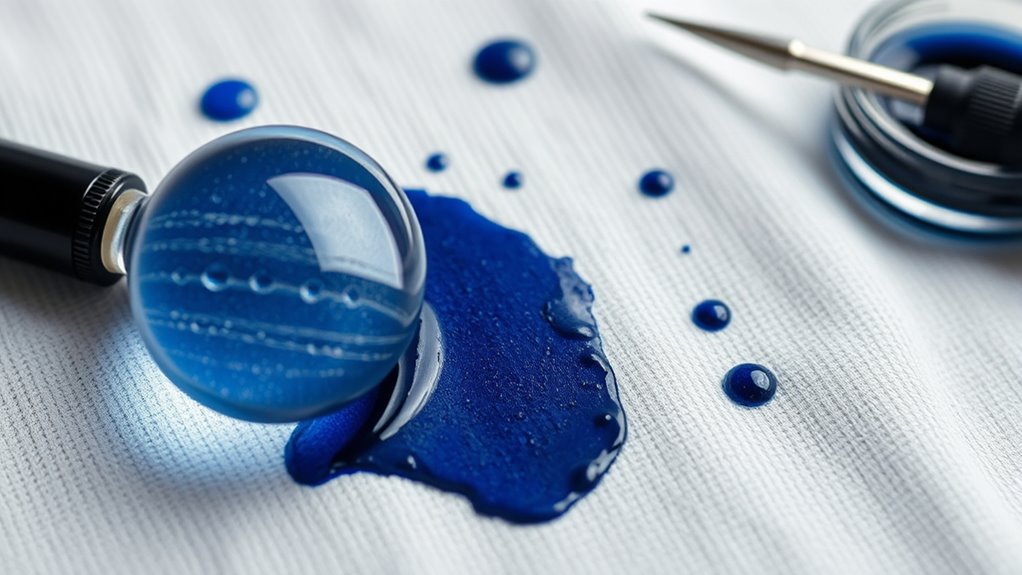
Different types of ink vary a lot in their makeup, which affects how you should treat stains. Water-based ink, like fountain pen ink, is mostly water-soluble, so it’s easier to clean when it’s fresh.
Water-based inks are easier to remove when stains are fresh due to their water-soluble nature.
You can often remove these stains just by rinsing or blotting. Permanent inks have resins that aren’t water-soluble, making them tougher to get out. They often need stronger solvents or special stain removers.
Ballpoint ink combines dyes with solvents and oils, so once it’s dried, it’s more water-resistant and harder to lift from fabric. Knowing the type of ink helps you pick the right cleaning method.
Water-based inks respond well to water and soap, while permanent inks need stronger solutions. The age of the stain also matters—fresh stains are usually easier to treat.
How to Prepare Your Clothes for Ink Stain Removal
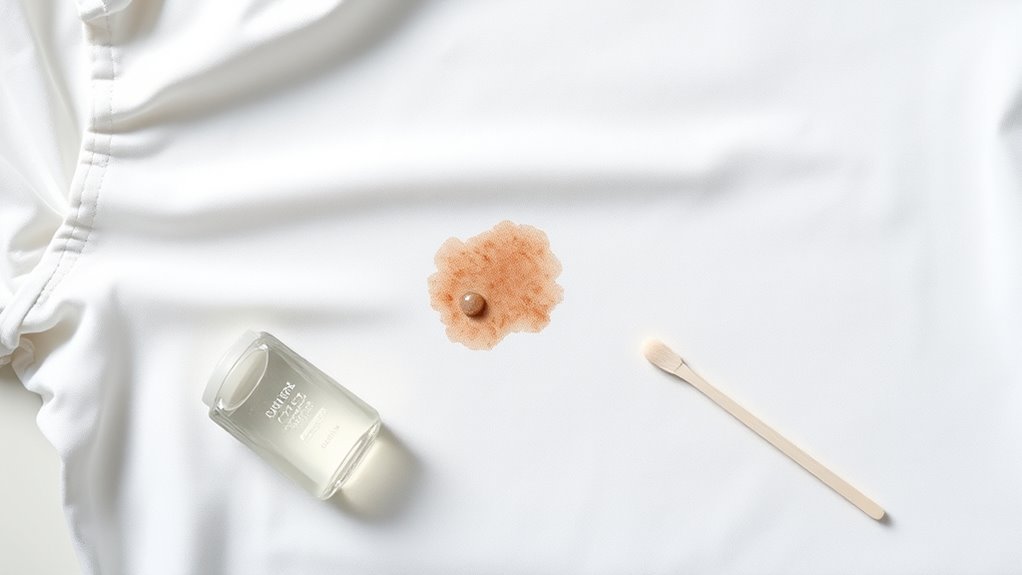
Start by gathering all the supplies you’ll need, like rubbing alcohol, cotton pads, and laundry detergent, so everything’s ready.
Lay the stained garment flat on a clean surface, then place white paper towels underneath and on top to absorb excess ink and shield nearby areas.
Make sure the stained spot is smooth and accessible to make treatment easier.
Gather Necessary Supplies
Gather all your supplies before you start removing ink stains from your clothes. You’ll want items like rubbing alcohol, a good stain remover, and clean cloths.
If you’re working with white clothes, have white paper towels or cloths ready to soak up excess ink and prevent it from spreading. Check the fabric care label to make sure your garment is washable and suitable for stain treatment.
Set up your workspace on a clean, well-lit surface that’s free of clutter. This way, you can apply the stain remover carefully and accurately, which helps avoid spreading the ink or damaging the fabric.
Having everything within reach makes the stain removal process quicker and more efficient.
Protect Surrounding Areas
Have you prepared your workspace to prevent the ink stain from spreading or causing more damage? To protect surrounding areas, lay the garment flat on a clean, dry surface.
Place white paper towels or cloths underneath and inside the clothing to absorb excess ink and shield the surface from staining. Clear the area of other items to avoid accidental transfer or contamination.
Remove jewelry, buttons, or accessories that may interfere with stain treatment or risk damage. Use the following table for quick reference:
| Step | Action | Purpose |
|---|---|---|
| 1 | Lay garment flat | Prevent stain spreading |
| 2 | Place absorbent towels | Protect surface, absorb ink |
| 3 | Clear surrounding area | Avoid contamination |
| 4 | Remove jewelry/buttons | Prevent damage |
| 5 | Test cleaning solutions | Protect fabric from harm |
This preparation helps ensure you protect your clothes and surface during stain removal.
Quick Household Tips for Removing Ink Stains at Home
You can often remove ink stains quickly with common household items like rubbing alcohol or hairspray. Just make sure to test these on a hidden fabric spot first to avoid any damage.
Acting fast and rinsing with cold water afterward can really improve your chances of getting the stain out.
Use Common Household Items
When dealing with ink stains at home, common household items can be surprisingly effective. Rubbing alcohol, found in many medicine cabinets, can be dabbed directly onto the stain to break down the ink.
Hand sanitizer with high alcohol content works similarly—just apply a small amount, let it sit briefly, then blot away. Hairspray containing alcohol can also lift ink marks; spray it directly onto the stain and wait a few moments before wiping.
For gentler options, make a paste of baking soda and water to gently lift the ink without harming the fabric. Remember to test these remedies on a hidden area first to avoid color bleeding or fabric damage.
These simple household items can save you time and money while effectively removing ink stains.
Test Before Applying Products
Before applying any ink stain removal product to your clothes, it’s really important to test it on a small, hidden area first. This helps you see how the fabric reacts and avoid any damage or color loss.
Use a white cloth or cotton swab to put a tiny amount of the cleaner on a discreet spot, like inside a seam or hem. Wait about 5-10 minutes to see if there’s any change in color or texture.
If nothing changes and the fabric looks fine, you can go ahead and treat the stain on the visible area. But if you notice any discoloration or damage, stop immediately and try a different method.
Doing this patch test is a simple way to make sure the product works without risking your garment’s look or quality.
When and How to Use Commercial Ink Stain Removers
Commercial ink stain removers are best used when household methods don’t fully eliminate stubborn or set-in ink stains. You’ll want to apply the product directly onto the stain, following the manufacturer’s instructions closely.
Use commercial ink stain removers for stubborn stains when household methods fail, applying directly as instructed.
Picture squeezing a small amount of the stain remover onto the ink spot, avoiding over-application. Then, wait a few minutes or even several hours, especially for dried or old stains, to let the remover break down the ink.
Think of testing the product on an inconspicuous area first to make sure it won’t damage the fabric before treating the stain. Always follow the recommended application time and wash the garment in the appropriate water temperature.
This targeted approach helps maximize stain removal and keeps your fabric safe.
Step-by-Step Guide to Removing Fresh Ink Stains
Act quickly to prevent the ink from setting deeper into the fabric. Prompt action can make all the difference in successfully removing a fresh stain. First, gently blot the fresh ink with a clean cloth or paper towel to absorb excess ink without spreading it.
Place a white paper towel or cloth underneath the stained area to avoid ink transfer. Next, apply rubbing alcohol or a stain remover directly onto the fresh ink stain, ensuring even coverage to break down the ink pigments. Let it sit for 5 to 10 minutes to loosen the ink particles.
Then, rinse the fabric thoroughly with cold water. For effective stain removal, wash the garment promptly in cold water, checking the stain before drying to guarantee all ink has been removed.
How to Remove Dried or Set-In Ink Stains Effectively
When dealing with dried or set-in ink stains, it’s best to use stronger solvents like rubbing alcohol or commercial stain removers such as OxiClean Max Force. These powerful agents help break down the ink fibers that have deeply embedded into the fabric.
To treat the stain effectively, apply the solvent directly onto the ink stain, making sure to cover the entire area. Let it sit for at least 10-15 minutes, or longer if the stain is stubborn.
Gently blot or scrape the treated area to lift the ink without spreading it further. This pre-treatment helps loosen the set-in ink, making it easier to remove during washing.
Repeat the steps if needed until the stain is gone. Always check the care label for heat and solvent compatibility before proceeding.
Special Tips for White Clothes and Delicate Fabrics
Treating ink stains on white clothes and delicate fabrics requires gentle methods to prevent damage or discoloration. For white clothes, soak the garment in a mixture of OxiClean White Revive and warm water for up to six hours to lift the stain effectively.
Avoid using bleach directly on ink stains, as it can cause discoloration or weaken the fabric. Instead, rely on oxygen-based whiteners like OxiClean.
When dealing with delicate fabrics such as silk or wool, opt for gentle techniques like dabbing with a small amount of rubbing alcohol. Never soak these fabrics for extended periods.
Always perform a patch test on an inconspicuous area before applying stain removal solutions. For delicate fabrics, rinse with cold water and air dry to prevent heat damage or stain setting.
Preventing Ink Stains and Keeping Your Clothes Looking Their Best
Preventing ink stains starts with a proactive approach; taking simple precautions can save you time and effort later.
To prevent stains, consider these steps:
- Apply a clear barrier like Vaseline or tape before handling ink to block stains from setting.
- Use cold water to rinse spills immediately, which helps dilute the ink and reduces how well it sticks to fabric fibers.
- Follow your clothing care instructions carefully, and choose washable, colorfast fabrics that resist permanent ink damage.
Regularly inspecting your clothes and quickly addressing ink stains while they’re fresh helps stop them from drying and becoming harder to remove.
These simple tips are essential for good clothing care and keeping your wardrobe looking its best. They can help reduce the need for stain removal later.
Frequently Asked Questions
How to Get Ink Stains Out of Clothes Quickly?
To get ink stains out quickly, act fast. Blot excess ink with a clean cloth to stop it from setting.
Apply rubbing alcohol or a stain remover directly to the stain and let it sit for 10-15 minutes. Rinse with cold water, then wash the garment in hot water suitable for the fabric.
Check if the stain’s gone before drying. If it’s still there, repeat the process.
How Can I Remove Ink Stains From My Clothes?
To remove ink stains from your clothes, start by blotting the stain with a clean cloth to lift excess ink. Apply rubbing alcohol or hand sanitizer directly on the stain, then gently blot to lift the ink.
Rinse with cold water, then wash the garment in the hottest water safe for the fabric using regular detergent. Check the stain before drying, and repeat if needed to fully remove it.
Does Dawn Soap Remove Ink?
Think of Dawn soap as a detective trying to crack the ink stain case. Yes, it can help remove water-based ink stains, especially when used as a pretreatment. You apply it directly and gently rub, letting it loosen the ink.
But for stubborn or dried ink, you might need to team it up with alcohol or other stain removers. Dawn alone might not always do the trick, but it’s a good place to start.
Can Dried Pen Ink Come Out of Clothes?
Yes, dried pen ink can come out of clothes with the right treatment. You should pre-treat the stain with rubbing alcohol or a commercial stain remover, letting it sit for several minutes.
Gently blot or scrub the area, then wash the garment as usual. Repeat the process if needed, but avoid heat drying until the stain’s fully gone, as heat can set the ink permanently.
Conclusion
So, you’ve now mastered the art of banishing ink stains—because nothing says “I’ve got this” quite like saving your favorite shirt from a childish mistake. Ironically, with all these tips, you might even start to enjoy the challenge, turning stains into triumphs.
Just remember, even if your clothes refuse to cooperate, at least you’ve gained a little stain-removal wisdom. It’s an ironic badge of honor in the messy journey of laundry. And when it comes to removing ink stains from clothes, you’re now well-equipped to handle it.