What Does Ink Poisoning Look Like on Skin?
Many people struggle with skin reactions from ink exposure, especially when they’re unsure if it’s something serious. If you’ve ever noticed strange skin changes after handling ink, you’re not alone. Knowing what ink poisoning on skin looks like can help you act quickly and get the right care.
If you have ink poisoning on your skin, you might notice persistent redness, swelling, blistering, or discoloration that lasts days or weeks. You could see surface staining or irritation, but serious signs include spreading redness, pus, open wounds, or systemic symptoms like fever or chills.
If these symptoms worsen or don’t improve, medical attention might be needed. To understand how to spot the difference and get help, keep exploring more details.
Key Takeaways
- Ink poisoning may cause persistent redness, swelling, and skin irritation or inflammation where the ink touched your skin.
- You might notice blistering, discoloration, or staining that can stick around for days or even weeks.
- Signs of infection include spreading redness, tenderness, pus, or open wounds from the ink exposure.
- If you see these symptoms, it’s important to get medical help sooner rather than later.
- Severe reactions can involve blistering, tissue damage, or systemic symptoms like fever and chills.
- Seek immediate medical attention if you notice redness spreading, pus, open wounds, or if you start feeling unwell with systemic symptoms.
What Are the Visual Signs of Ink Poisoning on Skin?
When ink poisoning happens on the skin, you’ll notice persistent redness and swelling around the area. Skin reactions might include blistering, which shows damage to the skin’s surface, and swelling that feels tight or tender.
Persistent redness, swelling, and blistering indicate ink poisoning on the skin. Seek prompt treatment.
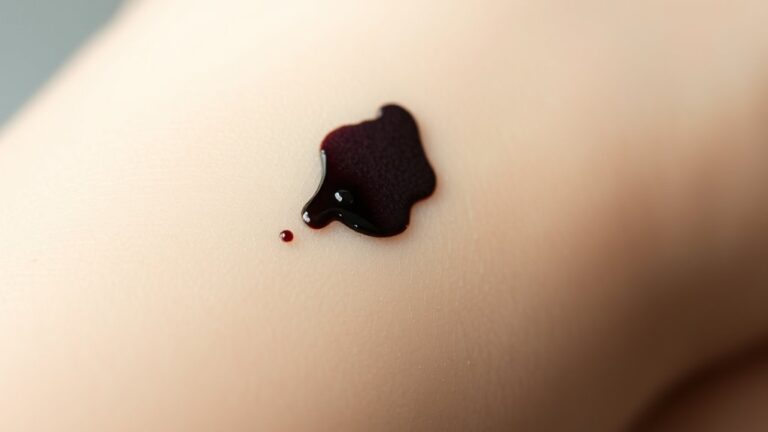
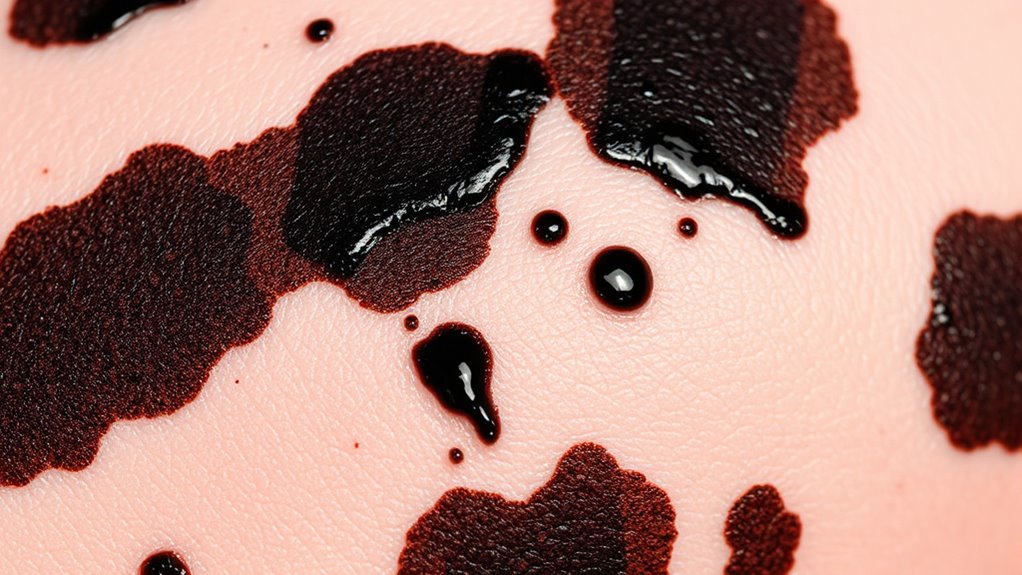
You may see discoloration, like darkening or staining of the skin, but this usually isn’t permanent. Redness often gets worse over time and can be accompanied by itching or burning sensations.
In more serious cases, the redness and swelling become more noticeable, and you might see blisters forming. These are clear signs of inflammation or irritation caused by ink exposure.
Recognizing these visual signs early can help you determine if your skin is reacting badly and if you need to seek prompt treatment.
How Can You Tell if Skin Changes Are Just Stains or Infections?
You can usually tell if a skin change is just a stain or an infection by how it looks and feels.
Stains tend to fade over time and stay in one place. Infections often cause redness, swelling, or pus, and these symptoms may get worse or spread.
Pay attention to any pain or discomfort. Infections are more likely to be tender or sore to the touch.
Visible Signs and Symptoms
Many skin changes caused by ink may look similar at first glance, but it’s important to tell the difference between harmless stains and signs of infection. Ink staining usually looks like temporary, colorful discoloration that soap and water can often remove.
Signs of infection include redness, swelling, warmth, and pain around the area. You might also notice pus or fluid discharge, which indicates an infection. Allergic reactions can cause itching, hives, or a rash that extends beyond the inked area.
Persistent skin changes like blistering, open sores, or discoloration that won’t fade could be a sign of a more serious problem. If the skin develops a foul odor, increasing pain, or if you experience systemic symptoms like fever, seek medical help right away.
Recognizing these signs helps you get the proper care you need and avoid complications.
Duration and Progression
Skin changes caused by ink usually stay the same or fade quickly, making them easier to tell apart from infections.
Ink stains tend to be stable, with no progression, and often disappear after washing.
Infections, on the other hand, often get worse over time, showing increased redness, swelling, warmth, or pus.
The duration and how things change help tell them apart: stains stay the same or fade, while infections tend to worsen.
Here’s a quick comparison:
| Aspect | Ink Stain | Infection |
|---|---|---|
| Duration | Short-lived or fading | Persistent or worsening |
| Progression | No change or fading | Redness, swelling, spreading |
| Symptoms | Colorful, stable marks | Redness, warmth, pus |
If skin changes persist or get worse, see a healthcare professional to rule out infection.
Associated Discomfort or Pain
Discoloration from ink stains usually doesn’t cause pain or tenderness, so it’s easy to tell them apart from infections.
If you notice any discomfort or pain, it could be a sign of an infection rather than just a stain. Swelling and redness are common signs of irritation, but if they get worse or are paired with tenderness, warmth, or blistering, it’s time to see a doctor.
Persistent pain that worsens over time suggests there might be an infection. Unlike simple ink stains, infected skin can develop open sores or pus, and the pain often feels more intense.
If discomfort or pain continues or gets worse, it’s important to check for signs of infection instead of dismissing it as just a stain. Recognizing these symptoms helps you know when to seek treatment.
What Do Ink Reactions Look Like on Your Skin?
When ink touches your skin, you might see some visible changes, and these can vary based on your sensitivity. You could notice redness, itching, or swelling at the spot where the ink contact occurred, which are common skin reactions.
Some inks can cause allergic dermatitis, leading to persistent redness and irritation that can last for days. Surface staining or discoloration is typical but usually fades within a few days and doesn’t mean poisoning.
In rare cases, exposure to ink might cause blistering or localized inflammation if you have an allergic reaction. Most reactions are mild, but be on the lookout for swelling, pain, or signs of infection, which may need medical attention.
Recognizing these skin reactions helps you figure out if your response is normal or if you should seek further help.
How Do You Recognize Serious Symptoms That Need Medical Help?
If you notice intense redness, swelling, or persistent pain, it’s a sign you should see a doctor.
Pus, fever, or chills indicate an infection that needs medical attention.
Seek help immediately if symptoms worsen or if you develop a rash, difficulty moving, or systemic symptoms like dizziness or nausea.
Severe Swelling or Redness
Severe swelling and redness around a tattooed area often signal that something is wrong and may need medical attention. If the swelling worsens or the redness spreads, it could be a sign of an infection or allergic reaction.
Red streaks extending from the inked area are especially concerning, as they indicate a spreading infection that needs prompt evaluation. Persistent or increasing pain alongside swelling and redness suggests a serious tissue reaction, like an abscess.
If you experience fever, chills, or feel unwell, these are warning signs of a systemic infection or allergic response. If swelling and redness don’t improve after home care or get worse quickly, seek immediate medical help to prevent complications and ensure proper treatment.
Pus or Discharge
Noticing pus or discharge around a tattooed area is a clear sign that something may be wrong and needs medical attention. Pus, especially if thick, yellow, green, or foul-smelling, suggests a bacterial infection that needs prompt treatment.
Discharge with increasing redness, swelling, or warmth signals a serious infection or abscess. If the pus persists or worsens over several days, it could mean the infection is spreading and needs evaluation by a healthcare professional.
Any open wound with discharge along with systemic symptoms like fever or chills calls for immediate medical care. Ignoring these signs can lead to complications, so seek medical help promptly to prevent further infection and ensure proper treatment.
Fever or Chills
When you notice fever or chills after ink exposure, it often means your body is fighting a serious reaction or infection. A high fever above 101°F (38.3°C) can signal a systemic infection related to ink poisoning.
Chills along with skin redness, swelling, or a spreading rash suggest an allergic reaction or infection that requires urgent medical attention. Persistent or worsening fever and chills might indicate complications like tissue infection or systemic toxicity.
If these symptoms come with severe pain, dizziness, or difficulty breathing, seek emergency care immediately. Recognizing these signs early helps prevent serious health issues.
Don’t ignore ongoing fever or chills, especially if they’re paired with skin redness or swelling. Prompt treatment is essential for a safe recovery.
How Long Do Ink-Induced Skin Changes Usually Last?
Ink-induced skin changes usually don’t last very long, especially if you take care of your skin properly. You might see redness, swelling, or irritation that tends to go away within 24 to 48 hours.
Discoloration or staining from ink can fade over a few days to weeks, depending on how deep the ink went and how your skin reacts. If the ink causes pigmentation changes or irritation, these effects can last for several weeks.
In cases of allergic reactions or inflammation, symptoms often improve within a week after avoiding contact and using topical treatments. But if skin changes last longer than a month or get worse, it’s a good idea to see a doctor.
Proper cleaning and care usually help these skin changes resolve in a timely manner.
When Should You See a Doctor for Ink-Related Skin Issues?
Seeking medical attention promptly is essential if you experience severe redness, swelling, or pain that worsens at the ink contact site. These signs may indicate an infection or a serious allergic reaction, both of which need professional care.
If you notice pus, fever, chills, or red streaks spreading from the area, see a doctor immediately. These are clear signs of infection that require urgent treatment.
Persistent or worsening allergic reactions like hives, rash, or difficulty breathing also call for urgent medical attention.
If ink staining is accompanied by blistering, open wounds, or tissue damage, a healthcare professional must evaluate the injury.
Systemic symptoms such as nausea, dizziness, or unusual fatigue after ink exposure also suggest the need for medical assessment.
Prompt care helps prevent complications and ensures proper treatment.
How Can You Prevent Ink Reactions and Stains?
To prevent ink reactions and stains, it’s important to prioritize proper hygiene and use safe materials. Always start by cleaning your skin thoroughly with soap and water after drawing, which helps minimize residual ink and chemical buildup.
Using skin-safe products like cosmetic-grade markers or body paints reduces the risk of adverse reactions and stubborn skin stains. Before fully applying ink, test a small patch of skin to check for potential allergic or irritant responses. This helps you prevent unwanted ink reactions.
Wear gloves and use clean tools to avoid introducing bacteria or irritants to broken or irritated skin. This increases the likelihood of staining, infection, or allergies. By following these steps, you can enjoy your artwork or body art while safeguarding your skin’s health.
Frequently Asked Questions
What Are the First Signs of Ink Poisoning?
The first signs of ink poisoning on your skin include redness, swelling, and itching at the contact site. You might see a rash or small bumps develop soon after exposure.
Persistent dry or irritated skin that doesn’t improve with cleaning can also be an early indicator.
Sometimes, you’ll feel localized pain or a burning sensation in the affected area, signaling that your skin’s reacting to toxic ink ingredients.
What Are Four Signs a Person Has Been Poisoned?
Think of your skin as a battlefield, where signs of ink poisoning are fierce enemies. You’ll notice severe redness, swelling, and blistering that won’t go away.
Persistent rash or open sores that don’t heal within days signal trouble. Dark discoloration spreading beyond contact areas and increasing pain or burning sensations also point to poisoning.
If you develop fever or chills along with skin changes, seek help immediately. Your body’s warning system is sounding the alarm.
How Likely Is It to Get Ink Poisoning From a Sharpie?
You’re very unlikely to get ink poisoning from a Sharpie. Its ink is non-toxic and meant for surface use, so it usually doesn’t cause systemic poisoning.
Most reactions are just temporary skin irritation or mild allergic reactions, which clear up with proper washing and skin care. You don’t need to worry about serious health risks because Sharpie ink isn’t designed to be absorbed deeply or cause long-term harm.
Can Someone Get Ink Poisoning?
Yes, you can get ink poisoning, but it’s extremely rare, especially from skin contact. Most reactions are allergic or irritant, causing redness, swelling, or rash.
Serious signs like blistering or infection are uncommon. If you notice persistent inflammation or pus, it’s best to see a doctor.
Usually, cleaning the area and using topical treatments help. The risk is minimal with non-toxic inks, but it’s still a good idea to avoid prolonged contact.
Conclusion
So, next time you proudly show off your ink, keep in mind that a little skin drama might be lurking beneath the surface.
While most ink stains fade, serious reactions can sneak up when you least expect it. Ironically, what’s meant to be a permanent mark can sometimes turn into a fleeting medical emergency.
Stay vigilant and don’t ignore skin changes. Your body’s way of saying “look closer” might just save you from a more permanent regret.
When it comes to ink poisoning on skin, being aware of symptoms like redness, swelling, or blistering is key. Recognizing these signs early can make all the difference.