

What Are the Safety Concerns of Squid Ink and Its Poisonous Nature?
If you love cooking with squid ink or are considering trying it, you’re not alone. Many people struggle with understanding the safety concerns and potential risks involved. It’s natural to wonder if squid ink is safe to eat and what precautions you should take.
Squid ink is generally safe when used in culinary amounts, but risks come from contamination, spoilage, or high levels of heavy metals like cadmium and copper. If the ink smells foul, has a slimy texture, or discoloration, it’s likely spoiled and unsafe.
Allergic reactions, especially for those with shellfish allergies or sensitive groups like children and pregnant women, can also occur. To stay safe, source from reputable suppliers and handle properly—continue to investigate for detailed safety tips.
Key Takeaways
- Squid ink is generally safe when used in cooking, but it can cause allergic reactions in people with seafood allergies.
- During harvesting or storage, contamination can happen. Harmful bacteria, toxins, or pollutants like heavy metals might get into the ink.
- If the ink smells foul, feels slimy, changes color, develops mold, or its texture alters, it could be spoiled and unsafe to use.
- Trace metals such as cadmium and mercury can build up over time. Eating contaminated squid ink repeatedly could pose health risks.
- To keep things safe, it’s important to source, store, and handle squid ink properly. This helps reduce the chances of contamination, spoilage, and other health hazards.
Are There Safety Concerns When Eating Squid Ink?
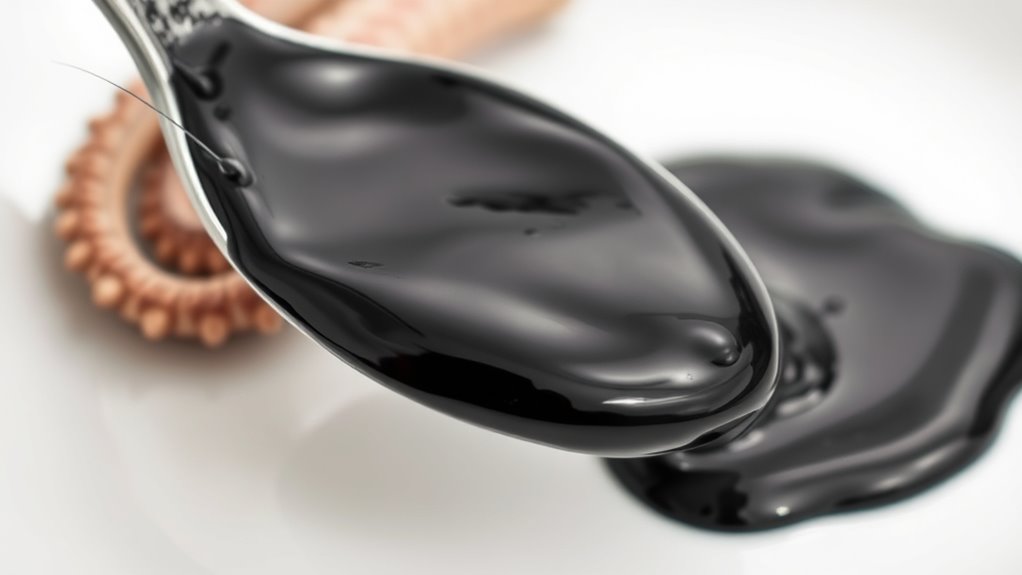
While squid ink is generally safe to eat in normal culinary amounts, there are some safety concerns to keep in mind. If you’re allergic to seafood or shellfish, eating squid ink could trigger reactions that range from mild to severe.
Squid ink is safe in small amounts but may cause allergic reactions or health risks if contaminated or consumed excessively.
Contamination or spoilage can also be risks if the ink isn’t properly sourced or handled. Squid ink may contain trace metals like copper and cadmium, which could be harmful if eaten in large amounts over time.
To stay safe, check that the ink comes from reputable sources and is fresh. Proper handling helps reduce the risk of contamination or spoilage that could affect safety.
If you have seafood allergies, it’s best to avoid squid ink altogether to prevent any adverse health effects.
How Can Contamination or Spoilage Make Squid Ink Toxic?
Contamination or spoilage can make squid ink toxic by introducing harmful bacteria, fungi, or pollutants that pose health risks. When squid ink is exposed to contamination during harvesting, processing, or storage, bacteria and fungi can grow, leading to microbial proliferation.
Spoiled ink often develops an off-odor, changes in color, or texture. These signs indicate bacterial growth that can produce dangerous toxins. If stored improperly at temperatures above refrigeration, bacteria multiply rapidly, increasing the risk of toxin formation.
Pollutants like heavy metals from contaminated water can also accumulate in the ink, further raising health risks. Cross-contamination from spoiled seafood or dirty equipment can introduce harmful pathogens or toxins, making the ink unsafe for consumption and potentially causing foodborne illnesses.
Can Squid Ink Cause Allergic Reactions?
If you have a shellfish allergy, you might be at risk when consuming squid ink because it contains proteins like tropomyosin that can trigger reactions.
Symptoms can range from hives and swelling to difficulty breathing and stomach issues.
It’s important to exercise caution and consult an allergist before trying squid ink if you’re sensitive to shellfish.
Allergens in Squid Ink
Squid ink contains proteins like tropomyosin, which can cause allergic reactions in people with shellfish allergies. If you have a shellfish allergy, eating squid ink might trigger symptoms like hives, swelling, or trouble breathing.
Cross-reactivity is common, meaning people allergic to other seafood may also react to squid ink because of similar allergens. Even tiny amounts of ink can cause a hypersensitive reaction in sensitive individuals.
To stay safe, it’s best to avoid squid ink if you’re allergic to shellfish. Here’s a quick overview:
| Allergen Type | Common Reactions |
|---|---|
| Shellfish Proteins | Hives, swelling, breathing issues |
| Cross-Reactivity | Allergic responses to related seafood |
| Hypersensitivity | Severe allergic reactions |
| Seafood Allergies | Common trigger for allergic responses |
Stay cautious to prevent allergic reactions.
Symptoms of Allergic Reaction
Have you ever wondered what happens during an allergic reaction to squid ink? When your immune response sees proteins like tropomyosin as threats, symptoms can develop quickly.
If you’re sensitive to shellfish, you might experience hypersensitivity reactions after eating squid ink. Common signs include hives, swelling, and trouble breathing, which show how serious the reaction is.
Gastrointestinal issues like nausea, vomiting, or diarrhea can also happen as your body reacts to the allergen. These symptoms can show up within minutes or hours after eating.
If you have a shellfish allergy or think you might be allergic, it’s important to be careful. Recognizing these symptoms early can help you get medical help quickly and avoid serious health problems.
Precautions for Sensitive Individuals
Because squid ink contains proteins like tropomyosin that can trigger allergic reactions, people with shellfish sensitivities should be cautious. Even small amounts can cause responses such as hives, swelling, or difficulty breathing.
Cross-reactivity is common, so those with shellfish allergies should avoid squid ink altogether. It’s best to consult an allergist before trying dishes with squid ink to understand your hypersensitivity risks.
| Precaution | Explanation |
|---|---|
| Avoid consumption | Because it could cause allergic reactions in sensitive individuals. |
| Read ingredient labels | To spot and avoid squid ink in prepared foods. |
| Seek medical advice | Before trying new dishes if you have seafood allergies. |
| Be aware of symptoms | Recognize early signs of allergic responses for quick action. |
Which Metals in Squid Ink Could Be Harmful?
You should be aware that squid ink can contain trace metals like copper and cadmium, which may be toxic in high amounts.
There’s also a concern about mercury buildup, especially in certain environments, increasing health risks.
Understanding the metal levels and safety thresholds is key to avoiding potential harm from consuming squid ink.
Trace Metal Content Levels
Squid ink contains trace metals like copper, cadmium, and zinc, which can pose health risks if consumed in high amounts. Elevated levels of heavy metals such as cadmium can lead to health issues over time, especially with frequent intake.
The concentration of these trace metals varies depending on the squid’s habitat, diet, and water quality, influencing how much metal accumulates. Seafood safety regulations set limits for heavy metal content in seafood, including squid ink, to protect consumers.
If these limits are exceeded, there’s an increased risk of toxicity from prolonged consumption. Be mindful of the variability in trace metal levels based on environmental factors, and the potential for heavy metal buildup in your body.
It’s important to adhere to regulatory limits and understand the risks associated with consuming contaminated squid ink.
Mercury Accumulation Risks
While the levels of mercury in squid ink are usually low, eating it repeatedly can cause mercury to build up in your body. Mercury is a heavy metal linked to serious health problems, especially with ongoing exposure.
Although squid ink generally has minimal mercury, environmental toxins can vary depending on where the squid lives and its species. Heavy metals like copper and cadmium can also pose risks if you consume too much, but mercury is the main concern because of its toxicity.
Seafood safety rules help keep contamination levels in check, making sure they stay safe for us. To lower your risks, buy squid ink from trusted sources and enjoy it in moderation. This way, you reduce the chance of harmful heavy metal buildup and protect your overall health.
Metal Toxicity Thresholds
Certain metals in squid ink, like copper and cadmium, can reach harmful levels if eaten too much, posing health risks. Metal toxicity from heavy metals such as cadmium and mercury depends on how much contamination there is and how often you consume it.
The European Food Safety Authority (EFSA) has set maximum levels for cadmium in seafood at around 0.5 mg/kg to prevent toxicity. Higher mercury levels can lead to neurological and developmental problems, especially for vulnerable groups.
Eating squid ink with high metal levels regularly might cause heavy metal poisoning, which can affect your kidney and liver health. To keep seafood safe, it’s important to source from clean environments and eat in moderation.
Monitoring contamination levels is key to reducing risks of metal toxicity in squid ink.
How Do You Know if Squid Ink Is Spoiled or Contaminated?
How can you tell if squid ink has gone bad? If it develops a foul, sour odor or a slimy, discolored appearance, it’s likely spoiled. Look closely for mold or any unusual, rancid smell—both signs of contamination.
Check the texture—spoiled ink may become thick, clumpy, or show separation. Proper storage is key; keep it in an airtight container in the refrigerator, where it lasts up to a week. After that, spoilage becomes more likely.
Always buy squid ink from reputable sources and inspect the packaging for damage or expired dates. If you notice any of these signs, discard the ink immediately to avoid health risks.
Staying vigilant helps ensure you don’t consume contaminated or spoiled squid ink.
Are Children or Pregnant Women at Higher Risk?
Pregnant women and children face higher risks when consuming squid ink because of its potential mercury content, which can harm developing brains and nervous systems. High seafood consumption, especially in vulnerable groups, increases safety concerns related to mercury accumulation.
Children and pregnant women with shellfish allergies are also more prone to allergic reactions from squid ink. Since mercury can affect neurodevelopment, it’s essential to limit intake and consult healthcare providers.
Be aware that concentrated squid ink supplements may pose additional risks due to limited safety research. To reduce risks, monitor seafood consumption carefully and stay informed about mercury levels.
Always seek professional advice before including squid ink regularly in your diet, especially if you belong to these higher-risk groups.
How Do Regulations Protect Your Squid Ink?
Regulations are essential for keeping your squid ink safe to eat. They set strict safety standards that limit contamination and the presence of heavy metals like mercury and cadmium.
These rules also require thorough testing and quality checks to catch any unsafe products before they reach you. Labeling laws make sure you get clear info about where the squid ink comes from, how it’s processed, and any potential allergens.
Here’s a quick overview of how regulations work to protect your squid ink:
| Regulation Aspect | Purpose |
|---|---|
| Heavy metals limits | Prevent toxic metals from building up in seafood |
| Safety standards | Make sure the quality and safety are consistent |
| Testing & quality control | Catch contamination early |
| Labeling laws | Give you info about origin and possible risks |
| Monitoring & inspection | Keep companies in check and reduce risks |
What Precautions Should You Take Before Using Squid Ink?
Before using squid ink in your dishes, it’s important to take some simple precautions to guarantee safety and quality. First, make sure the ink comes from reputable sources to avoid contamination with heavy metals or pollutants.
Check for potential allergies, especially if you have seafood sensitivities or shellfish allergies. If you’re unsure, it’s a good idea to consult a healthcare professional.
Use squid ink in moderation, as high concentrations can contain trace metals or allergenic compounds. Proper storage is essential; verify that the ink is fresh and stored correctly to prevent bacterial growth and spoilage.
Always buy from trusted sources, and keep the ink stored properly to maintain freshness. Following these steps helps ensure you enjoy your dishes safely.
Frequently Asked Questions
Is Squid Ink Toxic to Humans?
Squid ink isn’t toxic to humans when eaten in typical amounts used in cooking. You can enjoy it safely, but if you have shellfish allergies, you should be cautious because it contains proteins that might trigger reactions.
Eating excessive amounts or concentrated extracts could pose health risks due to trace metals or allergens. Overall, as long as you consume it in moderation and are aware of allergies, squid ink is safe.
Are There Any Side Effects of Eating Squid Ink?
Eating squid ink can surprise you with side effects, especially if you’re sensitive. You might experience allergic reactions like hives, swelling, or trouble breathing.
Overdoing it could introduce trace metals like copper and cadmium into your system, which might pose long-term health risks. If you have shellfish allergies, it’s safest to avoid it altogether.
While generally safe in small amounts, eating large quantities leaves some uncertainty about potential health impacts.
What Does Squid Ink Do for the Body?
Squid ink offers several health benefits for your body. It provides antioxidants that fight free radicals, helping protect your cells.
It also supports your immune system with antimicrobial properties and may help reduce inflammation.
The compounds in squid ink can help lower blood pressure by relaxing blood vessels. Its nutrients, like amino acids and minerals, support tissue repair and overall wellness.
Including squid ink in your diet could boost your health, but remember to enjoy it in moderation to avoid any safety issues.
What Happens if a Squid Inks on You?
If a squid inks on you, don’t panic—your skin or clothing might get stained with a dark, washable pigment.
The ink isn’t poisonous, so it won’t harm you, but it can cause mild irritation or allergic reactions if you have shellfish allergies.
Just wash it off with soap and water. The stain will fade, leaving no lasting damage.
It’s a harmless, temporary mess.
Conclusion
So, before you dive into that vibrant squid ink dish, keep in mind that safety is key. Ignoring proper handling can turn your culinary adventure into a potential health risk.
Contaminated or spoiled ink isn’t just unpleasant; it could cause food poisoning or allergic reactions. Always check for freshness and source it from reputable suppliers.
Handle squid ink with care to avoid exposure to bacteria or toxins. While squid ink is generally safe, some varieties may contain traces of toxins if not processed correctly.
By taking these precautions, you’ll protect yourself from invisible dangers lurking in that striking black ink. Remember, no flavor is worth risking your health—especially when it comes to squid ink and its safety concerns.