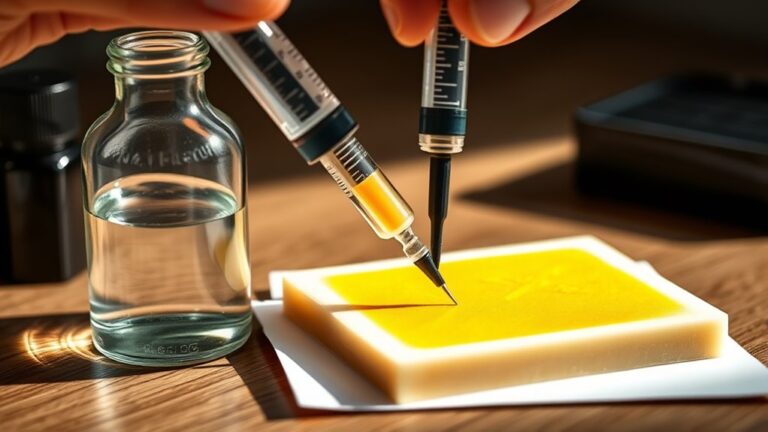
What Is Ink?
Are you tired of dealing with dull, smudgy ink that ruins your projects or artwork? You’re not alone—many people struggle with finding the right ink that delivers vibrant color and smooth performance.
Ink is a liquid or paste used to add color and detail to surfaces like paper, skin, or other materials. It contains dyes or pigments for color, carriers to help it spread evenly, and various additives for durability.
Over thousands of years, ink has evolved from simple soot and plant dyes to modern formulas with synthetic ingredients and special effects.
If you keep exploring, you’ll uncover how ink impacts art, security, and industry today.
Key Takeaways
- Ink is a liquid or paste used to add color to surfaces like paper, skin, or materials.
- It contains dyes or pigments as colorants, along with carriers or solvents to help it spread smoothly.
Historically, inks were made from natural sources. Today, modern inks often use synthetic dyes, inorganic pigments, and various additives.
There are different types of ink. Dye-based inks give vibrant colors, while pigment-based inks are more durable and opaque.
Some inks have special functions. They can include security features, artistic effects, or even electrical conductivity.
What Is Ink? Definition and Main Ingredients
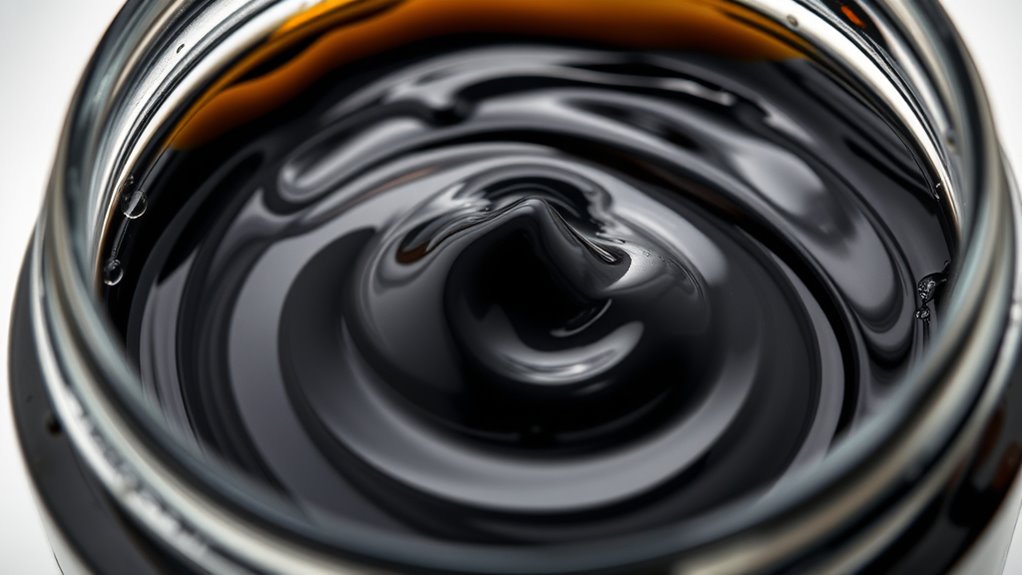
Ink is a liquid or paste used to add color to surfaces like paper, skin, or other materials for writing, drawing, or printing. Its main ingredients are dyes or pigments, which give it color.
Dyes are soluble, creating transparent colors, while pigments are insoluble particles that produce opaque coverage. Carriers or solvents help deliver these colorants smoothly onto surfaces, ensuring even application.
Historically, ink ingredients came from natural sources like soot, plant dyes, animal tissues, and minerals. Today, synthetic dyes, inorganic pigments like titanium dioxide, and special additives are common.
The specific makeup of ink varies depending on its intended use. This affects properties like opacity, drying time, and durability. Understanding its composition helps explain how different inks perform in various applications.
How Have Different Types of Ink Evolved Throughout History?
Throughout history, the formulations and materials used in ink have continuously evolved to meet the needs of different cultures and technological advancements. Early ink components included simple carbon-based soot and plant dyes, forming the basis of many historical inks.
Ink formulations have evolved over centuries to suit cultural and technological changes.
In medieval Europe, iron gall ink became popular. It was made from iron salts and tannic acids from oak galls, but its corrosive nature eventually led to its decline.
East Asian ink traditionally consisted of solid inksticks made from soot and animal glue. Artists would grind these on inkstones with water, a practice that dates back thousands of years.
Today, ink evolution includes diverse compositions like dye-based inks for vibrant colors and pigment-based inks for durability. Modern innovations also incorporate nanomaterials for electronic uses.
These advancements reflect ongoing efforts to improve ink’s permanence, security, and functionality across different applications.
How Is Modern Ink Manufactured and Applied?
Modern ink is produced by dispersing pigments or dyes into liquids through processes like grinding, milling, or mixing with solvents and surfactants to guarantee a uniform consistency. During production, controlling parameters like particle size and viscosity is vital to assure smooth application and consistent quality.
Dispersing involves evenly distributing pigments, which are responsible for color, throughout the liquid medium. Additives such as stabilizers, flow agents, and preservatives are included to improve durability, ease of application, and colorfastness.
The viscosity of the ink is carefully adjusted to suit different application methods, whether through pens, brushes, or inkjet printers. Advanced inks may also incorporate nanomaterials for special effects or electrical conductivity.
The precise manufacturing process ensures reliable performance across various uses.
What Are the Health and Environmental Risks of Ink?
Although ink plays a vital role in communication and art, many formulations pose health and environmental risks. Traditional inks often contain heavy metals like lead, cadmium, and mercury, which are toxic and can cause health issues if ingested or absorbed through the skin.
Production and disposal of ink release volatile organic compounds (VOCs), contributing to air pollution and respiratory problems. Some inks, especially older types, are non-biodegradable, meaning they can contaminate soil and water sources when improperly disposed of.
Toxins in certain inks can also cause headaches, skin irritation, or nervous system damage. While regulatory standards aim to limit harmful substances, improper handling and disposal still pose significant environmental and health hazards.
Choosing biodegradable inks and responsible disposal methods helps reduce these risks.
What Are the Uses of Special and Functional Inks Today?
Today, special and functional inks are essential in security printing and decorative design, making products more than just visually appealing.
You’ll see them protecting currency, passports, and packaging from counterfeiting, while also adding vibrant effects for artistic expression.
These inks combine advanced materials like microencapsulated dyes and nanoparticles to create innovative, functional finishes.
Security and Anti-counterfeiting
Special inks are essential for protecting documents and currency from counterfeiting by adding advanced security features. They include UV-visible inks, optically variable inks, and fluorescent dyes that make reproduction more challenging.
Micro- or nano-particles, holographic elements, and thermochromic properties add extra layers of complexity. These inks are usually invisible under normal light but reveal specific features under UV or special lighting, making quick authentication possible.
The table below summarizes common security ink features:
| Feature | Purpose |
|---|---|
| UV-visible inks | Hidden under UV light |
| Holographic elements | Difficult to duplicate |
| Fluorescent dyes | Visible under specific lighting |
| Micro- or nano-particles | Increase security through complexity |
Artistic and Decorative Effects
Special inks open up a world of artistic and decorative possibilities, allowing creators to add striking visual effects that enchant viewers. Artistic inks often feature metallic pigments or iridescent inks, delivering shimmering surfaces and vibrant color shifts that *augment* calligraphy, paintings, and crafts.
Decorative effects like glow-in-the-dark, iridescence, and holography bring depth and movement to designs. Modern special inks also include thermochromic and photochromic options, which change color with temperature or light exposure, adding an interactive element.
These inks aren’t just for aesthetics; they serve functional purposes too, creating surfaces with electrical conductivity or security features. Overall, special inks expand the potential of artistic expression and decorative design, making every project more engaging and visually *enthralling*.
How Do Inks Impact Art, Security, and Industry?
Inks play a crucial role across different fields, shaping how we create, secure, and produce. In art, inks let us do expressive brushwork, calligraphy, and detailed illustrations. They’ve evolved from simple monochrome to rich, multi-layered colors.
Security inks, like ultraviolet-reactive and indelible types, help protect currency, documents, and products from forgery. They ensure authenticity and add an extra layer of safety.
In industry, specialized inks are essential for printing, packaging, and electronics. Conductive inks, which use nanomaterials like carbon nanotubes, enable flexible circuits and other innovations.
Artistic ink uses include murals, psychological inkblot tests, and traditional paintings. This shows how versatile inks are in different creative fields.
Advances in functional inks, with effects like fluorescence and thermochromism, expand their use in security printing, smart packaging, and innovative art projects. Overall, inks have a multifaceted impact across sectors.
Frequently Asked Questions
What Is Ink Made Of?
Ink is made of colorants like dyes or pigments suspended or dissolved in a liquid carrier. You’ll find pigment-based inks with solid particles for durability and opacity, and dye-based inks with soluble colors for vibrancy.
Traditional ingredients include plant dyes, soot, and mineral pigments. Modern inks incorporate synthetic dyes, inorganic pigments, and nanomaterials.
The specific composition depends on the ink’s purpose, balancing stability, color fastness, and safety.
What Is Another Meaning of Ink?
Another meaning of ink is signing or sealing a deal. When you “ink” a contract, you’re making a commitment as permanent as ink on paper.
It’s like stamping your signature with a bold, unmistakable mark that says, “This is done.” So, in everyday talk, “ink” isn’t just about the substance.
It also means sealing agreements, making promises, or leaving your mark in a way that sticks.
What Is Ink Used for Today?
Today, you use ink for printing newspapers, books, packaging, and for writing or drawing. It’s essential for creating artwork and tattoos, giving permanent skin decoration.
You also rely on specialized inks for security features on banknotes and passports. Modern inks like fluorescent or conductive types power smart packaging and flexible electronics.
In everyday life, ink helps you communicate, decorate, and even secure valuable documents with advanced, innovative formulations.
How Is Black Ink Made?
Black ink is made by burning organic materials like wood, oil, or bones to create soot. You then mix this soot with a binding agent such as animal or hide glue, forming either a solid inkstick or a liquid.
Modern black ink often uses carbon black pigments suspended in a solvent. This process results in a durable, opaque ink suitable for writing, printing, and artistic purposes.
Conclusion
Understanding ink is like opening a door to a world filled with colors and endless possibilities that influence our daily lives. From ancient scrolls to today’s printers, ink has grown and changed, blending science with art.
By exploring its history and how it impacts us, you see that ink is more than just a pigment. It’s a quiet artist, a security guard, and a tool for innovation.
Welcome the power of ink. It’s an invisible brush that’s been painting the story of human progress throughout history.