10 Best Ways to Remove Ink From a Couch
Many people struggle with removing ink stains from their couches, and it can be really frustrating. You’re not alone in feeling concerned about damaging your furniture while trying to clean it.
To remove ink from your couch, first identify the ink type—water or solvent-based—and check your upholstery care tag for safe cleaning methods. Test solutions on hidden fabric areas to avoid damage.
Use a gentle blotting approach with dish soap or a vinegar solution for water-based inks. For tougher stains, dab with rubbing alcohol or nail polish remover, applying multiple gentle treatments and allowing each to dry.
If stains linger or reappear, you can try more advanced techniques—continue to uncover effective tips.
Key Takeaways
- Identify the ink type (water-based, solvent-based, gel) to choose the most effective cleaning method.
- Test cleaning solutions on hidden fabric areas first. This helps prevent any damage or discoloration on your couch.
- Use alcohol-based solutions like rubbing alcohol for stubborn or solvent-based ink stains.
- When cleaning, blot gently with microfiber cloths. Avoid rubbing, as that can spread the stain further.
- Let the area dry completely. If the stain persists, repeat the treatment until it’s gone.
How to Identify Your Ink Type for Better Removal
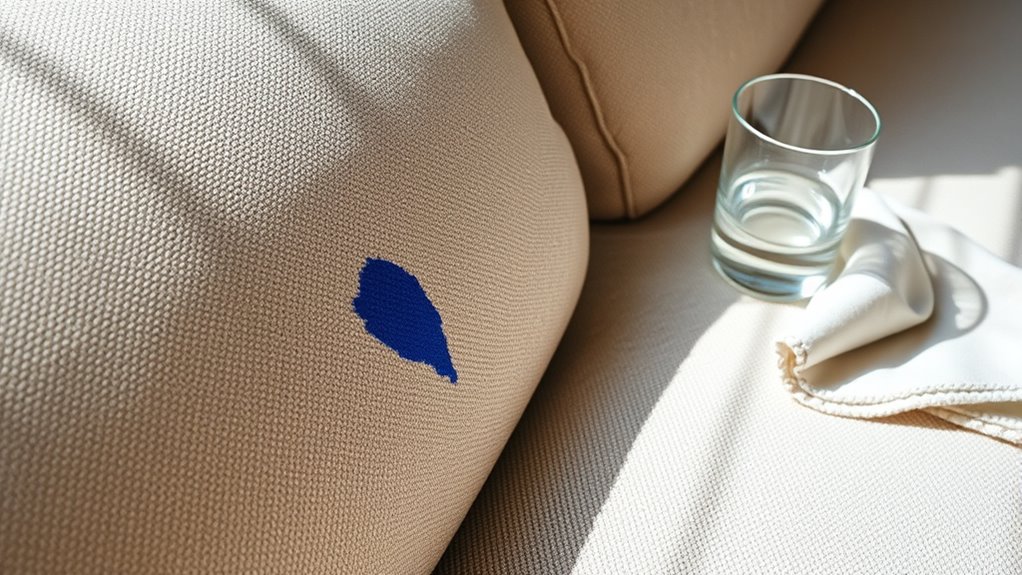
How can you determine the type of ink on your couch to choose the most effective removal method? Start by examining the ink’s appearance—look at its consistency, color intensity, and overall look.
Water-based inks usually respond well to mild detergent solutions. If it appears watery or less thick, this is likely your ink type.
Water-based inks are best treated with gentle detergent solutions; if the ink looks watery or thin, it’s likely water-based.
Solvent-based inks, often found in markers or felt-tip pens, typically require stronger solutions like rubbing alcohol or nail polish remover.
Gel inks tend to be thicker and may need multiple treatments for complete removal.
Also, consider where the ink came from—ballpoint pen ink is generally oil-based, while markers often contain water or solvent-based ink.
Always perform a patch test to make sure your chosen method won’t damage the fabric.
Check Your Upholstery Care Tag for Safe Cleaning Methods
Before trying to clean your couch, always check its upholstery care tag to find the safest method. The tag shows cleaning codes like W (water-safe), S (solvent-safe), WS (water or solvent), or X (vacuum only). These codes help you pick the right cleaning method without damaging the fabric.
Using an incompatible approach—like applying water on an S-coded fabric—can lead to discoloration or damage. If the care tag is missing, test cleaning solutions on a small hidden spot first to see if the fabric reacts well.
Always follow the instructions on the care tag to remove ink stains safely. This way, you protect your furniture while getting the best cleaning results.
Test Cleaning Solutions on Hidden Fabric Areas First
To prevent further damage to your couch, always test cleaning solutions on a small, hidden area of the fabric first. Testing helps you check for colorfastness and how the fabric reacts without risking visible damage.
Use discreet spots like behind a cushion or under a flap to evaluate the effects. After applying the solution, wait at least 10-15 minutes to see if there’s any color fading, bleeding, or fabric deterioration.
Test in hidden areas like behind cushions, wait 10-15 minutes to check for color changes or damage before cleaning visible fabric.
Make sure to document the test results so you know it’s safe before tackling the stain. Avoid harsh chemicals on visible areas until you’re confident they won’t cause discoloration or damage.
Thorough testing guarantees you choose the safest method for your fabric and helps you avoid permanent harm during the ink removal process.
How to Remove Water-Based Ink With Dish Soap
Start by blotting the excess water-based ink with a paper towel to prevent it from spreading.
Next, mix a teaspoon of dish soap with warm water and dampen a microfiber cloth with the solution.
Gently blot the stain from the outside inward until the ink lifts.
Finally, rinse the area with a clean damp cloth to remove any soap residue.
Blot Excess Ink
Gently blot the excess water-based ink with a paper towel to stop it from spreading further. Avoid rubbing or scrubbing, as this can push the ink deeper into the fabric.
Focus on carefully lifting as much of the stain as you can. Imagine the paper towel softly pressing against the fabric, soaking up the ink without smearing it.
Use a clean section of the towel each time to prevent spreading the ink again. Keep blotting until no more ink transfers onto the paper towel.
Prepare Soapy Solution
After blotting away as much excess ink as possible, mix a simple soapy solution to help lift the remaining stain. Combine about one teaspoon of dish soap with warm water until it forms a light sudsy mixture.
Dip a microfiber cloth into the soapy water, making sure it’s damp but not soaked. Gently blot the water-based ink stain on your couch, avoiding rubbing, to help break down the ink particles.
Press the cloth onto the stain repeatedly, lifting and loosening the ink. Once you’ve worked on the stain, dampen a separate microfiber cloth with clean, warm water to rinse off any soap residue.
This step ensures no soap is left behind, which could attract dirt or cause discoloration.
Gently Blot Stain
How can you effectively lift water-based ink from your couch without making the stain worse? The key is to gently blot the area to absorb excess ink without spreading it further. Picture yourself softly pressing a paper towel onto the stain, avoiding any rubbing that could embed the ink deeper.
Imagine a microfiber cloth dipped in a sudsy dish soap mixture, ready to be pressed gently onto the affected fabric. Visualize working from the outside of the stain inward, carefully blotting rather than scrubbing.
Envision using a clean, damp microfiber cloth to remove soap residue, then pressing with a dry cloth to help the fabric air dry.
Using Rubbing Alcohol to Remove Solvent and Ballpoint Ink
Rubbing alcohol is a great choice for removing solvent and ballpoint ink stains from your couch. To use it, dampen a clean microfiber cloth with rubbing alcohol and gently press it onto the ink stain.
Blot the stain repeatedly with the alcohol-soaked cloth, being careful not to rub, as rubbing can spread the ink further. Keep applying rubbing alcohol and blotting until the ink starts to lift from the fabric.
Once the stain begins to lighten, use a separate damp cloth to blot and remove any remaining alcohol. After that, let the fabric air dry completely to prevent the ink from setting again.
This method works well because it breaks down the ink’s bonds, making it easier to lift without damaging your couch’s fabric.
How to Use Non-Acetone Nail Polish Remover for Tough Ink Stains
For tough ink stains, non-acetone nail polish remover can be an effective solution because it contains solvents that break down ink pigments without damaging delicate fabrics. To safely remove ink stains, start by testing the remover on a hidden area of your couch to prevent discoloration.
Dip a microfiber cloth into the remover and gently blot the stain, working from the outside toward the center. Imagine the stain shrinking as you lift the ink away, like a magic eraser. Keep blotting and reapplying the remover as needed, but avoid rubbing, which can spread the stain further.
Once the ink starts to lift, use a damp cloth to wipe away any residual remover. Then, let your fabric air dry completely—your couch will look fresh again.
Vinegar Solution: Safe Ink Removal for Delicate Fabrics
A simple and gentle way to tackle ink stains on delicate fabrics is by using a vinegar solution. Mix equal parts distilled white vinegar and water to create a safe, effective cleaning mixture.
Dip a microfiber cloth into this solution and gently blot the stain, lifting the ink without harming sensitive fibers. Repeat the process if needed, as stubborn stains may require multiple applications.
Afterward, rinse the area with a damp microfiber cloth to remove vinegar residue and prevent odor. Allow the fabric to air dry thoroughly, making sure the stain is gone and the fabric stays intact.
| Key Point | Benefit |
|---|---|
| Gentle cleaning | Protects delicate fabrics |
| Repeated blotting | Improves stain removal |
| Air drying | Prevents damage and odor |
Strategies for Old or Set-In Ink Stains
Old ink stains often take multiple cleaning sessions to remove completely. Be patient and let the fabric dry fully between treatments.
Gently blot the stain with solutions like rubbing alcohol or vinegar. Repeating this process gradually lifts the embedded ink.
Proper drying techniques are key. They help prevent more damage and make each cleaning step more effective.
Multiple Treatment Sessions
Removing stubborn ink stains often takes multiple treatment sessions, especially if the stain has set in over time. You’ll need patience and persistence, as each application gradually breaks down and lifts the ink without damaging the fabric.
Between treatments, make sure the fabric is completely dry to prevent the ink from spreading or embedding further. Repeating gentle blotting with solutions like rubbing alcohol or vinegar can noticeably improve results over time.
It’s important to test each treatment on a hidden area first to avoid discoloration. Visualize gently pressing with a cloth soaked in your chosen solution, then waiting for it to dry before reapplying.
Multiple treatment sessions help you avoid rushing the process and give each effort a chance to work effectively.
Patience and Care
When dealing with set-in ink stains, rushing the process can make things worse. Patience is key to gradually lifting the stain without damaging your couch’s fabric. You should use repeated, gentle treatments, allowing each to fully dry before trying again.
Short, frequent efforts are often more effective than one aggressive attempt, reducing the risk of embedding the ink deeper. Avoid vigorous rubbing, which can push the ink further into the fibers and make removal more difficult.
Remember, some stains take time and may require multiple applications over several days. Staying patient and careful ensures you don’t cause additional damage or spread the ink.
With consistent, gentle attention, you increase your chances of successfully cleaning old or set-in ink stains without harming your couch.
Proper Drying Techniques
After treating a stubborn ink stain, it’s important to let the area dry completely before checking your progress. Residual moisture can cause the stain to set further or even lead to mold growth.
To dry the fabric effectively, imagine a soft breeze gently drying the fabric or a cool hairdryer carefully blowing across the surface. Use a fan or a cool hairdryer on a low setting, making sure not to damage delicate fibers.
Visualize the fabric drying evenly without heat damage. Avoid using heat or hot air, as they can push the ink deeper into the fabric. Instead, focus on gentle, even drying to preserve your couch’s fabric and maximize stain removal.
For old or set-in stains, repeat the cleaning process in short sessions. Make sure the fabric dries completely between treatments to prevent saturation and buildup.
Cleaning Tips for Microfiber and Velvet Upholstery
To effectively clean microfibers and velvet upholstery, it’s important to use only small amounts of cleaning solution to prevent saturation and damage. Water is key—dampen a microfiber cloth with a gentle cleaning solution, but don’t over-wet it.
Always test the solution on a hidden spot first. This helps ensure it won’t harm the fabric’s color or texture. When cleaning, gently blot the ink stain from outside inward to lift it without spreading.
After cleaning, use a clean, dry microfiber cloth to press and absorb excess moisture. Be careful not to rub, as that can damage the fabric. Once the fabric is dry, brush the nap in the same direction to restore its look and feel.
Proper water control and gentle blotting are essential for safe, effective cleaning.
What to Do if Ink Stains Persist or Reappear
If ink stains come back after drying, it usually means the ink has seeped deep into the fabric fibers, making it harder to remove completely. Persistence or reappearance indicates residual ink that wasn’t fully cleaned initially.
To tackle this, avoid heat or hot air, as they can set the remaining ink stains, making removal even tougher. Instead, try repeating the cleaning process with a gentle solvent or stain remover.
Avoid heat; repeat cleaning with gentle solvent to prevent ink stains from setting deeper.
If the stain reappears, consider consulting a professional upholstery cleaner for specialized techniques.
Visualize a faint ink mark resurfacing like a ghost on your fabric, or repeated attempts to lift stubborn stains, each time fading the fabric slightly.
The frustration of trying different cleaning products without success is common.
Persistent ink stains require patience and sometimes expert help to ensure thorough removal.
Frequently Asked Questions
What Takes Ink Out of a Fabric Couch?
To remove ink from your fabric couch, start by testing a small hidden area with rubbing alcohol or non-acetone nail polish remover. Gently dab the stain with a cloth soaked in the solution, avoiding rubbing too hard.
If needed, mix dish soap with water and blot the stain. For delicate fabrics, vinegar solutions can also help. Always rinse with clean water and dry thoroughly to prevent damage.
Does Dawn Soap Remove Ink?
Yes, Dawn soap can help remove ink from your couch, especially if the ink is water-based and fresh.
You should gently blot the stain with a microfiber cloth dipped in a mixture of Dawn and warm water, avoiding rubbing.
Repeat the process until the stain lifts. Always test first on a hidden area to prevent any color damage.
Keep in mind, it’s most effective on water-based ink and newer stains.
What Removes Ballpoint Pen Ink From Fabric?
To remove ballpoint pen ink from fabric, you should use rubbing alcohol. Apply it carefully, blotting gently to lift the ink without spreading it.
Test it first on a hidden spot to avoid damage. Repeat the process if needed, then rinse with water and blot to remove residue.
This method breaks down the oil-based ink effectively, helping restore your fabric’s appearance.
Can You Remove Ink After It’s Dried?
Yes, you can remove dried ink from your couch, but it does take some patience and multiple attempts. Start by testing a small, hidden area first with rubbing alcohol or non-acetone nail polish remover.
Gently dab the stain, being careful not to damage the fabric. If the ink still won’t come out, you might want to consider professional upholstery cleaning.
Keep in mind, dried ink is tougher to remove, so take your time. Be cautious to protect your fabric’s color and texture during the process.
Conclusion
Remember, about 60% of ink stains can be successfully removed with quick action and the right techniques.
By identifying your ink type and testing cleaning solutions first, you give yourself the best chance to restore your couch.
Don’t forget, patience and gentle methods often work better for delicate fabrics.
With these tips, you’re well-equipped to tackle ink stains and keep your furniture looking fresh and inviting.
So, don’t hesitate to try these simple solutions today to remove ink from your couch effectively.