8 Simple Steps to Do You Remove Ink From Leather
If you’ve ever accidentally gotten ink on your leather belongings, you know how frustrating it can be. Many people struggle with removing stubborn ink stains without damaging their cherished items. Don’t worry—you’re not alone, and there are simple steps to tackle this problem effectively.
To remove ink from leather, act quickly by gently blotting the stain with a dry cloth to prevent it from spreading. Test your cleaning method on a hidden spot first to avoid damage.
Use household supplies like mild soap, alcohol, or vinegar to gently dab or scrub the stain. Then follow with a leather conditioner to keep the surface soft.
Allow the conditioner to soak in, buff the leather, and you’ll restore its shine. If the stain persists, realize when professional help is your best option.
Key Takeaways
- Act quickly by gently blotting the stain with a dry cloth. This helps prevent the ink from soaking deeper into the leather.
- Before applying any cleaning solution, test a small, hidden area first. Use mild soap and water or rubbing alcohol to make sure it won’t damage the leather.
- Carefully dab the stain with your chosen cleaner. Remember, don’t rub or scrub, as that can make things worse.
- If the ink is dried, use a soft cloth or a toothbrush to gently lift it. Then wipe the area clean and make sure it’s dry.
- Once the stain is gone, apply a leather conditioner. This will help restore moisture and keep the leather soft and shiny.
Why Are Ink Stains so Hard to Remove From Leather?
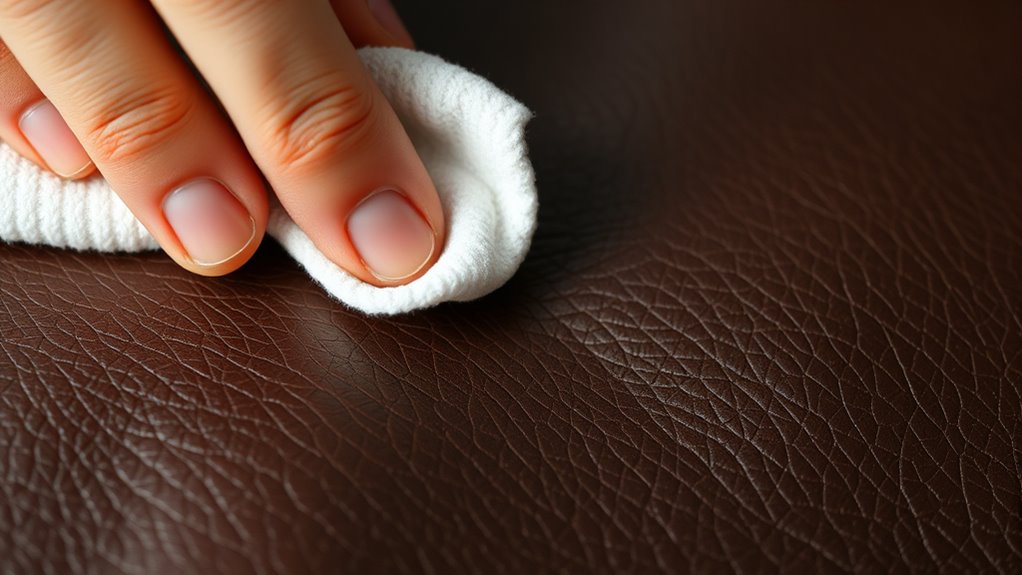
Have you ever wondered why ink stains are so tough to remove from leather? It’s because ink quickly seeps into leather’s porous surface, especially on open-pore types like suede. The chemical makeup of different inks—ballpoint, gel, or permanent—affects how deeply they embed into leather fibers.
Once the ink sets, it forms chemical bonds with the leather, making it even harder to get rid of. The leather’s finish and natural oils can trap ink, which adds to the cleaning challenge. Leather porosity plays a big role; more porous or untreated leathers let ink seep deeper, creating stubborn stains.
When ink penetrates leather, it becomes chemically bonded. That means you need special techniques to break those bonds and effectively remove the stain.
How Quickly Should You Act to Prevent Ink From Penetrating Leather?
You need to act immediately after ink hits the leather to stop it from soaking in further.
Blot the stain gently with a dry cloth within minutes, especially on open-pore leather, where ink can seep in almost instantly.
The faster you respond, the easier it is to remove the stain completely.
Immediate Blotting Is Crucial
How quickly ink penetrates leather depends on how fast you act. Immediate blotting is vital to prevent staining from setting in. When you notice the ink spill, grab a clean, dry cloth and blot with gentle pressure to absorb excess ink.
Quick action can make a big difference in removing the stain and caring for your leather. Rubbing or scrubbing early on can push ink further into the pores, making it harder to remove later.
Since leather porosity varies, acting swiftly is especially important with open-pore leathers that absorb ink faster. The longer the ink stays on the surface, the higher the risk of permanent staining.
A prompt response helps maintain the leather’s appearance and reduces the need for harsher cleaning methods later.
Speed Prevents Penetration
Timing is key when it comes to stopping ink from sinking into leather. You need to act fast—within the first few minutes—to blot and prevent it from penetrating.
The longer the ink stays on the surface, the more it seeps into the pores, making it harder to remove. For porous leathers like suede, ink can be absorbed almost instantly, so quick action is essential.
Use a clean, dry cloth to blot immediately and remove excess ink before it can go deeper. Quick, decisive blotting greatly reduces the amount of ink that sinks in, giving you a better chance to clean it up.
Act Quickly for Success
Acting within the first few minutes after ink hits leather is essential for preventing permanent stains. Quick action, like blotting the ink stain immediately, helps stop it from spreading and soaking deeper into the leather fibers.
The sooner you respond, the easier it is to remove the ink before it bonds tightly with the material. Delaying cleaning allows the ink to dry and harden, making removal much more difficult and increasing the risk of permanent damage.
If you act fast—within about five minutes—you maximize your chances of lifting the ink with minimal effort and damage. Remember, every second counts when trying to prevent ink from penetrating leather.
Quick, decisive action is your best defense against stubborn, lasting stains.
Test Your Cleaning Method on a Hidden Spot First
Before applying any cleaning solution to remove ink from your leather, it’s important to test it on a small, hidden spot first. This helps prevent damage or discoloration.
Choose an inconspicuous area, like underneath a flap or inside a seam. Apply a small amount of the cleaning method and wait 10-15 minutes to see if anything changes.
Check for staining, discoloration, or damage. If the leather looks fine, you can go ahead and clean. Use the table below as a guide:
| Leather Type | Test Result | Action |
|---|---|---|
| Aniline | No change | Proceed with cleaning |
| Pigmented | Slight discoloration | Try a gentler method |
| Suede | Damage | Avoid this cleaning method |
Doing a patch test helps reduce risks and ensures safe ink removal.
Simple Household Tips to Remove Ink From Leather Safely
You can remove ink from leather safely using simple household items and gentle techniques. Testing solutions on a hidden area first helps prevent damage.
Gentle Cleaning Techniques
When tackling ink stains on leather, starting with gentle cleaning techniques is essential to prevent further damage. Begin by using a soft cloth dampened with mild soap and water to carefully clean the area. This helps remove surface dirt and prepares the leather for stain removal.
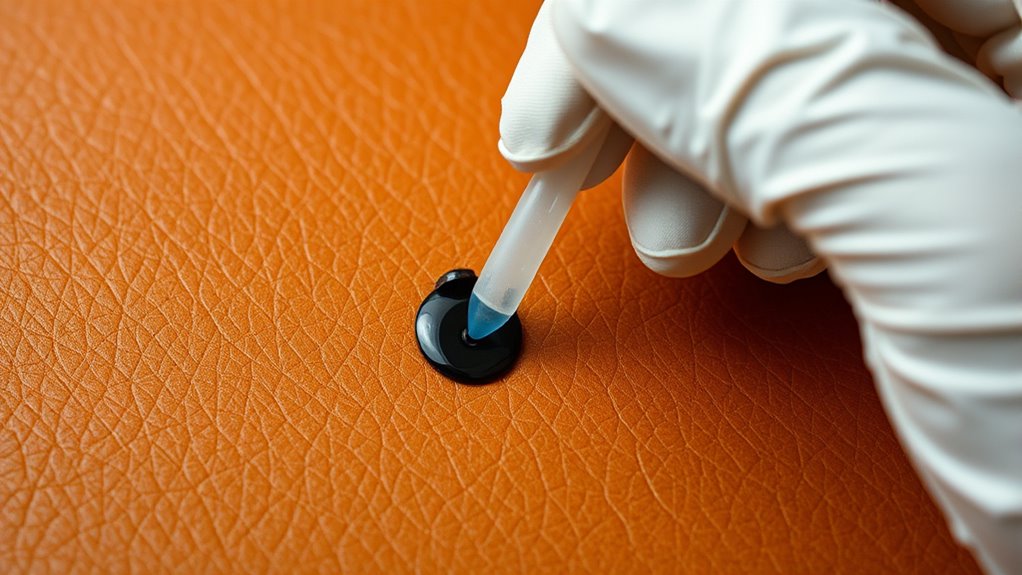
Before applying any cleaning solution, perform a spot test on a hidden area to guarantee it won’t harm the leather. To remove the ink, dab gently with a cotton swab or soft cloth—avoid rubbing, which can spread or embed the stain.
For dried ink, after applying rubbing alcohol or vinegar, gently scrub with a soft toothbrush. Always follow up with a leather conditioner to restore moisture and keep your leather soft and protected.
Safe Household Solutions
Are household solutions truly effective for removing ink from leather? Yes, with care. Rubbing alcohol or diluted white vinegar can lift ink stains when applied with a cotton swab or soft cloth.
Always perform a patch test on a hidden area to prevent damage. Applying a baking soda paste helps break down ink stains—spread it on the stain, let it sit, then gently scrub with a soft brush.
Hairspray can loosen ink, but spray it close to the stain and rinse thoroughly afterward. After treatment, use a leather cleaner to remove residue, then follow up with a leather conditioner to restore moisture and prevent cracking.
These simple household solutions can be safe and effective when used correctly.
How to Properly Apply Leather Conditioner After Cleaning
Applying leather conditioner correctly is key to restoring moisture and keeping the leather flexible after cleaning. Use a soft cloth to apply the conditioner in gentle, circular motions, making sure to spread it evenly over the cleaned area.
Use a small amount of conditioner to avoid over-saturating the leather, which can lead to stickiness or attract dirt. Let the conditioner sit for 15-30 minutes so it can soak in and restore moisture.
After the waiting time, buff the surface with a clean, dry cloth to restore the leather’s shine and smoothness. Regular conditioning is important because it helps prevent cracking, extends the leather’s lifespan, and keeps it looking great.
Why Let the Conditioner Soak In for Better Results
Allowing the leather conditioner to soak in for several minutes is a key step for better ink removal and overall leather restoration. This soak helps soften and loosen ink particles that are embedded in the leather fibers, making cleanup much easier.
When you give the conditioner time to absorb, it can better break down any residual ink and improve the cleaning process. Plus, it helps prevent over-wetting the leather surface, which reduces the risk of damage or stiffness.
During this soaking period, the conditioner also restores moisture and flexibility to the leather, leaving it smooth and supple. For the best results, keep these points in mind:
- The soak-in process boosts ink removal
- It loosens ink particles trapped in the fibers
- Restoring moisture helps prevent over-wetting
- It enhances the overall leather restoration process
Buff and Finish Your Leather to Restore Its Shine
Once you’ve cleaned and conditioned your leather, buffing it with a clean, dry cloth helps restore its natural shine and smoothness. Use gentle, circular motions to evenly distribute the leather conditioner and improve the finish.
Applying a leather polish or shine enhancer can give your item a glossy look, making it appear new again. Regular buffing also prevents dirt and oil buildup, which can dull the surface over time.
Let the conditioner or polish sit for a few minutes before buffing. This step helps achieve a polished, reflective surface and protects the leather, keeping it beautiful and durable.
When to Call a Professional for Tough Ink Stains
How do you know when it’s time to call in the professionals for tough ink stains on leather? If your stain is over 24 hours old or has set-in deeply penetrated ink, home remedies may no longer be effective.
Call in professionals if ink is over 24 hours old or deeply set in the leather.
For large or persistent stains that resist multiple cleaning attempts, professional cleaning is your best option. Special care is necessary for delicate leather or exotic leathers like python or crocodile, which can easily be damaged by improper treatments.
Consider calling for professional removal if the stain is deeply penetrated or set-in, it’s been over 24 hours since the stain appeared, the leather is vintage, delicate, or exotic, or home treatments haven’t worked after several attempts.
Professional ink removal ensures your leather’s integrity while effectively eliminating stubborn stains.
Frequently Asked Questions
What Is the Best Way to Get Ink off of Leather?
The best way to remove ink from leather is to gently dab the stain with a cotton swab dipped in rubbing alcohol or a leather-specific ink remover. Always test on an inconspicuous area first.
For stubborn spots, you can try applying diluted white vinegar and lightly scrubbing with a soft toothbrush. Just be gentle to avoid damaging the leather.
After cleaning, it’s a good idea to condition your leather to restore moisture and prevent any damage. Remember, avoid harsh scrubbing to protect the surface of your leather.
Does Dawn Dish Soap Remove Ink?
Think of Dawn as a gentle rain, washing away surface dirt but not the deep ink storm. It won’t effectively remove ink stains from leather, and using it might damage your cherished item.
Instead, you should reach for specialized solutions like rubbing alcohol or leather ink removers. Always test first on a hidden spot to prevent unwanted discoloration, ensuring your leather stays protected while you battle stubborn ink marks.
What Is Good to Remove Ink From Leather?
To remove ink from leather, start with rubbing alcohol or isopropyl alcohol. Gently dab it on the stain using a cotton swab.
You can also try a diluted white vinegar solution or a leather-specific cleaner made for ink removal. Just make sure to test any product on a hidden spot first.
Avoid scrubbing hard. Instead, gently dab to lift the ink without damaging your leather.
Is Ink Permanent on Leather?
Yes, ink can be permanent on leather, especially when it sinks deep into the pores, like a mark that’s etched in stone. Oil-based inks, such as ballpoint pen marks, tend to resist removal and can be stubborn stains that cling fiercely.
But don’t despair—prompt cleaning acts as a shield, preventing the ink from settling fully. With quick action, you can still fade the stubborn marks or even restore your leather’s original shine.
Conclusion
Now that you know how to tackle ink stains on leather, picture your favorite piece restored to its original shine, gleaming like a mirror reflecting your care.
With quick action and gentle steps, you breathe new life into your leather, turning a frustrating blot into a mere memory.
Treat it with patience and the right touch, and watch your leather item regain its smooth, polished charm.
Soon, it’ll be ready to be admired once more, thanks to your effort in removing ink from leather.