How Do You Remove Ink Stains?
Dealing with ink stains can be really frustrating, especially when you’re trying to keep your clothes and belongings looking fresh. Many people struggle with removing these stubborn marks, but don’t worry—you’re not alone. With a little patience and the right approach, you can tackle ink stains effectively.
To remove ink stains, act quickly by gently blotting the stain with a dry cloth or paper towel, avoiding rubbing to prevent spreading. Identify the ink type and fabric, then test a small, hidden area first.
Use household items like dish soap, baking soda, or vinegar for water-soluble inks, and apply solvents carefully if needed. Patience and proper tools are key to preventing damage—if you’d like to learn more tips, keep exploring.
Key Takeaways
- Act quickly and gently blot the stain with a dry cloth to absorb excess ink without spreading it.
- Identify the ink type and test a small, inconspicuous area before full treatment.
- Use household solutions like water, dish soap, or vinegar on water-soluble inks, applying carefully.
- For permanent or stubborn stains, apply appropriate solvents or professional stain removers, following safety instructions.
- Always blot instead of rubbing. Work from outside inward and be patient for the best results.
How to Act Quickly When Ink Stains Appear
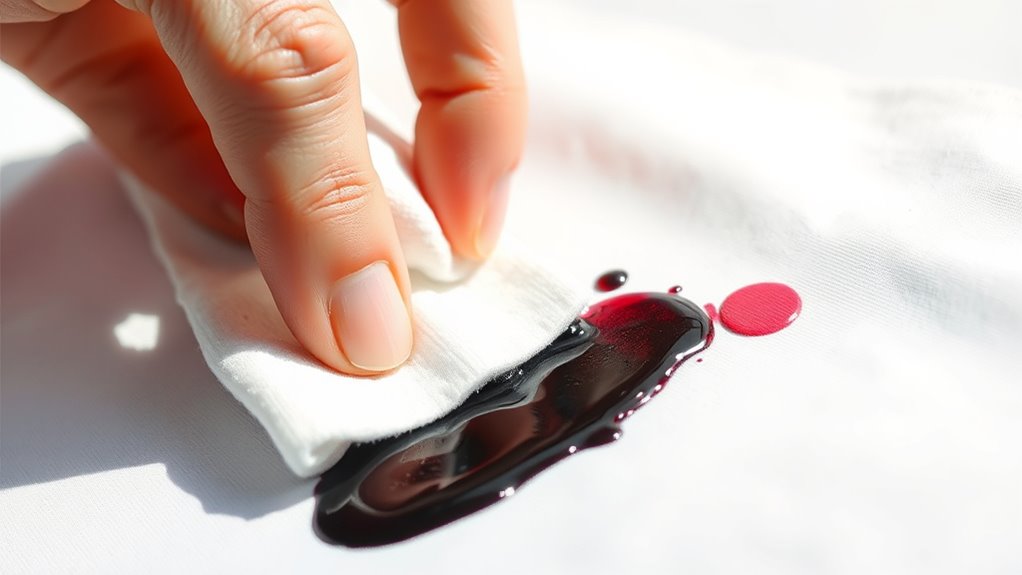
When you notice an ink stain, acting quickly is key to stopping it from setting permanently.
Start by gently blotting the stain with a dry cloth or paper towel to soak up excess wet ink. This helps prevent the ink from soaking deeper into the fabric.
If the ink is still wet, sprinkling salt on it can help absorb the ink before it dries and bonds with the fibers.
Avoid rubbing the stain, as this can spread the ink and make it harder to remove. Instead, dab gently to lift the wet ink without spreading it further.
The most important thing is to act fast, especially with water-soluble inks, to give yourself a better chance of removing the stain.
Always test your cleaning method on an inconspicuous spot first to avoid damaging the fabric.
Identify Your Ink Type and Fabric to Pick the Right Method
To choose the most effective method for removing an ink stain, you first need to identify the type of ink involved and the fabric you’re dealing with. Recognizing whether the stain is from water-soluble inks, like fountain pen or gel ink, or non-water-soluble inks, such as permanent markers, is essential for selecting the right stain removal methods.
Check the fabric care label to see if it can handle solvents or hot water treatments without damage. Before applying any solution, test it on a small, hidden area to prevent discoloration or fabric harm.
Knowing your fabric type—delicate, synthetic, or natural fiber—helps you choose appropriate cleaning agents and avoid further damage. Properly identifying your ink and fabric guarantees effective ink stain removal while maintaining fabric care.
Test Your Fabric for Colorfastness First
Before treating an ink stain, check your fabric care label for specific instructions.
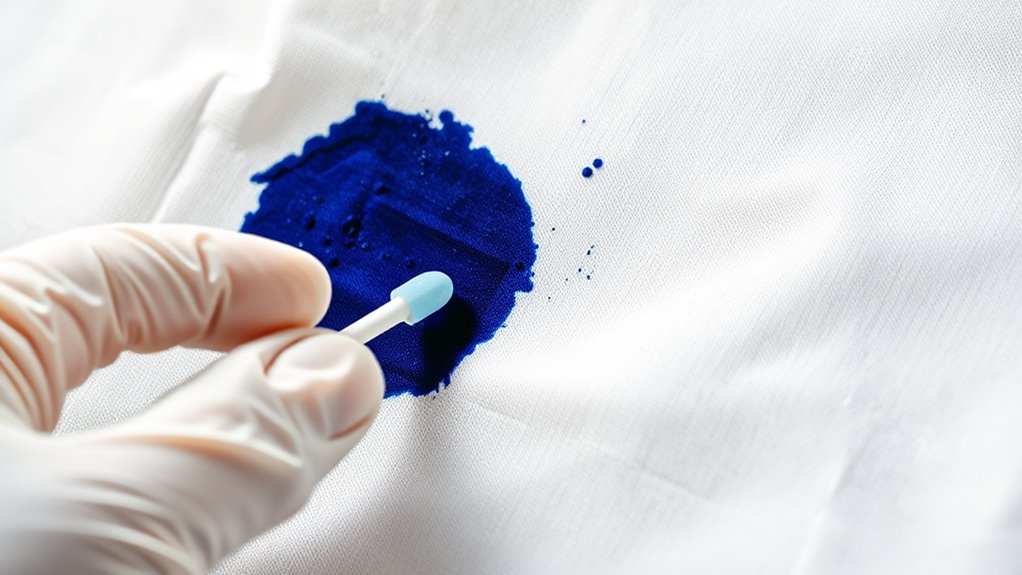
Perform a spot test on a hidden area using a white cloth or cotton swab with your chosen cleaner.
Wait five minutes to see if there’s any color change or damage.
If the fabric or dye reacts poorly, skip harsh solvents and consider professional cleaning instead.
Check Fabric Care Labels
Checking the fabric care label is an essential first step in removing ink stains, as it guides you on how to proceed without damaging your clothing. The label shows important info about how the fabric reacts to water, heat, and cleaning products.
Before applying stain removal products, do a colorfastness test on an inconspicuous area. Use a small amount of cleaning solution and a white cloth or cotton swab. This helps you avoid unwanted color bleeding or fabric damage.
Be especially cautious with delicate fabrics like silk or acetate. They often require gentle methods or professional cleaning. By understanding your fabric’s needs, you can guarantee safe and effective stain removal.
Your clothes stay vibrant, and you avoid costly mistakes.
Perform Spot Test
Performing a spot test is a crucial step to ensure your fabric can handle the stain removal process without damage. Before applying any stain remover, test the fabric for colorfastness by using a small, hidden area.
Apply a tiny amount of your cleaning solution to that spot and wait five minutes. Watch for any color change or fabric damage during that time. For delicate fabrics, choose a mild cleaner and extend the testing period to be extra safe.
Make sure to record the results so you can decide if your fabric is safe for stain removal. Never use harsh chemicals on the whole fabric until you’re sure the spot test shows no discoloration or damage.
This simple step helps prevent costly mistakes and keeps your fabric looking its best.
Household Tips for Removing Water-Soluble and Permanent Ink
Removing ink stains from household fabrics can be pretty simple if you act quickly, especially with water-soluble inks. The trick is to use common household items to lift the stain before it sets.
Act quickly with household items to easily lift water-soluble ink stains from fabrics.
Start by gently blotting the stain with a damp, clean cloth soaked in water and a small amount of dish soap. This helps lift water-soluble ink without spreading it further.
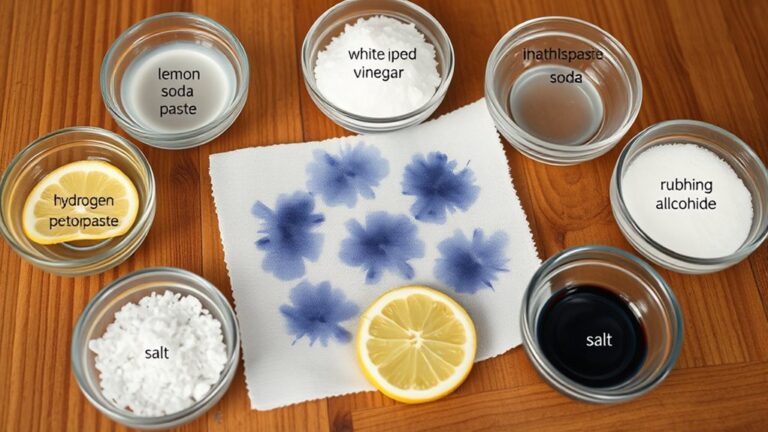
Next, you can apply a paste made of baking soda and water directly on the stain. Let it sit for a bit, then rinse thoroughly to remove the paste.
For stubborn stains, soak the fabric in a solution of equal parts white vinegar and water for about 30 minutes. This can help break down tougher ink marks.
Just remember to always test your stain remover on an inconspicuous area first. This way, you can prevent any discoloration or damage to your fabric.
When and How to Use Solvents and Professional Products Safely
Since solvents and professional stain removers can be effective but also risky if misused, it’s important to know when and how to use them safely. Before applying isopropyl alcohol or other solvents, always do a patch test on a hidden part of the fabric to check for colorfastness.
Use solvents carefully—make sure you’re in a well-ventilated area and avoid prolonged skin contact to prevent irritation. Follow the instructions on the product label closely, especially when using professional ink stain removers, to avoid damaging delicate fabrics.
When applying the solvent, dab it directly onto the stain using a cotton ball or cloth. Gently dab instead of rubbing, which helps prevent spreading the ink or pushing it deeper into the fabric. Afterward, rinse thoroughly with cold water to remove any leftover chemicals and protect your fabric.
Final Tips to Prevent and Handle Ink Stains Effectively
To prevent lasting ink stains, act quickly when spills happen and blot carefully to remove excess ink. Always test cleaning methods on a hidden area first to avoid damaging your fabric.
Use gentle techniques with proper tools like cold water and cotton swabs. Keeping stain removal supplies handy means you’re ready to handle ink stains effectively before they set.
Act Quickly After Spills
When you spill ink on fabric or surfaces, acting quickly can make all the difference in preventing a permanent stain. The sooner you respond, the easier it is to remove stains before they set.
Blot the excess ink immediately with a dry cloth or paper towel to prevent it from sinking deeper. Pre-treat the stain with salt or cold water to absorb or dilute the ink before it dries.
Remember, heat can cause ink to set permanently, so avoid hot water or heat sources. Fast action can save your fabric and keep your surfaces looking new.
- Stop the spill immediately to prevent spreading
- Blot gently without rubbing the ink deeper
- Pre-treat with cold water or salt promptly
- Act quickly to increase your chances of successful removal
Test Before Cleaning
Wondering how to avoid worsening an ink stain? Always test your cleaning method on an inconspicuous fabric area first.
This helps you check for colorfastness and prevents damaging the fabric or making the stain worse. Use a small amount of cleaner on a hidden spot and wait at least five minutes to see if it causes discoloration or damage.
It’s also essential to identify whether the ink is water-soluble or non-water-soluble so you can choose the safest, most effective cleaning technique.
Avoid applying hot water or harsh chemicals directly to the stain until you’re sure they won’t harm the fabric or set the stain deeper.
Testing first is a critical step that saves time and preserves your fabric while ensuring successful stain removal.
Use Proper Tools
Using the right tools is essential for effectively removing ink stains without causing further damage. When you’re working on stain removal, always use clean, white, absorbent materials like paper towels, rags, or cotton balls to blot and lift the ink gently.
Tools like cotton swabs or pads help you apply solvents such as rubbing alcohol or acetone precisely. This reduces the risk of disturbing the fabric or spreading the stain.
Keep multiple clean applicators on hand so you don’t reapply contaminated materials, which could make the stain worse. Always test any stain removal method on an inconspicuous area first to prevent damage or color bleeding.
Using proper tools helps you control the process, making stain removal safer and more effective. Be cautious, stay patient, and protect your fabric while using these simple, essential tools.
Frequently Asked Questions
How Do You Remove Dried Ink Stains?
To remove dried ink stains, start by testing your chosen solvent, like rubbing alcohol, on an inconspicuous area. Then, apply it directly to the stain with a cotton ball and let it sit for a few minutes.
Gently blot the area and repeat the process until the stain lifts. Rinse with cold water afterward. For stubborn stains, consider using specialized stain removers or consulting a professional cleaner.
Does Dawn Soap Remove Ink Stains?
Dawn soap is like a gentle hero fighting ink stains; it can help lighten water-based inks. You dampen the fabric, dab on a small amount of Dawn, and let it work its magic.
While it’s effective at breaking down oils and dyes, stubborn permanent ink may need a stronger ally, like rubbing alcohol. Rinse thoroughly with cold water afterward to keep your fabric looking fresh and clean.
What Will Take Ballpoint Pen Ink Out of Clothes?
To remove ballpoint pen ink from clothes, you should use rubbing alcohol or isopropyl alcohol. Test a small hidden area first to prevent damage.
Soak a cotton ball in alcohol and gently blot the stain without rubbing to avoid spreading it. Rinse with cold water afterward, then wash the garment as usual.
For stubborn stains, repeat the process or try a commercial ink stain remover for better results.
Does Vinegar Remove Ink?
You might hear “a little vinegar never hurts,” and it can help lighten water-based ink stains. Vinegar, especially white vinegar, may reduce ink visibility if you soak the fabric for about 30 minutes.
Just remember, it works best on water-based ink and less on permanent or oil-based stains. Always test on a hidden spot first to avoid discoloration.
If it doesn’t work, stronger solvents like alcohol might be needed.
Conclusion
Now that you know how to tackle ink stains, you’re armed with the ultimate stain-fighting toolkit—your secret weapon against stubborn marks!
Act quickly, test first, and choose the right method, and you’ll conquer ink stains like a superhero.
Remember, with patience and the right approach, you can turn what seems like an impossible stain into a faint memory.
Your fabric’s future is safe in your hands. Nothing can stand in your way when you use these ink stain removal tips!