Do Squids Have Ink?
Ever wonder how some marine creatures manage to escape predators in a flash? If you’re curious about squids and their clever tricks, you’re not alone. Many people struggle with understanding how these underwater animals defend themselves.
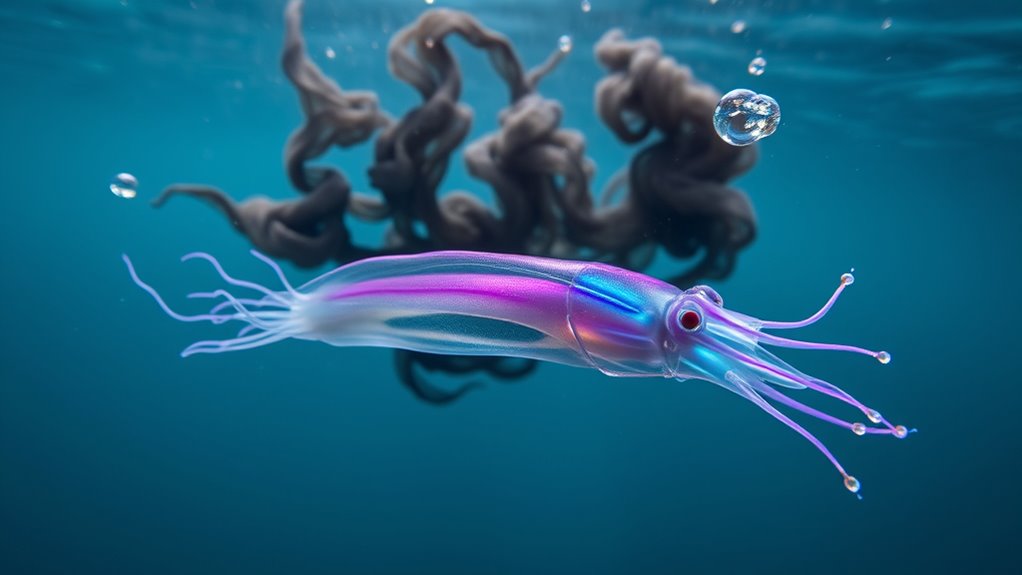
Yes, squids have an ink sac that stores ink they use for defense. When threatened, they quickly release a dark cloud of ink into the water, creating a smokescreen to escape predators.
The ink contains melanin and other chemicals that confuse enemies and disrupt their senses. Not all squids can produce ink, but many species rely on this clever trick.
If you’re curious about how they make and use their ink, there’s plenty more to uncover.
Key Takeaways
– Yes, squids have an ink sac that stores ink used for defense and camouflage.
They release ink through a siphon to create a cloud or plume to escape predators.
Squid ink contains melanin, enzymes, amino acids, and particles, which give it its dark color and irritant properties.
Ink production varies among cephalopod species, and it’s mainly used for escape and confusing predators.
Some squid species don’t have ink sacs at all, showing that ink production isn’t the same across all squids.
Do Squids Have Ink? An Overview
Many people wonder if squids have ink, and the answer is yes. Squid ink is an important defense tool, helping them escape predators.
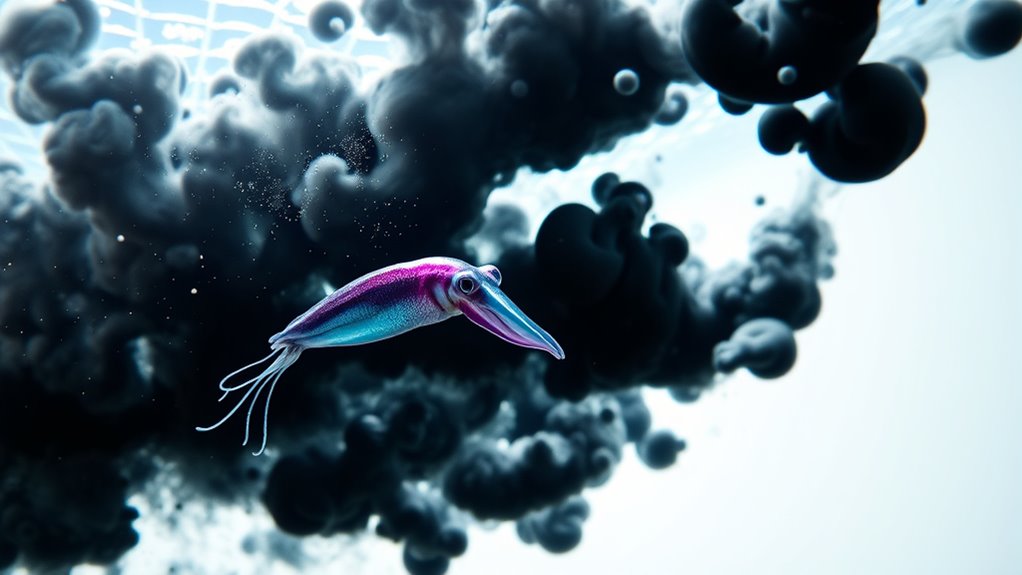
Stored in an ink sac inside their body, this dark, bluish-black substance is released through a siphon when they feel threatened. The ink cloud blocks the predator’s view, giving the squid a chance to escape.
Stored in an ink sac, the dark substance is released to create a cloud that helps squids escape predators.
The ink contains melanin, enzymes like tyrosinase, and small amino acids, which give it its distinctive color. Different squid species vary in how much ink they produce and the shade of their ink, but all use it mainly for defense.
This clever adaptation helps squids stay safe in their underwater world.
What Is Squid Ink Made Of? Composition and Chemicals
Squid ink is a complex mixture of chemicals that gives it its distinctive dark color and defensive properties. Its main pigment, melanin, provides the deep black hue.
The ink also contains enzymes like tyrosinase, which irritate predator eyes and disrupt their sensory systems. Small amino acids such as taurine, aspartic acid, glutamic acid, alanine, and lysine are present, contributing to the ink’s chemical makeup.
Metals like iron and other trace elements are also found, increasing its density and coloration. Additionally, the ink forms a suspension of particles about 80–150 nanometers in size, giving it a cloudy appearance.
All these chemicals work together to create the ink’s unique properties, making it effective for defense and camouflage.
How Do Squids Make and Eject Ink? The Inking Process
When threatened, squids quickly activate their ink-making process by contracting muscles around a specialized organ called the ink sac. This action forces ink from the sacs into the water through the siphon, a tube-like structure that directs the ejection.
The ink is expelled as a cloud or plume, often mixed with mucus to create a thick, dark suspension that obscures the predator’s view. The rapid muscle contractions ensure a swift, targeted release of ink.
Ink forms a dark, thick cloud with mucus, obscuring predators and aiding quick escapes through rapid muscle contractions.
This creates a distraction that helps the squid escape. The process involves the coordinated release of ink from the sacs and its propulsion through the siphon.
Being able to produce and eject ink efficiently is crucial for the squid’s defense. It helps them evade danger in their environment quickly and effectively.
Why Do Squids Use Ink as a Defense? Understanding Its Purpose
When a predator gets too close, you’ll see squids release ink to create a cloud that distracts and confuses them. This helps buy the squid some time to escape.
The ink also blocks the predator’s view, making it harder for them to catch the squid. Plus, it can irritate their senses with chemicals like tyrosinase.
Distraction and Confusion
In danger, squids release ink to create a dark cloud that confuses predators and helps them escape. This ink acts as a distraction, drawing attention away from the squid itself.
The ink can even mimic tentacles or other sea creatures, making the confusion even greater. When expelled through their siphon, the dense mixture spreads quickly, forming a smokescreen.
This cloud blocks the predator’s view and makes it hard to see the real squid. The ink’s rapid spread and mimicry help sharks and other predators stay confused.
Sensory Irritation Effects
Squids use their ink not just to create a visual distraction but also to interfere with predators’ senses. The ink contains chemicals like tyrosinase that irritate and temporarily deactivate predators’ chemosensory systems.
This chemical disruption makes it harder for predators to track prey or find the squid after the ink is released. The ink overwhelms scent receptors, especially in sharks, which makes it tougher for them to detect or pursue the squid.
The irritant properties cause discomfort and disorientation, helping the squid escape. This chemical defense works by impairing sensory perception, increasing the squid’s chances of survival.
| Ink Composition | Chemical Effect | Predator Response |
|---|---|---|
| Tyrosinase | Chemosensory irritation | Disorientation |
| Other chemicals | Overwhelm scent receptors | Reduced tracking ability |
| Disrupts senses | Impairs predator detection | Increased escape chances |
Escape and Evade
Squids rely on their ink not just to distract predators visually but also to create quick escape routes. When threatened, they eject ink from their ink sac through a siphon, forming a cloud that blocks their escape path.
This ink cloud confuses predators by disrupting their senses, giving the squid a chance to slip away. They also release pseudomorphs—ink-mucus decoys that mimic their shape—and contain chemicals like tyrosinase, which can irritate predator chemosenses.
These strategies make it harder for predators to track or catch the squid, boosting their chances of survival. Using ink as a defense is especially important since squids lack shells and rely on rapid escape to avoid danger.
What Shapes Do Squid Ink Clouds Take? Forms and Their Functions
When a squid releases ink to escape predators, the cloud can take different shapes that serve various purposes. These ink forms include diffuse puffs, elongated ropes, and dense clouds.
Diffuse puffs act like quick smokescreens, hiding the squid’s position from predators. Ink ropes are thin, extended strands that help create barriers or let the squid hide among the ink.
Sometimes, squids produce pseudomorphs—ink shapes that look like the squid’s body or tentacles—to confuse predators by mimicking a decoy. Large, spreading ink clouds serve as visual distractions, giving the squid a better chance to escape.
The shape and behavior of these ink clouds are carefully tuned to create confusion and boost the squid’s chances of survival during an attack.
How Do Inking Strategies Vary Among Squid and Octopus Species?
Different species of squids and octopuses have developed unique inking strategies to defend themselves from predators. Some, like *Sepioteuthis lessoniana* and *Loligo* spp., produce ink in different colors—from bluish-black to reddish-brown—and vary the amount they release.
Octopuses such as *Octopus vulgaris* release dense ink clouds with pseudomorphs that mimic their shape, while others like *Amphioctopus* spp. produce smaller, more diffuse ink clouds.
Larger ink clouds and ink ropes are used for quick escapes, while dense clouds with shape-mimicking pseudomorphs help confuse predators. Smaller, diffuse ink clouds serve as distractions.
Some species combine ink with mucus or luminous variants for added effect, triggered by specific threats or environmental cues.
These differences show how each species customizes its inking strategy to improve its chances of survival.
Can Ink Confuse Predators and Help Squids Escape? Camouflage and Distraction
The clever use of ink helps squids escape predators by creating a confusing visual barrier. When threatened, they release a cloud of ink that blocks your view and makes it hard to see.
This ink can be shaped into decoys or mimic other sea creatures, adding to the confusion. It also contains chemicals like tyrosinase that irritate your eyes and temporarily impair your senses.
The dark color and quick spread of the ink make it a strong form of camouflage and distraction. Some squids even produce glowing ink, disorienting you with bright shapes.
This mix of camouflage and distraction helps squids escape threats fast and effectively.
| Effect of Ink on Predators | How Squids Use Ink Effectively |
|---|---|
| Obscures vision | Creates visual barriers |
| Confuses decoys | Mimics other sea creatures |
| Irritates eyes | Impairs predator senses |
| Disorients with glow | Luminous ink disorients |
| Rapid spread | Amplifies camouflage |
Are There Different Types of Ink in Cephalopods? Species-Specific Variations
Cephalopods produce a variety of inks that differ quite a bit among species, reflecting their unique adaptations and habitats. You’ll notice differences in color, chemical makeup, and physical traits across different types.
For example, cuttlefish make sepia ink, which has a reddish-brown color. Squids usually produce bluish-black ink. Some species, like nautiluses, don’t produce ink at all.
Variations in melanin and other compounds influence how dense the ink is and what hue it has. These differences also affect properties like particle size, density, and whether the ink can glow in the dark.
These species-specific differences help each cephalopod improve its defense strategies based on its environment. Whether it’s the rich, reddish-brown ink of a cuttlefish or the dark, bluish-black ink of a squid, these variations show how ink production is tailored to each species’ needs.
What Is the Ecological Role of Squid Ink in Marine Environments?
Squid ink plays a crucial role in their survival by acting as both a visual and chemical defense. When threatened, they release ink to create a cloud that confuses predators and helps them escape.
This ink cloud disrupts a predator’s sense of smell and vision, making it harder for them to track or recognize the squid. It’s a clever way for squids to buy time and avoid being eaten.
Beyond protecting themselves, squid ink influences predator-prey interactions across marine ecosystems. It can also serve as an alarm to other squids, signaling danger and warning them to stay alert.
Additionally, squid ink contributes to nutrient cycling in the ocean. It releases organic material that supports marine life and helps maintain the balance of ecosystems.
How Has Squid Ink Evolved? Insights From the Fossil Record
Fossil evidence shows that ink production in cephalopods dates back over 330 million years, well before the age of dinosaurs. This ancient ink is preserved as fossilized ink, giving us clues about how it evolved.
The structure and chemical makeup of ink sacs have remained surprisingly consistent throughout cephalopod history, highlighting their importance. Early cephalopods already had ink sacs capable of producing ink similar to what modern squids use today.
This suggests that ink evolved early on as a vital defense mechanism. The durability of fossilized ink sacs shows how crucial ink was for survival over millions of years.
Understanding this long history helps explain why ink remains such an essential feature in cephalopods. The fossil record proves that ink sacs have been a constant part of their evolution for hundreds of millions of years.
How Do Humans Use Squid Ink? From Art to Food and Medicine
Humans have long recognized the value of squid ink beyond its natural role in cephalopod defense. Historically, it served as a natural dye and writing ink, inspiring the term “sepia.”
Humans have treasured squid ink as a natural dye and writing ink, inspiring the term “sepia.”
Today, you’ll find squid ink used in a variety of dishes, from pasta to Mediterranean specialties like calamares en tinta. Commercially, the ink is extracted from dead squid’s ink sacs, prized for its rich pigment and flavor.
Scientific studies reveal that compounds in squid ink may have medicinal benefits, including anti-tumor, anti-cancer, and anti-viral properties.
In medicine, enzymes derived from squid ink are being investigated for their ability to dilate blood vessels, showing promise for future therapeutic applications.
Squid ink’s uses span from art and cuisine to potential health innovations.
Do All Squids Have Ink? Clarifying Species Differences
Not all squids can produce ink. For example, the colossal squid doesn’t have an ink sac at all.
Most common squids, like those in the Loligo genus, have well-developed ink sacs for defense. But some deep-sea species have lost this ability over time.
Whether a squid can produce ink depends on its environment and survival strategies.
Species Without Ink Sacs
While many people assume all squids can squirt ink as a defense mechanism, this isn’t true for every species. Some squids, especially deep-sea ones in the family Cranchiidae, lack ink sacs entirely. Others, like certain bioluminescent species, don’t have the anatomical structures needed for ink production.
Typically, ink sacs are found in shallow-water and commercially important squids. But many lesser-known or deep-sea species don’t have them. This suggests that ink-based defense isn’t essential for all squids.
Instead, they’ve developed other strategies to survive, such as bioluminescence, rapid escape, camouflage, sharp spines, and size advantage. These adaptations help them avoid predators without relying on ink sacs.
Ink Production Variability
Have you ever wondered if all squids can produce ink? Not every species has the same ink production abilities. Some, like the common market squid (*Doryteuthis opalescens*), have well-developed ink sacs for secretion.
Others, especially deep-sea or pelagic species, might lack ink sacs altogether. The presence and size of these sacs often depend on their habitat and how much they face predators.
Juvenile or small squids might produce less ink or none at all. This variability reflects differences in their evolution rather than a universal trait.
Frequently Asked Questions
Do All Squids Have Ink?
Not all squids have ink. While many species, like the European squid, have ink sacs for defense, others, especially deep-sea or primitive squids, don’t have this ability.
Having ink is an evolutionary trait that not all squids share. So, if you see a squid, don’t automatically assume it can produce ink—you might be looking at a species without that defense mechanism.
Is Squid Ink Harmful to Humans?
Squid ink isn’t harmful to humans when used in cooking or consumed in typical amounts. You might experience allergies or skin irritation if you touch raw ink directly, but ingesting it is generally safe.
The bioactive compounds are not toxic, and proper processing makes it safe for culinary use. Just avoid contact with eyes or open wounds, and enjoy its flavor and color in your dishes without worry.
Can a Squid Feel Pain?
Yes, squids can feel pain. They have a complex nervous system and sensory receptors, like other cephalopods, which help them detect harmful stimuli.
When their tissues are damaged, they respond with withdrawal and protective behaviors. This indicates they experience discomfort or pain.
Because of this, some places like the European Union have laws protecting them. These laws recognize their sentience and the need for humane treatment.
Is Octopus Ink Smelly?
Yes, octopus ink is smelly. When you encounter it, you’ll notice a strong, often pungent odor caused by compounds like amino acids, enzymes, and melanin.
The scent can be earthy or metallic, and it tends to linger, especially if used in cooking or exposed to air for a while.
The smell varies depending on freshness and preparation, but overall, it’s quite a potent aroma that leaves an impression.
Conclusion
So, yes, squids do have ink—nature’s secret inkblot, ready to paint their escape in the vast ocean’s canvas. This dark cloud acts as a fleeting ghost, cloaking their retreat in mystery.
As you explore their ink’s purpose and evolution, remember it’s more than just a defense. It’s a living brushstroke in the grand masterpiece of marine life.
In the ocean’s symphony, squid ink is both shield and signature, crafted by nature’s artist.