7 Steps to Do You Get Ink Out of Fabric
Many people struggle with removing ink stains from their favorite fabrics, and it can be really frustrating. You’re not alone—getting ink out can seem tricky, but with the right steps, you can save your clothes and keep them looking fresh.
To remove ink from fabric, start by inspecting the fabric’s care label and gathering supplies like rubbing alcohol or hand sanitizer. Gently blot the stain to lift excess ink without spreading it.
Apply the cleaning solution, allowing it to loosen the ink, then rinse thoroughly with cold water. Wash the fabric using suitable detergent and water temperature.
If the stain remains, repeat the process until it’s gone. For detailed steps, you’ll find more helpful tips below.
Key Takeaways
- Gently blot the ink stain with a clean cloth to absorb as much ink as possible. Be careful not to spread the stain further.
- Next, try applying a cleaning solution like rubbing alcohol or hand sanitizer directly on the stain. Test it on a small, hidden area first to make sure it won’t damage the fabric.
- Let the solution sit for a little while. This helps loosen the ink fibers so they can be easier to remove.
- After that, blot the stain again to lift the ink. Once you’ve done that, rinse the fabric thoroughly with cold water.
- Check if the stain has disappeared before you dry the fabric. If it’s still there, re-treat the area and repeat the process until the ink is gone.
Gather Supplies and Assess the Fabric and Stain
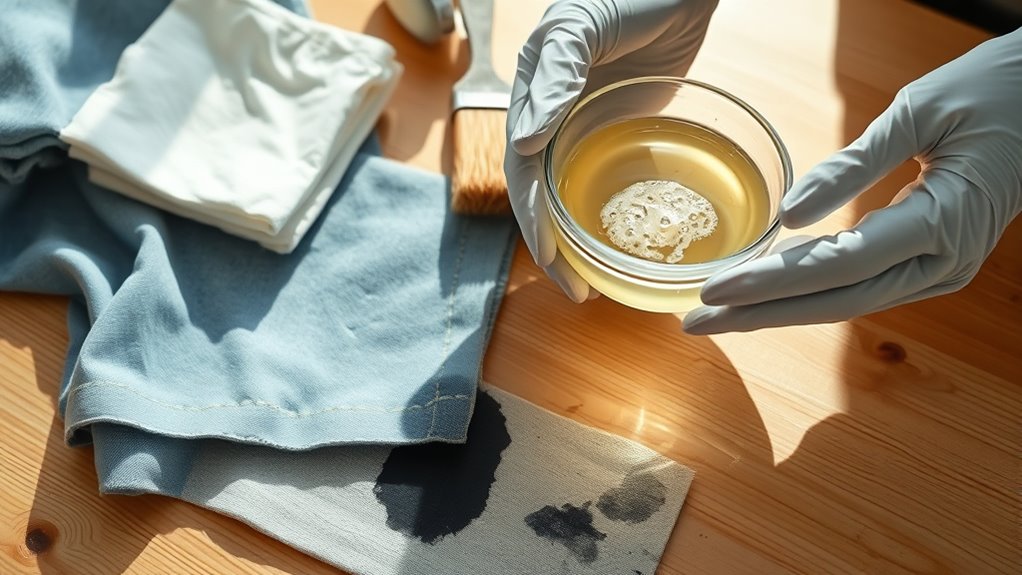
Before you start removing ink from fabric, it’s important to gather the right supplies and assess the fabric and stain carefully. Begin by inspecting the fabric to identify its type and check for any care labels or specific cleaning instructions. This helps you pick the safest cleaning method.
Next, determine how old and severe the stain is. This will guide your approach—whether you need to treat just the spot or wash the entire item. Gather essential supplies like rubbing alcohol, hand sanitizer, cotton balls, or clean cloths.
Before applying any solution, test it on a small, hidden area of the fabric. This helps you avoid discoloration or damage. Finally, evaluate the size and location of the stain so you can plan your removal strategy effectively, making sure to use the right supplies for your fabric type and stain severity.
Blot the Ink to Remove Excess and Prevent Spreading
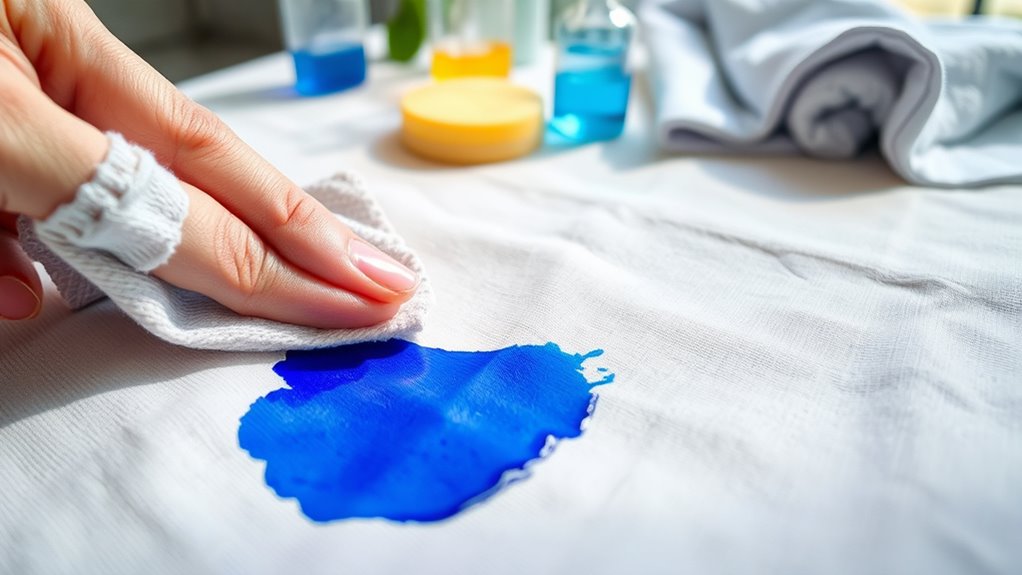
Start by gently blotting the ink stain with a clean cloth or paper towel to soak up excess ink. Avoid rubbing, as it can push the ink deeper into the fabric. Use a light blotting motion instead.
Act quickly and apply gentle pressure to lift the ink without damaging the fabric. This helps prevent the stain from spreading or setting further.
Use a Clean Cloth
Ever wonder how to keep a small ink spill from turning into a bigger mess? The trick is using a clean cloth to gently blot the excess ink.
Take a fresh section of the cloth with each blot to avoid reapplying ink to the fabric. Press lightly and steer clear of rubbing, which can push ink deeper into the fibers and make the stain worse.
Your goal is to lift the excess ink without damaging the fabric. Keep blotting until no more ink transfers to the cloth, showing you’ve removed as much ink as possible.
Using a clean cloth helps prevent spreading and sets the stage for effective stain removal. Patience and gentle blotting are your best tools to keep the stain manageable.
Avoid Rubbing Stains
Have you thought about how rubbing the stain can actually make things worse? When you’re removing a stain, try not to rub the ink, because it can push the ink deeper into the fabric fibers.
Instead, gently blot the stain with a clean cloth or paper towel to lift the excess ink. Use a light, dabbing motion to absorb the ink carefully, which helps prevent smudging or making the stain bigger.
Applying too much pressure could damage delicate fabrics or cause the ink to set permanently. Always work from the outside of the stain inward, so the ink stays contained and doesn’t spread to clean areas.
Rubbing or scrubbing might seem tempting, but it often makes the stain worse. Blotting gently is the best way to remove stains without spreading or setting the ink further.
Blot Gently and Quickly
When you notice ink on your fabric, acting quickly can make all the difference. Blot the ink stain immediately with a clean cloth or paper towel to absorb excess ink and prevent it from spreading further into the fabric.
Use gentle dabbing motions rather than rubbing, as rubbing can push the ink deeper into the fibers and cause more damage. Work from the outside of the stain inward to contain the ink and minimize the affected area.
Quickly removing excess ink reduces the chances of a set-in stain, making the next steps more effective. Always blot gently to preserve the fabric’s integrity, especially with delicate materials.
Speed and gentle pressure are key to preventing the ink from setting and causing more damage.
Apply Rubbing Alcohol, Hand Sanitizer, or an Alternative Solution
Choosing the right solution is key to effectively removing ink stains. You should apply rubbing alcohol or hand sanitizer directly to the stain, using a blotting method to prevent spreading.
Let the solution sit for a few minutes before rinsing or washing. This helps maximize stain removal and makes the process more effective.
Choosing the Right Solution
Selecting the right solution is key to removing ink stains effectively without damaging your fabric. Rubbing alcohol is a popular choice because its solvent properties dissolve ink dyes quickly, making it very effective.
Hand sanitizer, which contains alcohol, is a convenient alternative and works just as well to break down ink stains on fabric. When choosing a solution, think about your fabric’s sensitivity—most washable fabrics handle alcohol-based methods, but it’s best to test on a small, hidden area first.
Alternatives like vinegar or acetone-based nail polish remover are options, but they carry a higher risk of damaging your fabric. Always pick a solution that’s compatible with your fabric, and remember to dab gently instead of rubbing. This helps prevent the stain from spreading or setting further.
Application Techniques for Stains
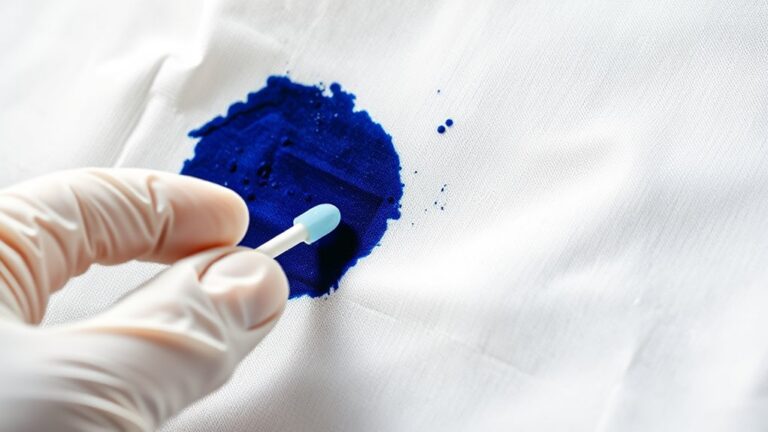
Have you ever wondered how to effectively apply rubbing alcohol or hand sanitizer to ink stains? When removing ink, proper application techniques are key. Gently saturate the stain with rubbing alcohol or sanitizer, making sure the fabric is thoroughly covered.
Use a clean, white cloth or cotton swab to dab and lift the ink. Avoid vigorous rubbing, as it could spread or embed the stain further. Allow the solution to sit for a few minutes to loosen the ink before blotting or gently scraping off excess residue.
If the stain remains, reapply and repeat the process until it starts to fade. Always test the solution on a hidden fabric area first to prevent damage or color bleeding. Correct application techniques make all the difference in removing ink effectively.
Let the Solution Loosen the Ink and Inspect the Stain
Before applying any cleaning solution, it’s important to test it on a small, hidden area of the fabric first. This helps prevent damage or color bleeding.
Once you’re sure it’s safe, apply your chosen solution—like rubbing alcohol or hand sanitizer—directly to the ink stains.
Let it sit for a few minutes so it can loosen the ink fibers from the fabric.
Gently check the stain to see if the ink looks lighter or less embedded.
If needed, reapply the solution and inspect again. This ensures the ink is ready for the next step.
This careful observation helps prevent over-treatment and makes the removal more effective.
Rinse the Fabric and Check for Residual Ink
After applying the cleaning solution, rinse the fabric thoroughly with cold water to wash away any remaining ink and residue. This step helps remove residual ink and makes sure no cleaning agents are left behind, which could damage the fabric or cause the stain to set again.
Carefully check the fabric closely for any signs of residual ink before moving on. Use a clean white cloth or paper towel to gently blot the area and see if ink transfer still occurs.
Make sure all cleaning solutions are rinsed out completely, as lingering agents can cause further damage or re-staining. Confirm that no visible ink remains; drying too soon can make the stain permanent.
Proper rinsing and inspection are vital for successful ink removal.
Wash With Appropriate Detergent and Water Temperature
Using the right detergent and water temperature is key to effectively removing ink stains. Start with a high-quality, enzyme-based laundry detergent that can break down ink more easily.
Next, pick the water temperature carefully. Use cold or warm water since hot water can set ink stains permanently. Always check the fabric care label to avoid damaging your clothes.
Pre-treat the stain directly with detergent before washing for better results. Make sure the stain is completely gone before drying, because heat from the dryer can set the ink deeper into the fabric.
Washing properly with the correct detergent and water temperature helps lift ink stains and prevents them from becoming permanent.
Repeat if the Ink Stain Is Still Visible
If the stain remains visible after your initial treatment, reapplying the stain remover can significantly boost your chances of complete removal.
Reapplication helps loosen remaining ink particles, especially in stubborn or dried ink stains.
Allow enough time between treatments for the fabric to recover and for the stain remover to work effectively.
Repeat the treatment if needed, as consistent re-treatment along with proper washing techniques can improve removal success from 50% to over 90%.
Always check the stain after each application before drying, since heat can set any remaining ink, making it impossible to remove later.
Patience and multiple treatments increase the chances of fully removing dried ink stains and leaving your fabric clean.
Frequently Asked Questions
What Will Remove Ink From Fabric?
To remove ink from fabric, you should use rubbing alcohol or hand sanitizer with alcohol. Apply it directly to the stain and let it sit for a few minutes to dissolve the ink.
Gently blot or scrub with a clean cloth, then wash the fabric thoroughly. Repeating this process and testing on a hidden area helps prevent damage and guarantees you get the stain out effectively.
Does Dawn Soap Remove Ink?
Dawn soap can help loosen some ink stains because of its grease-cutting properties, but it isn’t the most effective solution. You might see some improvement if you apply it directly and let it sit.
For better results, combine it with alcohol-based solutions like rubbing alcohol or hand sanitizer. Always test Dawn on a hidden fabric area first to avoid discoloration or damage.
Expect to use additional stain removers for complete ink removal.
What Should You Not Do When Removing Ink?
When removing ink, don’t rub or scrub the stain aggressively, as this can spread the ink and push it deeper into the fabric.
Avoid using bleach or harsh chemicals that aren’t suitable for your fabric, and don’t dry the garment before the stain is fully removed. Heat can set the ink permanently.
Also, don’t apply too much stain remover at once or use outdated methods that might damage delicate fabrics.
Does Rubbing Alcohol Remove Ink?
Yes, rubbing alcohol can remove ink from fabric. It dissolves ink pigments effectively, especially when the stain is fresh.
You should dab, not rub, the alcohol onto the stain to avoid spreading it further. Make sure to test on a small, hidden area first, as it may cause color bleeding or damage delicate fabrics.
After treatment, wash the fabric thoroughly to remove any residual alcohol and ink residues.
Conclusion
By following these steps, you’re essentially wielding a magic wand to erase ink stains from your fabric. Think of your efforts as a skilled artist’s brushstrokes—each move gradually restoring your fabric’s original beauty.
With patience and the right tools, you can turn a stubborn ink blot into just a distant memory. Remember, persistence is key; soon enough, your fabric will shine like new, free of unwanted ink marks.
Getting ink out of fabric isn’t always easy, but with these steps, you’re well on your way to success.