10 Steps to Do Ink Removal From Carpet
Dealing with ink stains on your carpet can be incredibly frustrating. You’re not alone—many people struggle to find effective ways to get rid of those stubborn marks. Luckily, with a little patience and the right approach, you can restore your carpet’s appearance.
To remove ink from your carpet, start by blotting the excess ink immediately with a clean, dry cloth to prevent it from setting.
Identify the type of ink and surface, then test your cleaner on a hidden spot first.
Gently blot the stain from outside in with a suitable solution, rinse with cold water, and pat dry.
Repeat if necessary or consider deep cleaning for stubborn stains.
Keep watching to learn more tips for effective ink removal.
Key Takeaways
- Blot excess ink immediately with a clean, dry cloth to prevent spreading and deep penetration.
- Test cleaning solutions on a hidden area first to make sure they won’t damage your carpet.
- Use cold water and gentle blotting to lift the ink stain. Be careful not to rub, as that can make things worse.
- Apply the right stain remover, like enzyme or oxygen-based cleaners, depending on the type of ink.
- Rinse the area thoroughly with cold water and blot dry. Repeat the process if the stain is stubborn.
Blot Excess Ink Immediately to Prevent Setting
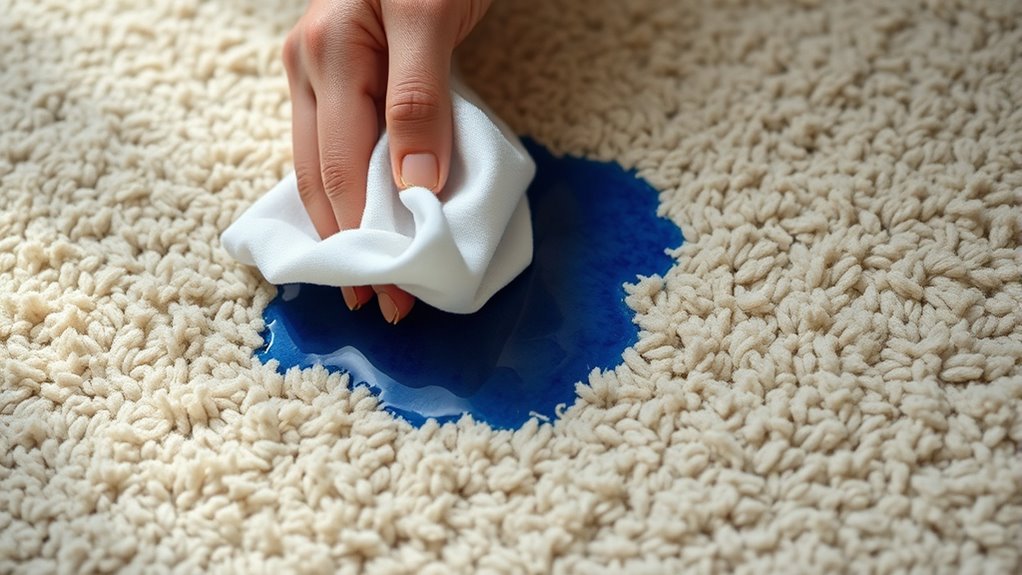
To prevent the ink from setting deeper into your carpet fibers, act quickly by blotting the stain immediately. Grab a clean, dry white cloth or paper towel and gently blot the ink to absorb as much as possible.
Use light, dabbing motions rather than rubbing, which can spread the ink further into the fibers. Apply gentle pressure to avoid pushing the ink deeper.
Dab gently with light pressure to prevent ink from spreading or penetrating deeper into the fibers.
Keep blotting until no more ink transfers to your cloth, ensuring you remove most of the stain upfront. The longer the ink sits, the more it penetrates and becomes harder to remove.
Quick action is essential, so don’t wait—blot the excess ink swiftly to prevent it from setting. This will make subsequent cleaning much easier.
Understand the Types of Ink Stains and Surfaces
Recognizing the type of ink stain and the surface it’s on can really change how you go about cleaning it. Different ink stains, like water-soluble, oil-based, or permanent inks, need specific removal techniques.
Water-soluble ink stains, such as washable markers, are easier to handle with water-based solutions and blotting. Oil-based inks, like ballpoint pens, usually require solvents like rubbing alcohol or hairspray to break down the stain.
Permanent markers and gel inks are tougher and might need stronger, sometimes professional, cleaning methods. The surface type also matters; natural fibers react differently than synthetic carpets.
Knowing these differences helps you pick the best cleaning method, which can reduce damage and boost your chances of completely removing the ink stain.
Choose the Right Cleaning Solution for Your Ink Type
To choose the right cleaning solution, first identify your ink type accurately.
Then, select a formula tailored to that ink—enzyme-based for water-soluble stains or oxygen-based for ballpoint ink, for example.
Always test your chosen solution in a hidden area to prevent damage before applying it to the stain.
Ink Type Identification
Identifying the ink type on your carpet is a crucial first step before trying to clean the stain. Knowing whether the ink is water-soluble, oil-based, or permanent helps you choose the most effective method.
Water-soluble inks, like washable markers, are the easiest to clean with water and simple blotting. Oil-based inks, such as ballpoint pens, need solvents like rubbing alcohol or lacquer spray to break down the stain.
Permanent markers and gel pens often require stronger solutions, like rubbing alcohol or professional stain removers. Before applying any cleaner, test it on a small, hidden area of your carpet to prevent damage and make sure it’s compatible.
Correctly identifying your ink type ensures you pick the right stain removal method for the best results.
Suitable Cleaning Formulas
Choosing the right cleaning formula depends on the type of ink stain you’re dealing with. For organic or water-soluble ink stains, enzyme-based cleaners are effective. Oxygen-based products like Oxy Spot & Pre-treat work best for ballpoint pen ink.
Rubbing alcohol is suitable for crayon and some permanent ink stains. Just be sure to apply it carefully with a cloth. Water-based inks, such as washable markers, respond well to a mixture of dishwashing liquid and water.
Always spot test your stain remover on an inconspicuous area first. This helps prevent damage to your carpet before you do the full application. Here’s a quick reference:
| Ink Type | Recommended Stain Remover |
|---|---|
| Organic, water-soluble | Enzyme-based cleaner |
| Water-based | Dish soap and water |
| Ballpoint pen | Oxygen-based product (Oxy Spot) |
| Permanent, crayon | Rubbing alcohol |
| General rule | Always spot test first |
Test Your Cleaner on a Hidden Area First
Test your cleaner on a hidden area first.
Before using any cleaner, try it on a small, hidden part of your carpet. Use a white cloth to apply a tiny amount and wait 10-15 minutes for any reactions.
If you notice any color change or fibers reacting, try a different cleaner. This helps you avoid causing more damage to your carpet.
Verify Cleaner Compatibility
Have you ever wondered if a cleaning solution might harm your carpet? Before you start cleaning, it’s important to check if your cleaner is compatible.
Always test the solution on a small, hidden spot first. Use a white cloth or paper towel to prevent dye transfer. Gently apply the cleaner and wait at least 5 minutes to see if there’s any color change or fiber reaction.
Check the manufacturer’s instructions to make sure it’s suitable for your carpet type and stain. This quick test can help you avoid costly damage or discoloration.
Here’s a simple guide:
| Step | Action |
|---|---|
| 1 | Apply cleaner on a hidden area |
| 2 | Use a white cloth for testing |
| 3 | Wait 5 minutes for reaction |
| 4 | Check for discoloration or damage |
Always clean and test carefully!
Select Hidden Test Area
Wondering how to make sure your cleaner won’t do more harm than good? Start by choosing a hidden test area on your carpet. This small spot helps you check for any discoloration, color bleeding, or damage caused by the cleaner.
To do this effectively, pick a discreet, inconspicuous spot that closely matches the stained area in fiber type and color. Apply a small amount of the cleaning solution to the test area.
Wait at least 5 minutes to see if anything adverse happens, like discoloration or damage. Never skip this step. Testing first prevents permanent damage or worsening the stain, making your cleaning safer and more effective.
Gently Blot the Cleaner From Outside to Inside the Stain
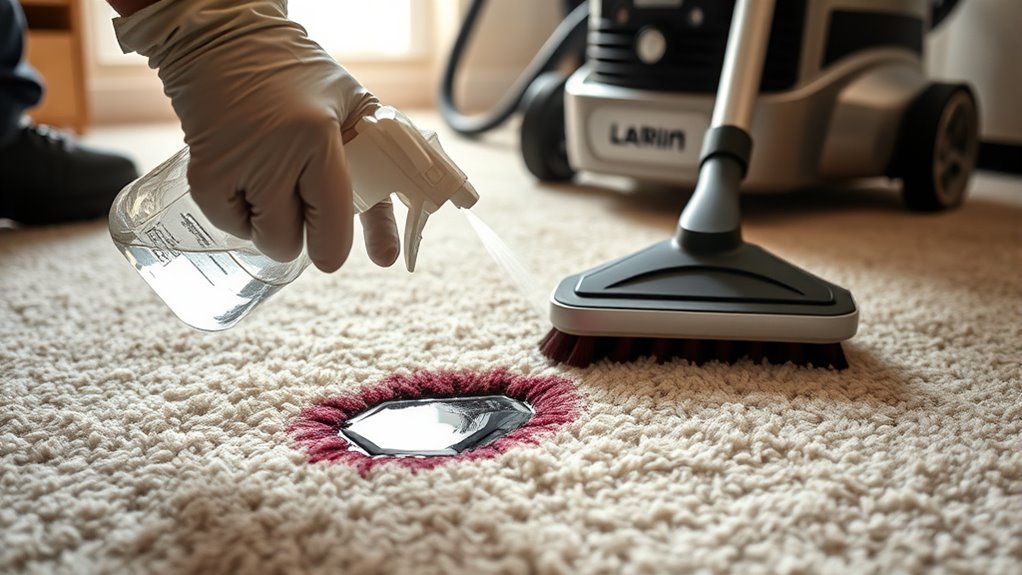
To effectively lift the ink stain without spreading it further, start blotting from the outside edge of the stain inward. Gently blot the stain using a clean, white cloth, applying light, consistent pressure to lift the cleaner and ink without pushing the stain deeper.
Work in small, circular motions from the perimeter toward the center, making sure the cleaner is absorbed without oversaturating the carpet. Be patient and avoid rubbing, which can damage fibers or spread the stain.
Continue blotting until the stain and excess cleaner are removed. Once the ink has been lifted, use a damp cloth to rinse the area, preventing any residue buildup.
This careful approach helps contain the stain and prepares the carpet for the next cleaning steps.
Use the Right Tools to Lift Ink Without Rubbing
Using the right tools is key to lifting ink stains effectively without causing damage. Start with a clean, white cloth or cotton swab to gently blot the ink, avoiding rubbing that could push the stain deeper.
Next, consider stain-specific products like enzyme-based cleaners or rubbing alcohol. Apply them carefully from the outside of the stain inward to prevent spreading.
Finally, use a blotting motion rather than scrubbing. This lifts the ink residue without damaging the carpet fibers. You might also find specialized wipes like Tub O’ Towels helpful—they’re designed to lift ink stains without aggressive rubbing.
These tools help you clean efficiently while protecting your carpet’s integrity.
Rinse the Area With Cold Water and Blot Dry
When dealing with ink stains on your carpet, rinsing the area with cold water is an essential step. Cold water helps dilute the ink and loosen it from the carpet fibers, making removal easier.
Use a clean, damp cloth or sponge soaked in cold water to gently blot the stained area. Avoid rubbing, which can spread or embed the ink further.
Repeating this process—applying cold water and blotting—can lift residual ink particles from the surface. Remember, hot water can set the stain, so stick to cold.
After rinsing, blot the area with a dry towel to absorb excess moisture and prevent the stain from spreading. This step ensures the area is clean and ready for more treatments.
Repeat the Process or Consider Deep Carpet Cleaning
If your ink stain sticks around after the first treatments, repeating the rinsing and blotting can help lift those stubborn traces. For stains that just won’t go away, try:
- Repeating the stain removal steps, reapplying enzyme or oxygen-based products, and gently blotting.
- Deep cleaning with rental machines like BISSELL’s Rent A Rug Doctor® can really help remove any leftover ink.
- If repeated efforts still don’t fully get rid of the stain, consider professional deep cleaning services.
Older or set-in stains might need multiple cleaning cycles. Repeating the process gives your carpet the best shot at recovery. When all else fails, deep cleaning can restore your carpet’s look and get rid of those stubborn ink traces.
Try Specialized Products or Rent a Carpet Cleaner for Tough Stains
For tough ink stains that resist standard treatments, using specialized products or renting a carpet cleaner can really help. Enzyme-based cleaners work well on water-soluble ink, while oxygen-based stain removers target ballpoint pen ink by breaking down stain molecules.
Before using a rented carpet cleaner, apply pretreatment solutions generously over the stained area to boost stain removal. Renting a Rent A Rug Doctor® carpet cleaner helps by spraying, agitating, and suctioning out stubborn ink marks.
Be sure to follow the manufacturer’s instructions carefully to get the best results. If the stain still won’t come out after this, repeating the cleaning or seeking professional help might be necessary to fully eliminate the ink from your carpet.
Tips to Maintain Your Carpet and Prevent Future Ink Stains
Maintaining your carpet and preventing future ink stains starts with simple, proactive steps. By staying vigilant, you can prevent stains from setting and becoming harder to remove.
First, regularly vacuum your carpet to prevent ink particles from settling deep into fibers. Second, apply a protective spray or stain guard designed for carpets to create a barrier against future ink stains.
Keep markers, pens, and other ink-containing items out of reach of children and store them in designated areas to reduce accidental spills. If ink does spill, immediately blot it with a clean, dry cloth to minimize absorption.
Finally, schedule routine professional deep cleanings to maintain your carpet’s health and help eliminate any lingering ink residues. These steps make stain prevention easier and help keep your carpet looking its best.
Frequently Asked Questions
How to Get Ink Out of Carpet Fast?
To get ink out of your carpet fast, start by blotting the stain immediately with a clean cloth to absorb as much ink as possible.
Next, apply rubbing alcohol or a suitable stain remover directly onto the stain, working from outside in to prevent spreading.
Let it sit for a few minutes, then gently blot or dab to lift the ink.
Rinse with cold water, then blot dry.
Repeat the process if needed until the stain is gone.
Does Dawn Dish Soap Remove Ink?
Yes, Dawn Dish Soap can remove water-based ink from your carpet. You mix a small amount with lukewarm water, then gently blot the stain with a clean cloth.
The soap breaks down the ink molecules, making it easier to lift. Keep in mind, it’s most effective on washable, water-soluble inks.
Try it on a hidden spot first to avoid damage or discoloration.
Does WD-40 Remove Ink From Carpet?
WD-40 isn’t your best choice for removing ink from your carpet. It might loosen some ink stains, but it can also spread or set the stain further, leaving oily residues that attract dirt.
Instead, you should use an enzyme-based cleaner or rubbing alcohol, which are safer and more effective. For tough stains, professional cleaning is often your best bet to guarantee the ink’s gone without damaging your carpet.
How to Get Rid of Ink Stains Out of Carpet?
To get rid of ink stains from your carpet, start by blotting up excess ink with a clean cloth. Then, apply a suitable ink remover like rubbing alcohol or an enzyme-based solution, working from outside in.
Make sure to test the solution first to avoid any damage. Gently blot or dab the stain, then rinse with lukewarm water and blot dry. Repeat the process if needed until the stain is gone completely.
Conclusion
By acting quickly, you can turn a potential ink disaster into a manageable stain, much like catching a falling leaf before it hits the ground. Always blot, test, and gently work from outside inward, just as you’d carefully peel away a stubborn sticker.
With patience and the right tools, your carpet can be bright and spotless again. Even tough ink stains are just a few careful steps away from being perfectly erased. Remember, quick action and gentle cleaning are key to success.